
The Future of Connection: Meetup Unveils Advanced Personalized Event Recommendation Engine

By the Editorial Team | February 18, 2025
In an era defined by digital saturation, the challenge for community builders has shifted from simply reaching an audience to reaching the right audience. For years, Meetup has served as the global town square for hobbyists, professionals, and social seekers. However, as the platform’s scale has grown, so too has the complexity of matching individual passions with relevant gatherings.
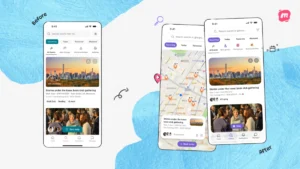
This week, Meetup announced the deployment of a sophisticated, AI-driven personalized event recommendation model. Designed to bridge the gap between intent and attendance, this upgrade represents a paradigm shift in how the platform facilitates real-world community building. By moving away from broad, location-based heuristics and toward a nuanced, intent-based discovery system, Meetup is setting a new standard for how social platforms foster meaningful, offline engagement.
Main Facts: A New Era of Discovery
The core of the update is a transition from a generalized recommendation architecture to a highly granular, personalized engine. Previously, Meetup’s algorithms relied primarily on two pillars: geographical proximity and global event popularity. While effective for discovery in dense urban centers, this approach often overlooked the specific nuances of a user’s evolving interests.
The new model functions by analyzing a multi-dimensional data set unique to every member. By synthesizing past activity, stated preferences, and behavioral patterns, the platform can now predict with greater accuracy which events will resonate with a user. For the organizers behind these events, the implications are profound: the system effectively acts as a high-precision marketing tool, surfacing their events to members who are statistically most likely to RSVP and attend.
Crucially, this update requires zero technical maintenance from organizers. The "smarter" algorithm works autonomously in the background, ensuring that the heavy lifting of audience targeting is handled by the platform’s machine learning infrastructure.
Chronology: The Evolution of Matchmaking
To understand the significance of this update, one must look at the historical trajectory of Meetup’s discovery mechanisms.
The Foundational Era (2002–2015)
In its infancy, Meetup relied on basic directory-style discovery. Users searched for categories, and the results were sorted chronologically or by distance. The system was manual and discovery was largely intentional—users had to know what they were looking for.
The Popularity Surge (2016–2022)
As the user base expanded, the platform introduced basic ranking algorithms. These models favored high-traffic events, often creating a "rich-get-richer" cycle where already-popular groups gained more visibility, while smaller, niche communities struggled to gain traction.
The Personalization Pivot (2023–2024)
Recognizing that community is inherently subjective, Meetup’s data science teams began experimenting with "Interest-Based" filtering. Early trials tested the effectiveness of recommending events based on past RSVPs rather than just group topics.
The Current Deployment (Q1 2025)
Following months of testing, the current recommendation engine was launched in early 2025. This model integrates real-time feedback loops, allowing the platform to adjust recommendations based on a user’s interaction with the app during a single session.
Supporting Data: Why Personalization Matters
The shift toward personalized recommendations is supported by extensive data regarding user behavior and "event fatigue." Internal studies conducted by Meetup prior to the rollout revealed several critical insights:
- The "Discovery Gap": Over 60% of users who searched for events were overwhelmed by the noise of non-relevant gatherings, leading to a high "bounce rate" from the search page.
- Relevance Drives Attendance: Data indicates that users are 40% more likely to RSVP when an event is presented as a direct match to their specific interest profile rather than as a trending event in their area.
- The Power of Niche: The new model has shown a significant uptick in attendance for smaller, specialized groups. By prioritizing "relevance over reach," the algorithm helps micro-communities find their audience, which historically suffered under popularity-based ranking systems.
These data points illustrate a fundamental truth about online communities: users do not want more events; they want the right events.
Official Responses: Insights from the Engineering Team
While the technical specifications remain proprietary, the development team has been vocal about the philosophy driving this change. "Our objective was never just to increase the number of RSVPs, but to increase the quality of the connection," says a lead engineer on the project.

"When we rely on popularity alone, we prioritize the loudest voices. With this new model, we are prioritizing the most resonant ones. We want a member who is interested in ‘Urban Sketching’ to find that niche workshop before they are prompted to join a generic ‘Social Mixer.’ By aligning the algorithm with the member’s intent, we are effectively shortening the distance between an idea and a community."
Management has emphasized that this is an iterative process. The model is designed to be a "living" system—it learns from its successes and failures. Every RSVP, every dismissed recommendation, and every group join serves as a data point that refines the system’s future accuracy.
4 Tips for Maximizing Visibility: A Guide for Organizers
While the new algorithm works automatically, organizers can optimize their groups to ensure the system "understands" their event’s value proposition. Here are four strategic recommendations for organizers looking to leverage the new system:
1. Optimize Event Titles and Descriptions
The algorithm relies heavily on semantic analysis. Using clear, descriptive language in your event titles—rather than clever or vague puns—helps the model categorize your event accurately. Include keywords that reflect the specific interests of your target demographic.
2. Leverage Consistent Tagging
Tags are the primary vocabulary of the new recommendation model. Ensure that every event is tagged with relevant categories and sub-interests. If your event is a "Python Coding Workshop," ensure it is tagged not just with "Technology," but with "Coding," "Python," "Software Development," and "Beginner-Friendly."
3. Maintain High-Quality Imagery
While the algorithm is text-driven, user conversion is visual. The model tracks engagement metrics, including "click-through rate" (CTR) from the recommendation feed. An event with a compelling, high-quality cover photo is more likely to be clicked, which signals to the algorithm that the event is high-quality, thereby boosting its future ranking.
4. Encourage Early RSVPs
The system prioritizes events that demonstrate early momentum. By encouraging your core group of members to RSVP shortly after an event is posted, you provide the algorithm with positive social signals, making it more likely to feature your event to new, prospective members.
Implications: The Future of Offline Community
The implications of this update extend beyond Meetup itself. In an increasingly polarized and digital-first world, the ability to facilitate genuine human connection is a valuable service. By removing the friction of discovery, Meetup is positioning itself as the primary infrastructure for the "loneliness epidemic."
Implications for the Creator Economy
For group organizers, this is a democratization of discovery. Previously, growth was often gated by an organizer’s ability to run external social media ads or perform complex SEO. With the platform’s internal algorithm doing the heavy lifting, the barrier to entry for community leaders is significantly lowered.
Implications for User Retention
For the platform, the goal is long-term retention. A user who finds a perfect group on their first or second visit is exponentially more likely to become a lifetime member. By delivering value immediately, the algorithm transforms Meetup from a utility app into an essential lifestyle companion.
A Look Ahead
As the system continues to evolve, we can expect to see even more sophisticated features, such as "Collaborative Filtering," where the platform suggests events based on the patterns of users with similar profiles.
The launch of this personalized recommendation engine is more than just a software update; it is a commitment to the idea that technology, when applied thoughtfully, can lead to more human, face-to-face interaction. As the community continues to grow, these algorithmic improvements ensure that the platform remains a place where everyone, regardless of their niche interest, can find their people.
We look forward to witnessing the growth of the diverse groups that define the Meetup ecosystem, and we remain dedicated to providing the tools necessary for organizers to turn their passions into thriving, engaged communities.