Narrative Reclamation: How Portland Redefined Its Image at the Destinations International 2026 Annual Convention

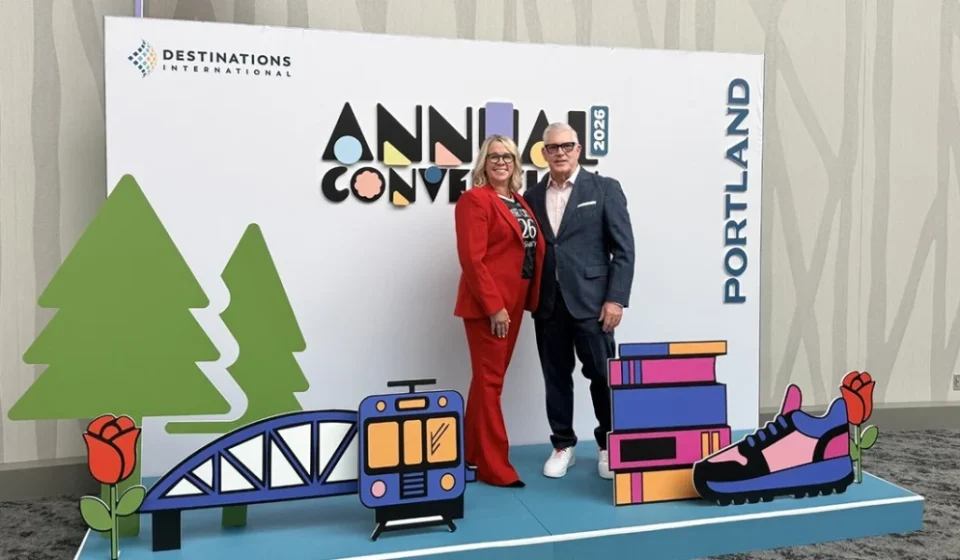
PORTLAND, OR — For the global tourism and destination marketing industry, the battle over public perception is often as critical as the physical infrastructure of the destinations themselves. This reality took center stage at the Oregon Convention Center during the Destinations International (DI) Annual Convention 2026.
For the hundreds of hospitality executives, Destination Marketing Organization (DMO) leaders, and event planners in attendance, the convention served as both an educational summit and a live demonstration of narrative reclamation. Over the last six years, Portland—affectionately known as the "City of Roses"—frequently found itself in the crosshairs of national media coverage that painted a bleak picture of urban decay and social unrest. However, the firsthand experience of DI attendees told a vastly different story: one of a culturally vibrant, resilient, and deeply welcoming metropolis.
Main Facts: The Intersection of Tourism, Safety, and Rebranding
The DI Annual Convention 2026 arrived at a pivotal moment for Portland. Once celebrated as a progressive, quirky haven for foodies and creatives, the city became a national flashpoint for civil rights protests and political polarization starting in 2020. In the years that followed, Travel Portland, the city’s DMO, faced a dual challenge: addressing legitimate safety concerns from event organizers while countering exaggerated, politically charged media narratives.
The 2026 convention demonstrated that Portland’s strategic recovery efforts have yielded substantial results. Key takeaways from the event highlight several critical milestones:
- Direct Experience over Media Narrative: Attendees experienced a peaceful, culturally diverse city, participating in events at landmark venues such as Powell’s Books and Providence Park.
- Significant Crime Reductions: Official data presented during the event confirmed that violent crime in Portland fell by 51% in 2025, leading the nation in crime reduction among major metropolitan areas.
- Proactive Public Relations: Travel Portland detailed its highly coordinated, multi-tiered communication strategy that prioritized transparency and grassroots engagement over defensive public relations.
- Industry Innovation: The convention showcased cutting-edge industry trends, including sustainable tourism frameworks like Japan’s "Touristship," behavioral technology concepts like "vibe coding," and advanced data analytics to measure the socio-economic impacts of business events.
Chronology: The Journey from Crisis to Recovery (2020–2026)
To understand the significance of Portland hosting the DI Annual Convention 2026, it is necessary to trace the timeline of the city’s reputational crisis and subsequent strategic pivot.
+-----------------------------------------------------------------------------+
|                                  TIMELINE                                   |
+-----------------------------------------------------------------------------+
|                                                                             |
|  2020: Civil unrest thrusts Portland into the national media spotlight.     |
|        The city becomes a symbol of urban polarization.                      |
|                                                                             |
|  2021-2023: Event planners voice safety concerns; Travel Portland shifts    |
|             from passive promotion to proactive, transparent messaging.     |
|                                                                             |
|  2024: Collaborative public-private safety and social service programs     |
|        begin showing measurable urban improvements.                         |
|                                                                             |
|  2025: Violent crime drops by 51%, leading the nation. Protests evolve      |
|        back into peaceful, uniquely Portland cultural expressions.          |
|                                                                             |
|  2026: Portland hosts the DI Annual Convention, solidifying its             |
|        reputational recovery on the global stage.                           |
|                                                                             |
+-----------------------------------------------------------------------------+
2020–2022: The Crisis and the "Doom Loop" Narrative
In the summer of 2020, Portland became the epicenter of prolonged protests following the murder of George Floyd. While the vast majority of demonstrations were peaceful, isolated incidents of property damage and clashes with federal law enforcement dominated national news broadcasts.
For nearly three years, national media outlets ran continuous segments depicting Portland as an active conflict zone. This coverage triggered a wave of cancellations from convention organizers, who expressed deep anxiety regarding the safety of their attendees. The city risked falling into an economic "doom loop," where declining tourism revenues would further strain municipal resources.
2023–2024: Designing the Proactive Response
Recognizing that traditional tourism marketing campaigns would be ineffective against deeply entrenched safety fears, Travel Portland pivoted. Under the leadership of Vice President of Communications Marcus Hibdon, the DMO launched a coordinated campaign designed to provide radical transparency.
Instead of denying the city’s challenges, Travel Portland began sharing concrete, data-backed updates regarding public safety initiatives, municipal cleanup efforts, and community-based social service programs. Crucially, the campaign targeted not just national travel writers, but local stakeholders—including rideshare drivers, hotel staff, and hospitality workers—arming them with factual information to share with visitors.
2025: The Statistical Turnaround
By 2025, the strategic shifts began to show clear results. Public safety statistics reflected a dramatic stabilization of the urban core. Furthermore, the nature of public demonstrations in Portland shifted back toward the city’s historically peaceful, eccentric roots.
Rather than clashing with police, local activists engaged in whimsical, characteristically "weird" protests—such as residents donning inflatable frog costumes or participating in the city’s famous naked bike rides to peacefully protest institutional actions, such as Immigration and Customs Enforcement (I.C.E.) policies. This return to peaceful, creative expression signaled to the travel industry that Portland’s unique cultural fabric remained intact.
2026: The Ultimate Litmus Test
Hosting the DI Annual Convention in July 2026 served as the ultimate proof of concept. By bringing thousands of destination marketing professionals to the city, Travel Portland allowed the industry’s most influential voices to experience the reality of the destination firsthand, effectively neutralizing years of negative press.

Supporting Data: Crime Reductions and Economic Indicators
The success of Portland’s rebranding is anchored in empirical data rather than mere marketing rhetoric. According to the Major Cities Chiefs Association’s 2025 report, Portland led the United States in crime reduction, recording a 51% decrease in violent crime year-over-year. This statistical milestone was critical in rebuilding trust with corporate travel buyers and meeting planners.
| Metric | 2020–2022 Trend | 2025 Performance | Impact on Tourism |
|---|---|---|---|
| Violent Crime Rate | Sharp Increase | 51% Reduction (Led Nation) | Restored confidence for event planners |
| Protest Activity | High-conflict / Property Damage | Peaceful / Culturally Quirky | Re-established Portland’s safe, eccentric identity |
| Culinary Infrastructure | Pandemic-related Closures | Expansion (James Beard Market) | Re-established city as a premier culinary destination |
In addition to safety data, Portland’s economic indicators point to a robust hospitality recovery. The city’s legendary culinary sector continues to serve as a primary economic driver. During the convention, local officials highlighted the upcoming opening of the James Beard Public Market, scheduled for 2027. This landmark development will pay homage to the city’s local culinary pioneer while showcasing the agricultural and viticultural bounty of the surrounding Willamette Valley and Pacific Northwest regions.
Official Responses and Convention Highlights
The convention itself was characterized by an atmosphere of optimism and forward-looking strategy. Leaders from Destinations International and various global tourism sectors spoke on the necessity of resilience and adaptability in modern destination management.
The DMO Perspective: Transparency as a Shield
Marcus Hibdon, Vice President of Communications for Travel Portland, emphasized that honesty was the single most effective tool in combatting negative media coverage.
"When the headlines are spiraling, your first instinct might be to put up a glossy facade," Hibdon noted during a panel session. "But we realized that planners wanted honesty. We didn’t shy away from our challenges. Instead, we walked them through our community-based solutions, our partnerships with public safety officials, and the real-time data. By being transparent, we built a level of trust that a standard ad campaign could never buy."
Leadership and Inspiration: A "Brand New Day"
Destinations International President and CEO Don Welsh set an energetic tone for the conference, walking onto the main stage to the opening chords of an indie-rock rendition of "Brand New Day." Welsh urged attendees to challenge traditional boundaries and explore new possibilities in destination stewardship.
The educational sessions featured a diverse lineup of thought leaders focusing on innovation, purpose-driven leadership, and technological integration:
- Jeremy Gutsche, author and founder of TrendHunter.com, delivered a keynote on cognitive adaptability. Gutsche challenged tourism professionals to push past their comfort zones to reignite creative thinking. He emphasized that artificial intelligence should not just be used as an administrative tool, but as a collaborative partner to optimize community impact and streamline visitor experiences.
- Kathy Varol, former Head of Global Purpose at Adidas, spoke extensively on the power of purpose-driven leadership. Varol argued that modern travelers and convention delegates are increasingly choosing destinations and brands that align with their ethical values, making social responsibility a core business imperative for DMOs.
       CONVENTION HIGHLIGHTS & INNOVATION TRACKS
┌────────────────────────────────────────────────────────┐
│                                                        │
│  [SUSTAINABILITY]                                      │
│  "Touristship" Concept (Chieko Tanaka)                 │
│  Focus: Respect, local integration, and mutual benefit │
│                                                        │
│  [TECHNOLOGY & SKILLS]                                 │
│  "Vibe Coding" (Todd Brook, Unchained)                 │
│  Focus: Anticipating traveler needs through behaviors  │
│                                                        │
│  [DATA & ANALYTICS]                                    │
│  Event Impact Metrics (Sarah Lehman, Zartico)          │
│  Focus: Measuring qualitative & quantitative outcomes  │
│                                                        │
└────────────────────────────────────────────────────────┘- Chieko Tanaka introduced the audience to the concept of "Touristship." Developed in Japan, this framework encourages travelers to view themselves not merely as consumers, but as temporary citizens who have a responsibility to respect, protect, and actively contribute to the well-being of local host communities.
- Todd Brook, founder and CEO of Unchained, led a practical workshop on "vibe coding." This methodology teaches hospitality professionals how to read and interpret subtle behavioral and environmental cues to anticipate and meet visitor needs before they are explicitly expressed.
- Sarah Lehman, CEO of Zartico, addressed the evolving science of destination analytics. Lehman demonstrated how DMOs can utilize advanced data platforms to measure the true economic, environmental, and social impacts of events, moving beyond simple metrics like hotel room occupancy to understand the holistic footprint of tourism.
Implications for the Tourism and Events Industry
The success of the DI Annual Convention 2026 in Portland offers valuable lessons for the global travel and tourism sector. As cities worldwide navigate political polarization, climate concerns, and economic fluctuations, Portland’s recovery strategy provides a blueprint for crisis management and brand rehabilitation.
1. The Death of the "Glossy" PR Campaign
Portland’s turnaround demonstrates that traditional, top-down public relations campaigns are increasingly ineffective in the face of organic social media narratives and 24-hour news cycles. Modern destination marketing requires a commitment to radical transparency, real-time data sharing, and direct engagement with both critics and supporters.
2. DMOs as Community Stewards, Not Just Promoters
The role of the Destination Marketing Organization has fundamentally shifted. As demonstrated by Travel Portland, modern DMOs must act as liaisons between local government, public safety agencies, local businesses, and the community. By actively participating in the resolution of civic challenges, DMOs ensure that the destination remains a viable, pleasant place to both visit and live.
3. The Integration of "Touristship" and Sustainability
As the global travel industry grapples with the impacts of overtourism and climate change, concepts like Chieko Tanaka’s "Touristship" will become increasingly vital. Destinations that foster mutual respect between travelers and residents are far more resilient to reputational crises and social friction.
By successfully hosting Destinations International 2026, Portland did more than just fill its hotels and convention halls; it proved that a city’s identity is defined by its community, its resilience, and its willingness to face challenges head-on. As attendees departed the City of Roses, they carried with them a renewed understanding of how destinations can rewrite their futures through authenticity, innovation, and unwavering transparency.
Related posts: