Beyond the Bay: Topgolf Evolves into a Media Powerhouse with New Sponsorship Division

Topgolf, the entertainment giant that revolutionized the traditional driving range, is undergoing a profound transformation. No longer content to simply be a destination for hitting golf balls, the company is positioning itself as a dominant force in the advertising and media landscape. With the official launch of Topgolf Media Networks, the firm is pivoting to leverage its massive physical footprint and growing digital ecosystem to create a comprehensive, data-driven sponsorship business.
This strategic shift aims to integrate brands directly into the guest experience, moving away from static signage and toward dynamic, multi-channel engagement. By capitalizing on its 42 million annual guests, Topgolf is attempting to rewrite the playbook on how sports and entertainment venues interact with corporate partners.
The Strategic Pivot: What is Topgolf Media Networks?
Topgolf Media Networks is a newly minted division designed to unify the company’s disparate advertising assets under a single, cohesive banner. For years, Topgolf has operated as a "third place"—a social hub where consumers eat, drink, and play. The new network intends to monetize this dwell time by offering advertisers a "connected platform" that spans physical venues, digital screens, and proprietary content.
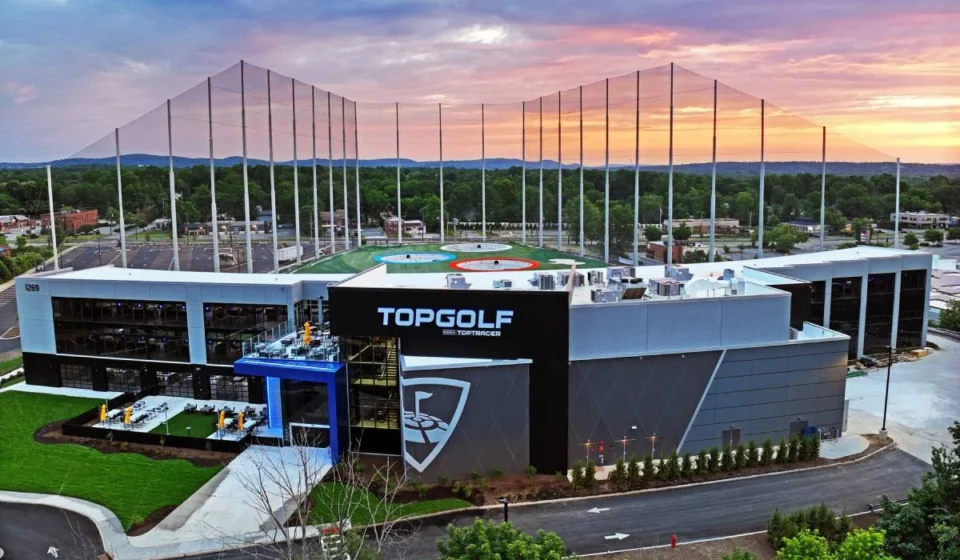
Unlike traditional sports sponsorships—which often rely on fixed perimeter boards or logo placement—Topgolf Media Networks is selling an integrated journey. By combining its network of over 100 U.S. venues with more than 28,000 digital screens and a robust first-party data set, the company is offering brands the ability to reach consumers before, during, and after their visits.
Rethinking the "Active" Consumer
The core value proposition for Topgolf lies in the nature of its customer engagement. In a media landscape dominated by passive consumption, Topgolf offers an active environment. Guests spend an average of two hours at a venue, creating a captive, high-intent audience. By embedding brand messages into the gameplay software, the menu experience, and the venue’s digital displays, Topgolf aims to provide an "authentic" connection that feels additive to the guest experience rather than disruptive.
A Chronology of Transformation: From Callaway to Private Equity
To understand the birth of Topgolf Media Networks, one must look at the company’s turbulent and rapid evolution over the last several years.
The Separation and Ownership Transition
For a significant period, Topgolf was the crown jewel within the Topgolf Callaway Brands portfolio. However, the synergy between manufacturing golf equipment and running high-volume entertainment venues proved complex to manage under one corporate roof. In 2025, a landmark deal was reached: private equity firm Leonard Green & Partners acquired a 60 percent stake in the business.
The $1.1 billion transaction, which finalized in early 2026, effectively severed Topgolf from its manufacturing parent. This independence was the catalyst for the company’s current strategic shift. Freed from the constraints of a public, equipment-focused conglomerate, the new leadership team—backed by the agility of private equity—began to aggressively pursue revenue streams that prioritize high-margin media and data services.
Leadership Overhaul
The transition to private ownership was accompanied by a wholesale restructuring of the executive suite. David McKillips, formerly of CEC Entertainment (the parent company of Chuck E. Cheese), was brought in as CEO. His mandate was clear: leverage his experience in high-volume, family-entertainment venues to scale Topgolf’s operations.
The company subsequently filled out its C-suite with veterans of the leisure and hospitality sectors, including:
- Jay Spears (CIO): Recruited from CEC Entertainment to oversee the digital infrastructure necessary to support the new media network.
- Jason Weatherford (VP of In-Venue Services): Tasked with optimizing the physical guest experience to maximize advertising inventory.
- Erin Chamberlin (President & COO): Elevated to a top leadership role after successfully navigating the complex ownership transition, signaling a commitment to operational continuity.
Supporting Data: Why Advertisers are Taking Notice
Topgolf’s pitch to advertisers is built on scale and precision. By operating in 24 of the nation’s 25 largest media markets, Topgolf offers a footprint that rivals major professional sports franchises, yet with a demographic reach that is arguably more consistent and diverse.
The Metrics of Engagement
The data backing the new media network is compelling. Topgolf’s internal analytics highlight:
- Dwell Time: The average guest visit is approximately two hours, providing a massive window for brand exposure.
- Digital Scale: With over 28,000 digital screens across the country, the network provides a national reach that can be geo-fenced or hyper-localized to match a brand’s specific needs.
- First-Party Data: Because guests must interact with digital interfaces to play games and order food, Topgolf collects valuable data on consumer behavior, preferences, and demographics, which it can now ethically leverage to help advertisers refine their campaigns.
The company has framed this not just as "advertising," but as "creative partnerships." By utilizing original content and licensing opportunities, brands can sponsor tournaments, customize digital game modes, or provide exclusive in-venue experiences that are inherently measurable.
Official Responses and Corporate Vision
In his first major statement regarding the division, CEO David McKillips emphasized that the company’s goal is to move beyond the "golf" label.
"Topgolf has become much more than a place to play golf," McKillips stated. "More than 42 million guests and golfers come to our venues to compete, celebrate, socialize and connect. Topgolf Media Networks allows brands to become part of those experiences through creative partnerships that are measurable, authentic, and built around real consumer engagement."
The leadership team has been adamant that this move is a logical progression. The "venue-as-media-platform" model is a proven success in other sectors, such as cinema advertising or airport media, but Topgolf believes it has a unique advantage: the playful nature of the visit. Unlike a cinema, where the phone is put away, the Topgolf experience encourages the use of digital screens, creating a natural synergy between the guest’s device and the venue’s advertising inventory.
Implications: The Future of Experiential Advertising
The launch of Topgolf Media Networks has significant implications for both the media industry and the entertainment sector at large.
1. The Death of the "Passive" Sponsorship
Traditional sports sponsorships are increasingly viewed as outdated by CMOs seeking hard data and higher ROI. By offering a platform that tracks consumer behavior throughout the visit, Topgolf is forcing other entertainment venues to rethink their sponsorship models. If Topgolf succeeds, expect a wave of "venue-as-a-service" models where the physical experience is merely the anchor for a massive data-harvesting and advertising operation.
2. A New Revenue Stream for Private Equity
The success of this division will serve as a bellwether for the private equity firm Leonard Green & Partners. By diversifying Topgolf’s revenue away from food, beverage, and bay rentals toward high-margin advertising and media licensing, the company significantly increases its valuation. This move effectively insulates the business from the inherent seasonality and volatility of the golf/hospitality industry.
3. The Competition for "Third Place" Dollars
Topgolf is effectively competing with social media and digital platforms for ad dollars. By offering an "IRL" (In Real Life) environment that is digitally connected, Topgolf is attempting to prove that physical engagement is more effective at driving brand loyalty than a standard digital ad impression. If the company can prove that a sponsored game-mode leads to higher brand recall than a banner ad on a website, they could fundamentally alter where marketing budgets are allocated.
4. Potential Risks and Challenges
While the prospects are bright, the company faces challenges. Over-commercializing the guest experience could lead to "ad fatigue." If the brand integrations become too intrusive, the social, relaxed atmosphere that defines the Topgolf experience may be compromised. Furthermore, as the company handles more consumer data, the scrutiny regarding privacy and data protection will increase, requiring a highly sophisticated and transparent approach to user consent.
Conclusion: A New Era for Topgolf
Topgolf is no longer just a golf company; it is a technology and media enterprise that happens to have a footprint of massive, high-traffic physical venues. The launch of Topgolf Media Networks is a bold acknowledgment that the future of brand engagement is not in billboards or television commercials, but in the experiences where people choose to spend their time.
As the company continues to refine its leadership, integrate its digital assets, and expand its media reach, it is clear that the "Topgolf" of the future will be a platform where entertainment and advertising converge. For advertisers, it represents a new frontier of access. For the consumer, it is a sign that the boundaries between leisure and digital connectivity are becoming increasingly, and perhaps intentionally, blurred. Whether this model becomes the gold standard for experiential media remains to be seen, but with 42 million guests waiting in the bays, Topgolf has an audience that advertisers simply cannot afford to ignore.