Savoring the Alpine Wild: How Slovenia Became Europe’s Most Unexpected Culinary Powerhouse

Main Facts
Tucked neatly between the sun-drenched Adriatic coast and the rugged peaks of the Julian Alps, Slovenia has quietly emerged as one of Europe’s most exhilarating and boundary-pushing gastronomic destinations. Roughly the size of New Jersey and bordered by Italy, Austria, Hungary, and Croatia, this small nation punches astonishingly far above its weight class in the culinary world. Slovenia now boasts 13 Michelin stars—tying culinary heavyweights like Greece—and has captured global attention through visionary talents such as chef Ana Roš, whose three-star temple, Hiša Franko, sits nestled in the lush, emerald embrace of the Soča Valley.
The defining characteristic of modern Slovenian gastronomy is an uncompromising, hyper-local connection to the land. More than half of the country’s total landmass is covered in dense, protected forests, making it one of the greenest and most heavily wooded regions in the European Union. This verdant landscape serves as an endless, natural pantry for pioneering chefs.

Menus here are not merely designed in a kitchen; they are dictated by the surrounding meadows, rivers, and alpine forests. From slow-cooked alpine potatoes encased in hay and served with local honey and sour cream to delicate dishes of red-trout tartare, farm greens, and wild garlic, Slovenia’s culinary identity is built on elevating the most humble elements of its geography into world-class haute cuisine.
Chronology
To understand how Slovenia transitioned from a culinary afterthought to an international food lover’s pilgrimage site, one must look at the gradual evolution of its rural hospitality and the stubborn brilliance of a few self-taught visionaries.

- The Pre-Star Era (The 2000s and Earlier): For decades, Slovenian cuisine was viewed through a regional, domestic lens—hearty, traditional, but rarely recognized on the global stage. Ingredients were abundant locally, yet international gastronomic recognition remained entirely focused on neighboring Italy and Austria.
- The Catalyst at Hiša Franko: Self-taught chef Ana Roš took the helm at Hiša Franko in the Soča Valley, facing an uphill battle against regional prejudices. Legend has it that an early Italian food critic dismissed her talent by calling her a cook working in the “land of poor ingredients.” Rather than retreat, Roš used the slight as rocket fuel, transforming the regional bounty into a sophisticated, highly personal narrative that celebrated local heritage.
- Global Discovery (The Netflix Era): The international breakthrough accelerated significantly when Roš was featured on Netflix’s acclaimed documentary series Chef’s Table. Her philosophy of hyper-seasonal, terrain-driven cooking captivated a global audience, transforming Hiša Franko into an international reservation powerhouse.
- The Michelin Wave (2020s): Michelin officially arrived in Slovenia, sparking a nationwide culinary renaissance. Establishments across the country—from historic valley houses to alpine chalets—invested heavily in elevating local dining experiences, culminating in the country securing 13 Michelin stars.
- Recent Accolades (2025): Ana Roš continued her global ascent by securing second place at the prestigious Best Chef Awards in Milan, cementing Slovenia’s permanent place at the absolute pinnacle of modern international gastronomy.
Supporting Data
Slovenia’s rapid rise as a luxury culinary and travel destination is supported by striking statistics and unique infrastructural integration between fine dining and high-end hospitality:
- Michelin Density: Slovenia currently boasts 13 Michelin stars, matching the total of historically celebrated culinary destinations like Greece, despite its compact geographic size.
- The Cost of Excellence: A multi-course tasting experience at Hiša Franko generally hovers around $380 USD, unfolding across an immersive, three-hour gastronomic journey.
- Forest Cover: More than 50 percent of Slovenia is covered in dense forests, providing an exceptional ecosystem for wild foraging—yielding pounds of wild garlic, oxalis, elderflower, and mushrooms.
- Immersive Stays: High-end dining in Slovenia frequently blends with immersive, historic lodging. Hiša Franko offers an 1861 guesthouse with no televisions, designed to force guests to connect with the surrounding alpine meadows. In Radovljica, master chef Uroš Štefelin welcomes guests into a renovated 500-year-old property at Hiša Linhart.
- Ultra-Luxury Accommodations: At the high end of alpine luxury, properties like Chalet Sofija in Kranjska Gora command rates starting around $1,370 per night, featuring private hot tubs, sweeping mountain views, and spaces sophisticated enough to house a Ferrari inside the garage.
Official Responses and Culinary Philosophies
The minds behind Slovenia’s Michelin-starred movement are remarkably unified in their philosophy: luxury is not defined by imported luxuries like truffles from Alba or caviar from the Caspian Sea, but by the absolute proximity and authenticity of the hyper-local environment.

Chef Ana Roš has frequently encapsulated the ethos of Hiša Franko by emphasizing the visual and physical connection between the plate and the horizon. "If you are standing on top of the mountain and you look around, you can see all the places from where we source," Roš has noted, highlighting a zero-kilometer philosophy that guides her kitchen. Every herb, green, and protein tells a specific story of the Soča Valley.
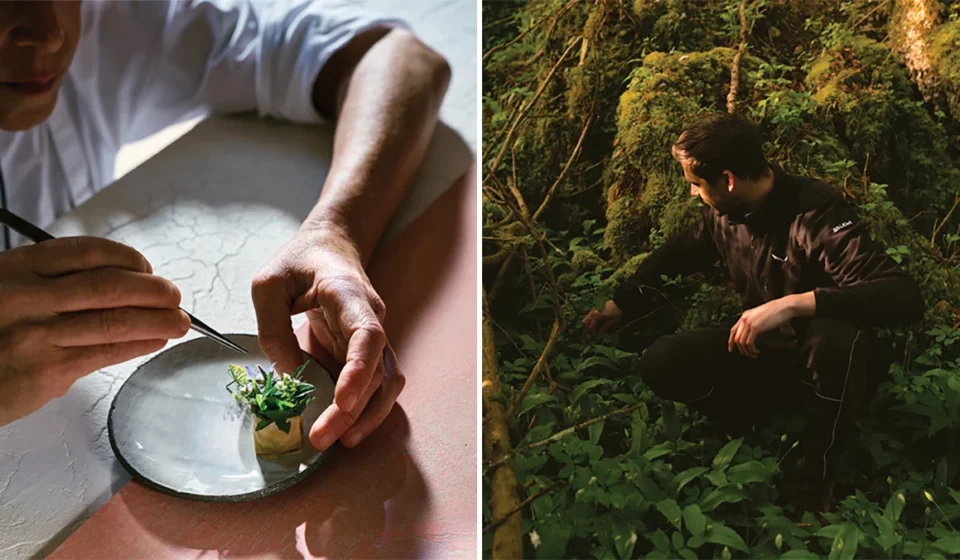
This farm-to-table philosophy relies heavily on traditional knowledge passed down through generations. Foraged elements are often harvested by local experts like Miha, a lifelong forager who began his craft as a child collecting wild herbs for family meals. Long before supplying Michelin-starred kitchens, foragers like Miha interacted organically with cross-border neighbors—selling wild mushrooms to eager Italian travelers shouting "Fungi, fungi!" in exchange for better currency and gas prices. Today, that same intuitive relationship with the wild woods forms the spine of modern Slovenian plating.

Implications
The transformation of Slovenia into an elite foodie haven carries profound implications for European tourism, rural economics, and the future of fine dining.
First, it proves that the traditional geographic centers of European haute cuisine—France, Italy, and Spain—no longer hold a monopoly on Michelin excellence. By leaning into geographical uniqueness, cultural heritage, and deep sustainability, smaller and previously overlooked nations can leap to the forefront of global culinary tourism.

Second, the structural model pioneered by Slovenian chefs—where luxury dining is inextricably linked to immersive, slow-paced hospitality (such as historic guesthouses without televisions, morning yoga sessions, and alpine chalet retreats)—suggests a shifting consumer desire among affluent travelers. High-net-worth tourists are increasingly seeking authenticity, wellness, isolation, and ecological storytelling over urban flashiness and corporate luxury.
Finally, this culinary boom acts as a powerful economic anchor for rural Slovenian communities. By channeling international wealth directly into local agriculture, small-scale farming, and traditional foraging networks, Slovenia’s Michelin-starred restaurants ensure that the preservation of the natural landscape and culinary heritage remains deeply profitable. As the world takes notice of the "land of poor ingredients" turned gastronomic paradise, Slovenia stands as a glittering blueprint for how a nation can reinvent its identity through the simple, profound act of sharing its table.