Ancient Vessels, Modern Vision: How Tuscany’s Top Winemakers Are Rediscovering Terra-Cotta Amphorae

For centuries, the gleaming stainless-steel tank and the toasted oak barrel have reigned supreme as the twin pillars of modern winemaking. Oak imparts sweet spices, vanillin, and a velvety softness to reds and whites alike, while stainless-steel preserves crisp, linear fruit profiles with clinical precision. Yet, across the sun-drenched hills of Tuscany, a quiet revolution is taking root in the earth itself.
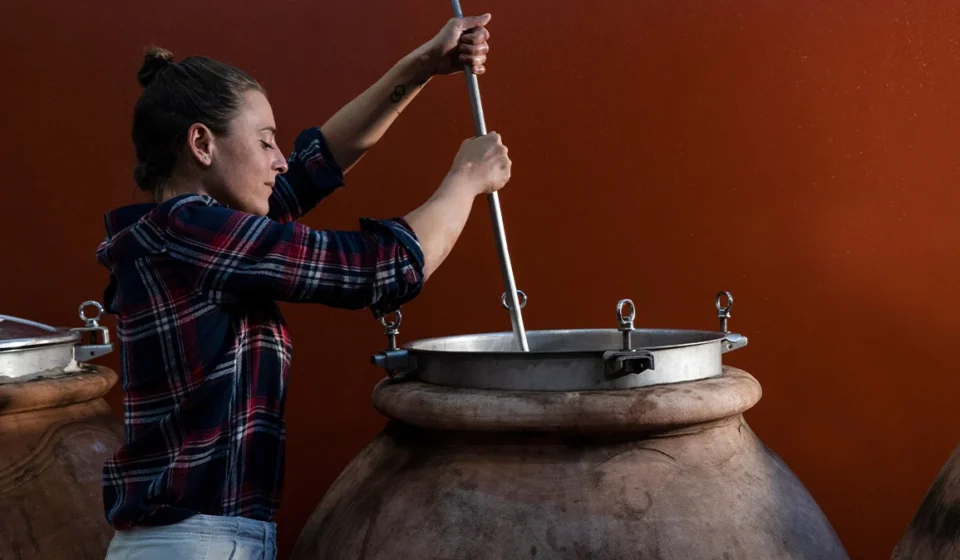
Forward-thinking winemakers in one of Italy’s most storied wine regions are dusting off a vessel far older than modern enology: the terra-cotta amphora. Once the gold standard of the ancient Etruscans and Romans who first cultivated these rolling landscapes, clay amphorae are experiencing a dramatic renaissance. What began as a fringe movement among experimental natural-wine producers has evolved into a sophisticated methodology embraced by some of the most prestigious estates in Tuscany.
By wedding ancient history with contemporary precision, these vintners are using terra-cotta not as a nostalgic novelty, but as a sophisticated tool to capture the unadulterated essence of their terroir.
Main Facts: The Terra-Cotta Renaissance in Tuscany
The modern shift toward amphora fermentation and aging represents a fundamental rethinking of how wine interacts with its environment during its transformation from grape to bottle.
Unlike inert stainless-steel or heavily flavored oak, terra-cotta is a living, porous material. It allows for a measured, micro-oxygenation of the wine—similar to a barrel—without imparting any of wood’s signature flavors, such as vanilla, toast, or heavy tannin. This neutrality lets the grape variety speak in its purest, most authentic voice.
Tuscany is uniquely positioned for this revival. The region boasts centuries-old clay pits, most notably around Impruneta, a town just south of Florence whose clay has been revered for fine earthenware since antiquity. While local estates still source much of their terra-cotta locally, others look to different parts of Italy and Europe, including traditional Georgian qvevri, to find vessels that best suit their specific winemaking philosophies.
Far from being a step backward, this embrace of ancient technology addresses a modern desire among consumers and producers alike: transparency, minimal intervention, and a transparent translation of site-specific terroir.
Chronology: From Etruscan Roots to the Cellars of Today
To understand why terra-cotta is making headlines today, it helps to trace the long arc of its history in Italian viticulture.
- Ancient Origins: Long before the invention of the wooden barrel, the Etruscans and ancient Romans fermented, stored, and transported wine in large clay amphorae buried in the earth or stacked in cellars. Tuscany’s rich clay deposits made it a natural hub for this craft.
- The Industrial Shift: Over the middle centuries and into the modern industrial era, amphorae fell into steep decline. Winemakers favored the structural reliability and ease of cleaning offered by concrete, followed by the global dominance of stainless steel for freshness and oak barrels for prestige and complexity.
- The Fringe Revival (Late 20th/Early 21st Century): As the natural wine movement gained momentum globally, a small cohort of radical producers began experimenting with alternative vessels to break away from conventional, heavily oaked styles. They rediscovered that clay allowed for natural temperature regulation and oxygen exchange.
- The Institutional Pivot (Present Day): No longer confined to the underground fringe, amphorae have moved into the cellars of Tuscany’s most elite, mainstream estates. Producers are no longer just dabbling; they are building permanent production lines, constructing dedicated amphora rooms, and entirely rethinking their cellar programs to incorporate terra-cotta alongside traditional oak and concrete.
Supporting Data and Technical Insights: How Clay Shapes Wine
To appreciate the impact of terra-cotta, one must examine the physical and chemical properties of the material itself. Winemakers point to three critical attributes: porosity, thermal inertia, and neutrality.

The Science of Porosity
Oxygen is a double-edged sword in winemaking. Too much, and the wine oxidizes and spoils; too little, and it can become reduced or closed off. Oak barrels are notoriously porous, but they leave a distinct aromatic footprint. Terra-cotta offers a middle ground. Its microscopic pores permit a slow, steady ingress of oxygen that softens harsh tannins and binds color compounds, all without adding wood-derived aromas.
Thermal Mass and Conduction
Clay possesses high thermal inertia, meaning it heats up and cools down very slowly. During fermentation, this natural insulation helps regulate internal temperatures smoothly, preventing dangerous heat spikes that can kill off wild yeasts or strip delicate aromatics.
Comparative Profile: Oak vs. Stainless Steel vs. Terra-Cotta
| Vessel Type | Oxygen Exchange | Aromatic Impact | Textural Influence | Best Suited For |
|---|---|---|---|---|
| Oak Barrels | High | Adds vanilla, spice, toast | Softens tannins, adds weight | Full-bodied reds, structured whites |
| Stainless Steel | None (Hermetic) | None (Preserves primary fruit) | Crisp, linear mouthfeel | Aromatics, crisp whites, young reds |
| Terra-Cotta Amphora | Measured/Porous | Neutral (Allows pure terroir) | Unique tactile grip, savory depth | High-acid grapes, skin-contact whites, terroir-driven reds |
Official Responses: What Tuscany’s Leading Winemakers Say
The movement is best understood through the voices of the vanguards who are actively reshaping Tuscan cellars.
Marilisa Allegrini: The Voice of Montalcino
At San Polo in Montalcino, owner Marilisa Allegrini has become a passionate advocate for clay. Her estate produces the San Polo Amphora Vignamasso Toscana IGT, made entirely in terra-cotta, alongside a traditional Rosso di Montalcino aged in large oak casks. Both wines are 100 percent Sangiovese from neighboring high-elevation vineyards.
"For me, one of the most interesting things about amphora is almost what it doesn’t bring," Allegrini notes. "Unlike oak, it does not impose another aromatic layer on the wine, while its porosity still allows a measured exchange with oxygen."
Allegrini highlights the divergence in the glass: "Both wines share the mineral-driven character and lively acidity we associate with our vineyards, but their aromatic and textural profiles are quite different. Oak tends to soften the wine while contributing sweet-spice notes, whereas amphora allows the savory character of our terroir to come forward more clearly, with a very different texture."
Alessio Gorini: The Laboratory of Avignonesi
In Montepulciano, Alessio Gorini, COO of Avignonesi, views terra-cotta as an instrument for rigorous exploration. Avignonesi produces the Da’Di Rosso and Da’Di Bianco IGT Toscana wines using distinct, meticulous protocols. The red ferments in Tuscan terra-cotta with three months of skin contact, while the white ferments without skins in ceramic amphorae.
"At Avignonesi, amphorae are first and foremost small laboratories for learning," Gorini explains. "Amphora is particularly useful because it gives us a very direct reading of the grape variety. Without the aromatic contribution or textural sweetness of wood, characteristics such as aroma, acidity, tannin and texture remain particularly easy to identify."
For Gorini, this experimental scale allows the winemaking team to isolate variables—such as the exact impact of whole-cluster fermentation on Sangiovese—with unprecedented clarity.

Elena Casadei: Bridging Ancient Cultures
Elena Casadei of Le Anfore di Elena Casadei represents a younger generation redefining the family enterprise across Tuscany and Sardinia. She splits her loyalties between local Impruneta clay and traditional Georgian qvevri, a UNESCO-recognized heritage vessel.
"I love the idea of making wine in Tuscany using Tuscan earth itself," Casadei says. "I also love working with qvevri because they connect me with an ancient winemaking culture… I find it incredible that one of the oldest winemaking tools in history can still feel so contemporary today."
Addressing the common critique that natural clay wines can feel unrefined or gritty, Casadei draws a firm line between style and flaw: "Amphorae can certainly produce wines with a distinctive texture and a strong tactile quality, but that is very different from having unwanted sediment or a wine that lacks precision. We aim to achieve clean, precise wines through time, natural settling, and careful management throughout the entire winemaking process, intervening as little as possible. For me, minimal intervention does not mean accepting imprecision."
Implications: The Future of Tuscan Winemaking
The shift toward terra-cotta is far more than a passing aesthetic trend; it signals a profound philosophical evolution in how elite wine regions view tradition and innovation.
At San Polo, the lessons learned from experimenting with amphorae have triggered a complete restructuring of the cellar. Discovering that terra-cotta’s lower porosity allowed them to dramatically reduce sulfur dioxide additions—combined with its thermal neutrality—emboldened the estate to make a radical operational shift. Starting with the 2025 vintage, San Polo has completely eliminated stainless steel from its cellar, relying exclusively on a harmonious triad of concrete, oak, and amphora.
"What started as an experiment has therefore become something much more meaningful to us," Marilisa Allegrini reflects. "The lessons we have taken from the past are now actively helping to shape the future."
Across Tuscany, this sentiment is gaining traction. As consumer palates increasingly drift away from heavily oaked, high-alcohol blockbusters in favor of transparency, tension, and terroir-driven freshness, the humble clay amphora has proven to be an indispensable ally. By allowing the true voice of the grape to emerge unmasked by wood or masked by steel, terra-cotta is helping Tuscan winemakers write an exciting new chapter rooted in ancient history.