Comments Off on Beyond Bali: How Ultra-Luxury Travel Is Redefining the Indonesian Archipelago
Main Facts: The Evolution of Indonesia’s High-End Tourism Landscape
For decades, the name "Indonesia" to the Western traveler was practically synonymous with a single destination: Bali. When Christopher Wilmot-Sitwell, co-owner and director of the London-based luxury agency Cazenove & Loyd, first explored the sprawling Southeast Asian nation in the late 1980s, the tourism scene was overwhelmingly dominated by budget-conscious backpackers and a localized focus on the Island of the Gods.
Fast forward to the present day, and the topography of Indonesian tourism is undergoing a seismic shift. Wilmot-Sitwell, a recognized Robb Report Travel Master, now curates multi-week itineraries spanning up to three weeks across the nation’s roughly 17,000 islands. These journeys offer a masterclass in hyper-customized luxury—ranging from private, deeply spiritual water blessings in sacred springs to exclusive, behind-the-scenes access to UNESCO World Heritage sites.
"It’s a good idea to zig when people zag," Wilmot-Sitwell notes, summing up the philosophy driving today’s discerning travelers away from crowded hotspots and toward uncharted archipelagos.
Yet, exploring this vast island nation does not come without logistical hurdles. Unlike the highly streamlined island-hopping networks of the Mediterranean, such as the Greek Isles, Indonesia’s sprawling geography and developing infrastructure mean that independent luxury travel can quickly become an exercise in frustration. For travelers making the grueling 30-hour journey from the United States, navigating domestic connections, remote moorings, and high-end boutique properties requires heavy lifting.
Enter the new wave of ultra-luxury outfitters. Earlier this year, Edita Sgovio took the helm of "Ultraluxe," a newly launched division of Kensington Tours designed to bridge the gap between high-end land tours, private villas, deep-sea expeditions, and elite yacht charters. By blending these elements into frictionless, fully vetted itineraries, companies like Kensington and Cazenove & Loyd are opening up the remote corners of Indonesia to travelers who demand seamless execution without sacrificing a sense of adventure.
Chronology: From Backpackers to Aman Resorts and Ultra-Luxe Odysseys
To understand how Indonesia arrived at its current status as a premier frontier for high-end globetrotting, one must look at the historical timeline of its tourism development:
The Late 1980s (The Backpacker Era): Indonesia’s international appeal is largely localized to Bali, attracting budget travelers, surfers, and spiritual seekers. Infrastructure outside the island is virtually non-existent for Western tourists.
1989–1992 (The Aman Catalyst): Visionary hotelier Adrian Zecha changes the trajectory of Asian hospitality by establishing Aman resorts in Indonesia. This marks the genesis of luxury travel in the region, proving that high-end accommodations can successfully integrate into wild, culturally rich environments.
The 2000s–2010s (Expansion of Boutique Luxury): Iconic properties begin to pop up on neighboring islands. Resorts like Nihi Sumba redefine barefoot luxury, while ultra-exclusive phinisi yachts begin chartering cruises through remote marine paradises like Raja Ampat and the Lesser Sunda Islands.
Present Day (The Seamless Ultra-Luxe Movement): Major luxury operators launch dedicated ultra-luxury divisions. Itinerary curation shifts from simple hotel bookings to multi-modal, end-to-end odysseys utilizing private planes, helicopters, and chartered superyachts, minimizing friction and maximizing access to untouched regions.
The Near Future: The Indonesian government breaks ground on infrastructure projects designed to decentralize tourism, including a planned international airport on the north side of Bali, signaling a new chapter for the country’s accessibility.
Supporting Data: Inside a $70,000 "Indonesia Odyssey"
To appreciate what modern high-end curation entails, consider Kensington Tours’ flagship nine-day Indonesia Odyssey, priced at approximately $70,000 per person (excluding international airfare).
The journey begins in Bali, where guests check into Mandapa, a Ritz-Carlton Reserve nestled in the lush jungles of Ubud. Here, surrounded by serene river valleys and terraced rice paddies, the bustling energy of southern Bali fades into the background, providing an idyllic sanctuary to recover from jet lag.
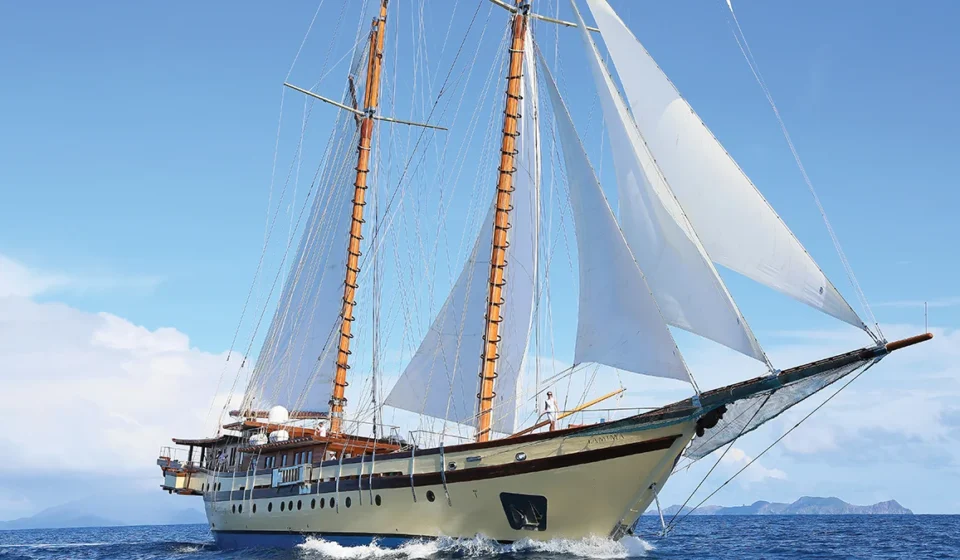
Following the mainland decompression, guests embark on a four-day maritime voyage through the Lesser Sunda Islands aboard the Lamima, a traditional Indonesian phinisi ship. Operated by a vibrant, highly trained crew, the vessel serves as a floating luxury hotel. Days are punctuated by shore excursions—such as tracking the legendary, prehistoric Komodo dragons on their native island—while evenings welcome guests back aboard with live music, exceptional local gastronomy, and unmatched ocean views.
The final leg of the odyssey transports travelers to Nihi Sumba, a legendary resort on the remote island of Sumba. Here, guests can experience the juxtaposition of high-octane adventure and restorative wellness: catching world-class waves at sunrise, followed by a bespoke massage overlooking the crashing surf of the Indian Ocean at sunset.
The entire itinerary—weaving together commercial flights, private boat charters, helicopter transfers, and remote island landings—operates with clockwork precision. As Sgovio emphasizes, "We’re not just booking something that we can find online and taking our chances. It’s truly vetted."
Official Responses and Expert Perspectives
While remote island-hopping commands the attention of extreme luxury seekers, industry leaders emphasize that Bali remains an indispensable anchor of the Indonesian experience. The island’s southern coast continues to attract blue-chip hospitality brands, such as Bulgari’s renowned resort in Uluwatu, with several more ultra-exclusive properties slated to open their doors in the near future.
Furthermore, Bali’s deep-rooted creative culture remains a powerful draw for global tastemakers. The island serves as the creative heartbeat for iconic brands like the jewelry house John Hardy, which operates a prominent boutique and artisan gallery in Seminyak.
Reed Krakoff, Creative Chairman of John Hardy, champions the unique geographical and cultural diversity that keeps elite travelers returning to the region:
"The variety of landscape and locations there; it’s kind of amazing," Krakoff remarks. "There are the beaches and the forest. It’s really rare that you have these kinds of differentiated environments so close together."
Despite these structural assets, industry insiders agree that unlocking Indonesia safely and comfortably requires specialized expertise. Edita Sgovio of Kensington Tours points out the stark contrast between more established vacation corridors and the Indonesian archipelago:
"It’s not as seamless as the Greek Islands," she notes.
This friction is precisely why the role of the modern travel master has evolved. Without an experienced planner orchestrating the logistics behind the scenes, the immense distances, complex domestic transfers, and cultural nuances can easily overwhelm even the most seasoned globetrotter. With proper curation, however, the country transforms from an intimidating logistical labyrinth into one of the most rewarding frontiers on earth.
Implications: The Future of Remote Archipelago Tourism
The rapid professionalization and elevation of Indonesia’s luxury tourism sector carry profound implications for both travelers and the destination itself.
For the high-net-worth traveler, the shift toward multi-modal, hyper-curated expeditions signals a departure from passive relaxation toward active, experiential discovery. The desire is no longer merely to stay in a five-star hotel room, but to engage in transformative experiences—swimming with stingless jellyfish in the secluded marine lakes of Misool, witnessing ancient indigenous rituals, or chartering handcrafted wooden superyachts through pristine coral reefs—all while insulated from the mass-market tourism that plagues portions of Bali.
For Indonesia, this evolving landscape presents both a tremendous economic opportunity and a critical conservation challenge. As infrastructure improves—highlighted by government investments like the upcoming international airport in northern Bali—the country will inevitably become more accessible.
The central question for the nation’s tourism strategists will be how to balance this influx of capital and visitors with the preservation of fragile ecosystems and distinct local cultures. If high-end operators continue to champion low-impact, highly vetted, and culturally respectful itineraries, Indonesia may well serve as a global blueprint for how remote archipelagos can successfully harness ultra-luxury tourism to protect, rather than exploit, their natural and cultural treasures.