The Shift from Generation to Direction: Why Autodesk’s AU26 Strategy Changes the AI Conversation

As a creative professional navigating the tumultuous waters of the generative AI era, I have found myself in a state of productive uncertainty. Like many of my peers, I have spent the last two years oscillating between fascination and existential dread. We have watched AI models ingest billions of images, text strings, and lines of code, promising a future of instantaneous creation. But as a designer, animator, and storyteller, I find myself asking a fundamental question: What do I actually want AI to do for me?
The industry is currently saturated with "magic button" promises—tools that claim to generate a final product from a single, vague text prompt. While technically impressive, this approach often leaves the creative professional sidelined, relegated to the role of a "prompt jockey" rather than an author.
This is why Autodesk’s strategic pivot at its annual user conference, AU26, held in Las Vegas, resonates so deeply. The company is moving away from the simplistic promise of "faster and cheaper" and toward a more nuanced philosophy: closing the gap between human imagination and tangible construction. By focusing on "project intelligence," Autodesk is betting that the future of creative AI isn’t about replacing the artist, but about augmenting their capacity to execute complex visions.
The Core Philosophy: Unlocking Human Capacity
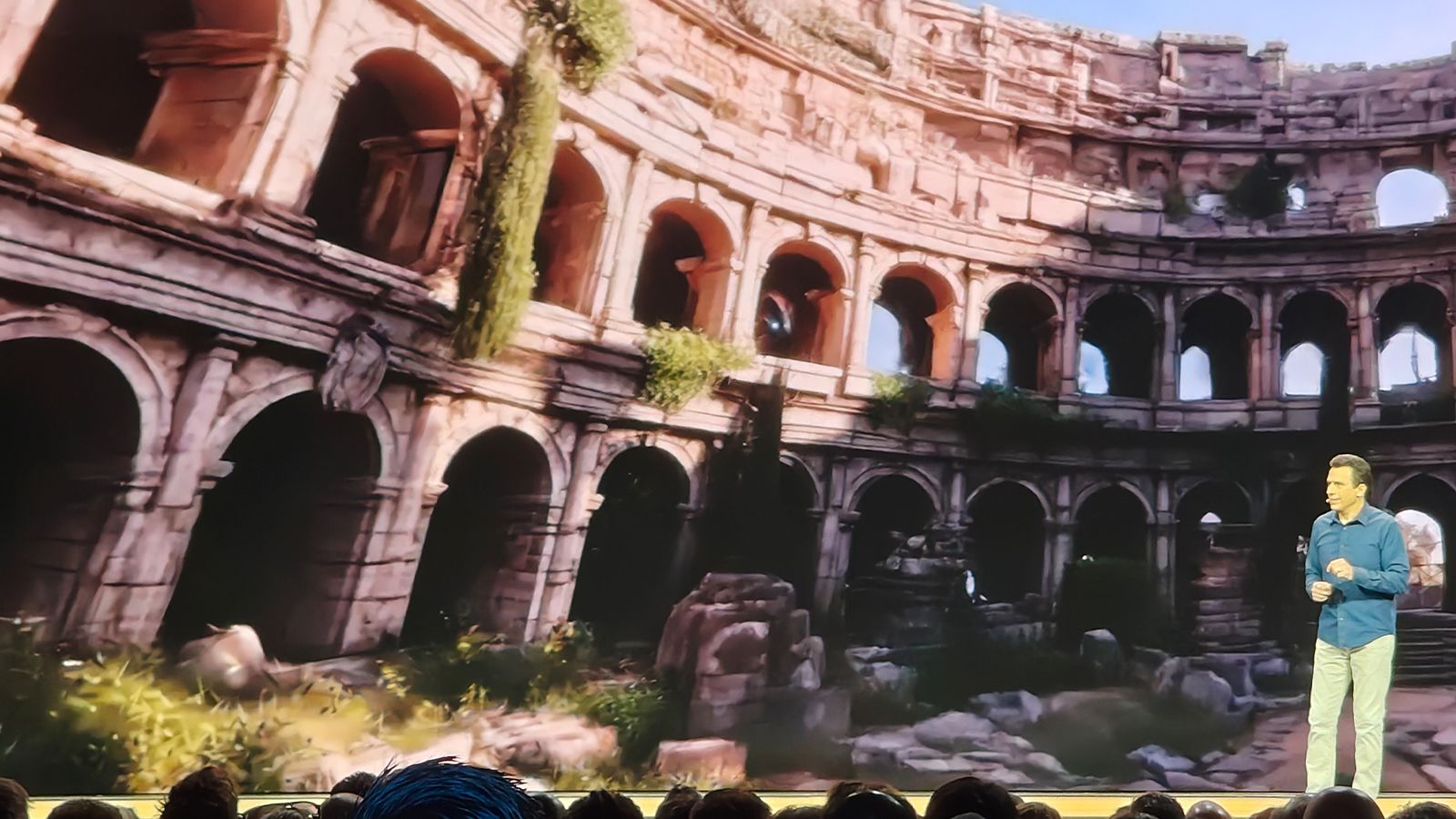
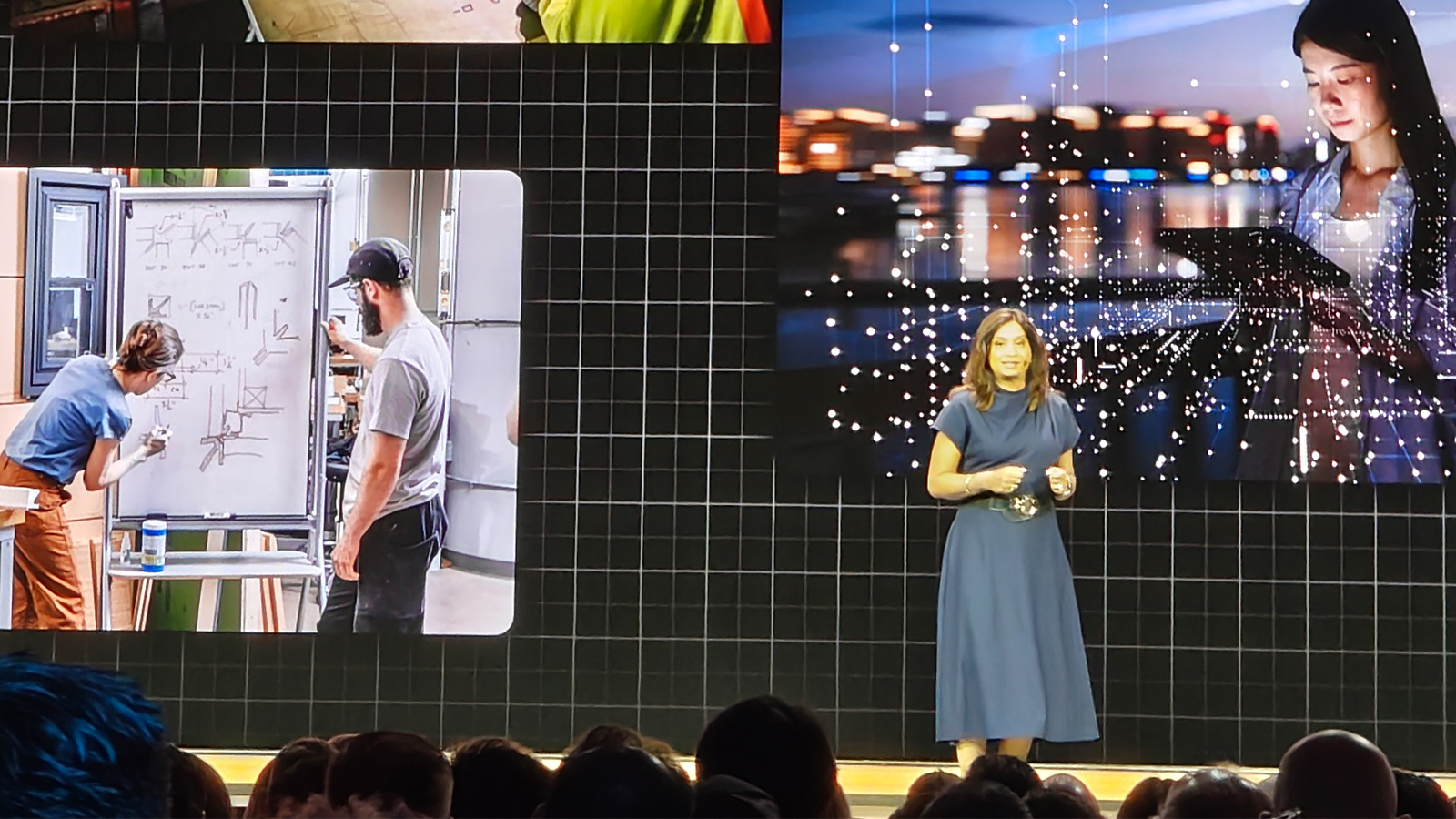
At the heart of the AU26 keynote was a sentiment expressed by Raji Arasu, Chief Technology Officer and Executive Vice President at Autodesk. She distilled the company’s complex roadmap into a single, blunt mission: "Our mission is to unlock capacity for you."
This is a critical departure from the typical AI sales pitch. Rather than marketing AI as a replacement for human labor, Autodesk is positioning it as a sophisticated utility that handles the "drudgery"—the repetitive, high-friction, and time-consuming tasks that act as a barrier to actual creativity.
For an animator, this means AI that can handle the tedious aspects of rigging or keyframing, allowing them to focus on the performance. For an engineer, it means AI that can synthesize vast quantities of product data, allowing them to focus on design innovation rather than data management. By increasing what an individual can accomplish with their existing resources, Autodesk is aiming to turn the current narrative of AI-driven displacement into one of AI-driven empowerment.
The Chronology of the Shift: From Tools to Agents
To understand why this shift matters, one must look at how the creative software landscape has evolved over the last decade. Historically, software was a toolset: you picked a brush, a modifier, or a plugin, and you performed a manual action.
At AU26, we witnessed the evolution of the Autodesk Assistant into a standalone, agent-first model. In previous iterations, software required the user to know exactly which tool lived in which menu. The new agent-first paradigm flips this: the user describes the desired outcome, and the AI analyzes the project context to pull the relevant tools and workflows from across the Autodesk ecosystem.
This "context-awareness" is the linchpin of the strategy. A creative project is not a vacuum; it is a repository of models, drawings, materials, revisions, and constraints. By training its AI to recognize the "project intelligence"—the specific ecosystem of a user’s work—Autodesk is attempting to build a partner that understands not just the what, but the why of a design decision.
The Rise of "Direction" Over "Generation"
Perhaps the most significant announcement at the conference was the debut of Flow Studio, a platform that signals a shift toward what I call "creative direction."
We have all seen the demos where a user types a prompt and receives a video clip. It is a party trick that loses its luster the moment you need to change a character’s expression, adjust the lighting on a specific prop, or re-frame a shot. Flow Studio moves beyond the single-prompt trap. It provides an editable 3D environment where users can assemble characters and AI-generated worlds, then retain the ability to direct, refine, and iterate.
This is the distinction between generation and direction. Generation is the act of creation; direction is the act of editing and curation. The latter is where the human element is irreplaceable. If you give an animator a rough motion pass generated by AI, they can then spend their time "polishing the performance"—adjusting weight, timing, and personality—until the character feels alive. The machine handles the mechanical heavy lifting; the human handles the soul of the work.
Integrating MotionMaker: A Case Study in Utility
The implementation of MotionMaker in Maya serves as a perfect case study for this philosophy. By leveraging machine learning to automate the tedious aspects of character animation, Autodesk is not replacing the animator; they are freeing them.
The goal here is not to eliminate the animator’s job, but to eliminate the "keyframe grind." When an artist can get a baseline motion in place in minutes rather than hours, they have more time to experiment. They can try five different versions of a pose, test different timing, and explore more complex interactions. This is a net gain for creative quality. It allows the professional to work at the speed of thought, keeping them in a flow state rather than bogged down in technical minutiae.
The Economic Reality: An Uncomfortable Question
However, we cannot discuss this technological shift without addressing the "elephant in the room." If a tool allows one animator to do the work that previously required two, the math of the industry inevitably changes.
CEO Andrew Anagnost has been uncharacteristically transparent about this, acknowledging that AI presents an immediate and tangible threat to the traditional labor structure of creative industries. While Autodesk argues that their tools will enable smaller teams to win larger, more complex projects, there is no guarantee that the headcount in those studios will remain stable.
The industry is currently in a state of transition. We are moving toward a model where the "generalist" becomes more powerful, and the "technical specialist" faces new pressures to evolve their skill set. Autodesk’s strategy is to provide the platform that makes the human the most valuable part of the equation, but it remains to be seen how corporate accounting departments will utilize this newfound efficiency. Will they use it to create more, or to spend less?
Implications for the Creative Future
As I look at the announcements from AU26, I am struck by the clarity of the vision: less searching, less stitching, less AI complexity, more creating, more solving, and more innovating.
The real test for AI in the coming years will not be its ability to create something impressive from nothing—we have already crossed that bridge. The test will be its ability to provide a scaffold for human intent. If the AI can handle the "boring stuff" while leaving the messy, subjective, frustrating, and deeply personal business of artistic decision-making to the human, then we are entering a new, exciting chapter.
I am not interested in a future where the answer to every creative problem is "let the AI do it." I am, however, very interested in a future where the AI knows what I’m working on, understands the constraints of my project, and quietly clears the path for me to do my best work.
The "project intelligence" that Autodesk is building isn’t just about software; it’s about preserving the role of the creator in a world that is becoming increasingly automated. As the dust settles from the flashy keynotes and the product demos, this remains the most vital thread of the story. The technology is evolving, but the need for human taste, human error, and human soul remains as high as ever.
We are not at the end of the creative process; we are merely at the start of a new, more complex, and potentially more rewarding way of working. I will be watching closely as these tools roll out, looking for the moments where the AI truly gets out of the way, leaving the artist to do what they have always done: make something that matters.