The Evolution of the C-Store Alcohol Category: From Beer Staples to Curated Cocktails

The landscape of the American convenience store (c-store) alcohol aisle is undergoing a radical transformation. As of 2026, the era of relying solely on a generic beer-heavy inventory is coming to a definitive end. Today’s c-store consumer is increasingly sophisticated, driven by a desire for portability, flavor innovation, and premium experiences that match the immediacy of the convenience retail model.
While beer remains the category’s heavyweight champion, the growth trajectory is shifting toward a more segmented, diverse portfolio. From the explosive rise of Ready-to-Drink (RTD) cocktails to the strategic prioritization of premium imports and flavored malt beverages, retailers are recalibrating their shelves to meet the demands of a modern, value-conscious, and experience-driven shopper.
Main Facts: The Shift in Consumer Priorities
The primary narrative defining the 2026 alcohol market is the movement away from "broad-based" growth toward "occasion-based" purchasing. Historically, the c-store alcohol section was a destination for quick beer pickups. Today, it is evolving into a multifaceted beverage hub.
The modern consumer is balancing two seemingly contradictory impulses: a sensitivity to discretionary spending and a willingness to pay a premium for high-quality, unique, or convenient beverage options. This "value-premium" paradox is forcing retailers to rethink their product mix. Rather than flooding shelves with excessive variety—which can lead to decision paralysis—successful retailers are curating assortments that align with specific lifestyle moments, such as post-work wind-downs, pre-event celebrations, or pairings for in-store prepared meals.
A Chronological Look at the Category Evolution
To understand where the category is heading, it is essential to look at the recent timeline of change:
- Pre-2020: The Beer Monopoly: For decades, the convenience channel was defined by the dominance of domestic lagers. Beer accounted for the vast majority of alcohol revenue, with little room for alternative segments to gain significant shelf space.
- 2020–2023: The Hard Seltzer Explosion: The initial pivot occurred during the pandemic, when hard seltzers surged in popularity, introducing consumers to the concept of "light, flavored, and portable" alcohol. This paved the way for more experimental beverage development.
- 2024–2025: The RTD Revolution: As consumers grew accustomed to the convenience of single-serve alcoholic options, the RTD cocktail segment began to scale rapidly. Innovation in packaging, flavor profiles, and premium ingredients transformed the segment from a niche offering to a core revenue driver.
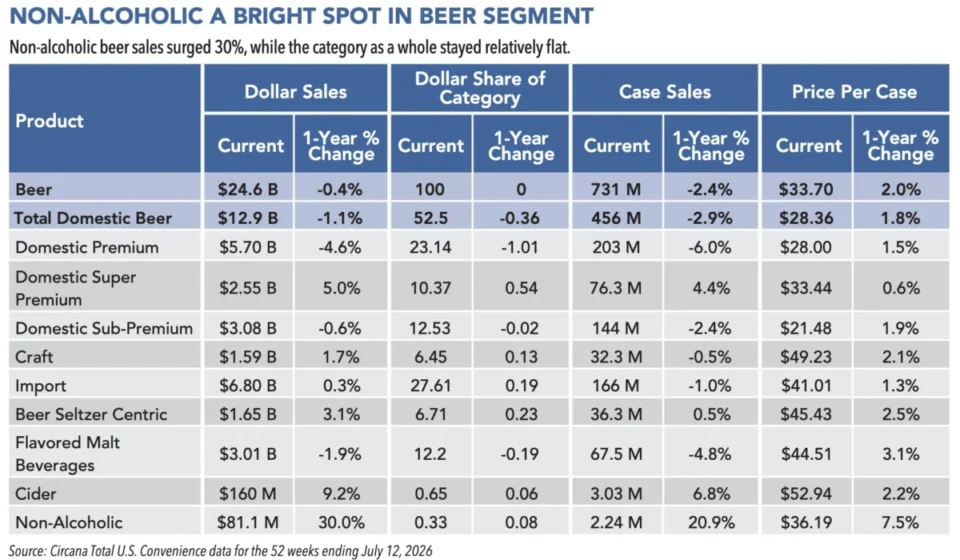
- 2026: The Era of Segmentation: We are now in a period of high-level refinement. Data from the 52-week period ending July 12, 2026, confirms that while beer remains the volume leader, its growth has matured. Conversely, high-margin, specialized segments like RTDs are capturing significant market share, forcing a permanent change in how retailers manage their inventory.
Supporting Data: By the Numbers
The statistical breakdown of the current market highlights the disparity between traditional segments and emerging growth drivers. According to data from the retail research firm Circana, the numbers tell a compelling story.
In the 52 weeks leading up to July 12, 2026, the beer category generated a massive $24.6 billion in dollar sales, representing 456 million units sold. While these figures are undeniably impressive, the real story lies in the velocity of the newer categories.
The RTD Surge
The most significant disruptor in the c-store space is the RTD cocktail category. In that same 52-week period, RTDs recorded a staggering 48.1% uptick in sales. Most notably, the segment hit $1.2 billion in total dollar sales, officially overtaking wine, which trailed at $1.1 billion.
This data point is critical: it proves that shoppers are no longer viewing the c-store as a place to grab a bottle of wine for a dinner party, but rather as a place to acquire a high-quality, individual serving of a complex, pre-mixed cocktail. This is a testament to the success of "flavor-forward" innovation and the consumer’s demand for high-end experiences in a low-friction environment.
Official Responses and Expert Analysis
Industry experts, including Tim Powell, managing principal at the c-store consulting firm Foodservice IP, emphasize that this transition is not merely a trend, but a structural shift in consumer behavior.
"The alcohol category remains critically important to convenience retailers, but growth is becoming more segmented than broad-based," Powell noted. "Traditional beer is a mature category. Meanwhile, premium imports, Mexican beer styles, flavored malt beverages, and RTD cocktails continue to attract significant consumer attention."
Powell points out that retailers are shifting their operational philosophy. Instead of simply expanding the number of SKUs—which can overwhelm the customer—retailers are "managing the category around specific consumption occasions."
The "Value and Convenience" Balance
When asked about the driving forces behind these shifts, Powell identifies three pillars: value sensitivity, convenience, and occasion-based purchasing.
"Consumers continue to monitor their discretionary spending, which makes the strategic use of promotions and the selection of package sizes vital," Powell explained. "Simultaneously, these shoppers are looking for beverages that fit an immediate consumption occasion. Whether they are buying a drink for an after-work wind-down, something to enjoy before an event, or a beverage to pair with a freshly prepared meal from the store’s deli, the product must fit the moment."
Implications for the Future of Retail
The data and expert insights lead to several key implications for c-store owners and category managers looking to succeed in the coming years.
1. The Death of "More is Better"
Retailers must move away from the "wall of beer" approach. Because consumers are now more deliberate in their purchasing, curated assortments that highlight premium, high-quality, or unique flavor profiles will outperform vast, undifferentiated shelves. The goal is to make the shopping experience easier, not more complex.
2. The Power of Portability
The modern consumer prioritizes convenience above all else. This explains the rise of the single-serve format. Products that require zero preparation—no mixing, no glass, no ice—are winning. RTDs offer the "cocktail experience" without the need to purchase multiple ingredients or spend time mixing, which is the perfect value proposition for the convenience channel.
3. Quality as a Differentiator
As the RTD and flavored malt beverage markets become more crowded, quality will become the primary differentiator. Consumers are increasingly discerning; they are willing to pay a premium for products that provide a consistent, bar-quality experience. Retailers who prioritize high-quality, craft-focused RTDs will likely capture the more affluent, younger demographics that are driving this growth.
4. Strategic Integration with Foodservice
The most successful retailers will be those who treat alcohol as a component of the broader food-and-beverage experience. By cross-merchandising specific RTDs or premium beers with high-quality prepared food offerings, stores can increase their "basket size" and solve the customer’s need for a complete, immediate dining solution.
Conclusion: A New Horizon for C-Store Alcohol
The data for 2026 is clear: the convenience store alcohol category is in the midst of a sophisticated evolution. While beer will remain a cornerstone of the business for the foreseeable future, its role as the sole growth driver is over.
The future belongs to the "convenient premium"—those products that offer the quality and variety of a bar or liquor store, delivered with the speed and accessibility of a convenience store. As retailers continue to curate their assortments, focus on occasion-based marketing, and prioritize high-growth segments like RTDs, they will find that the modern consumer is more than willing to spend on products that deliver both flavor and function. The key to capturing this market lies in understanding that for today’s shopper, convenience is not just about time; it is about the quality of the experience.
Related posts: