
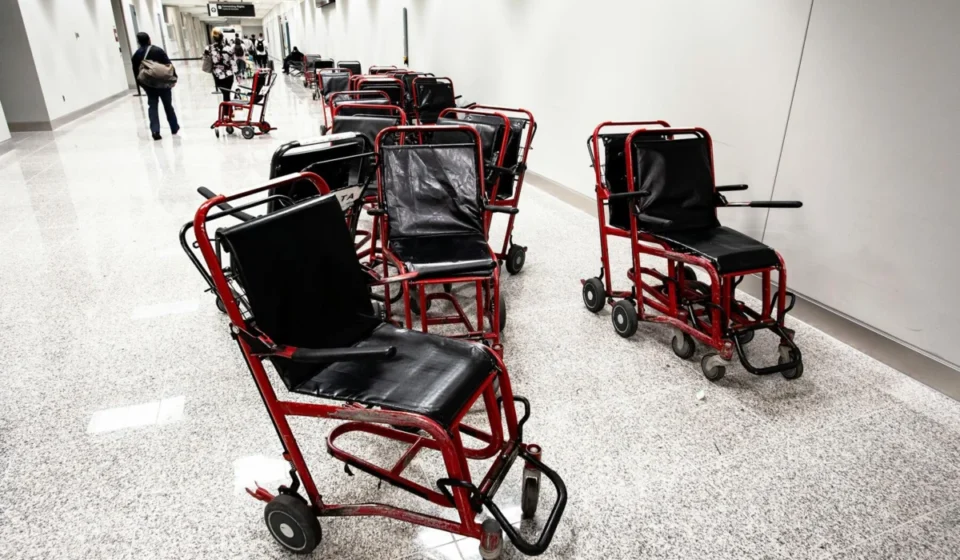
The Skies of Exclusion: Why Air Travel Remains a Frontier of Inequality for Passengers with Disabilities

For the more than 40 million American adults living with disabilities, the promise of modern air travel—speed, convenience, and connectivity—often feels like an exclusive privilege reserved for the able-bodied. While the aviation industry touts technological advancements and luxury amenities, a disturbing pattern of systemic failures, dehumanizing interactions, and logistical negligence continues to alienate disabled passengers. From being forcibly removed from aircraft to having essential mobility equipment destroyed, the experience of flying with a disability has become a gauntlet of humiliation.
Despite federal regulations and global accessibility standards, the recurring reports of ill-treatment suggest that when it comes to disability, the aviation industry remains trapped in an era of ignorance.
A Chronology of Negligence: Recent Incidents
The following accounts highlight the breadth of the crisis, spanning from international carriers to domestic powerhouses, illustrating that this is not a localized issue, but a global failure of service culture.
2024–2026: A Pattern of Discrimination
The frustration felt by the disabled community reached a boiling point in recent years. In 2024, BBC security correspondent Frank Gardner shared a harrowing account of a flight from Warsaw to London on the Polish airline LOT. Due to the lack of an onboard aisle chair—a basic piece of equipment designed to provide dignity to passengers unable to walk—Gardner was forced to crawl to the lavatory in his business suit. The airline’s subsequent defense, citing "limited space" on short-haul flights, highlighted a glaring disregard for the fundamental human right to privacy and hygiene during travel.
This sentiment of being "discarded like furniture" was echoed by Liz Venendaal in 2025. During a layover in Atlanta, the life coach, who lives with cerebral palsy, found herself abandoned in a designated wheelchair assistance area. After being ignored by staff who refused to coordinate gate transfers, she was forced to offer a $20 incentive to a staff member just to ensure she didn’t miss her connecting flight.
The 2026 Surge: From Motorized Devices to Invisible Disabilities
The year 2026 saw a high-profile viral incident involving disability advocate Shane Hryhorec. While attempting to fly from Sydney to Adelaide on Virgin Australia, Hryhorec was removed from his flight due to a dispute over his motor assist device—a portable mechanism essential to his mobility. Despite having used the device on previous flights without issue, the crew insisted it be stored under the seat, a physical impossibility given the space constraints and the presence of his service dog. The resulting ejection was not merely a logistical failure; it was a public act of discrimination that left Hryhorec feeling "humiliated and small."
That same year, Paralympic athlete Samanta Bullock faced a different barrier. While returning from a U.N. conference in New York, British Airways staff blocked her travel, claiming she required a companion to assist with "emergency evacuation" and lavatory use. Bullock, who travels independently for work, was subjected to intrusive questioning about her bodily functions—a violation of privacy that serves as a recurring, demeaning theme for disabled travelers.
In March 2026, the issue of "invisible disabilities" came to the fore when Kathryn Colvin, a passenger living with multiple sclerosis, was accosted by both a fellow passenger and a flight crew member for attempting to pre-board. Despite her reliance on a cane, she was told to "wait her turn" because she did not "look" disabled enough. The experience highlighted the need for mandatory sensitivity training for airline personnel, who often act as gatekeepers of accessibility without understanding the spectrum of human disability.
The Destruction of Mobility: "Not Just Luggage"
Perhaps the most egregious violation is the cavalier treatment of wheelchairs, which the industry frequently treats as common checked luggage rather than an extension of a passenger’s body.

In early 2026, Latavia Sturdivant, the winner of Ms. Wheelchair America, saw her customized wheelchair destroyed by Delta Air Lines. For a passenger whose chair is calibrated to maintain skeletal alignment, a "loaner" is not a substitute; it is a recipe for physical injury. When the airline suggested she have a family member manually push her—a task made impossible by the weight of her specialized equipment—it underscored a complete failure to understand that a wheelchair is not a piece of sporting equipment; it is a requirement for basic human autonomy.
Supporting Data and The "One-in-Four" Reality
The CDC estimates that one in four U.S. adults lives with a disability. This demographic represents a significant portion of the consumer base, yet airlines continue to operate on a "bolt-on" model of accessibility, where assistance is treated as an afterthought rather than a structural requirement.
According to data from the Department of Transportation (DOT), the number of wheelchair and scooter mishandling reports has remained consistently high. While airlines are often hit with fines, the financial penalties rarely outweigh the cost of implementing systemic, fleet-wide accessibility upgrades. The gap between the ADA (Americans with Disabilities Act) and the Air Carrier Access Act (ACAA) often creates a regulatory gray area where airlines can prioritize operational efficiency over the legal rights of their passengers.
The Official Response: Apologies vs. Accountability
The standard airline response to these incidents has followed a predictable script: an official apology, a promise of "internal review," and an offer to cover damages or provide flight vouchers. However, disability advocates argue that these performative gestures do not address the root causes.
"An apology is not a policy," says one advocate, noting that after the viral video of Shane Hryhorec, Virgin Australia issued a statement of regret, yet the incident highlights that the front-line staff lacked the training to navigate a simple conflict regarding a mobility device. When airlines relegate the care of disabled passengers to third-party contractors—who are often underpaid, overworked, and poorly trained—they effectively outsource their moral and legal responsibilities.
Implications for the Future of Aviation
The implications of these failures are profound. For the disabled community, air travel is becoming a "no-go" zone, forcing many to choose between the physical toll of alternative travel (such as long-distance trains or driving) or the psychological toll of potential discrimination in the air.
To rectify this, the aviation industry must move beyond reactive apologies. Structural changes are necessary:
- Mandatory Training: Comprehensive, empathy-driven training conducted by disability experts for all flight crews and ground staff.
- Standardized Equipment: Universal requirements for aisle chairs on all commercial aircraft, regardless of flight length, and standardized storage protocols for mobility devices.
- Accountability Metrics: Publicly reported data on wheelchair handling and accessibility complaints should be a factor in airline ratings, affecting federal subsidies and airport slot allocations.
- Inclusive Infrastructure: Airports and airlines must work in tandem to ensure that the transition from curb to seat is seamless and dignified.
Conclusion: A Call for Radical Empathy
The skies should be a symbol of human progress and freedom. Instead, for millions, they are a place of profound vulnerability. The airline industry has a clear choice: continue to treat disability as an "operational inconvenience" or recognize that true accessibility is a non-negotiable pillar of civil aviation.
As we look toward the future of travel, the measure of an airline’s success should not just be its on-time performance or its in-flight amenities, but the respect and dignity with which it treats its most vulnerable passengers. Until the industry acknowledges that a passenger’s mobility device is as essential as their own legs, and that their needs are as valid as any other traveler’s, the skies will remain a divided space. It is time for the aviation industry to stop apologizing and start changing.