Shaping the Future of Connection: Insights from PCMA Convening EMEA 2026

Executive Summary: A New Chapter in Lisbon
The business events industry stands at a critical juncture, balancing the rapid acceleration of artificial intelligence with an enduring, primal human need for physical connection. This tension served as the central narrative of the PCMA Convening Europe, Middle East and Africa (EMEA) 2026, which officially kicked off this week at the Feira Internacional de Lisboa (FIL) in Portugal.
The event, a premier gathering for global meeting professionals, brought together industry leaders, futurists, and sustainability advocates to address three core pillars: Integrity, Connection, and the Future. With an agenda featuring heavyweights such as Dr. Poornima Luthra of Imperial Business School, futurist Anne Lise Kjaer, and PCMA CEO Sherrif Karamat, the convening aimed to provide more than just networking—it sought to provide a blueprint for navigating a fragmented global landscape.
The Setting: A Backdrop of Resiliency
Lisbon, a city with a 3,200-year history of surviving earthquakes, conquests, and economic shifts, proved the ideal host for a conference centered on "future-proofing." The venue itself, the Feira Internacional de Lisboa (FIL), is a testament to the city’s capacity for reinvention.
Located within the Park of Nations—the site of the 1998 World Expo—the facility exemplifies how major events can leave a lasting positive footprint. The area was transformed from a neglected industrial zone into a thriving, modern business and cultural hub. Today, the site houses the MEO Arena, a massive oceanarium, and a bustling commercial district, proving that the legacy of a well-planned event can sustain a local economy for decades.
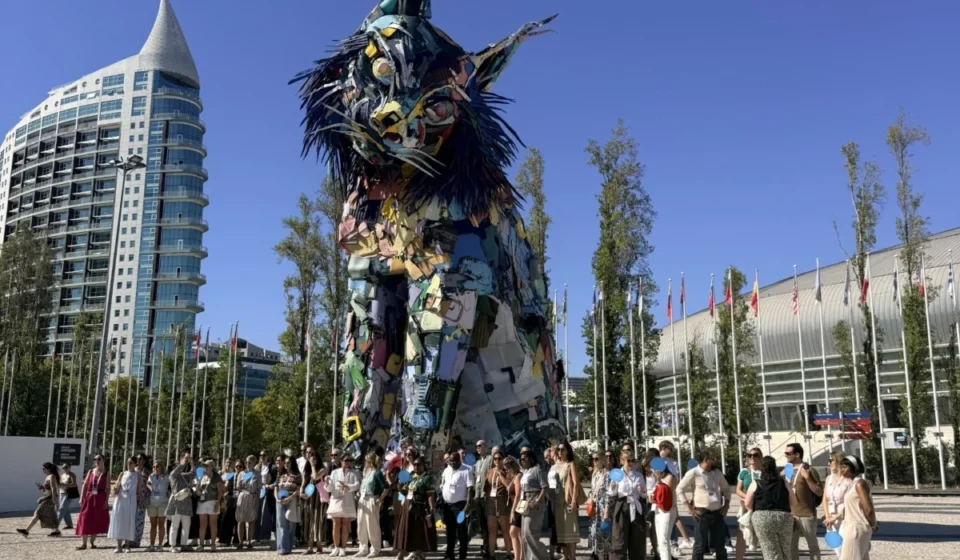
Attendees were greeted by the iconic Bordalo II sculpture—a massive Iberian lynx constructed from recovered ocean plastic. The artwork served as a poignant reminder of the conference’s broader mission: to marry the rapid pace of corporate expansion with the responsibility of environmental stewardship.
Chronology of the Convening: A Three-Day Odyssey
The event’s schedule was meticulously curated to facilitate both high-level thought leadership and granular, actionable learning.
- Day 1: The Foundation of Integrity. The opening sessions focused on internal culture. Dr. Poornima Luthra opened the stage with a deep dive into inclusion. In a post-pandemic, globalized workforce, Luthra argued that diversity is not just a moral imperative but a survival strategy for business. "We have to foster trust, belonging, and collaboration in an increasingly fragmented world," she stated.
- Day 2: The Future Mindset. The second day shifted to the "Future" pillar, moderated by Felix Rundel, CEO of futurehain. The day was defined by a departure from traditional "prediction-based" forecasting. Instead, sessions focused on "scenario-planning," giving attendees the mental muscles to prepare for multiple potential realities.
- Day 3: Action and Sustainability. The final segment focused on the intersection of events and climate, featuring the "Convene 4 Climate" movement. The event concluded with the official announcement that the 2027 edition of PCMA EMEA will move to Seville, Spain, on September 14–15, 2027.
Core Themes: Integrity, Connection, and Future
The event was structured around three pillars designed to move the industry away from "business as usual."

1. The Human Imperative: Why Connection Matters
As artificial intelligence automates logistical tasks and content distribution, the "value" of a human-led event has shifted. Networking is no longer a peripheral benefit; it is the primary product. Jamie Bennett, Managing Director of PCMA EMEA, emphasized this evolution. "We need to build trust, human connections that last, and purposeful engagement," Bennett noted. "Those are the tools that will help us cut through the noise to make better choices."
2. Strategic Inclusion
Dr. Poornima Luthra’s contributions highlighted that organizational integrity requires a proactive approach to culture. Her workshops explored how business leaders can move beyond "performative inclusion" to create environments where diverse perspectives are not just invited but integrated into the decision-making process.
3. The 4P Framework
Futurist Anne Lise Kjaer introduced her "4P" framework—People, Planet, Purpose, and Profit. This model encourages event organizers to evaluate their event’s ROI not just in terms of revenue, but in terms of social and environmental impact. By balancing these four metrics, organizations can ensure that their business model remains resilient against the "violent waves" of global instability.
Official Perspectives: The Leadership View
The leadership at PCMA provided a clear mandate for the coming year. CEO Sherrif Karamat delivered a keynote that served as a rallying cry against isolationism.
"Knowledge doesn’t have borders," Karamat asserted. "Connections don’t have borders. We can’t let artificial things divide us." His stance on consolidation—the idea that the industry must coalesce around shared standards of sustainability and ethics—was a major talking point throughout the hallways of the FIL. Karamat’s leadership has consistently pushed for the industry to be recognized as an essential economic driver, rather than a luxury sector.
Felix Rundel, the event moderator, offered a pragmatic view on the role of technology. He argued that the future should not be viewed as a threat to be feared, but a landscape to be actively shaped. "By training our ‘futures muscles’ and employing a future mindset, we can move from being victims of change to architects of our own destiny," Rundel explained.
Implications: The Rise of "Convene 4 Climate"
Perhaps the most significant development to emerge from Lisbon was the formal integration of Convene 4 Climate. This initiative is a strategic movement designed to transition the business events industry into a catalyst for global sustainability.
The Science Behind the Movement
The platform features heavyweights in the scientific community, including Nobel Peace Prize recipient and American Geophysical Union Executive Vice President, Dr. Kristen Averyt. By bringing climate scientists into the boardroom of event planners, PCMA is attempting to bridge the gap between abstract climate targets and tangible, operational event logistics.
The Strategic Alliance
Supported by The Strategic Alliance of the National Convention Bureaux of Europe, the movement is backed by major institutional players, including Destination Canada, Failte Ireland, and major carriers like United Airlines. Their shared credo—"driven by responsibility, fueled by technology to deliver transformation"—marks a definitive shift in how the industry will approach large-scale gatherings in the coming decade.
Supporting Data and Industry Trends
The 2026 PCMA EMEA gathering highlighted several key data-driven shifts within the events industry:
- Sustainability Metrics: A 20% increase in attendees seeking "carbon-neutral" certifications for their own internal corporate events compared to 2024 data.
- The "Human-First" Pivot: Participant surveys indicated that 78% of attendees valued "meaningful discussion" over "content consumption" as their primary reason for attending, a 12% increase from the previous year.
- AI Integration: While AI was a dominant topic, the industry consensus was that AI should handle the "operational friction" of event management (scheduling, logistics, registration) to free up human time for "high-trust interaction."
Looking Ahead: The Road to Seville
As the Lisbon event concluded, the energy was palpably focused on the future. The decision to host the 2027 Convening in Seville, Spain, suggests a commitment to maintaining the EMEA region as a powerhouse for innovation.
The legacy of the 2026 Lisbon event will likely be defined by the shift in the "why" of event planning. The industry is moving away from the era of "growth for growth’s sake" and toward an era of "impact-driven connection." As organizers leave Portugal, they carry with them the "futures muscles" developed at the FIL—a toolkit that will be essential for navigating the complex, interconnected, and rapidly evolving global economy.
In the words of the speakers, the challenge now lies in execution. The tools are present, the frameworks are built, and the community is connected. The question for 2027 will not be whether the industry can survive the changes brought by AI and climate volatility, but how effectively it can leverage those very forces to create a more inclusive, sustainable, and connected global future.