
For two decades, Italy has been a perennial fixture in my travel calendar. Like many seasoned globetrotters, my relationship with Rome has often been defined by logistical necessity rather than deep exploration. As a frequent flyer in and out of Fiumicino Airport, the Eternal City usually serves as a brief, high-energy bookend to my journeys—a place to grab a final espresso, admire the Pantheon, and navigate the inevitable throngs of tourists before returning to the pace of New York City.
However, during a recent trip this past May, my standard Roman routine hit a wall. Expecting a manageable shoulder-season experience, I instead found the historic center pulsating with a level of density reminiscent of Times Square at rush hour. Desperate for respite from the cacophony of tour groups and the relentless hum of traffic, I retreated to my hotel, seeking a digital escape. It was then that a fleeting, algorithmic suggestion on social media changed my entire itinerary. A short video clip revealed a corner of Rome that felt less like the capital of the Roman Empire and more like the backdrop of a Grimm’s fairy tale: the Quartiere Coppedè.
The Discovery: An Architectural Fever Dream
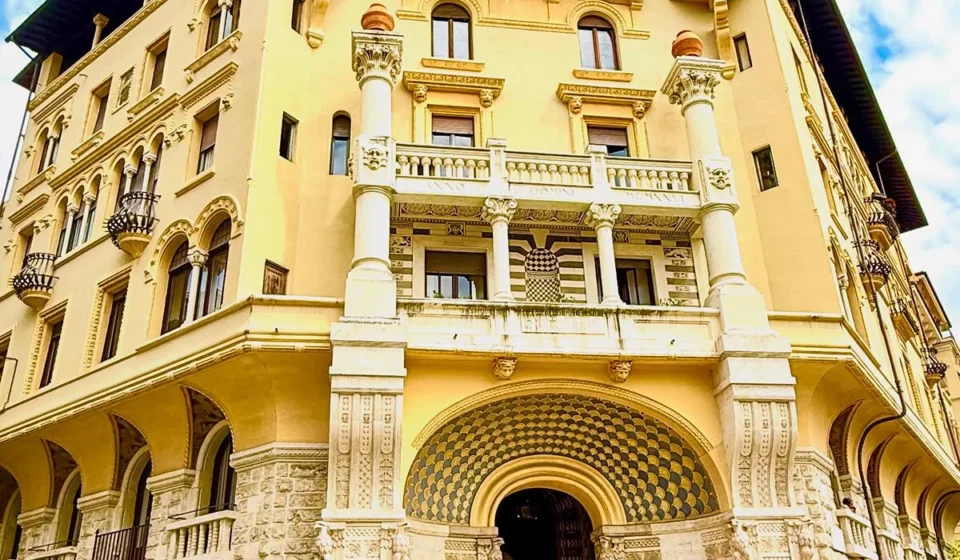
The video depicted a piazza of impossible geometry—ornate palaces adorned with gargoyles, wrought-iron spiders, and a centerpiece fountain alive with bronze frogs. It felt entirely incongruous with the classical ruins and Baroque facades that define the Roman aesthetic. Intrigued and slightly skeptical that such a place could exist in a city I thought I knew so well, I set out the following morning to find this "hidden" pocket of the city.
The Coppedè district is not a sprawling neighborhood, but a compact, concentrated architectural anomaly nestled between the Salario and Trieste areas. Unlike the rest of Rome, which evolved over millennia, this district was the singular vision of one man: Gino Coppedè. Built between 1913 and 1927, the district is a testament to the early 20th-century transition toward Art Nouveau, mixed with an eccentric, almost hallucinatory blend of Greek, Roman, Baroque, and medieval influences.
Chronology: From Concept to Architectural Curio
To understand the Coppedè district, one must look at the climate of early 20th-century Italian architecture. The era was defined by a search for a new national identity, often vacillating between the rigid classicism of the past and the avant-garde experiments of the future.
- 1913: Gino Coppedè, a Florentine architect, is commissioned by the Cerruti family to design a residential complex in the northern part of Rome.
- 1915–1921: The construction phase begins in earnest. Coppedè operates with significant creative autonomy, blending architectural styles that were rarely seen in tandem. He utilizes a mixture of concrete, brick, and high-end artistic flourishes like mosaics and frescoes.
- 1927: The project reaches its final stages. By this time, the district has become a lightning rod for architectural critique. Critics of the day labeled it "excessive," "theatrical," and "distracting" from the austere majesty of Roman history.
- 1927–Present: Following the death of the architect, the district enters a period of quiet existence. Because it sits away from the main tourist hubs, it largely avoids the mass-tourism influx of the late 20th century, effectively becoming a "hidden" enclave for locals and architectural scholars.
Supporting Data: The Anatomy of a Masterpiece
The Coppedè district is anchored by the Piazza Mincio, which serves as the psychological and physical gateway to this dreamscape. The architectural data points are staggering in their specificity:
- The Fountain of the Frogs (Fontana delle Rane): Completed in 1924, this fountain is the district’s heart. It features a circular basin adorned with twelve bronze frogs, paying a whimsical homage to Bernini’s Fountain of the Turtles. It is, perhaps, the most photographed element of the district.
- The Palaces of the Ambassadors (Palazzi degli Ambasciatori): These two massive buildings flank the entrance to the district on Via Tagliamento. They are connected by a grand, arched gateway that features a massive iron chandelier hanging from the center—a structural rarity that immediately signals to the visitor that they are entering a space governed by different rules.
- The Fairy House (Villino delle Fate): The most famous residential building in the complex. It is not a single structure but a series of interconnected homes that feature uneven walls, asymmetrical windows, and exterior frescoes depicting scenes of Dante’s Divine Comedy and historical motifs from Florence and Venice.
Official Responses and Preservation Status
Despite its eccentricity, the Coppedè district has gained a newfound respect from the Roman architectural establishment. The Sovrintendenza Capitolina ai Beni Culturali (the city’s cultural heritage department) has officially recognized the area as a site of significant architectural interest.
Unlike the Colosseum or the Roman Forum, which require constant structural maintenance to prevent decay, the Coppedè district poses a different challenge: private ownership. Most of the palaces are private residences or professional offices. Consequently, the "official" management of the district is a delicate balance between preserving the historical facade and respecting the privacy of those who reside within.

Local historians note that while the district was once dismissed as a "kitsch" experiment, it is now studied as a prime example of the Stile Liberty (Italian Art Nouveau) movement. It serves as a reminder that Rome’s history is not purely a vertical timeline of Caesars and Popes, but a horizontal layering of styles and individual artistic rebellions.
Implications for Modern Tourism
The "Coppedè Effect" offers a significant lesson for the modern traveler. My experience—moving from the suffocating density of the Pantheon to the eerie, quiet splendor of Piazza Mincio—highlights the shifting nature of urban tourism.
1. The Decentralization of the "Must-See"
As major European capitals grapple with over-tourism, there is a clear shift toward the "neighborhood-level" experience. Tourists are increasingly looking for "micro-destinations" that provide a high density of visual interest without the logistical strain of a major monument. Coppedè serves as a template for how cities can encourage visitors to disperse throughout the urban sprawl rather than congregating in the historic core.
2. The Role of Digital Discovery
The fact that I discovered this location via a social media algorithm underscores the democratized nature of modern travel planning. Where guidebooks once served as the gatekeepers of "what to see," short-form video content now drives cultural discovery. The implication for Rome is that even its most hidden corners are no longer truly hidden.
3. Preservation vs. Accessibility
With increased foot traffic comes the risk of erosion. Unlike a museum, Coppedè is a living residential neighborhood. The influx of tourists capturing content for social media creates tension with residents. The city of Rome faces the future challenge of managing this area: how do you allow the public to appreciate a masterpiece while ensuring that the inhabitants can live in peace?
Conclusion: A Shift in Perspective
As I sat on the edge of the Fountain of the Frogs, listening to the water and observing the gargoyles perched on the high eaves of the Villino delle Fate, I realized that my previous two decades of travel to Rome had been missing a crucial element: curiosity.
Rome is often presented as a fixed entity—a city to be "checked off." But the Coppedè district reminds us that the city is a living organism, capable of surprise. By stepping outside the prescribed paths, I found not just an architectural curiosity, but a renewed love for a city I thought I had exhausted. The next time you find yourself jostled by the crowds at the Trevi Fountain, take a moment to look at your map, head north, and step into the fairy tale that is Coppedè. Just remember: keep your voice low, for you are entering someone’s home, not just a museum.