Comments Off on NASA’s Lunar Reconnaissance Orbiter Captures a "Once-in-a-Lifetime" Impact: The Birth of McGetchin Crater
WASHINGTON — In the relentless, silent expanse of space, the Moon acts as an ancient shield for the inner solar system, bearing the scars of billions of years of cosmic collisions. Yet, witnessing the birth of a major lunar scar in real-time—or capturing the precise before-and-after portrait of such a catastrophic event—remains an extraordinarily rare astronomical prize.
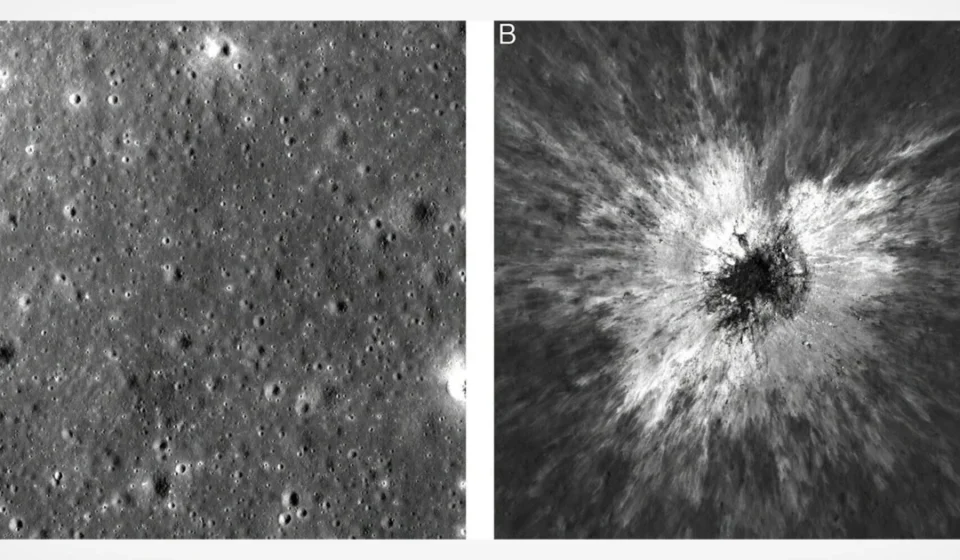
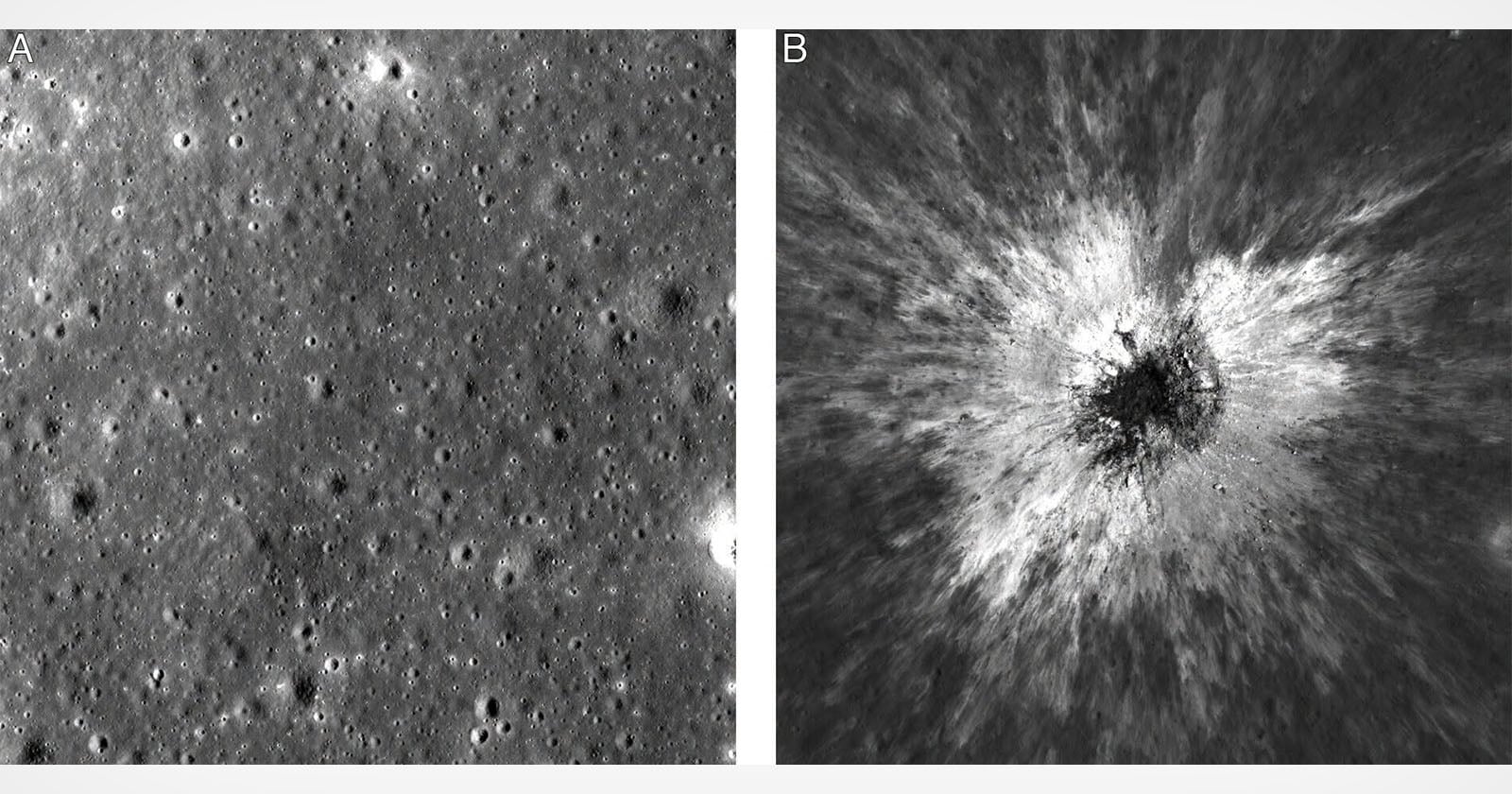
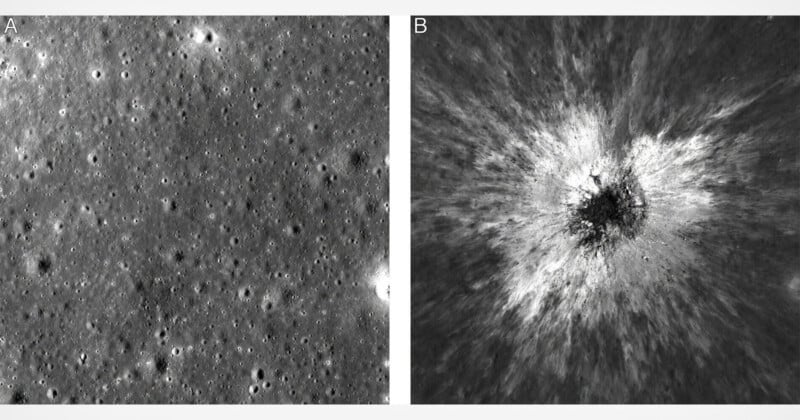
NASA scientists have now published comprehensive before-and-after imagery of a colossal, newly formed impact crater on the lunar surface. Named McGetchin crater in honor of the late Thomas McGetchin, a former director of Houston’s Lunar and Planetary Institute, the massive depression offers researchers an unprecedented, pristine laboratory to study the mechanics of planetary impacts.
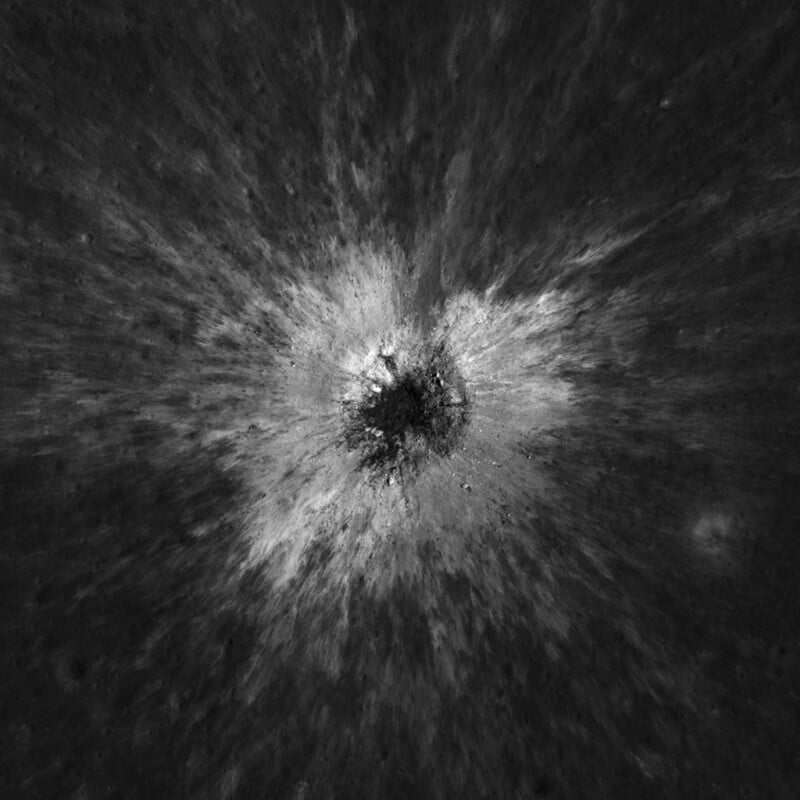
Measuring roughly 728 feet (222 meters) across and plunging to a depth of approximately 141 feet (43 meters), McGetchin is the largest newly formed impact crater ever identified by NASA’s veteran Lunar Reconnaissance Orbiter (LRO). According to planetary scientists, a cosmic impact of this sheer magnitude occurs on the Moon only about once every century, elevating this discovery from a routine planetary observation to a momentous, statistically rare event.
Main Facts
The cataclysmic impact that gave birth to McGetchin crater occurred on the near side of the Moon, the hemisphere perpetually facing Earth. However, the event went completely undetected in real time by ground-based observatories and space telescopes.
The colliding projectile—likely a high-velocity fragment of an asteroid or a dormant comet several stories tall—unleashed kinetic energy equivalent to a massive thermonuclear explosion upon contact. The resulting hole is roughly three times wider than the previous record-holder for a newly formed crater identified by the LRO during its decades-long mission.
Beyond the primary excavation site, the violence of the impact extended far across the lunar landscape. The blast violently hurled pulverized dust, regolith, and fractured bedrock—collectively known as ejecta—across a sprawling radius spanning more than 60 miles of the lunar surface. The resulting debris field created a distinct high-contrast pattern of bright radiating rays and a dark surface halo, drawing the sharp eye of automated data analysts and researchers back on Earth.
Chronology of a Discovery
The timeline of how McGetchin crater went from an anonymous flash of cosmic violence to one of the most significant lunar discoveries of the decade reads like a detective story spanning more than two years.
April 11 – May 22, 2024: The impact event takes place on the Moon’s near side. Because it produces no visible flash or seismic warning detected by terrestrial instruments, the event transpires in absolute silence.
May 2024: During a routine quality-assurance assessment of incoming telemetry and imagery, LRO researcher Robert Wagner notices an anomaly—an unusually bright surface patch surrounded by a stark, dark halo. The visual signature strongly implies that the local topography has been dramatically and recently disrupted. "I just stopped, dropped everything, and started looking into what that spot was," Wagner recalled in a NASA blog post.
August 2025: Amid the massive backlog of high-resolution photographic data collected by the LRO, researchers formally flag the anomaly as a potential new impact site. However, confirmation requires cross-referencing legacy orbital imagery.
Early 2026: Through meticulous before-and-after comparisons using high-resolution narrow-angle camera (NAC) data, scientists officially confirm the feature’s origin. The findings are compiled into two distinct studies submitted to the peer-reviewed journal Science Advances.
September 2026: NASA publicly unveils the discovery, releasing stunning side-by-side comparative imagery that details the transformation of the lunar terrain.
Supporting Data and Geological Context
Most lunar craters visible through backyard telescopes are ancient geological formations. Over hundreds of millions of years, these older craters have been heavily weathered, softened, and degraded by continuous micrometeoroid bombardments, solar wind exposure, and subsequent larger impacts.
McGetchin is fundamentally different. Because NASA possessed clear, high-resolution imagery of the exact geographic coordinates before the impact took place, planetary scientists now have an immaculate baseline dataset. They can directly compare the pre-impact and post-impact states to measure exact volumes of displaced rock, ejecta distribution angles, and substrate mechanics—variables that are ordinarily obscured by centuries of space weathering.
Furthermore, McGetchin occupies a uniquely strategic geological location. The crater straddles the volatile boundary line dividing the Moon’s darker, iron-rich basaltic volcanic plains (maria) from its brighter, aluminum-rich highland regions (terrae). This juxtaposition provides scientists with a rare multi-terrain impact scenario.
By analyzing how the kinetic energy of the impact shattered and mixed these two completely different geological formations, researchers can refine their computer models of planetary crust mechanics throughout the solar system.
Official Responses and Expert Analysis
The scientific community has greeted the publication of the McGetchin crater data with immense enthusiasm. Because a "once-in-a-century" impact has been captured with modern digital instrumentation, researchers are gaining insights that Apollo-era scientists could only theorize about.
"This event constitutes a statistically rare, effectively once-in-a-lifetime observation," the study’s authors wrote in their Science Advances paper, as reported by the Associated Press.
Tyler Powell, lead author of one of the companion studies, emphasized the profound limitations of studying planetary processes exclusively from orbit. Speaking to Space.com, Powell underscored the necessity of ground-truth data:
"Observations from the surface would be really valuable because they would allow us to correlate what we see and map from orbit with small-scale changes to surface texture, the distribution of ejected material, and other properties that can only be studied in detail from the surface. This would improve our understanding of many aspects of the impact cratering process."
The discovery also highlights the growing ecosystem of human-made and natural modifications occurring on the Moon. Just weeks prior to the widespread discussion of McGetchin, the LRO captured images of a different kind of lunar crater—one engineered entirely by human activity, resulting from the controlled impact of a spent SpaceX rocket booster stage.
Scientific Implications for Future Exploration
As space agencies worldwide turn their gaze back toward the Moon through crewed Artemis missions and uncrewed robotic prospecting, the discovery of McGetchin crater carries practical implications for human safety and lunar infrastructure.
Understanding the distribution velocity and thickness of secondary ejecta blankets—the sheets of debris thrown out hundreds of miles away from a primary impact site—is critical for planning lunar habitats, solar power arrays, and communication relays. A high-speed impact like the one that formed McGetchin, had it occurred closer to planned landing zones like the lunar south pole, could pose severe hazards to surface assets.
Moreover, the fresh exposure of unweathered sub-surface materials provides an enticing target for future rover missions. By sending an autonomous rover or human explorers directly to the rim of McGetchin crater, geologists could sample pristine material excavated from deep beneath the lunar crust without needing to drill down themselves.
Ultimately, McGetchin serves as a brilliant reminder of the dynamic, ever-changing nature of our solar system. While the Moon often feels like a dead, immutable monument frozen in time, the violent birth of this crater proves that the cosmic clock is still ticking—and modern science is finally equipped to watch the hands turn.