
Rebuilding the Social Muscle: Why Intentional Networking is the Lifeblood of Modern Events

Main Facts: The Atrophy of Connection and the Event Industry’s Core Driver
Networking muscles atrophy faster than most professionals care to admit. After spending three years working head-down at a fast-growing production company—consumed entirely by internal execution, deliverables, and rapid scaling—returning to the professional conference circuit can feel less like stepping back into a natural routine and more like undergoing physical therapy for the socially rusty.
For a long time, industry veterans and casual attendees alike have treated the networking segments of conferences as secondary perks—pleasant social hours tacked onto the margins of heavy, slide-deck-heavy educational tracks. However, comprehensive industry research proves this assumption fundamentally backward. According to the Freeman Trends Report, cited via the Professional Convention Management Association (PCMA), networking is not a fringe benefit; it is the primary engine of event attendance.
When polled on what matters most when attending a professional gathering:
- 81% of attendees prioritize interacting with industry experts.
- 68% emphasize meeting new, valuable contacts.
- 64% cite peer-to-peer exchange as their principal motivator.
People do not travel across time zones, check into sterile hotel rooms, and endure airport security just to read PowerPoint slides displayed on a massive screen. They travel to meet peers, pressure-test innovative ideas, forge commercial alliances, and build lasting relationships. Yet, event organizers frequently leave this critical mechanism to chance, expecting organic alchemy to occur simply by herding hundreds of strangers into a carpeted ballroom with a glass of house wine.

Chronology of a Comeback: From Social Rehab to Global Stages
A personal return to the circuit highlights just how jarring this re-entry can be, mapping out a clear roadmap for how professionals—and event organizers—can deliberately design better connection frameworks.
Stop 1: Minnesota Meetings & Events Day (The Rehabilitation Phase)
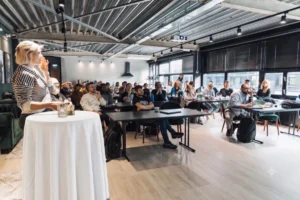
The comeback trail began at Minnesota Meetings & Events Day, where a session led by Nicole Coon titled "Five-Star Connections: Networking in Action" served as the initial physical therapy. The methodology was deceptively simple yet brilliantly effective: instead of leaning on awkward trust falls or scrambling for a forced "fun fact" about oneself, participants rotated from table to table armed with specific, industry-relevant prompts.
The discussion focused on mutual likes, shared dislikes, and tangible pain points currently plaguing the events industry. By the third or fourth table shuffle, the formal structure quietly dissolved. Groups abandoned the rotation clock and simply kept talking. The core lesson crystallized immediately: professionals do not need elaborate icebreakers. They need friction removed and relevance introduced. Give people a concrete reason to talk, and conversation starts itself.
Stop 2: Smart Meetings Innovation Experience, Boise (Getting in the Conga Line)
A few weeks later, the Smart Meetings Innovation Experience in Boise, Idaho, acted as the first true game back on the court. Reconnecting with familiar industry faces—such as Dalia El Gazar and Nick Borelli—delivered a sharp reminder of a cardinal rule often forgotten by anxious professionals: do not take yourself too seriously.

Before the opening keynote had even settled, the room’s energy pulled attendees into a literal conga line weaving through the venue, followed shortly by traditional Basque street dancing. While the resulting photographs might induce mild cringe, participating in shared, slightly ridiculous physical experiences breaks down the psychological barriers that keep professionals siloed behind name badges and corporate armor. Relationships cannot be built from a distance; at some point, you have to get in the conga line.
Stop 3: IMEX Frankfurt (Operating at Peak Capacity)
By the time the calendar rolled around to IMEX Frankfurt, networking muscles were fully rehabilitated. Thrust unexpectedly into heavy booth service, an initial schedule of six appointments rapidly expanded to 22, turning what could have been an exhausting marathon into a masterclass in high-volume, high-value connection. The takeaway for anyone feeling rusty or hesitant is blunt: go anyway, stay at the table when the conversation gets good, and refuse to let digital distractions pull you away from the human beings right in front of you.
Supporting Data: The Hidden Business Cost of Passive Attendance
While active participants leave conferences with transformative partnerships and overflowing notebooks, a quiet counter-trend unfolds along the sidelines of every major convention. At the edge of the conga line or near the back of the workshop tables, a handful of attendees invariably stand with phones out, heads down, actively opting out of the physical room.
The contrast in outcomes is stark:

- Active Participants: Those who dive into structured table prompts and shared physical activities leave with deep professional relationships, actionable insights, and enduring partnerships.
- Passive Observers: Those who hide behind glowing mobile screens leave with slightly fewer unread emails, a collection of unread PDFs, and virtually no human capital to show for their financial and time investment.
This dynamic introduces a severe, often-overlooked business cost. When event attendees leave a conference without forging genuine connections, they rarely return for the following year’s installment. Consequently, event networking ceases to be a soft metric or a nice-to-have hospitality feature—it directly impacts enterprise retention.
Modern event engagement is not a passive spectator sport. It demands effort, a tolerance for mild social discomfort, and a willingness to be seen. Professionals hiding behind their mobile devices are paying a steep opportunity cost, trading lifetime industry value for temporary digital comfort.
Official Perspectives and Industry Implications
Event organizers and tech innovators are increasingly recognizing that successful networking cannot rely on organic luck. Industry bodies and technology platforms are aligning around the necessity of engineered serendipity.
The EventMobi Perspective: Translating Intent into Engagement
Platforms like EventMobi are bridging the gap between digital convenience and physical presence by embedding structured and organic networking features directly into event apps. Rather than hoping two complementary professionals bump into each other near the coffee station, modern event technology uses rich attendee profiles, intelligent matchmaking algorithms, and pre-scheduled 1:1 meeting capabilities to replicate the friction-reducing success of table prompts at scale.

"You cannot fly every attendee to Boise, but you can build the same permission to connect directly into your event app," industry strategists note. By providing structured appointment booking and moderated group discussions before, during, and after the live event, organizers lower the psychological barrier to entry. This digital infrastructure acts as the modern equivalent of Nicole Coon’s table prompts—it hands attendees an easy, low-risk opening line.
Implications for Event Organizers
The broader implications for the events industry are clear:
- Design on Purpose: Organizers must deliberately architect networking moments into the core schedule, treating them with the same structural importance as keynote addresses.
- Assign Ownership: Every major conference must designate a clear owner responsible for attendee connection metrics and engagement strategies.
- Open Early: Digital networking tools and community forums should open weeks prior to the event, allowing participants to break the ice before they even set foot in the venue.
- Measure Connection: Success must be tracked not merely by headcounts or badge scans, but by the volume and quality of ongoing post-event collaborations.
Conclusion: The Bottom Line for Reluctant Networkers
Networking muscles atrophy with neglect, but they can always be rebuilt. Whether returning from a multi-year hiatus at a corporate production house or simply battling chronic conference anxiety, the path forward is uniform:
- Remove Friction: Give people a specific reason to talk, replacing awkward small talk with shared industry challenges and structured prompts.
- Prioritize Quality Over Quantity: A handful of deep, sustained professional relationships will always outweigh a pocketful of uncontacted business cards.
- Stay Present: Put the phone away, step out of your comfort zone, and commit to the room.
Design event networking with intent, and loyalty, retention, and engagement will naturally follow. Leave connection to chance, and you leave the true value of your event on the table.