Comments Off on Meetup Unveils "Meetup Starter": A New Free Tier Designed to Lower Barriers for Community Organizers
By the Tech & Community Reporting Desk Published October 11, 2024
Main Facts
In an effort to cultivate a more diverse, accessible, and vibrant digital ecosystem, community-building platform Meetup has officially announced the launch of Meetup Starter. This new, free-of-charge subscription tier is meticulously engineered to provide first-time and prospective community leaders with a risk-free, lightweight environment to test the waters of community management.
For years, the financial commitment associated with organizing events on digital platforms has acted as a deterrent for individuals passionate about niche hobbies, local advocacy, or emerging professional networks. Meetup Starter directly addresses this friction point. By offering a curated sampling of the platform’s core event-management tools at zero cost, the company aims to democratize community building, allowing anyone with an idea to experiment with event organization before scaling up to paid plans.
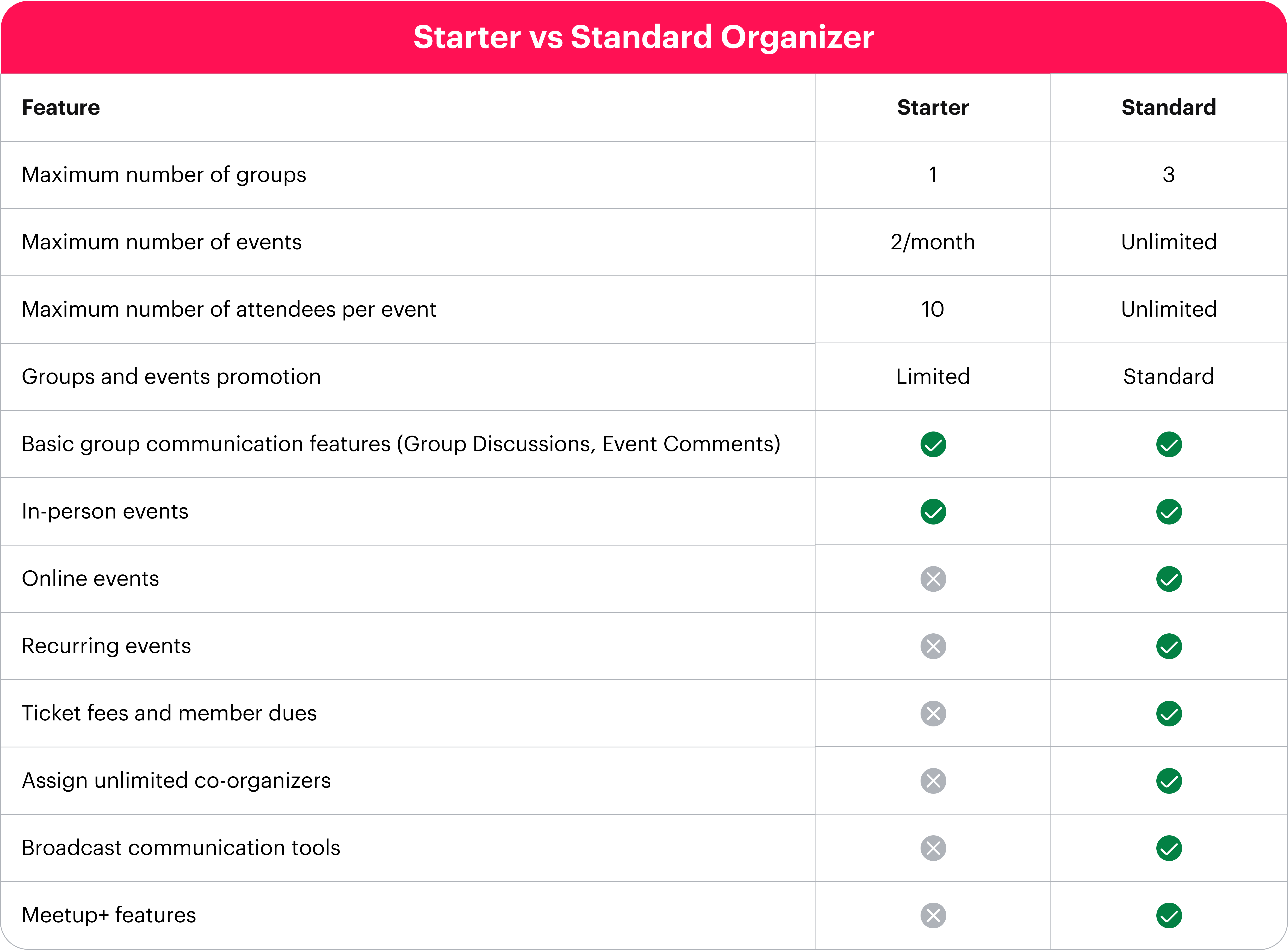
The launch of Meetup Starter is paired with a clear restructuring of the platform’s broader tier system, distinguishing it from the established Meetup Standard and enterprise-grade Meetup Pro plans. While the Starter tier focuses strictly on foundational elements to ease novices into the space, the Standard plan remains the cornerstone for dedicated organizers, offering the muscle required to manage multiple groups and host unlimited monthly gatherings.
Chronology: The Evolution of Meetup’s Pricing and Accessibility
To understand the strategic significance of Meetup Starter, it is necessary to examine how the platform’s organizational model has evolved over the past decade.
1. The Early Years: Peer-to-Peer Subscriptions
Since its inception, Meetup carved out a unique space in the digital landscape by connecting people around shared offline interests. For many years, the platform operated primarily on an organizer-pays model, where the individual spearheading a group bore the subscription cost, while members generally participated for free. This model helped sustain high-intent groups but occasionally limited casual experimentation.
2. The Shift Toward Tiered Flexibility
As the virtual and hybrid event landscapes shifted dramatically—accelerated by global changes in how people gather post-2020—Meetup refined its pricing structure. The introduction of standardized tiers allowed organizers to choose packages that matched the scale of their ambitions, dividing capabilities between casual hobbyists and commercial community builders. However, industry analysts noted a persistent gap: prospective organizers who wanted to test a concept without immediate financial outlay lacked a viable sandbox environment.
3. October 2024: Introducing Meetup Starter
Filling this strategic gap, Meetup formally rolled out the Starter tier in October 2024. Positioned as an entry-level runway, the feature set is intentionally streamlined. It strips away complex multi-group management requirements and focuses squarely on what first-time organizers need most: a simple, intuitive interface to launch their very first gathering, gauge audience interest, and build initial momentum without worrying about subscription overhead.
Supporting Data & Comparative Analysis: Starter vs. Standard vs. Pro
Choosing the right organizational tier depends heavily on the scope, scale, and monetization goals of the community leader. To assist prospective organizers in navigating these choices, Meetup has outlined clear boundaries between its offerings.
Meetup Starter: The Sandbox for Novices
Cost: Free.
Target Audience: First-time organizers, casual hobbyists, and individuals testing a community concept.
Core Focus: Essential event management and introductory community tools.
Key Limitation: Designed for lightweight, exploratory use rather than large-scale, multi-community operations.
Meetup Standard: The Primary Engine for Dedicated Organizers
For those ready to move past the experimental phase, Meetup Standard remains the platform’s flagship offering. It delivers the robust functionality required to sustain active, growing communities.
Capacity: Allows organizers to manage up to three different groups concurrently.
Event Frequency: Offers the ability to host an unlimited number of events every month.
Tooling: Includes advanced management features, member communication tools, and enhanced customization options.
Suitability: Best for leaders who are running established clubs, professional chapters, or regular recurring meetups and require a complete, unhindered toolset.
Meetup Pro: Enterprise-Level Capabilities
For organizations, brands, and large-scale networks managing dozens or hundreds of chapters worldwide, Meetup Pro provides absolute scalability. Pro packages unlock enterprise analytics, centralized billing, advanced branding controls, and multi-admin permissions, making it the definitive choice for corporate community relations and global associations.
Official Responses and Strategic Vision
Leadership at Meetup has framed the introduction of the Starter plan not merely as a product update, but as a philosophical shift in how the company approaches community growth.
In official communications released alongside the launch, the Meetup Team emphasized the democratization of event organization:
"By providing new organizers with a simplified option, we hope to make Meetup’s ecosystem richer with an ever more diverse range of organizers, groups, and events. We look forward to welcoming our new Starter organizers to the Meetup community!"
Industry observers have praised this move, noting that lowering the barrier to entry is essential for digital platforms facing competition from decentralized social networks and hyper-local messaging apps. By welcoming risk-averse or budget-conscious organizers through a free front door, Meetup creates a natural pipeline. Successful Starter organizers who outgrow the free tier’s limitations—such as the multi-group cap—are statistically likely to upgrade to the Standard plan as their communities flourish.
Broader Implications for the Event Management Ecosystem
The introduction of Meetup Starter carries significant implications for the broader landscape of community management and local engagement technologies.
1. Fostering Grassroots and Niche Communities
When financial barriers are removed, innovation flourishes at the margins. High-cost software often weeds out hyper-niche, passion-driven projects that may not have immediate commercial viability. With a free tier available, individuals can launch groups centered around obscure historical interests, micro-programming languages, local neighborhood mutual aid, or avant-garde art forms without fiscal anxiety. This diversification ultimately makes the entire Meetup platform a richer, more eclectic destination for users seeking authentic human connection.
2. Mitigating Organizer Burnout
Burnout is one of the leading causes of community decay. New organizers often bite off more than they can chew, investing in expensive monthly subscriptions only to find that their community fails to gain traction within the first thirty days. This financial and emotional loss frequently leads to permanent disengagement. By absorbing the financial risk during the crucial validation phase, Meetup Starter acts as a safety valve, helping organizers sustainably test engagement before committing resources.
3. Competitive Positioning in the Hybrid Era
As virtual, hybrid, and in-person event tools continue to battle for market share, user acquisition strategies are evolving. Platforms that rely strictly on upfront paywalls risk losing the next generation of community leaders to free alternatives like social media groups or messaging apps. By blending a freemium acquisition model with a clear, value-driven upgrade path to Standard and Pro tiers, Meetup has secured a competitive advantage in capturing early-stage community intent.
Conclusion
Meetup Starter represents a thoughtful, strategic evolution for a platform that has spent over two decades defining how people connect in the physical and digital worlds. By eliminating financial friction for newcomers, Meetup has opened its doors to a wider array of voices, passions, and local initiatives.
Whether the goal is to build a neighborhood book club, launch a localized tech study group, or test out a brand-new social concept, the new free tier provides an accessible runway. As these new organizers take their first steps into community leadership, the broader Meetup ecosystem stands to grow richer, more diverse, and more deeply connected than ever before.