A Century of Energy: CITGO’s Lemont Refinery Marks 100 Years of Industrial Significance

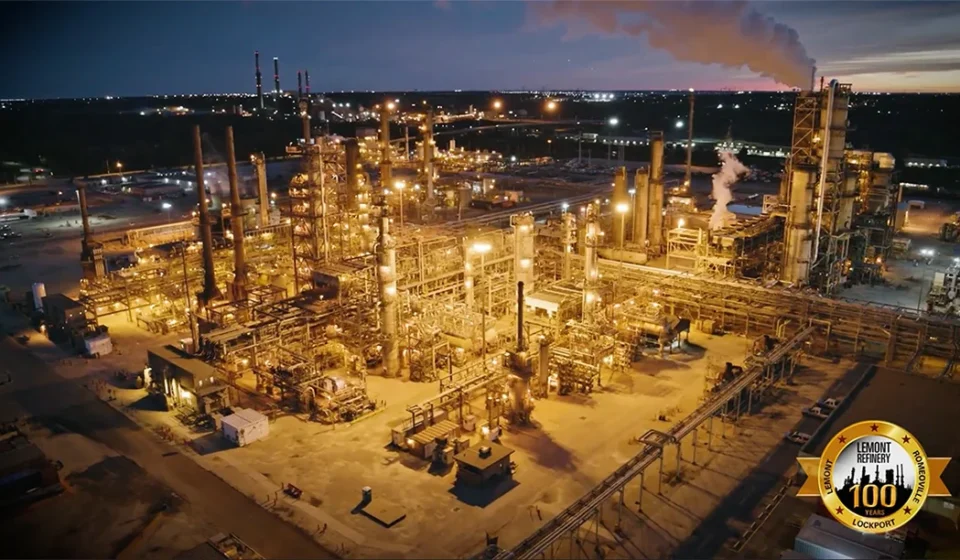
In the industrial landscape of the American Midwest, few institutions possess the endurance and economic gravity of the CITGO Lemont Refinery. Spanning 1,100 acres across the communities of Lemont, Romeoville, and Lockport, Illinois, the facility is this year celebrating its centennial—a rare milestone that marks a century of evolution, innovation, and unwavering contribution to the regional energy supply chain.
From its humble beginnings in the early 20th century to its status as a sophisticated, high-capacity refining powerhouse, the Lemont Refinery has remained a cornerstone of the Illinois economy. Today, it stands as a testament to the intersection of human ingenuity, logistical necessity, and the relentless march of industrial progress.
A Century of Energy: The Main Facts
The CITGO Lemont Refinery is more than just a cluster of pipes and processing units; it is a critical artery for the nation’s energy infrastructure. The facility specializes in the complex task of converting crude oil into the essential fuels that power modern life, including gasoline, diesel, propane, and high-performance jet fuel.
The sheer scale of its current operations is a far cry from its inception. While the refinery began with a modest crude capacity of 25,000 barrels per day (bpd), it has scaled its operations to over 177,000 bpd. This growth trajectory mirrors the expansion of American industry itself, transitioning from a localized operation to a vital component of the U.S. energy grid.
Beyond its mechanical output, the refinery is a pillar of regional stability. It provides direct employment to over 1,000 individuals—a mix of full-time staff and specialized contractors—whose combined efforts ensure the facility operates with maximum efficiency and safety. Economically, the impact is profound: the refinery injects approximately $300 million annually into the local economy, supporting small businesses, municipal services, and the broader supply chain throughout Will and Cook counties.
The Chronology of Growth: 100 Years of Evolution
The history of the Lemont site is a reflection of the 20th and 21st-century American experience. To understand the current refinery, one must look back at the decades of incremental innovation that allowed it to survive the boom-and-bust cycles of the energy sector.
The Formative Decades (1920s–1950s)
In its infancy, the refinery was built to serve a burgeoning automotive market and a growing regional need for heating oils. During these early years, the facility established the foundational culture of the site—one defined by technical precision. As the country transitioned through the Great Depression and the industrial mobilization of World War II, the refinery adapted, proving its resilience in the face of national and global volatility.
The Era of Expansion (1960s–1990s)
The latter half of the 20th century saw the refinery undergo significant technological upgrades. It was during this period that the facility integrated more complex refining processes, moving away from simple distillation toward sophisticated cracking and desulfurization. These technological leaps allowed the refinery to meet tightening environmental regulations while simultaneously increasing its output to meet the insatiable fuel demand of a suburbanizing America.
The Modern Benchmark (2000s–Present)
In the 21st century, the focus shifted toward efficiency, safety, and community integration. The refinery has spent the last two decades refining its internal processes, implementing strict safety protocols, and deepening its ties to the local community. The current centennial celebration is not viewed as a singular event, but as a months-long acknowledgment of the thousands of workers who have kept the facility operational through changing energy policies and shifting economic landscapes.
Supporting Data: Economic and Operational Impact
The longevity of the Lemont Refinery is grounded in data. The facility’s impact can be categorized into three primary pillars:
- Economic Stimulus: The $300 million annual contribution is a multifaceted figure. It accounts for direct payroll, tax contributions that support local schools and infrastructure, and the massive procurement of goods and services from regional vendors.
- Workforce Dedication: The 1,000-strong workforce is the heartbeat of the plant. However, the influence of these employees extends beyond the refinery gates. Through structured volunteer programs, employees contribute thousands of hours annually to local charitable organizations, environmental conservation efforts, and educational initiatives.
- Operational Flexibility: With a capacity of 177,000 bpd, the refinery is designed for high-utilization, low-downtime operation. The ability to pivot between different product outputs—switching focus between diesel for logistics and gasoline for transit—allows the refinery to remain profitable regardless of fluctuations in the crude oil market.
Official Perspectives: The Voices of Leadership
The centennial has prompted reflection from the highest levels of CITGO leadership. Carlos Jordá, President and CEO of CITGO Petroleum Corporation, highlighted the human element of the milestone.
"Reaching 100 years is a special accomplishment for any industrial operation," Jordá stated. "As we celebrate this milestone, we recognize the generations of employees whose dedication, skill, and commitment have helped make the Lemont Refinery an enduring part of CITGO’s success. For a century, the refinery has played an important role in serving customers, supporting local economies, and strengthening our position as one of America’s leading refiners."
This sentiment was echoed by Jim Cristman, Vice President and General Manager of the Lemont Refinery. For Cristman, the history of the refinery is essentially a history of the community. "For a century, people have come to work at this refinery each day with a shared sense of purpose and pride," Cristman noted. "This anniversary belongs to those whose contributions have helped sustain and strengthen the refinery across generations. Their commitment is reflected not only in the facility itself, but in the relationships and shared history that have developed around it over the past 100 years."
Broader Implications: Strategic Investment and Future Readiness
While Lemont celebrates its past, CITGO is simultaneously signaling its commitment to the future through aggressive capital investment across its entire portfolio. A prime example is the recent advancement of the Lake Charles Refinery Depentanizer Project.
This $310 million investment, while geographically separate from Lemont, illustrates the company’s broader "disciplined investment" strategy. The project aims to improve naphtha upgrading capabilities, effectively converting lower-value streams into high-value gasoline blend components. By enhancing the complexity of its refineries, CITGO is positioning itself to remain competitive in an era where energy demand is high, but the requirements for refined fuel quality are increasingly stringent.
The Path Forward
The Depentanizer Project, expected to be fully operational by 2029, represents the same philosophy that has kept the Lemont Refinery alive for 100 years: the necessity of constant, strategic evolution. As Edgar Rincon, CITGO Executive Vice President and Chief Operating Officer, noted during the project announcement: "The Depentanizer Project reflects CITGO’s commitment to disciplined investments that enhance the strength and resilience of our refining system. It also reinforces the strategic importance of our refineries to our company, our customers, and the broader U.S. energy market."
Conclusion: A Legacy in Motion
The 100th anniversary of the Lemont Refinery is more than a celebration of age; it is an affirmation of relevance. In an industry defined by its ability to power the world, survival is not guaranteed—it must be earned through operational excellence, community stewardship, and the foresight to invest in tomorrow’s technology.
As the Lemont Refinery enters its second century, it does so with a robust workforce, a deeply ingrained culture of service, and a clear mandate to continue fueling the American economy. The celebration of the past year serves as both a retrospective of what has been achieved and a prologue to the next chapter of energy production in Illinois. Whether through its $300 million economic footprint or the daily dedication of its 1,000 employees, the Lemont Refinery remains a quintessential example of American industrial resilience.