Comments Off on The Great Men’s Tote Search: Why Finding the Ultimate Everyday Bag Became a Modern Quest
Main Facts: The Anatomy of a Modern Dilemma
For the modern urban professional, the daily commute is a logistical puzzle. This is especially true for those navigating cities like New York without the luxury of a personal vehicle, where every item carried must survive unpredictable weather, crowded subways, and the sheer unpredictability of daily life. At the center of this urban survival strategy sits an increasingly essential piece of gear: the everyday carry-all.
Yet, for one commuter and style writer, finding the ideal men’s tote bag proved to be a multi-year odyssey. The criteria seemed straightforward enough:
Weather resistance: The material needed to withstand sudden downpours without ruining its integrity, all while developing a rich, character-building patina over time.
Ergonomics: The straps had to be long enough to comfortably clear a winter coat and wide enough to evenly distribute weight across the shoulders.
Security: Most importantly, the bag required a dependable closure system to prevent catastrophic spills—a critical feature for someone self-described as a "clumsy, inelegant oaf" prone to dropping belongings during high-stress moments like airplane deplaning.
Despite the booming luxury accessories market, finding a bag that checked every single box turned out to be an extraordinary challenge. The journey highlights a broader cultural shift in men’s fashion, where traditional boundaries regarding accessories have dissolved, making the "boy bag" a staple of modern menswear.
Chronology: A Multi-Year Quest for the Holy Grail
2021: The Loss of a Trusty Companion
The hunt began in earnest in 2021 as pandemic-era restrictions lifted and the return-to-office movement kicked off. For years prior, the writer’s ultimate companion had been a wax-dipped canvas holdall crafted by a now-defunct American accessories brand. Having traveled globally and survived stints at three different men’s magazines, the bag was a battle-tested favorite.
However, disaster struck during the very first week of hybrid work when one of the handles snapped. Crestfallen, the search for a replacement officially commenced.
The Trial and Error of Designer Options
Entering the market with high hopes, the writer turned to trusted friends and luxury retail shelves, running into a series of Goldilocks-style dilemmas:
Hermès Garden Party & Louis Vuitton Neverfull: Recommended by peers and recognized as undisputed classics, both were ultimately rejected due to their open-top or single-snap constructions, posing too high a risk for a spill-prone owner.
Lotuff Leather Working Tote: Praised for its smooth zipper, it was dismissed because its roughout-leather interior risked shedding tiny cowhide crumbs all over important notebooks.
Tom Ford North South Tote: While crafted from undeniably delicious leather, its straps were so excessively long that the bag practically scraped the ground when carried by hand.
Canali Hammered Calfskin Tote: Suffering from the exact opposite flaw, its straps were too short to comfortably reach the shoulder.
Prada Nappa-Leather Model: Featuring two sets of straps (short for hands, long for arms), it felt overly fussy and required too much switching back and forth during a fast-paced commute.
Tod’s Large Shopping Bag: This style came tantalizingly close with its central zippered compartment, but its belted closures for the two open side pockets left too much room for items to slip out.
The Breakthrough at Métier
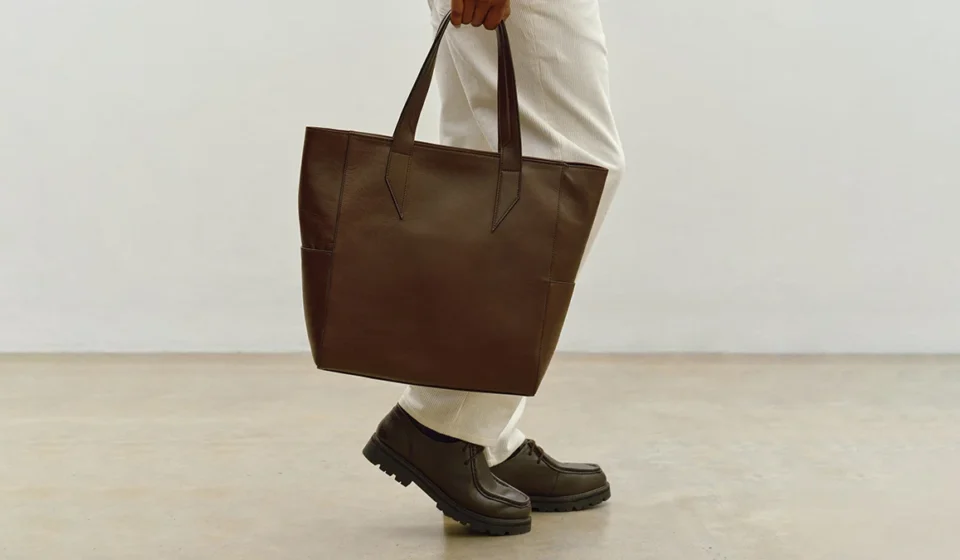
Finally, the search concluded at Métier, the British leather-goods maker that opened a flagship New York City boutique earlier this year. Choosing the Passerby North-South ($2,950), the writer found a bag that struck the elusive balance of form, function, and durability.
Supporting Data: The Rise of the "Big Boy Bag"
The difficulty of the writer’s search contrasts sharply with the massive expansion of the men’s luxury handbag market. In recent years, fashion has undergone a profound "manbag renaissance." Industry analysts attribute this surge to several cultural and practical factors:
The Demands of Modern Life: Men are carrying more technology, documents, and daily essentials than ever before, rendering standard pockets completely inadequate.
Evolving Gender Norms: The strict boundaries separating men’s and women’s fashion have blurred significantly.
High-Profile Endorsements: Style icons and elite athletes alike have normalized carrying statement bags traditionally marketed to women. High-profile figures frequently spotted with luxury totes and shoulder bags include:
Basketball star LeBron James
Soccer phenomenon Erling Haaland
Hip-hop artist A$AP Rocky (known for his extensive Chanel flap bag collection)
Actor Jacob Elordi (championing the Bottega Veneta Maxi)
Cultural trendsetters like Pharrell Williams, Marc Jacobs, and NFL quarterback Joe Burrow carrying Hermès Birkins.
This widespread cultural adoption prompted InStyle to declare earlier this year that "the big, bitchy boy bag is here to stay."
Official Responses and Brand Warranties: The Métier Advantage
What ultimately solidified the writer’s loyalty to the Métier Passerby North-South wasn’t just its resilient buffalo leather (aptly named "Elvis"), its dedicated laptop and AirPods compartments, or its satisfyingly smooth zipper. It was the brand’s commitment to long-term customer care.
Tucked inside the packaging was a care card bearing a remarkable promise:
"We also offer a yearly checkup service to give your Métier special attention to promote its longevity."
For a luxury leather-goods brand that has only been operational for nine years, making such a confident, service-oriented proclamation signals a rare dedication to craftsmanship and sustainability. In an era of fast fashion and disposable consumer goods, a brand willing to service its products annually offers immense peace of mind to buyers making a multi-thousand-dollar investment.
Implications: What Your Carry-All Says About You
The evolution of the men’s tote bag from a niche utilitarian item to a high-fashion necessity reflects deeper changes in professional culture and personal identity.
1. The Death of the Rigid Professional Aesthetic
The traditional briefcase—once the mandatory uniform of the corporate climb—has largely given way to softer, more versatile silhouettes. The modern professional’s bag must transition seamlessly from a morning subway commute to a boardroom presentation, and onward to an evening dinner engagement.
2. Investment in Longevity
With luxury totes ranging from $1,700 to over $5,000, consumers are no longer buying bags as seasonal accessories; they are treating them as long-term wardrobe anchors. Brands that offer repair services, durable linings (such as Métier’s fabric interior designed to survive accidental spills), and weather-resistant hides are winning the loyalty of discerning buyers who demand both aesthetic appeal and pragmatic resilience.
Ultimately, the search for the perfect bag is about more than just hauling gear—it is about finding a reliable partner for the daily urban routine. And for one New Yorker, the quest has finally reached its journey’s end.
Robb Reviews: Four Runners-Up in Elite Totes
For those whose standards match (or exceed) conventional market offerings, here are four stellar men’s tote bags that came remarkably close to perfection:
Tom Ford Natural Leather North South Tote – $5,090: Luxurious, premium natural leather craftsmanship with an unmistakable high-fashion presence.
Prada Nappa Leather Tote Bag – $5,100: Exceptionally soft nappa leather offering a sleek, minimalist silhouette for the design-conscious commuter.
Tod’s Large Shopping Bag in Leather – $3,575: A sophisticated Italian-crafted structure featuring intelligent compartment layouts.
Canali Hammered Calfskin Tote Bag – $1,725: A refined option utilizing textured hammered calfskin for understated elegance and durability.