Lights, Camera, Action: Inside the Cinematic Resurrection of ‘Stuntman: Hollywood’

For those who cut their gaming teeth in the early 2000s, the name Stuntman carries a distinct, visceral memory: the roar of an engine, the frantic commands of a director over a headset, and the inevitable, fiery crash that forced a retry. Originally developed by Reflections and published by Infogrames in 2002, the title was a pioneer in the "consequence-free" sandbox genre, offering players the chance to live out their most audacious Hollywood action fantasies. After a sequel, Stuntman: Ignition (2007), the franchise largely faded into the annals of gaming history.
However, in a move that signals a renewed interest in the arcade-style driving genre, Saber Interactive has officially announced the resurrection of the cult classic. Slated for a 2027 release on PlayStation 5, Xbox Series X/S, and PC, Stuntman: Hollywood aims to be more than just a nostalgia trip. By marrying the precision-driving mechanics of the original with a roster of legendary cinematic intellectual properties, Saber Interactive is betting that the allure of "movie magic" remains a powerful hook for modern audiences.
A Legacy Reclaimed: The Origins of the Reboot
The path to Stuntman: Hollywood is as complex as a feature film production. The project’s inception dates back to a tumultuous period for Saber Interactive, during its tenure under the massive, over-extended Embracer Group. The developer was eventually sold in 2024 for $247 million to Beacon Interactive, a company owned by Saber co-founder Matthew Karch.
During an interview at Gamescom, Saber Interactive’s Chief Creative Officer, Tim Willits, explained how the stars aligned for this particular reboot. "Stuntman was an IP that Embracer owned," Willits noted. "When we were part of that family, we looked at our internal capabilities. We had a talented team available with extensive experience in the driving genre. Simultaneously, we were nurturing a robust relationship with Universal Pictures through our work on Jurassic Park and Turok. Universal saw the potential, and they were enthusiastic about the collaboration."
This strategic alignment with major film studios appears to be the cornerstone of Saber’s current business model. In an industry where licensing is often cumbersome and fraught with legal hurdles, Saber has managed to curate a "Hollywood-first" approach that sets it apart from competitors.
The Cinematic Roster: Beyond Just Branding
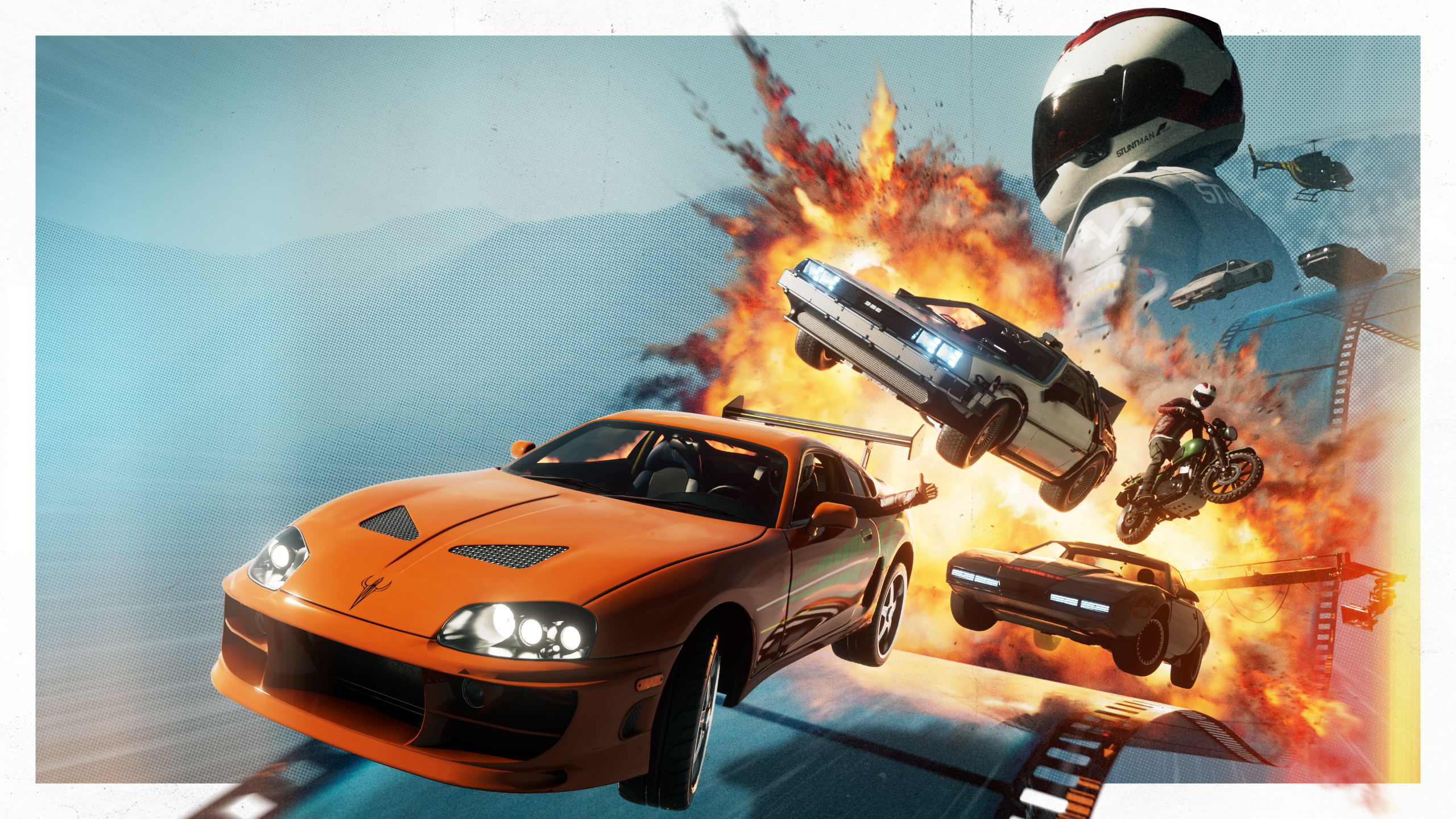
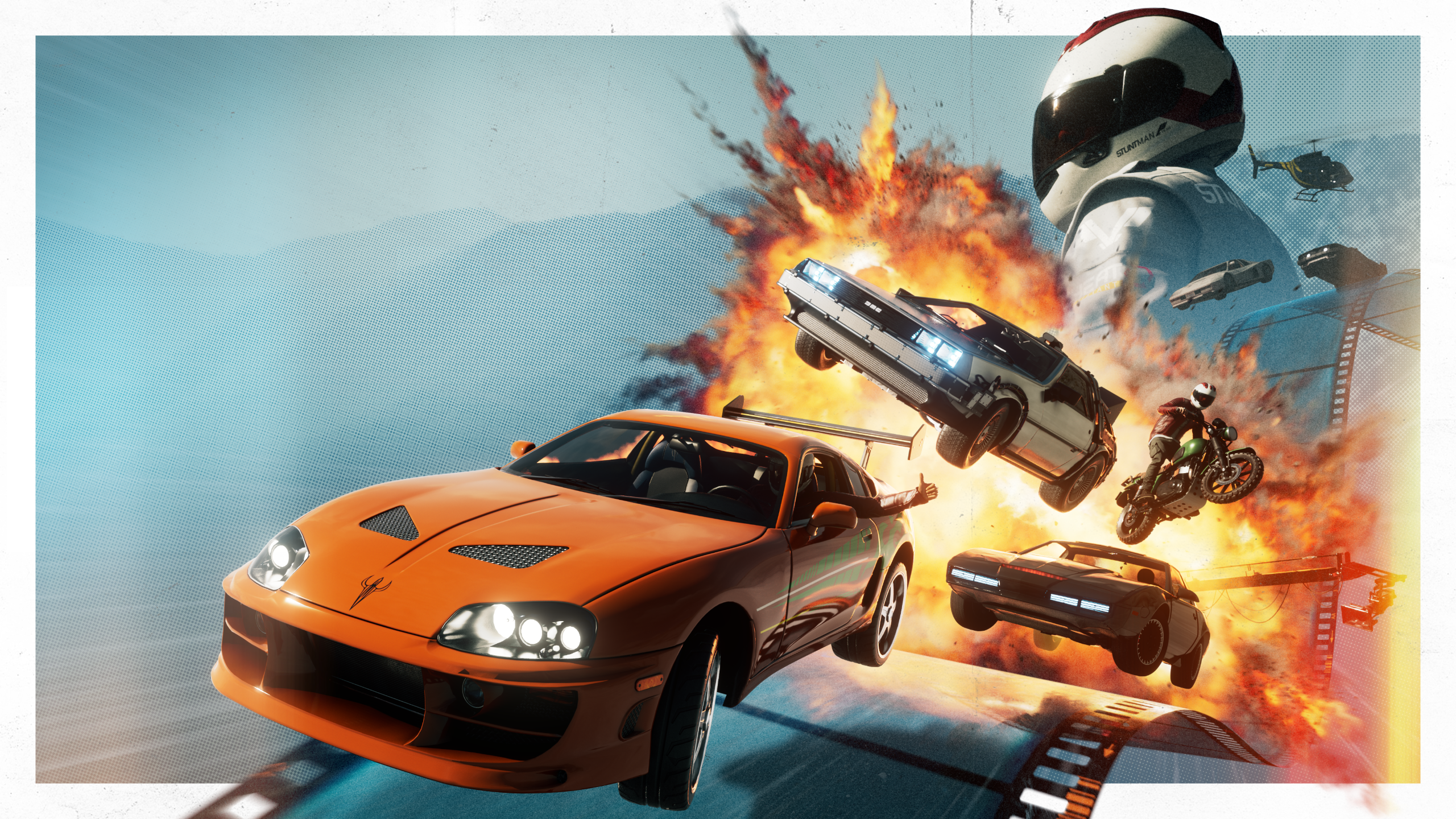
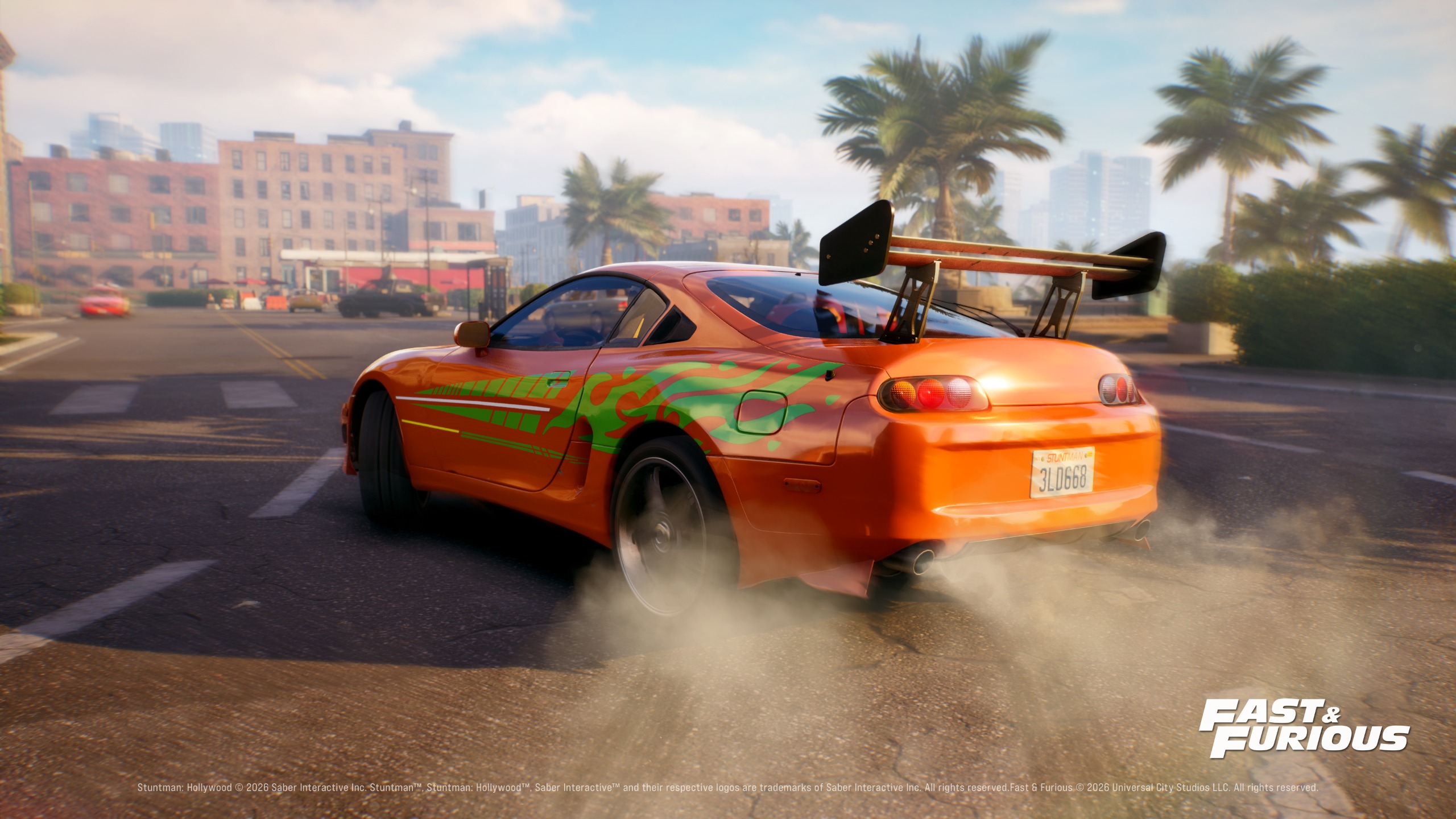
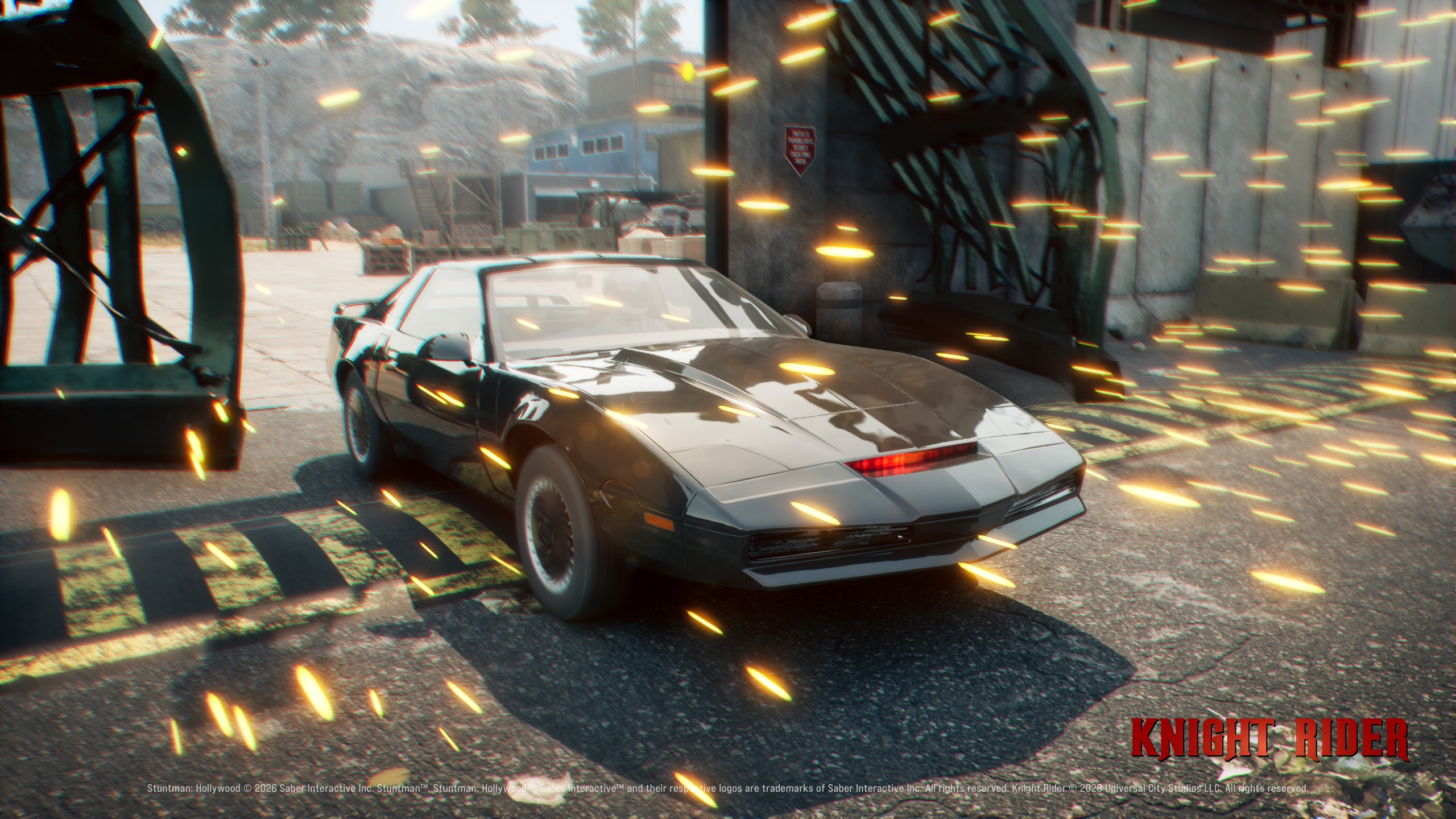
What elevates Stuntman: Hollywood from a standard racing game to a potential blockbuster is its access to some of the most iconic film franchises in history. The game’s promotional material confirms an impressive lineup, including The Fast and the Furious, Knight Rider, Miami Vice, Back to the Future, Death Race, and Jurassic World.
This is not merely a coat of paint; it is an integrated design choice. Willits emphasizes that the film studios have been active partners in the process. "The movie people were really excited," he says. "They provided ideas and helped us with assets. It’s been a dream to work with Universal on this."
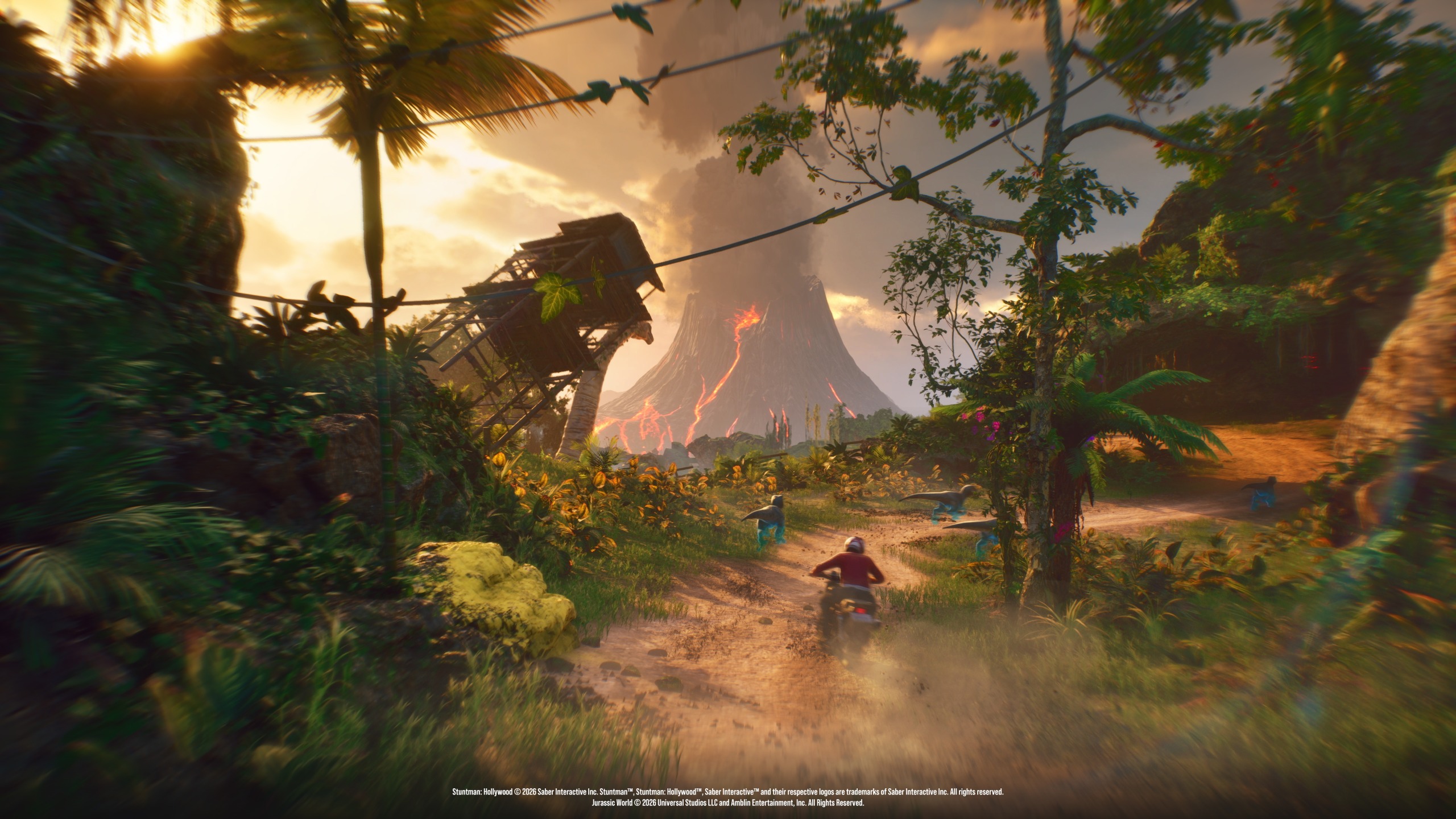
This level of cooperation allows the game to capture the specific "feel" of these worlds. The Miami Vice sequences, for instance, lean into the 1980s neon-soaked aesthetic, while the Jurassic World sections leverage the chaotic, high-stakes nature of off-road motorbiking. The inclusion of the DeLorean from Back to the Future and the heavily fortified muscle cars of Death Race suggests a deep respect for the source material, moving beyond superficial marketing to create an authentic, albeit hyper-stylized, stunt experience.
Hands-On: The Anatomy of a Stunt
At the heart of the Stuntman experience is a simple yet demanding gameplay loop that Willits describes as "bite-sized awesomeness." During a hands-on session at Gamescom, the game’s core loop was evident: players are dropped into a high-octane set, tasked with executing a series of precise maneuvers under the watchful eye of a virtual director.
The demo featured five distinct stunt runs, each lasting between five and ten minutes. These were not races in the traditional sense; rather, they were choreographed sequences requiring strict adherence to a "director’s cut" path. A line on the road indicated the ideal route, while proximity markers challenged the player to graze obstacles—such as piles of cardboard boxes or other vehicles—without causing a catastrophic failure.
The design is remarkably forgiving, allowing for a few "howlers" per run before the director forces a retake. However, the true challenge—and the replay value—comes from chasing the perfect rating. Whether it is drifting at a precise moment, maintaining enough speed to clear a massive jump, or weaving through explosions, the gameplay is designed to build to a crescendo. The final section of every run is a high-speed, precision-intensive sprint that culminates in a bravura stunt, such as launching a Ferrari Testarossa onto the deck of a moving super-yacht.
The Strategy of Synergy: Saber’s Hollywood Pipeline
Saber Interactive’s ability to secure these licenses is a testament to its evolving strategy. While many publishers view movie IPs as risky or fleeting, Saber has cultivated a "schmooze-and-build" culture that is yielding significant results.
This approach is not limited to the Stuntman revival. The company is currently in the early stages of developing a John Wick game in partnership with Lionsgate. Willits describes the collaboration as "amazing," specifically highlighting the involvement of director Chad Stahelski and Keanu Reeves. "Chad is a massive video game fan," Willits explains. "If you watch a John Wick film, the choreography, the pacing, the visual language—it’s inherently cinematic in a way that translates perfectly to the interactive medium."
By working directly with creators who understand the intersection of film and gaming, Saber is positioning itself as the premier destination for high-profile, licensed action titles. This pipeline reduces the "uncanny valley" of licensed games, where the title feels like a cash-in, and instead creates a sense of cohesive, developer-driven design.
Technical Fidelity and Visual Direction
Visually, Stuntman: Hollywood leans into modern graphical standards without falling into the trap of hyper-realism. The game uses a slightly stylized, "blockbuster" aesthetic that reflects the heightened reality of a film set. The lighting, textures, and physics are high-fidelity, yet they maintain a distinct, arcade-leaning sensibility.
This artistic direction allows the game to transition seamlessly between the varied atmospheres of its featured properties. The pastel-drenched streets of the Miami Vice levels feel distinct from the rugged, mud-caked jungle environments of Jurassic World. The handling physics are tailored to each vehicle; while the demo did not allow for a test of the DeLorean (a vehicle famously difficult to handle), the Ferraris and drift-tuned Toyotas provided a satisfying sense of weight and power that feels appropriate for an action game.
The Implications: Is Nostalgia Enough?
As we look toward the 2027 release, the question remains: is Stuntman: Hollywood more than just a trip down memory lane?
The original Stuntman was a product of its time—a punishingly difficult, niche title that found a loyal audience through its sheer audacity. Stuntman: Hollywood appears to be refining that formula for a modern market that demands more accessibility while retaining the high-stakes, "one more try" adrenaline of the original.
The implications for the industry are significant. If Saber Interactive can successfully leverage these film IPs into a commercially successful and critically well-received game, it could signal a shift in how major studios approach movie-based gaming. Instead of the "tie-in" model, which has historically been derided for poor quality, this "curated partnership" model could become the gold standard.
Moreover, the success of this title could breathe new life into the arcade-racing genre, which has been somewhat sidelined by the dominance of ultra-realistic simulators like Forza and Gran Turismo. By emphasizing the spectacle of the stunt over the precision of the racing line, Stuntman: Hollywood offers a refreshing alternative for players looking for a more cinematic, narrative-driven experience behind the wheel.
Conclusion: The Final Cut
Stuntman: Hollywood is an ambitious project. It is tasked with balancing the expectations of a legacy fanbase, the requirements of major film studios, and the demands of a modern gaming audience. Yet, based on the early hands-on evidence, it seems to have found a clear identity.
It does not aim to be a simulator. It does not aim to be a sprawling open-world epic. It aims to be exactly what it says on the tin: a high-octane, blockbuster-style stunt driving experience. If Saber Interactive can maintain the balance between the "bite-sized" intensity of the gameplay and the grandeur of its cinematic partners, it may very well prove that the Stuntman brand has more than enough fuel left in the tank to make a spectacular return to the spotlight in 2027.