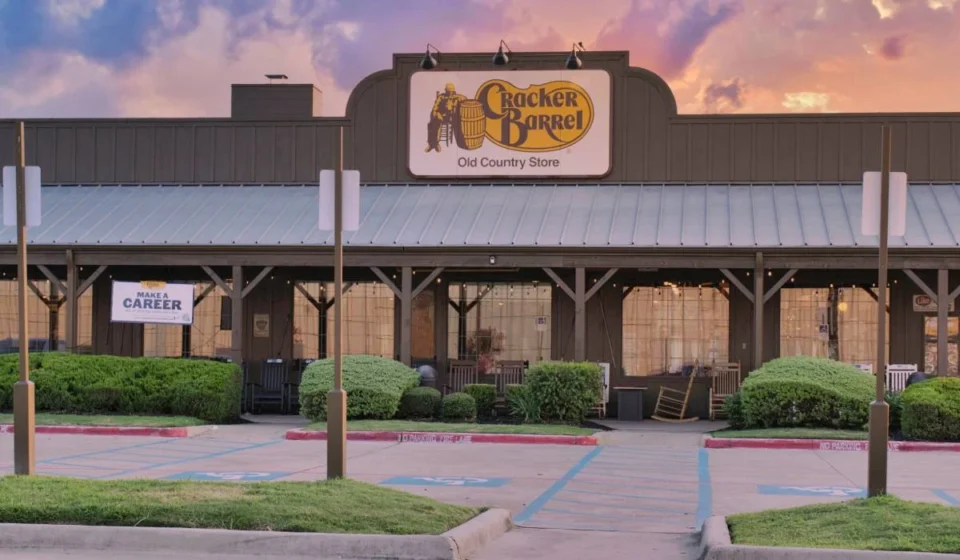

Cracker Barrel Old Country Store, an American staple known for its distinctive blend of home-style dining and retail, is navigating a period of significant transition. Following a fiscal fourth quarter marked by declining traffic but resilient revenue, the company has unveiled a comprehensive strategic roadmap aimed at returning to positive comparable sales by fiscal 2027. Under the guidance of newly appointed CEO David Deno, the organization is pivoting toward operational excellence, menu revitalization, and a modernized retail experience.
The State of the Business: Fiscal Q4 Highlights
Cracker Barrel’s most recent financial report serves as a baseline for the company’s ambitious turnaround plan. In the fourth quarter, the brand faced a 2.1 percent dip in comparable restaurant sales, driven primarily by a 6.1 percent decline in foot traffic. This downturn was partially mitigated by a 4.2 percent increase in the average check, fueled by a 4.4 percent pricing adjustment.
Despite the pressure on traffic, total revenue reached $849.3 million, with $698.5 million derived from restaurant operations and $150.8 million from the iconic retail shops. Notably, off-premises dining has become an increasingly vital pillar of the business, accounting for 19 percent of total restaurant sales—a year-over-year increase of one percentage point, largely bolstered by the expansion of third-party delivery partnerships.
From a profitability standpoint, the company demonstrated underlying strength. Adjusted EBITDA for the quarter climbed 11.4 percent to $62.1 million. While these figures were impacted by complex accounting factors—including a $9.1 million net benefit from tariff refunds and two offsetting $10 million legal settlements—the adjusted earnings per share reached $0.99. Furthermore, the company made significant strides in debt reduction, ending the quarter with $337.2 million in debt, a decrease of $147.4 million from the previous year, aided by a $77 million sale-leaseback transaction.
A Chronology of Change: The Arrival of David Deno
The transition at the top of Cracker Barrel’s corporate hierarchy is central to its current trajectory. David Deno, the former CEO of Bloomin’ Brands, stepped into the role just six weeks prior to the earnings call. His tenure began with an intensive "listening tour," involving visits to numerous locations and direct dialogue with both frontline employees and the customer base.
Deno’s early assessment identified a clear imperative: while the brand’s breakfast service remains a powerhouse of customer satisfaction and traffic, the dinner daypart requires significant investment. The company has identified specific areas for enhancement, including upgrading the quality of chicken, hamburger, and steak offerings. The goal is to ensure that every meal served meets stringent standards for taste, temperature, and overall quality.
This leadership change coincides with a broader effort to streamline operations. Deno has signaled a move to seek cost savings in "back-of-house" functions—specifically in corporate administration and technology—while doubling down on the guest experience inside the dining room.
Supporting Data: The Path to 2027
The fiscal 2027 outlook provides a detailed quantitative vision for the company’s recovery. Cracker Barrel projects total revenue in the range of $3.325 billion to $3.4 billion, with adjusted EBITDA anticipated to fall between $180 million and $200 million. The company expects comparable restaurant sales to grow by 3 to 5 percent annually, supported by a 3 percent contribution from menu pricing.
Operational Metrics and Guest Sentiment
The company’s internal data suggests that the operational foundations for this growth are already improving. In the fourth quarter, several key performance indicators (KPIs) showed positive momentum:
- Customer Satisfaction: Google Star ratings improved by 2 percent year-over-year, maintaining near-record levels.
- Quality Control: Scores for food taste and service quality rose by nearly 400 basis points, while food temperature scores saw an improvement of 500 basis points.
- Retention: Employee stability has increased significantly, with hourly employee turnover improving by 450 basis points and manager turnover by 85 basis points.
These gains in human capital are critical, as Deno emphasized that the 75,000-strong workforce is the heartbeat of the brand’s ability to deliver a consistent experience.
Retail Resilience
The retail segment, long considered a "competitive advantage" that distinguishes Cracker Barrel from other full-service chains, showed renewed life. Comparable retail sales rose 0.7 percent—the best performance since the second quarter of fiscal 2023. By simplifying product layouts, widening aisles, and clarifying sight lines, Deno intends to transform the retail shop from a post-meal curiosity into a seamless component of the guest’s visit.
Official Responses and Strategic Implications
During the earnings call, leadership offered a candid look at how the company intends to balance affordability with the need for margin expansion.
Navigating the Value Equation
CFO Craig Pommells acknowledged that the current economic climate is bifurcated. The chain is seeing sustained pressure on lower-income households, while higher-income guests remain relatively resilient. To address this, the company is leaning on its value-oriented menu items, such as the $7.99 Sunrise Pancake Special and weekday "Early Dine" options starting at $8.99.
Menu Engineering for Margins
Beyond pricing, the company is focusing on "menu mix." By introducing new appetizers, shareable items, and the option to upgrade entrées from two sides to three, Cracker Barrel aims to increase the average ticket size while simultaneously boosting margins. "We do think as we look to the future… there’s opportunity in the menu mix component of the business that is a win-win for our customers and then obviously improving our margins as well," Pommells noted.
Digital and Loyalty Engagement
The Cracker Barrel Rewards program now boasts over 12.5 million members, who account for more than 40 percent of the company’s tracked sales. By leveraging a newly launched app and website, the company is shifting toward a more personalized marketing approach. The firm expects to allocate approximately 3 percent of its sales toward advertising in fiscal 2027 to ensure its value proposition remains top-of-mind for these loyalists.
Implications: The Road Ahead
The implications of this strategy are clear: Cracker Barrel is moving away from a period of stagnation toward a phase of "disciplined investment." The company has signaled that there will be no new store openings in the current fiscal year, as capital expenditure—projected at $110 million to $125 million—will be heavily skewed toward maintenance (65 percent) and technology (35 percent).
The success of this plan hinges on Deno’s ability to execute a delicate balancing act. He must modernize the brand’s offerings and digital infrastructure without alienating the core, multi-generational customer base that values the "home-style" comfort Cracker Barrel has provided for decades.
As the company looks toward 2027, the focus remains squarely on the plate. By upgrading the quality of core dinner items and ensuring that every guest interaction is as strong as its breakfast performance, Cracker Barrel aims to reclaim its status as a growth-oriented leader in the casual dining space. Deno’s concluding sentiment—"We want to invest in it more and make it even more craveable"—encapsulates the company’s intent to move beyond short-term fixes and toward a sustainable, high-quality future.