
The digital age has fundamentally transformed the engagement ring shopping experience. Couples are no longer restricted to the inventory of a local high street jeweler; instead, they are inundated with an infinite, curated feed of glistening silhouettes—oval diamonds on twisting vine bands, pointed marquises with hidden halos, and intricate starburst clusters. While this abundance of choice is liberating, it often leads to “decision paralysis.” You may find yourself admiring a dozen vastly different designs, yet feeling no closer to knowing which one truly represents your personal aesthetic.
The secret to navigating this overwhelming landscape isn’t to look for the most elaborate design, nor is it to settle for a plain solitaire because you fear you’ve “misunderstood” the assignment. Rather, the process requires a shift in perspective: moving from passive scrolling to active, analytical curation. By isolating the specific design elements that resonate with your personal style and evaluating them against your daily lifestyle, you can move from a state of indecision to a clear, confident choice.
The Anatomy of Desire: Identifying Your Signature Style
The first step in finding your dream engagement ring is to strip away the distractions of the setting and focus on the stone itself. If you have a folder full of saved images, start by covering the bands with your thumb. When you look only at the center stones, do you see a pattern?
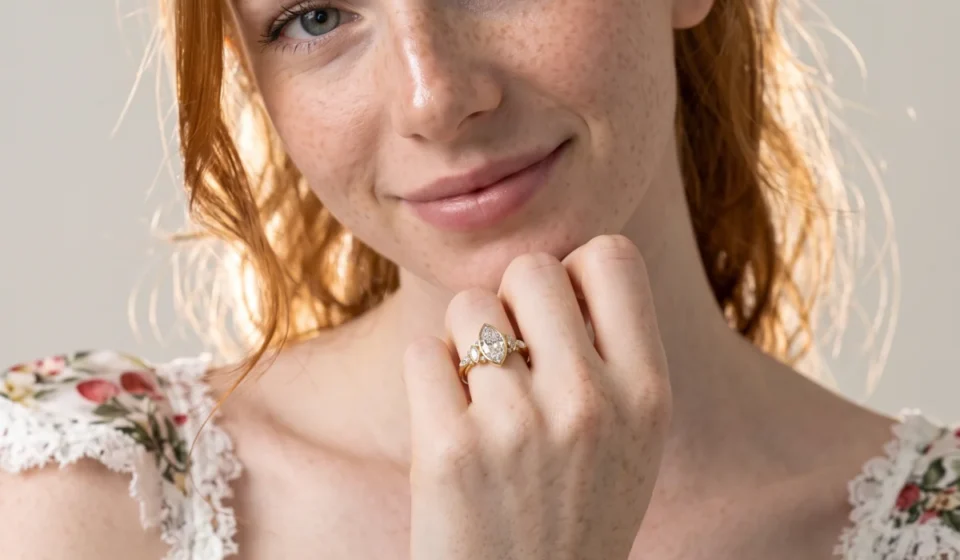
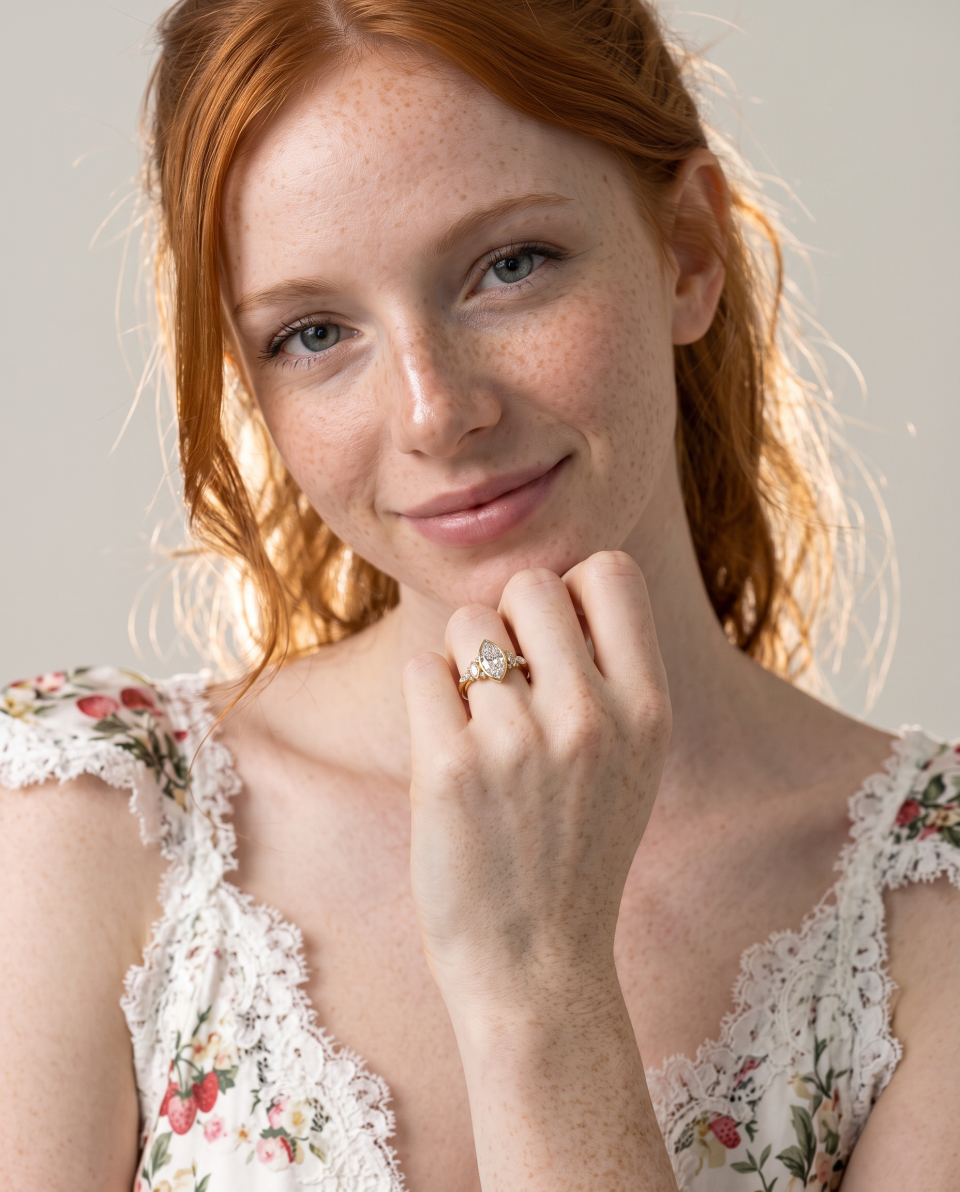
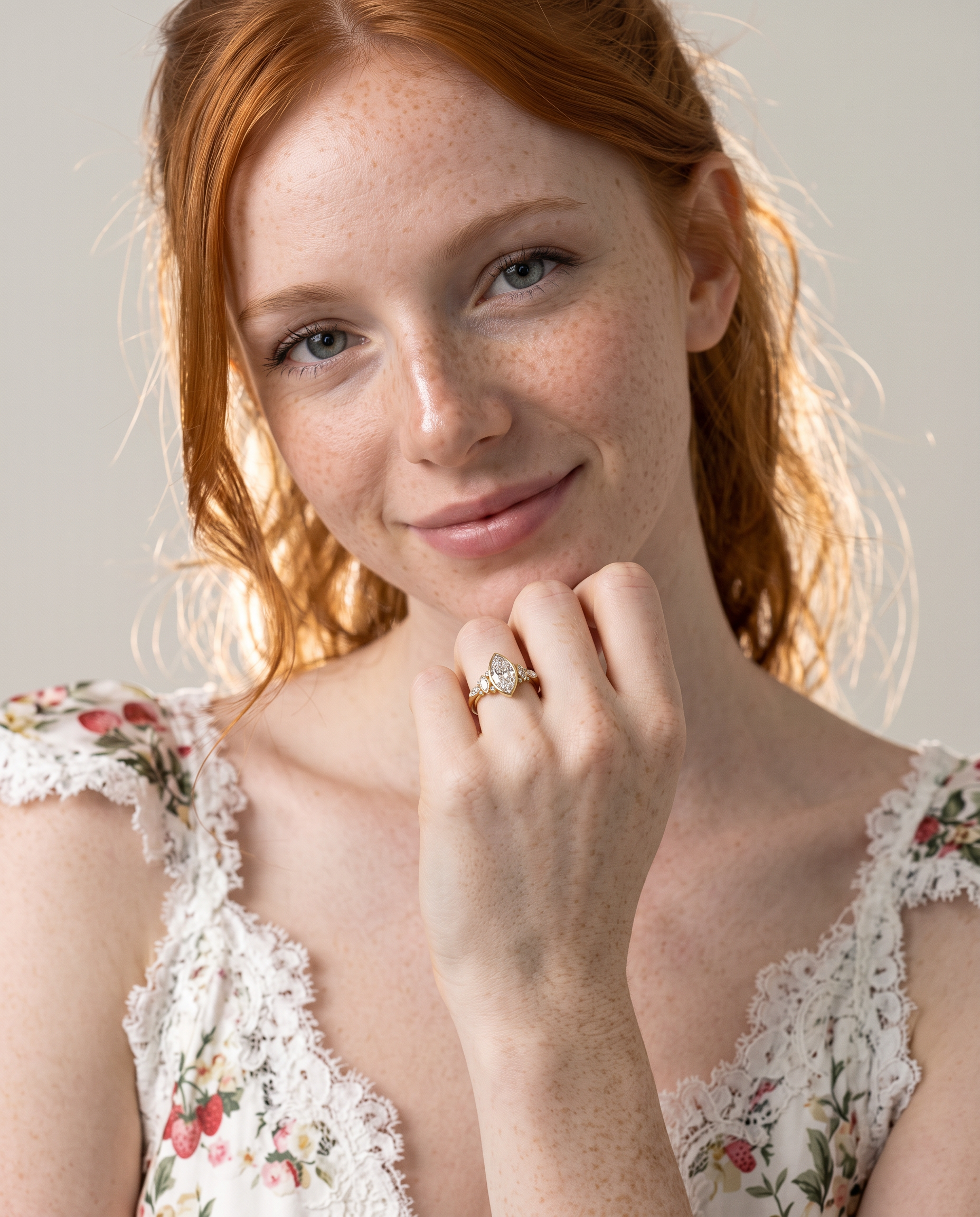
Often, you will discover that despite the vast differences in settings, your preferences gravitate toward a specific silhouette. Perhaps you consistently save rings with long, narrow outlines, such as marquise or oval cuts. These shapes are inherently elegant, but they offer different visual impacts: the oval provides a softer, organic rounded finish, while the marquise offers a sharper, more dramatic geometry.
Why Shape Matters More Than Complexity
It is a common misconception that an “alternative” wedding requires an “alternative” ring design. A simpler, well-proportioned ring is often more striking than a complex one that lacks a cohesive focal point. When comparing shapes, consider the coverage on your finger. Do you prefer the elongated look that draws the eye down the length of your hand, or do you find yourself favoring the classic symmetry of a round brilliant or the architectural clean lines of an emerald cut?
Furthermore, consider the dimensions. A “name” like “oval” is merely a starting point. The specific ratio—how short or wide the stone is—can fundamentally change the ring’s character. By comparing two stones of the same shape but different proportions, you begin to understand why one feels like an extension of your own hand while another feels foreign.
Dissecting the Setting: Where Should the Detail Live?
Once you have identified your preferred stone shape, the next logical step is to analyze the setting. Lily Arkwright’s collection of lab-grown diamonds provides an excellent case study in how the same center stone can evoke entirely different emotions depending on its housing.
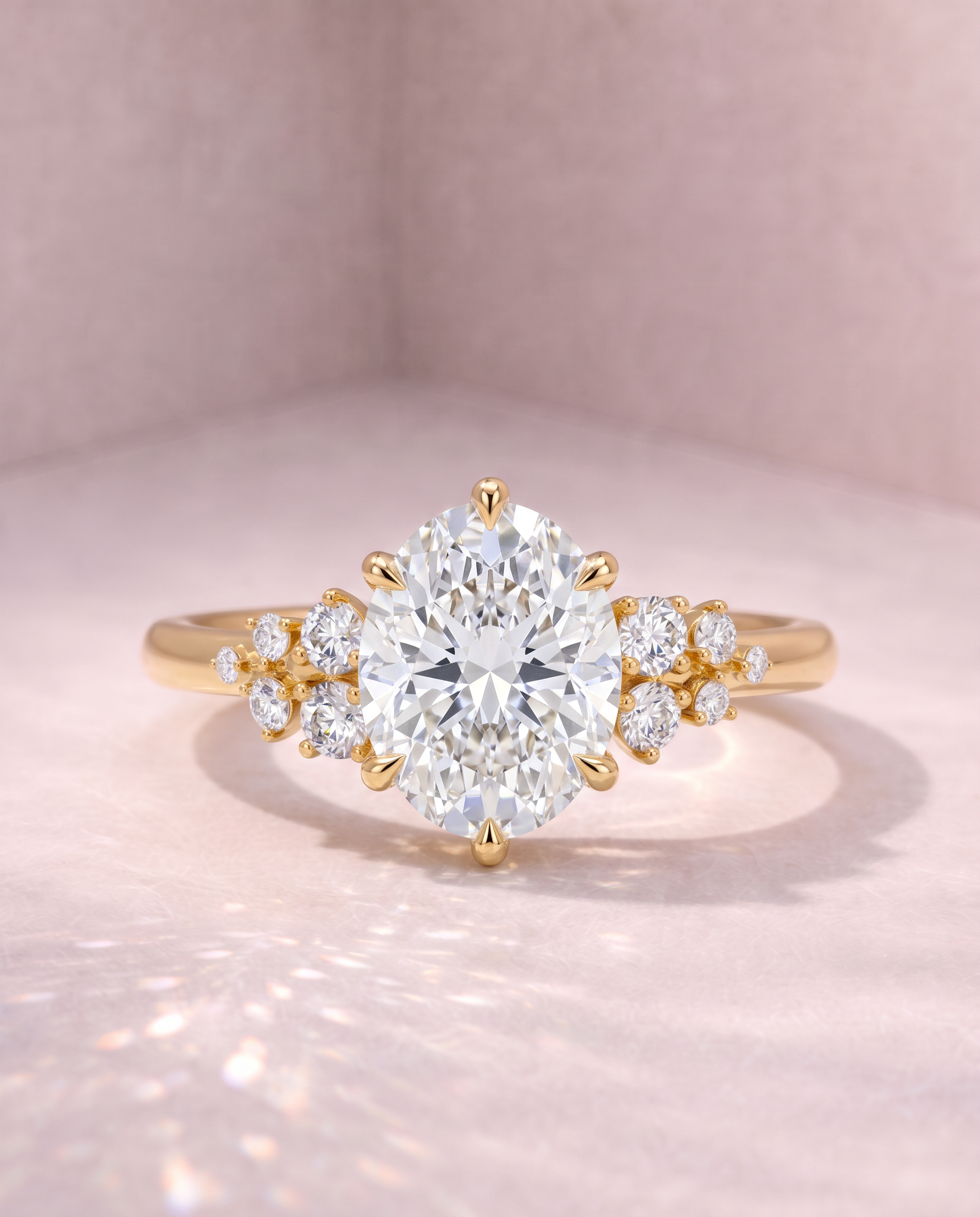
Consider the contrast between two popular designs: the Eden and the Alya. Both utilize an oval lab-grown center stone set in 18ct yellow gold, yet they achieve different aesthetic goals.
- The Eden Approach: This design draws the eye along the band. Its twisting, diamond-set shoulders create a vine-like, organic aesthetic. The beauty here is in the flow; the eye is encouraged to travel from the center stone out toward the finger, making the ring feel like a cohesive piece of jewelry rather than just a stone perched on a band.
- The Alya Approach: Conversely, this design builds the ornamentation directly around the center stone. A starburst cluster frames the oval, creating an immediate, high-impact focal point. The detail is concentrated, making the ring appear larger and more ornate from a distance.
The Comparison Methodology
To judge these settings fairly, you must keep the variables controlled. Compare rings with the same metal color and similar stone dimensions. If you compare a large stone in an intricate setting against a smaller stone in a simple one, the sheer volume of the larger stone will inevitably skew your judgment.
Ask yourself: Do you want the detail to be a conversation piece that is visible from across a table, or do you prefer “hidden” details—such as intricate gallery work or side-set diamonds—that are only visible to you or those who look at your hand from a close, intimate distance?
Understanding the Components: Lab-Grown Diamonds and Beyond
In the modern jewelry market, terminology is critical. A lab-grown diamond is, chemically and physically, a diamond. It is grown in a controlled environment that replicates the high-pressure, high-heat conditions of the earth. In contrast, Moissanite is a distinct gemstone with its own unique refractive properties and hardness.
When searching for the perfect ring, do not conflate the two. If you find yourself drawn to colorful or alternative stones, give them space in your shortlist, but investigate their durability. An engagement ring is an object of daily wear; therefore, you must consider the Mohs hardness scale and the specific care requirements of each gemstone.
The Role of Certification
Never buy a significant center stone without an independent laboratory report. Organizations like the IGI (International Gemological Institute) provide essential data on the stone’s quality, color, clarity, and cut. This report is your roadmap. If a jeweler is hesitant to provide this documentation, it is a red flag.
Furthermore, consider the “cut” of the diamond as a primary factor in its sparkle. The stepped facets of an emerald cut offer a hall-of-mirrors, sophisticated shine, while the brilliant-style facets of a radiant or round cut create a busier, more intense dispersal of light. If you love geometric precision, the emerald cut is your North Star; if you want maximum brilliance, look toward the radiant or oval brilliant cuts.
Financial Strategy: Balancing Budget and Design
A common pitfall is falling in love with a large, high-carat center stone only to realize that the cost has consumed the budget intended for the setting. A more effective strategy is to define a total budget for the finished piece.
When reviewing prices, remember that carat weight is a measure of mass, not necessarily size. A one-carat elongated oval will appear larger than a one-carat round brilliant because its weight is distributed across a wider surface area. Focus on the millimeter dimensions of the stone rather than just the carat weight.
If the price of your dream ring exceeds your limit, do not sacrifice the design feature that made you fall in love in the first place. If the “twisting vine” band is the essential element, consider opting for a slightly smaller center stone to accommodate the cost of that intricate metalwork. Keep the “hero” feature of the ring, and adjust the secondary elements accordingly.
The Final Transition: From Screen to Hand
Once you have narrowed your options to a manageable shortlist of three, it is time to move from the digital world to the physical.
The Try-On Protocol
When you finally have a ring on your finger, wear the jewelry you usually wear. Does the ring complement your existing style, or does it clash? Pay attention to the lighting. While display lighting is designed to maximize sparkle, it is not representative of the real world. View the ring under ambient, natural light.
Furthermore, consider your lifestyle. If you work with your hands, a high-profile setting with exposed prongs might be a snagging hazard. Communicate this to the jeweler—they can often adjust the height of the setting or suggest a bezel-set design that offers superior protection without sacrificing beauty.
Due Diligence for Online Acquisitions
If you are purchasing your ring online, the “human” element of the transaction is just as important as the ring itself. Ensure that all resizing, return, and customization policies are provided in writing. Ask for videos of the specific stone you are considering—not just a stock photo. A video captures the “fire” and “life” of the diamond in a way a static image never can.
Conclusion: Trust Your Intuition
At the end of this process, you may find that the ring you thought you wanted—the one you saved a dozen photos of—feels overwhelming when placed on your finger. Conversely, a design that seemed subtle on a screen might capture your attention in person.
This is the beauty of the search. By applying a systematic approach to your selection, you strip away the trends and the pressure of the “perfect” choice, leaving you with a ring that reflects your true aesthetic. The elaborate setting you loved online can remain a beautiful piece of art you admire from afar, but the ring you choose to wear for the rest of your life should be the one that feels like a natural part of you.