
The Strategic Evolution of Flower Child: How The Cheesecake Factory is Scaling its "Fast Casual" Crown Jewel

For years, investors have peppered Matthew Clark, Executive Vice President and CFO of The Cheesecake Factory, with the same pointed inquiry: When will the company truly unlock the potential of Flower Child? Since the parent company acquired the health-forward brand as part of its $308 million purchase of North Italia and Fox Restaurant Concepts (FRC) seven years ago, Flower Child has operated as the "quiet achiever" within a massive portfolio.
However, as the brand reaches a critical mass of 40 locations, the narrative is shifting from "emerging concept" to "growth engine." During the Barclays Annual Global Consumer Staples Conference, Clark provided a comprehensive look at how the company intends to scale this fast-casual powerhouse without sacrificing the quality or the unique "vibe" that has made it a standout in a crowded market.
A Chronology of Strategic Growth
The story of Flower Child is inextricably linked to the bold acquisition strategy initiated by The Cheesecake Factory in 2016. At that time, the parent company took a minority stake in FRC, recognizing the potential in a brand that was then only two years old and consisted of a mere five locations.
The strategy was methodical. By securing an option for full ownership, The Cheesecake Factory allowed the concept to mature and iterate under the guidance of its original founders before fully integrating it into the corporate fold. When the acquisition was finalized in 2019, the path forward became clear: leverage the infrastructure, supply chain, and capital of a global dining giant to propel high-performing concepts like North Italia and Flower Child into the national spotlight.
Today, the footprint of the company’s portfolio is significant. There are now approximately 220 Cheesecake Factory locations, 50 North Italia units, and 40 Flower Child locations. As the company looks toward the next phase of development, the goal is to hit a consistent annual growth rate of 20 to 25 percent for the Flower Child brand.

Supporting Data: The Case for Aggressive Expansion
The curiosity from Wall Street is not merely idle chatter; it is driven by hard numbers. Flower Child has demonstrated impressive resilience and momentum, posting same-store sales gains of 13 percent in the most recent quarter, with a remarkable 17 percent two-year stack.
Perhaps most compelling are the unit economics. Flower Child currently boasts annualized average-unit volumes (AUV) of $5.4 million, with adjusted mature store-level margins sitting at a healthy 20.1 percent. To put this into perspective, if Flower Child were categorized within the QSR 50—a prestigious ranking of the nation’s top fast-food chains—it would slot in at fourth place, outperforming industry titans like McDonald’s ($4.088 million) and Shake Shack ($4.048 million).
Furthermore, the concept is delivering 33 percent cash-on-cash returns, making it arguably the most efficient engine in The Cheesecake Factory’s entire suite of brands. As Clark noted, the company is seeing a "densification" effect; when they saturate a market like Dallas or Phoenix, the increased brand awareness drives performance higher rather than cannibalizing existing sales.
Official Perspectives: Defining the "Cheesecake Factory Fast Casual"
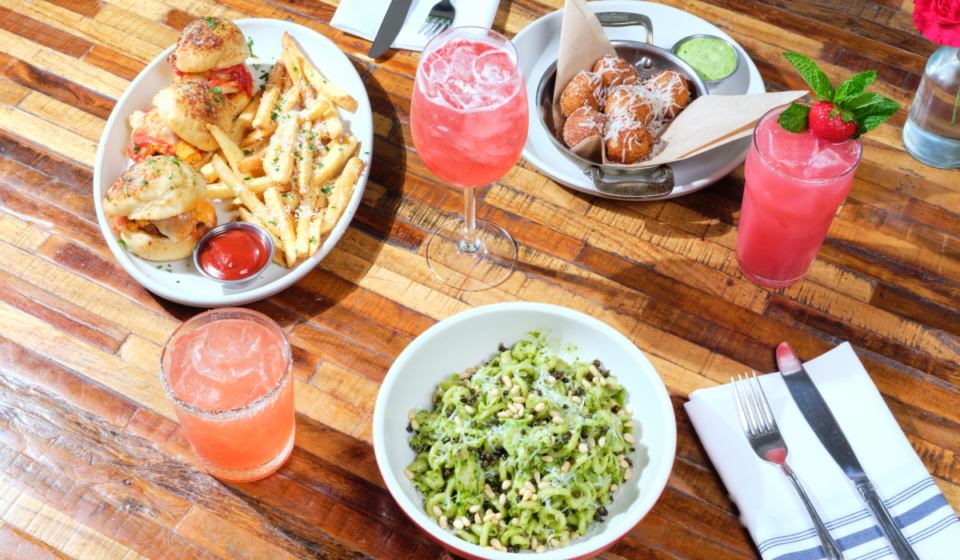
Internal leadership describes the Flower Child experience as "The Cheesecake Factory fast casual." It is a deliberate departure from the assembly-line, sterile nature of typical quick-service dining. Instead, the brand focuses on a scratch-kitchen, open-concept environment where customers witness the culinary craft in real-time.
"It’s got a huge, defensible moat," Clark explained during the conference. "Because not only does it have the price point of fast casual, the breadth of the menu, it’s got a vibe in the restaurant."
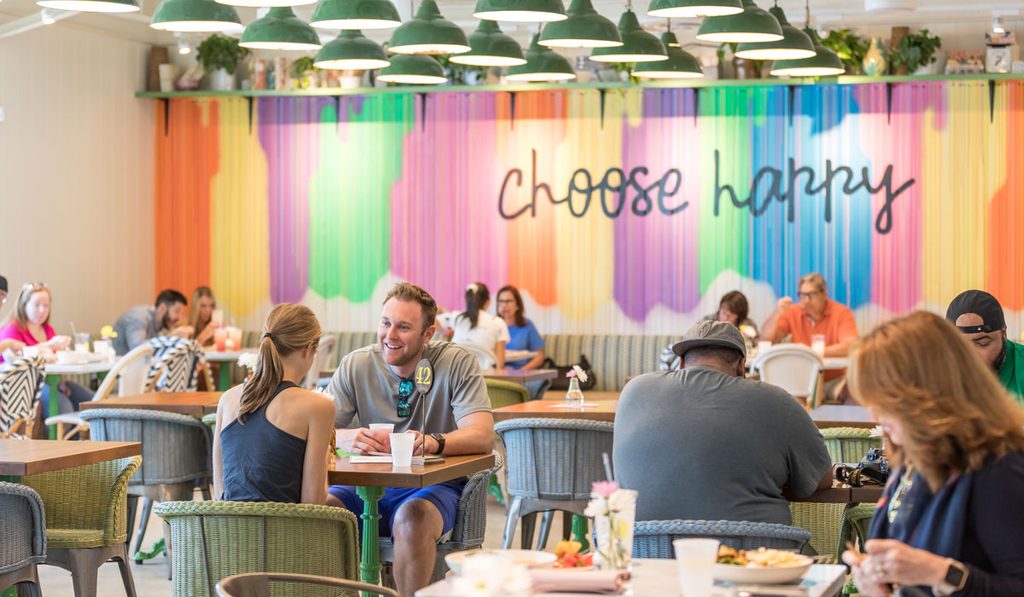
This "vibe" is backed by a unique operational model. While many fast-casual competitors skew heavily toward lunch, Flower Child maintains a split of roughly 40 percent dinner and 60 percent lunch—a level of balance that is highly unusual for the category. Additionally, the mix of off-premises and in-store dining remains essentially even, proving that the brand captures the "experiential" diner just as effectively as the "convenience" diner.
President David Gordon emphasizes that the goal is to provide an elevated experience that transcends the traditional expectations of the sector. "It could be a quick lunch, could be sitting down at dinner," Gordon noted. "The dine-in experience, the highly designed restaurants, and the higher touch of service… people really, really appreciate today that we’re bringing them their food. It’s being served by a server. We’re clearing their plates. It’s being served on real plateware."
The "Gating Factor": Operational Excellence and Talent
Despite the strong performance, leadership remains disciplined. Etienne Marcus, VP of Finance and Investor Relations, identified "people" as the primary gating factor for growth. The company is unwilling to sacrifice operational standards for the sake of speed. Consequently, the expansion of Flower Child is tethered to the brand’s ability to cultivate a robust pipeline of managers who understand the nuances of the concept.
This commitment to quality extends to the broader portfolio as well. While North Italia faced a slight contraction in same-store sales (down 3 percent) in the most recent quarter, the company is treating this as a manageable hurdle. They are currently testing lower-priced pasta dishes and community-focused events to broaden the consumer base, recognizing that while North Italia’s Net Promoter Scores are high, the brand needs to remove "psychological barriers" regarding pricing to reach a wider audience.
Implications: A New Era of Digital and Operational Synergy
The broader success of The Cheesecake Factory in the current climate—generating over $1 billion in quarterly revenue and a historic $68 million in net income—provides the financial tailwind necessary for Flower Child’s expansion. The parent company’s recent success has been fueled by a "consistent execution" playbook, including the successful launch of a rewards app in April.

This digital transformation has given the company a "whole other level of engagement." By leveraging data, the brand can now better understand the customer journey, from the 30-day return cycle to the preferences of younger cohorts who, surprisingly, continue to view malls and social dining as essential lifestyle components.
Navigating the Modern Consumer Landscape
Addressing the "state of the consumer," Clark remains optimistic but realistic. While consumers have money to spend, they are increasingly discerning. The company’s response has been to double down on "value proposition"—which, for The Cheesecake Factory, doesn’t mean cheapening the product, but rather offering a spectrum of choices, from "SkinnyLicious" options to indulgent, large-portion items that have become social media fodder.
When questioned about the potential impact of GLP-1 weight-loss medications on dining habits, Clark dismissed the "doom and gloom" projections. He drew a parallel to the 2018 mandate requiring chains to list calorie counts on menus, which many at the time feared would destroy the brand. Instead, the company found that customers simply made informed trade-offs, opting for a decadent meal as part of an experiential outing.
Future Outlook
As The Cheesecake Factory looks toward the future, the integration of AI, continued refinement of the rewards flywheel, and a measured, site-by-site expansion of Flower Child suggest a company that is in full control of its destiny.
"We compete against everybody and nobody," Clark concluded. By maintaining a focus on the experiential, the artisanal, and the operational, the company is positioning Flower Child not just as a side project, but as the cornerstone of its next decade of growth. For the investor community that once questioned the path forward, the answer is now becoming clear: The Cheesecake Factory isn’t just growing; it is strategically cultivating a multi-concept ecosystem designed to thrive in any economic environment.