Comments Off on The New Gold Standard on the Trade Show Floor: Why Modern Lead Capture is the Ultimate Driver of Sponsor Retention and Event Revenue
EXECUTIVE SUMMARY | In the high-stakes world of corporate events, association conferences, and commercial trade shows, an exhibitor’s decision to rebook for the following year comes down to a single metric: the quantity and quality of qualified leads captured. For decades, the industry relied on an archaic infrastructure of paper forms, bowls of business cards, and manual spreadsheets. Today, industry leaders warn that clinging to these legacy methods is a direct leak of both revenue and goodwill. Modern lead capture—powered by registration-linked badge scanning and intuitive mobile applications—has transformed from an optional booth accessory into the foundational cornerstone of exhibitor success, sponsor retention, and organizer profitability.
Main Facts: The Evolution of Trade Show Lead Generation
At its core, lead capture is the systematic collection and qualification of contact information from booth visitors at an in-person event, typically executed by scanning an attendee’s badge or quick response (QR) code. Unlike casual networking, a structured "lead" represents a prospective buyer who has actively engaged with booth staff and agreed to share their contact data, accompanied by tailored qualitative notes and priority ratings.
The industry is currently undergoing a structural shift away from three primary friction points:
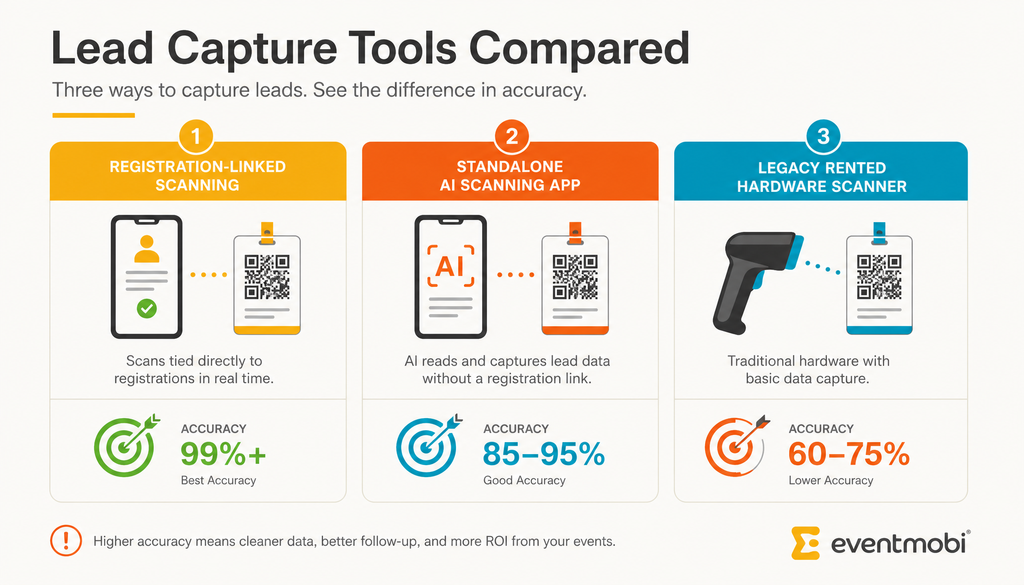
The Business Card Shoebox: Physical cards are easily lost, handwriting is frequently misinterpreted, and post-event manual data entry into customer relationship management (CRM) systems delays follow-up by weeks.
Legacy Hardware Scanners: While historically accurate, bulky rented hardware terminals require physical logistics, incur high equipment rental fees, and routinely fail to provide real-time analytics during the active days of the show.
Unofficial Third-Party Scanning Apps: While offering cheap or seemingly "free" alternatives via smartphone optical character recognition (OCR), these unauthorized apps often scrape or guess incomplete data (emails, phone numbers, job titles) outside the bounds of attendee consent, leading to poor data hygiene and compliance vulnerabilities.
In contrast, modern registration-linked lead capture matches the verified accuracy of legacy hardware while offering the agility, self-serve convenience, and compliance of mobile software. It transforms an attendee’s badge into a secure digital contact card instantly accessible to booth personnel.
Chronology: How the Modern Lead Capture Workflow Operates
Understanding how lead capture integrates into the daily routine of a trade show floor requires examining the step-by-step chronology experienced by booth representatives and event attendees alike.
Phase 1: Pre-Event Integration and Setup
Weeks before the exhibition floor opens, event organizers provision lead capture licenses to exhibiting companies. Rather than requiring complex individual software installations for every single staff member, modern platforms utilize a company-wide license model. One overarching license grants unlimited booth representatives the ability to download the mobile application and sync their accounts prior to arrival.
Phase 2: On-Site Engagement and Capture
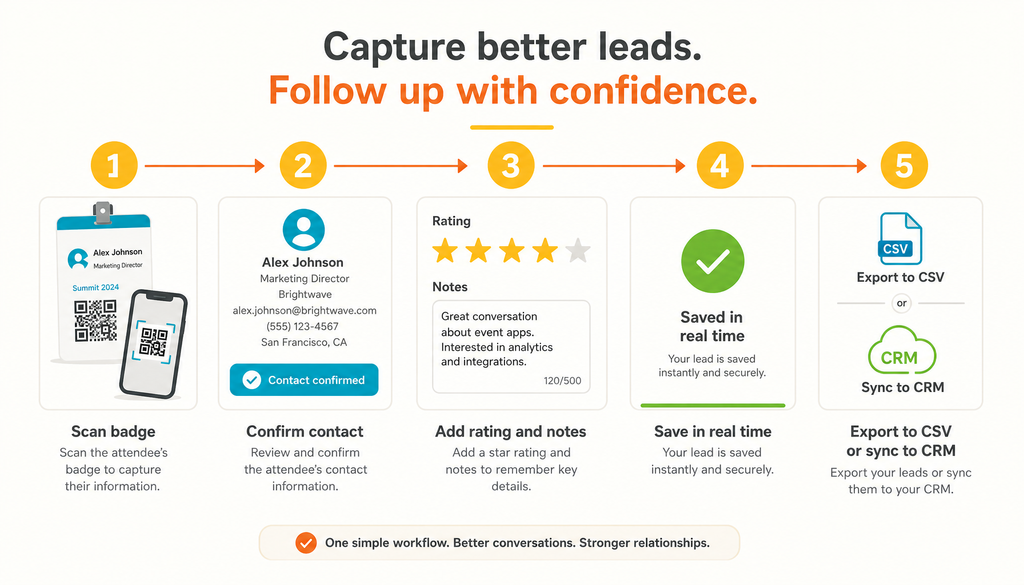
As attendees traverse the trade show floor, their registration badges serve as universal digital identifiers. When an engaging conversation occurs at a booth, the workflow proceeds through clear, optimized steps:
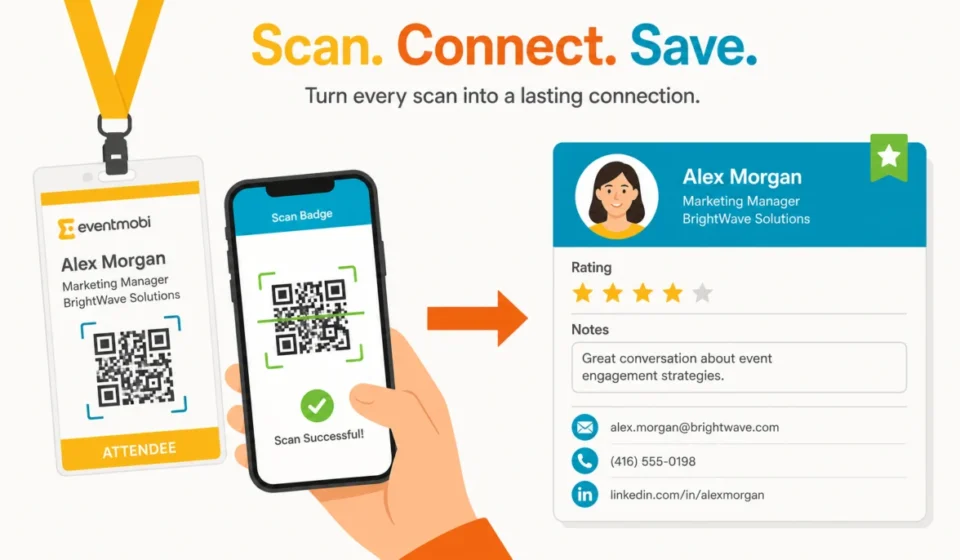
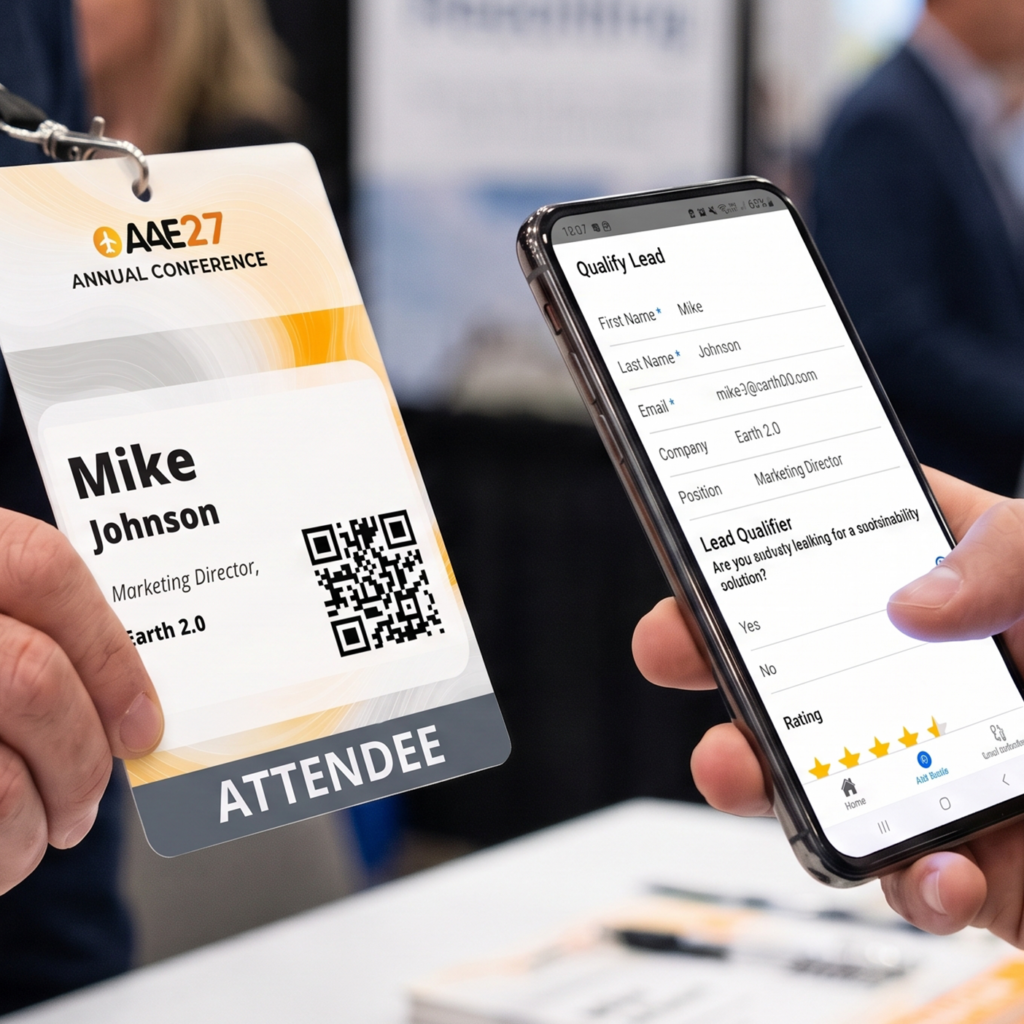
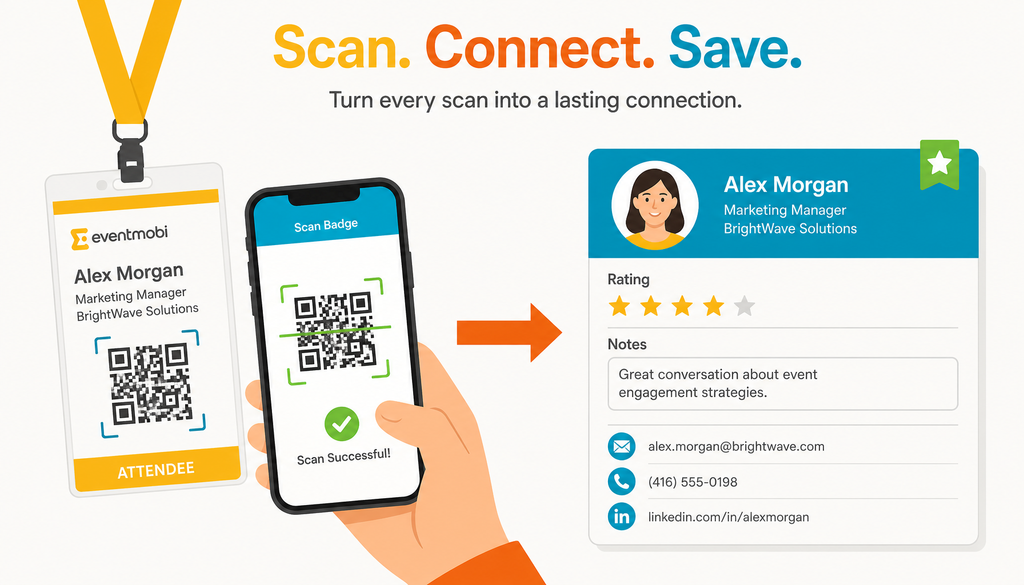
The Scan: A booth representative uses a mobile phone or tablet camera to scan the attendee’s badge QR code.
Data Population: The system instantly auto-populates the prospect’s verified registration details (name, title, company, email) directly from the event database.
Qualification: The representative inputs critical contextual data—assigning star ratings, logging free-text conversation notes, and completing custom fields tailored to product interest, budget constraints, or purchasing timelines.
Instant Sync: The lead record is securely saved to the cloud, enabling immediate internal routing or direct synchronization with the exhibitor’s corporate CRM.
Phase 3: Post-Event Conversion
As the exhibition concludes, exhibitors bypass the tedious weeks of manual data transcription. Instead, clean, structured lists are exported via CSV files or automatically fed into enterprise sales funnels, allowing sales teams to initiate rapid follow-up while event engagement remains fresh in the buyer’s mind.
Supporting Data: The Economic Imperative of Packaging and Reselling
For event organizers, lead capture is no longer just a technical utility—it is a sophisticated mechanism for driving ancillary revenue and securing long-term sponsorship commitments.
The Economics of Sponsorship Retention
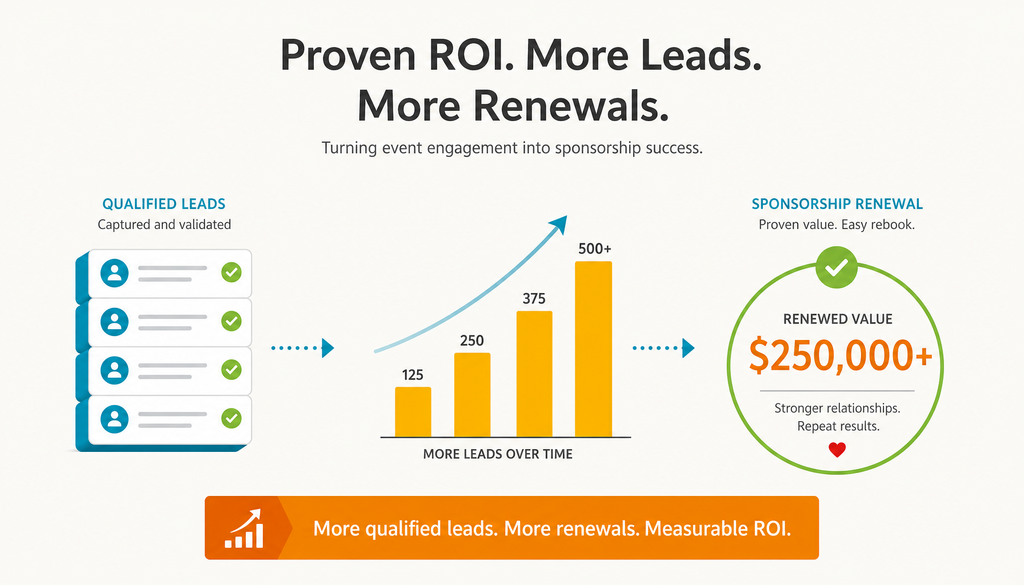
Exhibitors vote with their marketing budgets. When a mid-tier sponsor can log into an intuitive dashboard and mathematically verify that their team generated 250 highly qualified leads with specific purchasing timelines, next year’s sponsorship renewal is virtually guaranteed. Conversely, when metrics are obscured or based on estimates, exhibitors question the return on investment (ROI) of their booth packages.
Pricing and Packaging Models
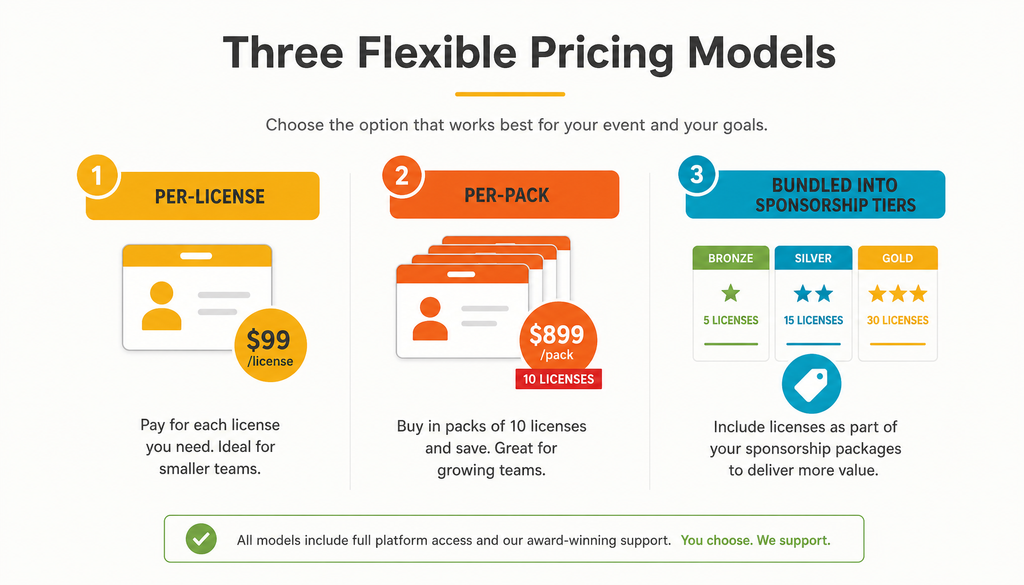
Event organizers typically deploy one of three primary pricing models to monetize lead capture:
Per-License Pricing: Charging a flat fee for each individual software license issued.
Per-Pack Pricing: Bundling licenses into convenient packages (e.g., standard packs of 10 company licenses at $50 per license, totaling $500 per pack, where one license covers unlimited staff for a single company). This eliminates unpredictable per-rep math and scales cleanly with floor size.
Tiered Sponsorship Bundling: Folding lead capture technology directly into higher sponsorship tiers (such as Gold and Silver packages) while offering it as an upgraded add-on for Bronze-tier exhibitors.
By purchasing licenses at cost and strategically marking them up within comprehensive sponsorship tiers, organizers capture lucrative profit margins while delivering undeniable value to exhibitors.
Furthermore, advanced platforms have introduced cutting-edge analytics—such as EventMobi’s Event Signals—which synthesize session attendance, in-app engagement, and survey responses into predictive buying-intent cohorts. Organizers can package these insights as premium add-ons, unlocking revenue streams that legacy scanning tools cannot match.
Official Industry Perspectives and Strategic Insights
Industry experts emphasize that lead capture must be treated as core event infrastructure rather than an afterthought.
"Ask any exhibitor what makes a trade show worth the cost of the booth package, and the answer comes down to one thing: how many good leads they walked away with," notes industry literature from event technology leaders like EventMobi. "If your show still runs on business cards and paper forms, you are leaving both revenue and goodwill on the floor."
Organizers are increasingly urged to audit their technological stack to ensure compliance, data accuracy, and user adoption. Transitioning exhibitors away from unverified third-party scanning apps requires education: organizers must demonstrate that registration-linked systems provide legally compliant, consent-backed data that protects attendee privacy while delivering superior sales intelligence.
To maximize adoption, forward-thinking event agencies and corporate organizers are implementing comprehensive onboarding strategies. By providing pre-show webinars, technical support guides, and dedicated help desks on-site, organizers ensure that exhibiting staff are fully operational before the exhibition hall doors open, eliminating day-one friction.
Implications: Securing the Future of Trade Shows
The widespread adoption of advanced lead capture technologies carries profound implications for the events industry at large:
Elevated Exhibitor Expectations: As digital-first lead retrieval becomes ubiquitous, exhibitors will increasingly penalize shows that fail to provide modern, streamlined data collection tools. The tolerance for manual data entry and "shoebox of business cards" environments is rapidly evaporating.
Data Privacy and Regulatory Compliance: With stringent global data protection regulations (such as GDPR and CCPA) in full effect, organizers must control how attendee data is captured and shared. Relying on unauthorized scraping apps exposes both the event and its exhibitors to legal liabilities, making official, registration-linked lead capture an essential compliance safeguard.
Enhanced Event Valuations: Events that successfully integrate behavioral intelligence—such as tracking session engagement alongside booth scans—can command higher sponsorship fees and demonstrate measurable economic impact to corporate stakeholders, investors, and association boards.
Ultimately, the future belongs to organizers who recognize that an exhibitor’s success is inextricably linked to their own. By treating lead capture as a cornerstone of event design, packaging it intelligently, and equipping booth teams with accurate, real-time tools, event professionals can protect their revenue, guarantee high renewal rates, and elevate the standard of trade show excellence.