
Main Facts
In the landscape of modern mixology, few templates hold the universal reverence and structural integrity of the Negroni. Traditionally composed of equal parts gin, Campari, and sweet vermouth, the classic Italian aperitivo has spawned an entire ecosystem of variations over the past century. Bartenders and enthusiasts typically manipulate this foundational blueprint in one of two directions: swapping the base spirit—as seen in the whiskey-based Boulevardier—or introducing supplementary modifiers to layer on complexity.
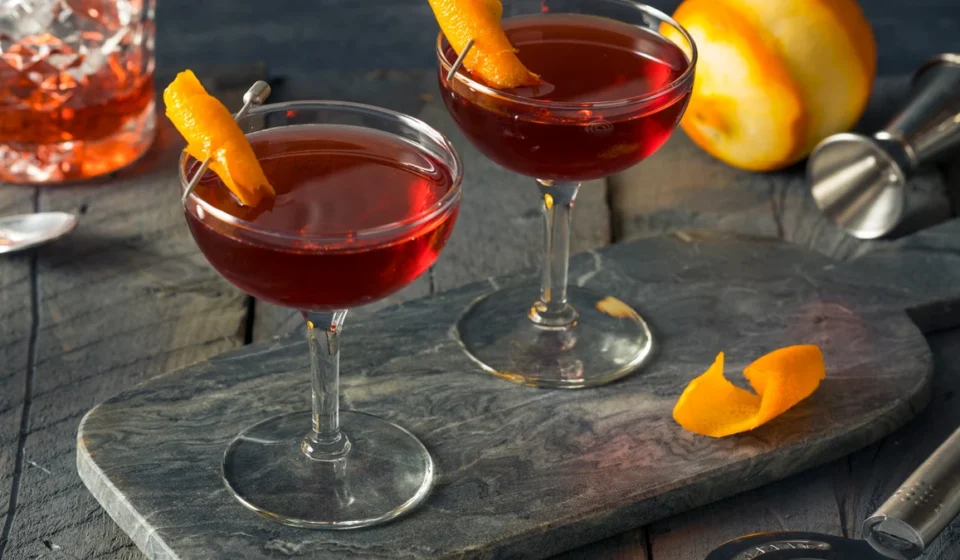
The Mane of Needles sits precisely at the intersection of these two methodologies. Crafted as a high-octane, aggressively bitter, and undeniably complex cocktail, it trades gin for spicy rye whiskey, then compounds the classic profile with an intricate assembly of French herbal liqueur, zesty orange bitters, and a whisper of Fernet-Branca. Measuring nearly four ounces in total volume, this potent potation delivers an experience that is at once silky, opulent, and thrillingly sharp.
Chronology of the Negroni Evolution
To understand the lineage of the Mane of Needles, one must trace the evolutionary path of the Negroni and its descendants:
- The Early 20th Century: The classic Negroni is born in Florence, Italy, establishing the immutable equal-parts trinity of gin, Campari, and sweet vermouth. It reigns supreme as the pinnacle of bitter balance.
- The Mid-20th Century: The introduction of American whiskey to the formula births the Boulevardier. By replacing gin with bourbon or rye, the drink adopts a warmer, oakier backbone, proving the Negroni template can withstand robust spirit swaps.
- 2011: The craft cocktail renaissance pushes boundaries further. At the legendary (now-closed) Chicago speakeasy The Violet Hour, the "Autumn Negroni" is invented. This iteration layers additional elements of autumn-inspired bitterness and spice onto the classic structure.
- The Present Day: The creation of the Mane of Needles merges the spirit-swap innovation of the Boulevardier with the heavy-handed, multi-layered complexity of modern craft iterations, using high-proof modifiers to redefine what a bitter cocktail can achieve.
Supporting Data and Technical Specifications
For the home bartender or professional seeking to replicate the Mane of Needles, precision is paramount. Because the drink relies heavily on high-proof ingredients, its final liquid volume (approx. 3.85 ounces) packs a punch equivalent to nearly 3.5 ounces of straight vodka.

Recommended Ingredients and Ratios
- Rye Whiskey: 1.5 oz to 2 oz. Specifically formulated around a high-rye mashbill (such as Bulleit Rye or George Dickel), utilizing a 95 percent rye and 5 percent malted barley profile. This ensures the spice cuts through the heavy modifiers without the interference of corn notes found in traditional Kentucky-style ryes.
- Campari: 0.75 oz. Providing the iconic crimson hue and foundational grapefruit-and-rhubarb bitterness.
- Sweet Vermouth: 0.75 oz. Requires a robust, assertive vermouth like Carpano Antica Formula to hold its ground against the surrounding heavyweights.
- Bénédictine: 0.25 oz. Brings a late-palate honeyed complexity, softening the edges with warm baking spices.
- Fernet-Branca: 0.25 oz. The titular modifier. Even at a quarter-ounce, its aggressive menthol, saffron, and botanical punch provide the characteristic "prickly sparks" that give the drink its name.
- Orange Bitters: A few dashes (originally Angostura Orange). Adds a dry, zesty citrus character with pithy bitterness.
Preparation Method
- Add all ingredients to a mixing glass filled with fresh, high-density ice.
- Stir briskly for 10 to 15 seconds to achieve proper dilution and chilling.
- Strain into a pre-chilled coupe or cocktail glass.
- Garnish with a fresh orange peel, expressing its oils over the surface of the drink.
Note on Batching: Because of the unusual sizing of the individual pours, professional bartenders recommend scaling the ingredients down by 70 percent (yielding roughly a 2.75-ounce pour per serving) if batching ahead for service.
Official Responses and Bartender Perspectives
The creators and proponents of the Mane of Needles frame the drink not merely as a cocktail, but as a sensory exercise in controlled aggression.
"It’s a good drink without the Fernet," note mixologists familiar with the recipe’s development. "The orange bitters add a dry and zesty citrus character, and the Bénédictine brings a late-palate honeyed complexity that is warmed with baking spices. But it’s devil Fernet, with its aggressive menthol and saffron, that sharpens all the points into needles, and moves the drink from good to great."
Industry veterans emphasize that Fernet-Branca, when mishandled, can easily overpower an entire cocktail, tasting aggressively of medicinal herbs and toothpaste. However, when deployed with surgical precision—as seen in the quarter-ounce dosage of the Mane of Needles—it operates as a textural and flavor enhancer. It lifts the heavy, brooding chords of the rye and vermouth, creating a lingering finish that leaves tiny, sparkling impressions on the palate long after the sip is gone.

Implications for the Modern Cocktail Landscape
The rise of recipes like the Mane of Needles speaks to broader shifts in contemporary drinking culture. For decades, cocktail culture focused heavily on approachability, fruit-forward profiles, and crowd-pleasing sweetness. The modern era, by contrast, has embraced the challenging, the esoteric, and the unapologetically bitter.
By pushing the boundaries of classic templates, contemporary mixologists are demonstrating that historical drinks are not museum pieces to be preserved in amber, but living frameworks ripe for evolution. The Mane of Needles challenges drinkers to lean into discomfort—proving that a cocktail can be complex, bracing, and entirely unforgettable, provided one is willing to handle the quills.
Related posts: