From Mop Sinks to Sacramento: Gavin Newsom on Wine, Politics, and the State of California’s Vineyards

Long before his name became synonymous with the high-stakes arena of California state politics, Governor Gavin Newsom harbored a very different kind of ambition: democratizing the world of fine wine.
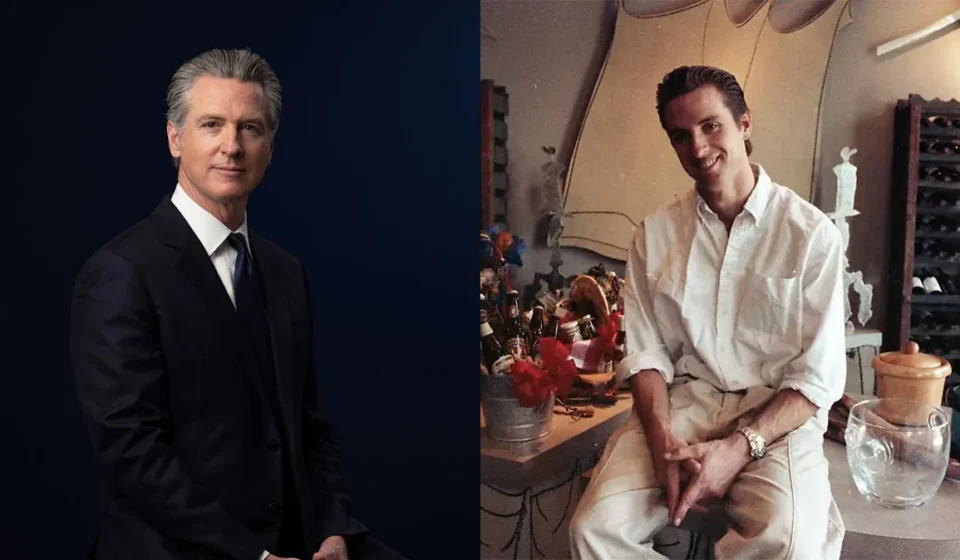
Long before setting his sights on the governor’s mansion in Sacramento, a young, ambitious Newsom sought to dismantle the pretension often surrounding fine vintages. A lifelong oenophile whose appreciation for the fruit of the vine was forged in his youth, Newsom’s journey into the industry is a quintessential California story. It winds from high-end San Francisco establishments and Shakespearean literary references to municipal code battles, ultimately laying the foundation for a political career that would eventually lead him to the highest office in the nation’s most populous state.
In a wide-ranging interview for Robb Report’s The Oeno Files newsletter, Newsom opened up about his roots in the wine business, the ethos behind the multimillion-dollar PlumpJack Group, and the pressing economic challenges facing California’s agricultural backbone today—including oversupply, global trade wars, and the human cost of the state’s signature industry.
The Main Facts: A Dual Legacy in Wine and Governance
Governor Gavin Newsom’s footprint on the California wine landscape is indelible. Co-founded in San Francisco in 1992 alongside a group of partners—including oil heir and composer Gordon Getty—the PlumpJack Group began as a single retail wine shop and has since blossomed into a hospitality empire. Today, the portfolio includes landmark Napa Valley properties such as PlumpJack, Cade, and Odette wineries, alongside upscale restaurants and hotels, managed by a leadership team that includes general manager John Conover and Newsom’s sister, Hilary.
When Newsom was elected governor of California in 2018, he placed his ownership interests in the PlumpJack Group into a blind trust to avoid conflicts of interest. Yet, his affinity for the industry remains undiminished. While his palate leans heavily toward classic Oakville Cabernets, Burgundies, Chablis, Pinot Noirs, and Italian whites, Newsom maintains that his relationship with wine has always been about consumption and connection rather than passive collection.
"I’ve always been more interested in drinking and sharing wine than displaying it," Newsom notes.
Chronology: From Family Bonds to Business and Bureaucracy
To understand Newsom’s entry into the wine trade is to understand a personal history defined by familial connection, youthful audacity, and accidental bureaucratic intervention.
The Father-Son Connection
Newsom’s initiation into the world of wine began at home. Growing up in San Francisco, wine served as a bridge to a father who could sometimes be difficult to reach on an emotional level.
"Wine was one of the things I could connect with my dad about," Newsom shares. "Food, wine, and travel were a big part of his life. Because he could sometimes be emotionally hard to reach, wine became a kind of shared language between us—a way to sit together, talk, learn, and connect without having to force the conversation."
The Birth of PlumpJack (1992)
That early appreciation catalyzed a business venture in 1992. Over a dinner at San Francisco’s Balboa Cafe with his father and Pat Kelley—who previously owned a nearby wine shop—a 24-year-old Newsom became fixated on a singular concept: making fine wine accessible.

"I became fixated on this idea of making fine wine more accessible—a store that wasn’t the discount rack but also wasn’t some precious place for the initiated, where people could discover great wine at an accessible price," Newsom recalls.
He raised $174,000 from 15 friends and family members, quit his job, and spent nearly two years navigating permits and scraping together the capital. The name "PlumpJack" was drawn from Sir John Falstaff, the irreverent, larger-than-life character in Shakespeare’s plays and the inspiration for Gordon Getty’s opera.
"I loved that Falstaff mocked stuffiness and celebrated the absurdity of life," Newsom says. "That was precisely the attitude we wanted to bring to wine."
The Accidental Politician
The transition from entrepreneur to politician was, ironically, sparked by a municipal health code enforcement. While running his carpeted wine shop, the San Francisco Department of Health required Newsom to install a mop sink—a bureaucratic hurdle that piqued his interest in local governance.
What began as frustration with red tape evolved into a career in public service. Newsom accepted a role on the San Francisco Parking and Traffic Commission, subsequently won a seat on the city’s Board of Supervisors, and eventually ascended to the mayor’s office in 2003 before moving up the political ladder to lieutenant governor and, ultimately, governor in 2018.
Supporting Data: Navigating California’s Wine Glut and Economic Realities
While Newsom stepped away from active management of his hospitality holdings upon taking office, the health of California’s wine industry remains a critical economic issue for his administration. The state’s agricultural sector has faced monumental headwinds in recent years, testing the resilience of growers, winemakers, and laborers alike.
The Vineyard Crisis
Over the past year, the California wine industry has reeled from a severe oversupply of wine grapes. The market imbalance forced growers to take drastic measures, ripping out an estimated 40,000 acres of vines and leaving roughly 100,000 tons of grapes unharvested.
When asked what the state has done to address the glut, Newsom emphasizes the limitations of executive power in a free-market economy.
"Government cannot manufacture consumer demand or wave a wand and correct an oversupply that developed over many years," Newsom states. "Across the agriculture industry, we’ve supported California growers through research, pest prevention, water resilience, and market development."
At the same time, Newsom maintains a strict firewall between his past life in the private sector and his public responsibilities. "I’ve gone out of my way throughout my public career to ensure my personal history in the wine business never influences state policy."

Official Responses and Trade Policy Pressures
Beyond domestic oversupply, California vintners face significant threats from international trade dynamics. Newsom is quick to point out that federal trade policies have frequently exacerbated the struggles of local producers.
"Right now, one of the worst things Washington could do is make a difficult market even harder," Newsom warns. He points specifically to past federal trade tensions, noting that "President Trump’s trade war with Canada has helped trigger retaliation and restrictions on American wine in what has been our largest export market. It’s exactly the opposite of what California growers need."
Demystifying the Industry Workforce
Addressing the common public perception that vineyards and wineries are solely the playgrounds of the ultra-wealthy, Newsom pushes back against the monolithic view of the industry.
"The industry is incredibly diverse," he asserts. "Yes, there are wealthy vineyard owners, but there are also thousands of farmers, small and multigenerational wineries, farmworkers, cellar workers, truck drivers, restaurant, and hotel employees whose livelihoods depend on this industry."
According to state figures, California wine alone supports more than 422,000 jobs. It is this sprawling socioeconomic footprint, Newsom argues, that makes external shocks like tariffs and trade retaliations so damaging to communities across the state.
Implications: Personal Reflection and Future Outlook
As Newsom reflects on his journey—captured in part by the themes of his book, Young Man In A Hurry—he views his impatience and ambition not just as political drivers, but as deeply personal traits. The title, originally drawn from a 2009 Economist article, has evolved from a critic’s shorthand into a self-assessment of the drive that shaped his career in business and politics.
"It came from a 2009 Economist article about me—not exactly a compliment at the time—and years later I realized how much truth there was in it," Newsom reflects. "I came to see it less as somebody else’s critique than as a self-critique: the impatience, ambition, insecurity, and constant need to keep moving that have shaped so much of my life."
If readers take away one thing from his reflections, Newsom hopes it is an understanding of human complexity. "That people are more complicated than their caricatures, including me. Writing this book forced me to scrutinize rather than sanitize my life, to understand my parents and my family differently, and ultimately to discover things about myself that I hadn’t fully understood before."
And when asked, purely hypothetically, what wines he would choose to pour at a White House state dinner, Newsom offers a characteristic quip, proving that his competitive edge—and his loyalty to independent viticulture—remains as sharp as ever:
"For now, my answer is anything but Trump Wine."
Related posts: