The Great Homogenization: Why America’s Cities Are Losing Their Soul and How to Find It Again

From the sun-drenched corridors of Miami to the high-altitude streets of Denver and the sprawling boulevards of Los Angeles, a peculiar, creeping phenomenon is reshaping the American urban experience. Travelers hopping from one major metropolitan hub to the next are increasingly met with a sense of déjà vu. The local coffee shop, the "authentic" artisan eatery, and the boutique retail experience have begun to bleed into one another, creating a landscape of manufactured charm that feels less like a destination and more like a franchise.
For years, many travelers viewed domestic trips as "placeholders"—the domestic transit taken between the grand, life-changing international expeditions. However, as the frequency of U.S. travel has increased, a startling realization has emerged: the United States is undergoing a "Great Assimilation." The question for the modern traveler is no longer just "where should I go?" but "what is left of the local spirit when every city offers the same, sanitized version of ‘cool’?"
The Chronology of the Bland: How We Got Here
The homogenization of American cities did not happen overnight; it is the culmination of several decades of shifting economic, social, and technological trends.
The Mid-Century Expansion
To understand the current malaise, one must look back. When our grandparents saw the proliferation of mid-century modern suburbs or the rapid expansion of "Main Street" vernacular architecture across the American West, they were witnessing the early stages of standardized design. At the time, this was heralded as progress—a way to bring order and efficiency to a rapidly expanding nation.
The Lockdown Catalyst
The COVID-19 pandemic acted as an accelerant. During the extended period of travel restrictions, the hospitality industry was forced to pivot. Digital menus, QR codes, and contact-free service became the industry standard. As the world emerged from lockdowns, these utilitarian, cost-saving measures remained. What was meant to be temporary became permanent, stripping away the tactile, personal touch of the dining experience in favor of an efficient, tech-first model.
The Rise of "Luxury Casual"
Post-2021, we entered the era of "luxury casual." This is a highly curated aesthetic—glossy, photogenic, and designed to look perfect on a social media feed. It is an engineering of "discoverability" where businesses prioritize the "Instagrammable" moment over the organic, messy, and authentic grit that once defined local culture.
The Economics of Erasure: Supporting Data
The shift toward uniformity is not merely an aesthetic choice; it is a calculated economic strategy.
The Private Equity Takeover
A silent, systematic takeover of urban centers is currently underway, led by private equity-backed groups and national restaurant conglomerates. These entities possess the capital to buy out beloved local institutions that are struggling under the weight of ballooning commercial rents.
Data indicates that in neighborhoods undergoing rapid gentrification, the rate of displacement for independent small businesses is significantly higher than that of corporate chains. While homeowners in these areas may see an increase in property value, the cultural cachet of the neighborhood—the very reason it became "cool" in the first place—is often sacrificed.

The "Stretched" Business Model
When a successful, independent local joint is purchased by a larger group, the business model often shifts toward multiplication. A single-location icon is stretched into a multi-location chain to maximize revenue. While the food may maintain its original branding, the soul of the establishment—the specific independence and idiosyncratic care of the founder—is invariably diluted. This is the "franchise-creep" that transforms a unique city experience into a predictable, replicable commodity.
Perspectives from the Ground: Official and Community Responses
Urban planners, small business owners, and sociologists are increasingly divided on whether this trend is an inevitable stage of urban development or a death knell for local identity.
The Perspective of the Developer
Proponents of current development models argue that the "sanitized" aesthetic is what the modern consumer demands. Developers point to the success of districts like the new Steel District in Sioux Falls, South Dakota. Here, sleek, modern architecture and high-end dining options have created a "destination" that competes with national hubs. They argue that these developments provide the infrastructure necessary for cities to grow and remain economically competitive in a global market.
The Perspective of the Local
Conversely, many residents and long-time travelers argue that this growth comes at the cost of the "soul" of the city. During a recent visit to Sioux Falls, the juxtaposition was stark: the Steel District offered fantastic, high-end food, but the prices mirrored those of Los Angeles, and the atmosphere felt disconnected from the rugged charm of the surrounding Falls Park. The concern is that if every city becomes a mirror of the next, there is no longer a reason to travel at all.
Implications for the Future of Travel
The homogenization of American cities has profound implications for how we experience our own country. If we continue on this trajectory, we risk losing the "unexpected" element of travel—the serendipitous discovery of a place that feels truly distinct.
The Resistance: Where the Locals Still Win
Authenticity has not disappeared; it has simply migrated to where the algorithm of private equity cannot easily reach. There are pockets of resistance, places that refuse to succumb to the "luxury casual" playbook.
- Estes Park, Colorado: This town stands as a fortress against the encroaching chain-hotel culture. By prioritizing local experiences—such as the handmade goods at Coffee on the Rocks—the town keeps the traveler in the present moment. The focus here is on the human interaction: the barista who is a local resident, the moonshine, and the saltwater taffy.
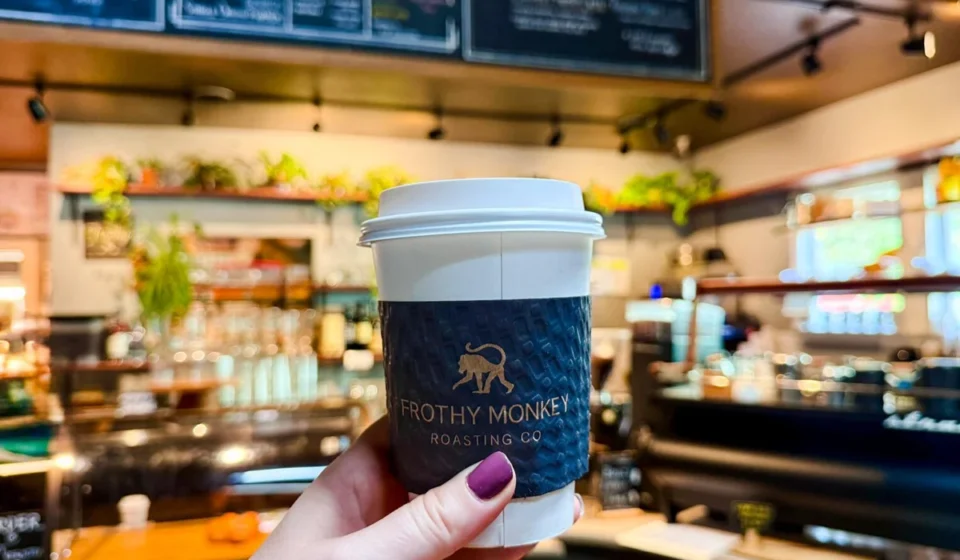
- 12South, Nashville: This neighborhood provides a roadmap for a balanced future. It successfully integrates national brands like Madewell or Lululemon alongside long-standing local institutions like White’s Mercantile and Frothy Monkey. It proves that the "comfort of the familiar" can coexist with the "character of the local" if there is a commitment to preserving the existing architecture and community vibe.
- Burbank, California: Magnolia Boulevard remains a testament to the power of independent commerce. Shops like Audrey K and local food institutions like Romancing the Bean and Porto’s thrive because they offer something that cannot be replicated by a national conglomerate. They are rooted in the neighborhood’s history and personal relationships.
Conclusion: A New Mindset for the Modern Traveler
The ultimate "souvenir" of modern travel is no longer the trinket or the photograph of a trendy, standardized cafe; it is the knowledge of how to look past the surface.
To combat the "Great Assimilation," travelers must shift their approach. While it is tempting to flock to the latest trending neighborhood, the most rewarding experiences are often found on the periphery. We must practice "connective travel"—a slower, more intentional pace that seeks out the places that have not yet been sanitized for mass consumption.
The center of our cities may be standardizing, but the edges remain vibrant. The challenge for the future is to support these local pockets, recognizing that when we choose the independent boutique or the family-run cafe over the national chain, we are not just buying a product—we are investing in the preservation of the unique, messy, and wonderful spirit that makes a city a home. Travel, at its best, should be a lesson in difference, not a confirmation of the same. By shifting our habits, we ensure that "local" remains a living, breathing reality rather than a marketing term for the next glossy, pre-packaged development.