
For the first time in a decade, the Berlin-based Georgian artist Thea Djordjadze has returned to the New York art scene, bringing with her a profound, site-specific meditation on space, memory, and architectural dialogue. Her solo exhibition, A well of night, currently on view at Sprüth Magers through October 24, 2026, marks a pivotal moment in her career, offering a rare look at how she recalibrates her practice in response to the distinct history of New York’s gallery landscapes.
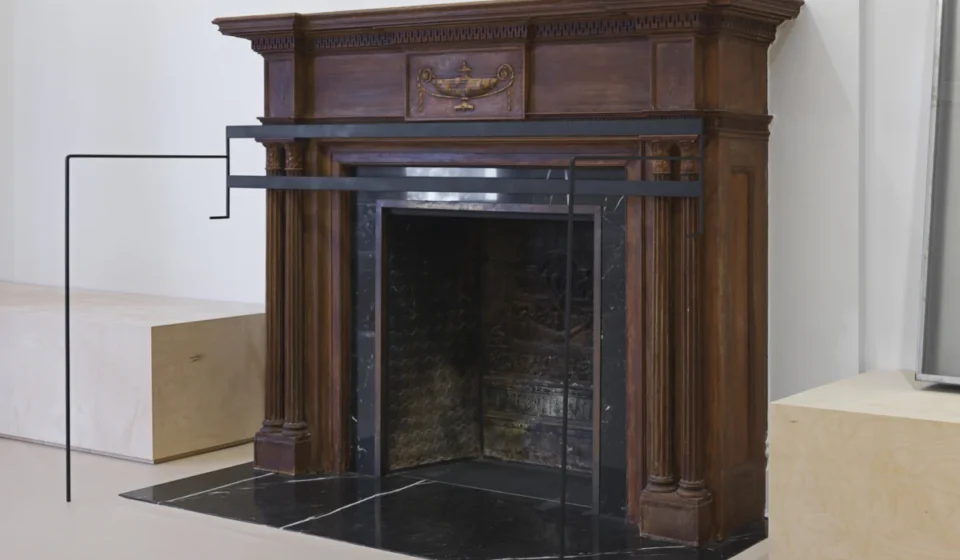
Known for her ephemeral, sculptural environments that challenge the permanence of the museum setting, Djordjadze has transformed the Sprüth Magers gallery into a living, breathing organism. By engaging with the building’s neo-Renaissance architecture, she has created an installation that feels less like an exhibition and more like an immersive, architectural intervention.
The Essence of the Exhibition: A Well of Night
At the heart of A well of night lies a central paradox: the artist utilizes cold, industrial materials—steel, aluminum, and plaster—to evoke feelings of intimacy, vulnerability, and domesticity. The exhibition is a tapestry of the old and the new, featuring a selection of existing pieces alongside a series of newly commissioned sculptural paintings.
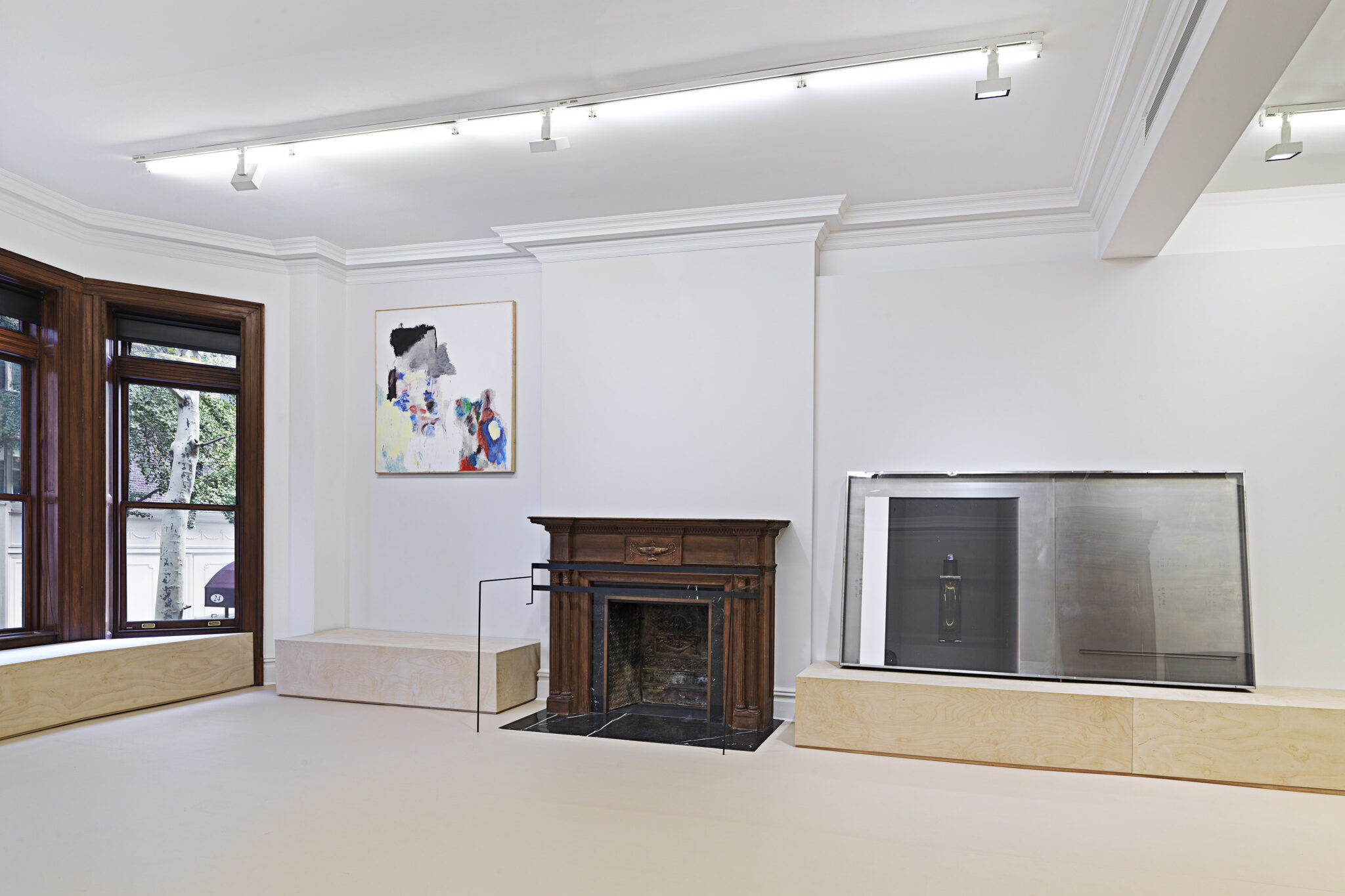
Djordjadze’s approach is fundamentally intuitive. She describes her process as "listening"—to the void, to the structural bones of the building, and to the inherent characteristics of her own materials. This sensitivity has allowed her to move beyond the traditional role of a sculptor, positioning herself instead as a choreographer of space.
The Intersection of Painting and Sculpture
One of the most striking elements of this show is the introduction of new plaster relief paintings. By working rich pigments into porous, layered surfaces over a creamy plaster ground, Djordjadze blurs the lines between two-dimensional painting and three-dimensional form. These works function as sculptural entities that possess the tactile warmth of ancient frescoes while retaining a contemporary, abstract edge.
Chronology and Evolution of an Artistic Practice
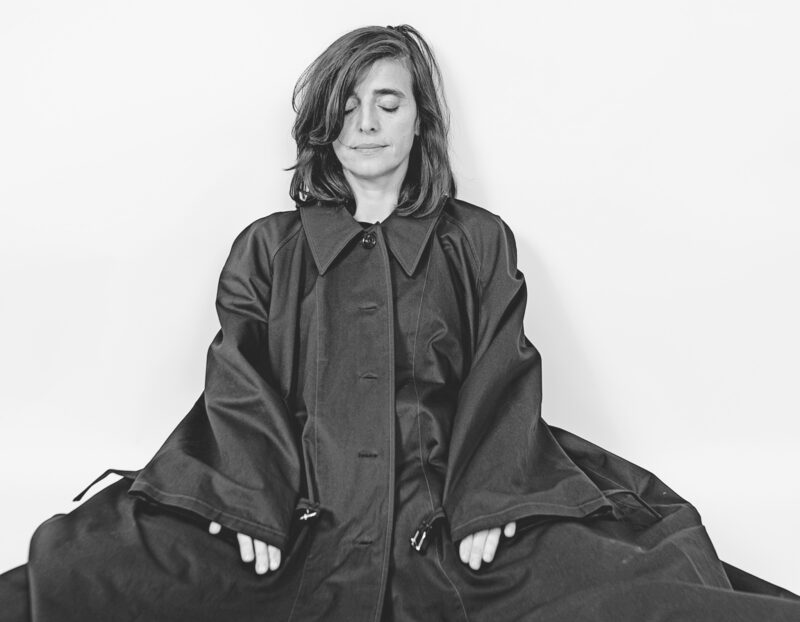
Thea Djordjadze’s journey to this moment has been characterized by a restless, iterative process. Her work is famously described as "never finished." For the artist, each exhibition is merely a pause in a continuous cycle of re-evaluation.
From Tbilisi to Berlin and Beyond
Djordjadze’s aesthetic is deeply rooted in her Georgian heritage, yet she has spent much of her career navigating the international art capitals of Berlin and Cologne. Her work often carries the traces of this displacement, reflecting a preoccupation with how objects travel, migrate, and find new meanings in foreign contexts.
Her history with display forms is a testament to this evolution. In 2017, she began integrating steel vitrines into her installations, a direct reference to the mid-century exhibition furniture designed by Georgian anthropologist Alexander Javakhishvili and painter Avtandil Varazi for the State Museum of Georgia in Tbilisi. By adopting these specific, historical display structures, she invites the viewer to consider how the act of "displaying" art is itself a cultural and historical construct.
The Decade-Long Hiatus
Returning to New York after ten years is a significant milestone. In the interim, the city’s gallery scene has shifted, and the discourse around site-specific installation art has evolved. Djordjadze’s return provides a masterclass in how to occupy a space without overpowering it. Unlike artists who fill rooms with loud, competing installations, Djordjadze subtracts. She modifies the floor, light, and sightlines to coax the viewer into a state of quiet observation.
Supporting Data: Materiality and Spatial Dynamics
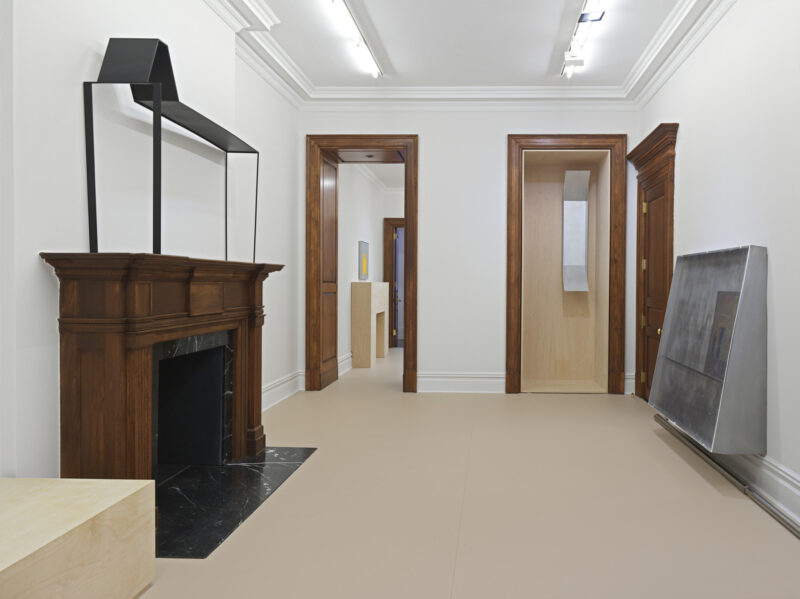
The technical execution of A well of night relies heavily on the manipulation of the gallery’s atmosphere. To counteract the "darkness" suggested by the exhibition’s title, Djordjadze has opted for a subtle, transformative maneuver: she has covered the gallery’s dark, traditional hardwood floors with a light-colored, reflective vinyl.
Architectural Interaction
This simple modification serves two purposes:
- Spatial Blurring: The light floor makes the floor plane appear to lift, detaching the viewer from the heavy reality of the wood beneath and creating a sense of weightlessness.
- Reflective Engagement: The vinyl acts as a mirror to the ceiling and the walls, effectively making the building’s neo-Renaissance details part of the art itself.
The steel vitrines scattered throughout the show further this theme of reflection. The prints sealed behind plexiglass do not just present an image; they force the viewer to see themselves reflected in the glass, thereby integrating the audience into the "well of night."
Official Perspectives and Artist Philosophy
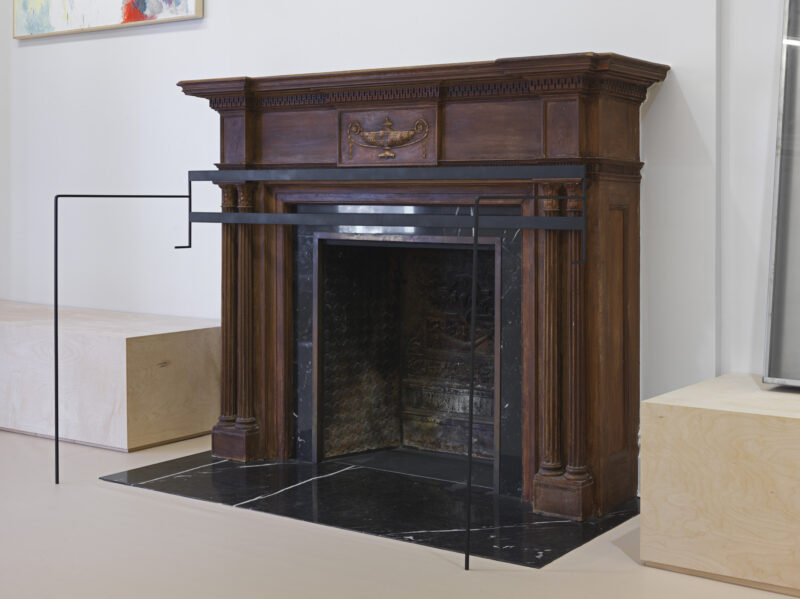
In a 2024 conversation with Elephant, Djordjadze articulated the collaborative nature of her work. "For me, the building and the design and the architecture are very important," she stated. "The sculpture is making decisions; it’s telling me where to go, how to be positioned. It’s not only me. It’s the interaction between me and the sculpture and the building."
This philosophy positions the artist not as the sole creator, but as a facilitator. She views her sculptures as active participants that have the agency to dictate their own placement. This humble approach to art-making is what makes her work so enduring; it is devoid of ego and centered entirely on the dialogue between object and environment.
The Implications of the Exhibition
What does A well of night mean for the current landscape of contemporary art? In an era where digital saturation and high-velocity consumption are the norms, Djordjadze’s work demands a radical slowing down.

Impact on Site-Specific Art
The exhibition challenges the notion that a gallery is a "white cube" or a neutral container. By treating the space as a primary medium, Djordjadze argues that the context of art is inseparable from the art itself. This has broader implications for how museums and galleries might approach installation in the future—encouraging a move away from "white-wall" neutrality toward a more nuanced, site-sensitive engagement.
The Cultural Resonance of Memory
Furthermore, by weaving in references to Georgian history through her use of vitrines and display archetypes, she brings a layer of cultural memory to the heart of New York. Her work suggests that even within the most modern, globalized spaces, there are deep, subterranean currents of history waiting to be unearthed and reconfigured.
Conclusion: A Lingering Presence
Thea Djordjadze’s A well of night is an exhibition that resists simple categorization. It is at once a sculptural display, an architectural renovation, and a historical meditation. By inviting us to "listen to the void," the artist provides a space for reflection that is increasingly rare in the bustling, frenetic environment of Manhattan.

As visitors navigate the space, the boundaries between the dark, ornate history of the building and the cool, minimalist future of the installation begin to collapse. The exhibition is not merely a collection of objects to be looked at; it is a landscape to be inhabited. It is a testament to the fact that when an artist truly engages with their surroundings, they do not just fill a room—they redefine it.
Thea Djordjadze’s exhibition, A well of night, remains on view at Sprüth Magers, New York, through October 24, 2026. It stands as a profound reminder of the power of silence, the weight of history, and the endless possibilities of the void.
About the Author
Danine Alati is a 25-plus-year veteran of the interior design and art industry. Having spent over a decade at the commercial design publication Contract, she has since transitioned into luxury lifestyle media, contributing to prestigious titles such as Art Basel, AD PRO, and Galerie. Based in Brooklyn, she remains a keen observer of the evolving intersections between architecture, design, and contemporary art.