Beyond the Horizon: How Atlas Copco Group and Reputation Intelligence Are Rewriting Enterprise Risk Management

In the high-stakes world of global industrial manufacturing, corporate reputation is often viewed through the lens of macro-events—major product recalls, financial restatements, or high-profile public relations crises. Yet, according to modern risk management experts, catastrophic crises rarely materialize out of thin air. Instead, they are typically preceded by a series of low-whisper anomalies: minor market friction, inconsistent cross-channel messaging, uncoordinated local responses, and sluggish customer feedback loops.
Individually, these weak signals are easy to dismiss as background noise. Collectively, they form the early warning architecture of a major organizational crisis.
For Atlas Copco Group, a sprawling industrial titan specializing in air compression, vacuum solutions, industrial power tools, and assembly systems, navigating this complex landscape required a fundamental paradigm shift. Recognizing that traditional, reactive reputation management was no longer sufficient for an enterprise of its scale, the company overhauled its risk detection framework. By pioneering a proactive reputation intelligence model—recognized globally with Sprout Social’s 2026 Predictive Edge Award—Atlas Copco Group has established a new benchmark for how multinational corporations safeguard brand equity in a hyper-connected, AI-driven digital economy.
Main Facts: The Evolution from Monitoring to Intelligence
At its core, the transformation at Atlas Copco Group highlights a vital distinction in modern corporate governance: the chasm between reputation monitoring and reputation intelligence.
- The Limitation of Monitoring: Traditional reputation monitoring is inherently reactive. It tracks what has already happened—scanning review sites, tabulating social media mentions, and measuring shifts in public sentiment after a threshold has been crossed. By the time a monitoring alert triggers, the issue has usually escalated to the point of public visibility, forcing a defensive response.
- The Power of Intelligence: Reputation intelligence, conversely, stitches together disparate brand signals across global markets, fragmented communication channels, and localized social accounts. It provides the contextual connective tissue required to spot emerging behavioral patterns, decode their systemic implications, and empower leadership to intervene proactively before brand equity is compromised.
Data underscores the urgency of this transition. According to insights from Sprout Social’s Social Intelligence Report, the vast majority of enterprise teams require anywhere from one to two weeks to act upon intelligence gathered via social channels. A meager 10% of organizations manage to mount a response within hours.
This operational latency comes at a steep price: 86% of organizations confess that siloed or slow-moving insights have caused them to miss critical business opportunities, while 26% report that unaddressed customer friction points escalated into full-blown crises that could have been mitigated at inception.

Chronology: The Anatomy of a Modern Risk Model
Atlas Copco Group’s journey toward predictive resilience did not happen overnight. It required a methodical, multi-phased overhaul of how decentralized business units interact with public-facing digital assets.
Phase 1: Diagnosing the Blind Spots
Operating across dozens of countries and multiple specialized industrial divisions, Atlas Copco Group faced a classic enterprise dilemma: balancing centralized compliance and brand safety with the agility required for local marketing teams to engage regional audiences. Historically, the brand’s global risk posture was vulnerable to fragmentation. Local pages operated in siloes, content publishing standards drifted, and warning signs—such as declining engagement quality or recurring technical complaints—were buried in local repositories.
Phase 2: Shifting from Alerts to Anomalies
The company’s internal stakeholders realized that relying solely on sentiment spikes or viral negative mentions was a losing game. They began mapping out how historical crises evolved, discovering that risks consistently began as subtle operational friction: repeated user inquiries, inconsistent account naming conventions, off-brand visual content, inactive local pages, and declining sentiment curves.
Phase 3: Institutionalizing the Five-Step Framework
To systematically capture these variables, Atlas Copco Group implemented a rigorous, five-tier operational model designed to standardize oversight without stifling local autonomy. This structural evolution earned the enterprise the prestigious 2026 Predictive Edge Award, validating a framework built on early detection, absolute accountability, and cross-departmental integration.
Supporting Data & The Mechanics of the Five-Step Model
The mechanics of Atlas Copco Group’s award-winning reputation intelligence model rest on five foundational pillars, each supported by advanced social technology.
1. Catching Weak Signals Early
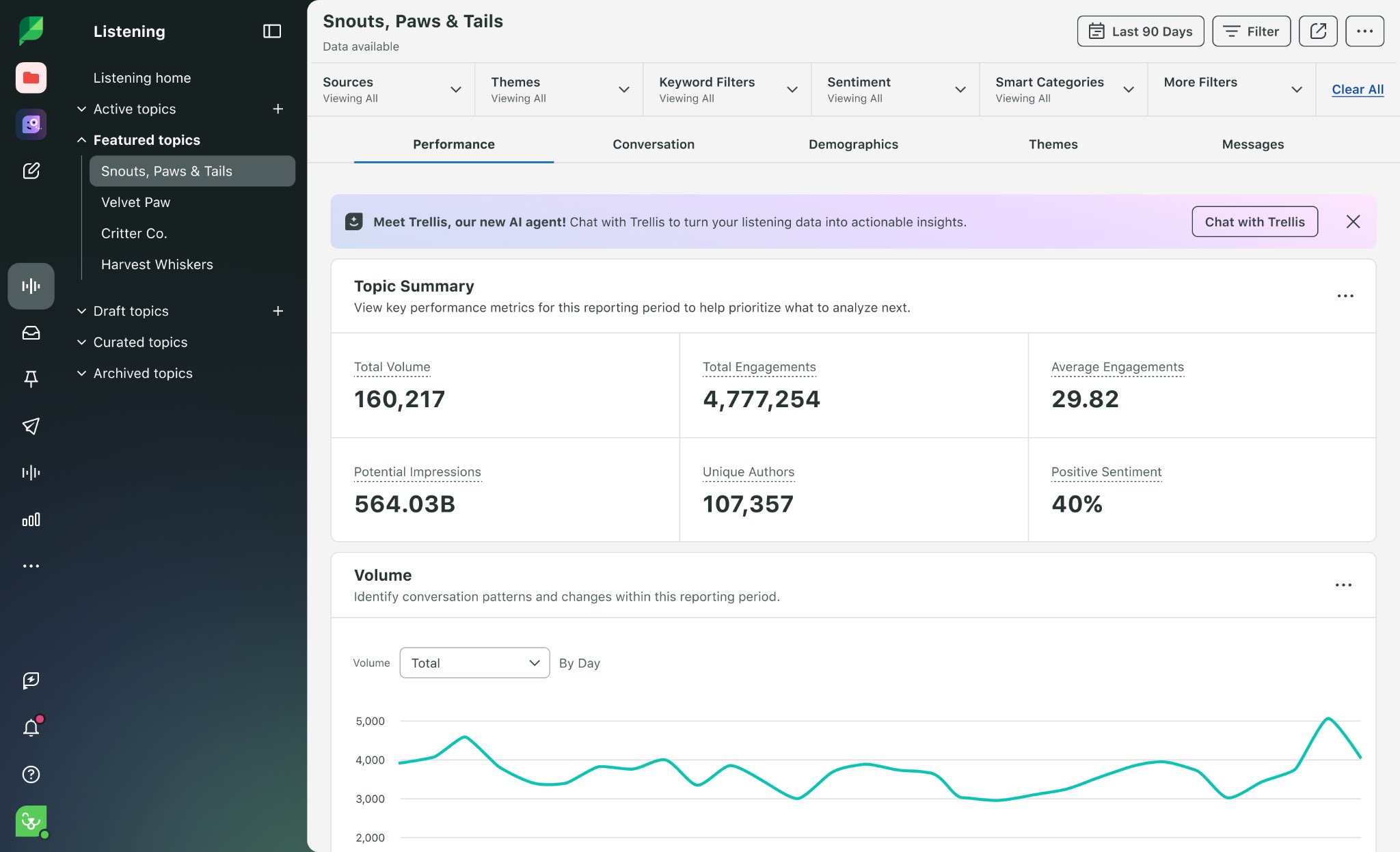
Rather than waiting for a crisis to breach the surface, Atlas Copco Group leverages Sprout Social Listening dashboards to track recurring behavioral anomalies across global channels. By working backward from known enterprise risks—analyzing what specific questions, customer complaints, or drops in engagement typically precede a negative shift—the central team can spot systemic issues early. This enables them to provide targeted guidance to local markets before minor inconsistencies manifest as major brand liabilities.
2. Establishing a Clear Governance Framework
Insights are useless if operational teams do not know who owns the response. Atlas Copco Group instituted a comprehensive social media action matrix. This framework defines explicit lines of ownership for every digital asset, dictates mandatory daily content checks, and mandates comprehensive account health scorecards published bi-annually.
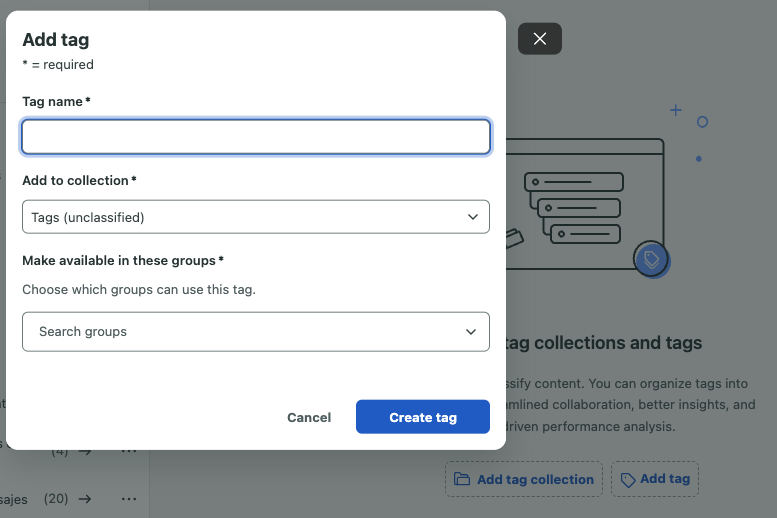
To operationalize brand safety, the team utilizes Internal Tagging in Sprout Social. This allows administrators to categorize content by quality and compliance metrics, immediately identifying which business units are adhering to global brand standards and which require operational intervention.
3. Standardizing Account Health Metrics
To eliminate subjective evaluations of digital performance, Atlas Copco Group enforces a unified matrix of key performance indicators (KPIs). Brand health across global markets is evaluated by synthesizing activity levels, brand compliance scores, response times, and audience engagement metrics into a single, objective composite view.
Using Sprout Social’s Profile Performance Report, leadership can seamlessly benchmark disparate regional profiles against one another, identifying training gaps, resource shortages, or structural accountability failures instantly.
4. Connecting Social Insights to Leadership Decisions
Historically, social media data has been quarantined within marketing and communications departments. Sprout Social’s research reveals that only 36% of organizations successfully feed social insights into broader enterprise decision-making processes.
Atlas Copco Group shattered this silo. By integrating reputation intelligence into enterprise risk management and executive communications planning, the company ensures that board members and C-suite executives have real-time visibility into shifting market perceptions, supply chain anxieties, or emerging operational risks captured via digital channels.
5. Operationalizing Internal Support
Crucially, Atlas Copco Group’s governance model is designed to be supportive rather than punitive. When central listening tools identify a regional account slipping in health or consistency, the response is tailored: struggling teams may receive specialized training, clarified asset ownership directives, or escalated administrative support. This ensures local managers feel backed by the enterprise while corporate leadership retains total visibility.
Official Responses and Industry Perspectives
The integration of advanced artificial intelligence into reputation intelligence has added a new dimension to how global enterprises process digital risk. With generative AI accelerating the volume, speed, and sophistication of content creation across the internet, brands face an unprecedented deluge of data.
Industry analysts note that while brand safety tools have become mandatory for filtering out emerging threats, the sheer scale of modern digital conversation often creates overwhelming cognitive noise for human analysts.
"Artificial intelligence is an extraordinary force multiplier for data ingestion, but it cannot replace human judgment," notes enterprise risk management specialists. "AI can flag patterns and surface anomalies at lightning speed, but contextualizing why a cultural shift is happening requires human insight, empathy, and strategic calculation."
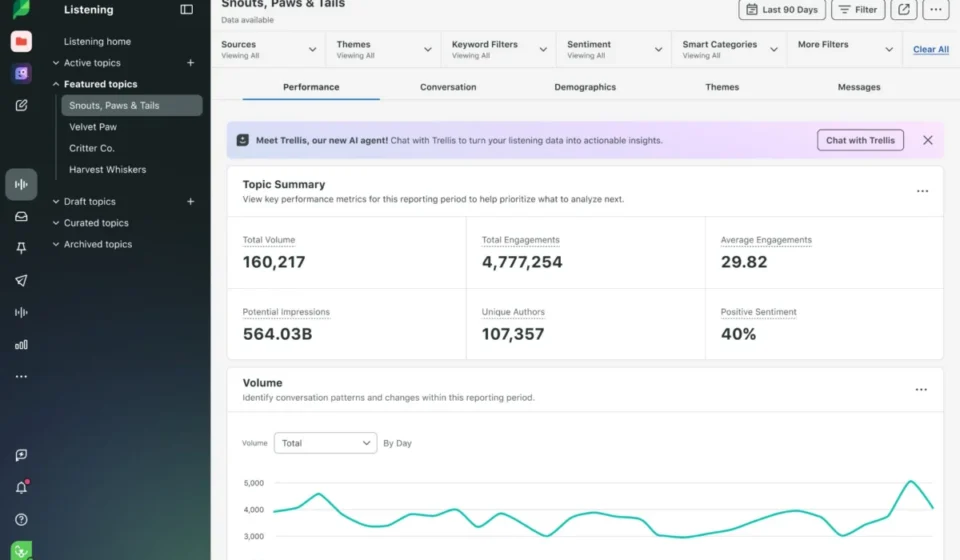
To bridge this gap, modern intelligence frameworks are increasingly turning to advanced AI agents. Tools like Trellis, Sprout Social’s AI-powered teammate for social intelligence, are designed to synthesize massive lakes of social data, instantly extracting actionable context for executive reporting. Instead of forcing human teams to manually piece together fragmented data points, AI-driven architectures distill the noise into clear, strategic narratives that executives can act upon immediately.
Implications: Where Is Your Reputation Risk Hiding?
The success of Atlas Copco Group’s proactive model offers a stark wake-up call for modern executives. In an era where brand trust can be eroded in minutes by decentralized errors or unaddressed digital friction, passive monitoring is no longer a viable risk mitigation strategy.
Organizations looking to evolve their reputation management systems must critically evaluate their current posture by addressing four core operational questions:
- Do you have visibility into weak signals? Can your current tech stack identify recurring customer complaints and micro-trends before they manifest as public relations crises?
- Are your digital assets governed consistently? Do you maintain clear, accountable frameworks across decentralized local markets, or are your regional social accounts operating in dangerous silos?
- Is social data reaching the C-suite? Are your reputation metrics actively informing enterprise risk management, or are they trapped exclusively within marketing dashboards?
- Are you effectively separating noise from signal? Does your team possess the technological capabilities—such as AI-driven listening tools—to process high-volume digital data without missing critical threats?
For Atlas Copco Group, answering these questions meant moving from a posture of defensive firefighting to one of strategic, predictive command. By treating reputation intelligence not as a marketing luxury, but as a core pillar of enterprise governance, the company has proven that protecting global brand equity in the 21st century requires looking not at the massive waves on the horizon, but at the subtle currents shifting underneath.
Related posts: