Hussmann Redefines Retail Efficiency: A Deep Dive into the New Era of Sustainable Refrigeration

The retail landscape is undergoing a seismic shift. As energy costs rise and environmental regulations tighten, food retailers are under unprecedented pressure to modernize their infrastructure. Hussmann, a global leader in food retail equipment and services, has responded to this challenge with a comprehensive suite of new refrigeration and technology solutions. By integrating sustainable refrigerants, smart digital management tools, and simplified installation systems, Hussmann is positioning itself at the forefront of the retail sustainability revolution.
The Core Innovations: Sustainability Meets Performance
At the heart of Hussmann’s latest product rollout is a commitment to natural refrigerants, specifically propane (R-290). As the industry moves away from high-global-warming-potential (GWP) hydrofluorocarbons (HFCs), Hussmann’s latest equipment line serves as a blueprint for the future of grocery and convenience store cooling.
The centerpiece of this launch is the RLN-A merchandiser, equipped with the proprietary Microblock Technology. This technology is not merely an incremental update; it represents a fundamental change in how heat exchange is managed within a compact footprint. By optimizing airflow and thermal conductivity, the RLN-A minimizes energy consumption while maintaining the precise temperatures required for perishable food safety.
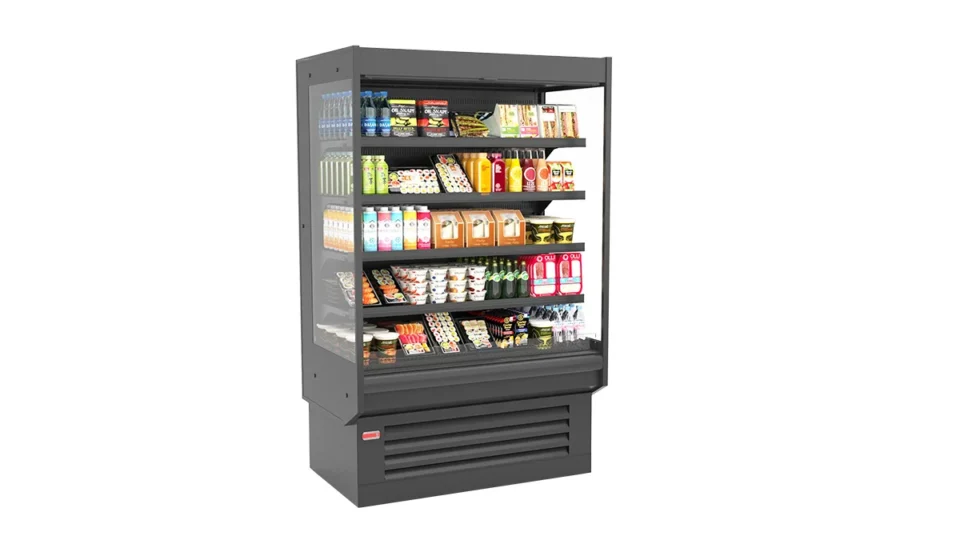
Complementing this are the new self-contained merchandisers designed specifically for the “grab-and-go” segment. As consumer behavior shifts toward quick-service and convenience-oriented shopping, these units provide retailers with the flexibility to place high-margin items—like salads, sandwiches, and chilled beverages—in high-traffic areas without the need for complex, centralized refrigeration piping.
Chronology of Innovation: From Design to Deployment
Hussmann’s path to this product release was not overnight. It is the result of a multi-year strategy focused on simplifying the “retail lifecycle.”
- 2021–2022: R&D Phase. Hussmann engineers prioritized the development of natural refrigerant-based systems in anticipation of tightening EPA regulations regarding HFC phase-downs. The goal was to maintain the cooling capacity of traditional centralized systems while achieving the portability of self-contained units.
- Late 2022: Prototyping the 4HP. The 4HP Outdoor Condensing Unit entered field testing. Its design was focused on the outdoor commercial environment, where durability and ease of maintenance are paramount.
- Early 2023: Integration of Digital Ecosystems. Recognizing that hardware is only half the battle, Hussmann began layering digital management solutions—Aperion Electronic Shelf Labels (ESL) and StoreConnect software—over their physical hardware.
- Q3 2024: Market Debut. The current rollout represents the commercial culmination of these efforts, bringing the hardware and software suites to the broader retail market.
Supporting Data: Why Efficiency Matters
The economic and environmental imperatives for these upgrades are clear. Retail refrigeration accounts for roughly 40% to 60% of the total energy consumption in a typical grocery store. By adopting Hussmann’s latest R-290 solutions, retailers are effectively targeting their largest operational expense.
- Energy Efficiency Gains: The Microblock Technology in the RLN-A series reduces energy draw by approximately 15–20% compared to traditional legacy merchandisers.
- Global Warming Impact: Propane (R-290) has a GWP of less than 3, compared to the thousands associated with traditional refrigerants. This transition allows retailers to meet state and federal environmental compliance targets years ahead of schedule.
- Simplified Installation: The Krack Monoblock system—an all-in-one condensing unit and evaporator—reduces on-site installation labor by an estimated 30%. Because the system is pre-charged and factory-tested, the potential for refrigerant leaks (which often occur during field brazing of copper lines) is virtually eliminated.
Digital Transformation: Aperion and StoreConnect
Hussmann has realized that modern refrigeration is not just about keeping food cold; it is about data visibility. The introduction of Aperion Electronic Shelf Labels (ESL) and StoreConnect software bridges the gap between the physical shelf and the retailer’s back office.
The Role of StoreConnect
StoreConnect provides a centralized dashboard for store managers. Instead of relying on manual temperature checks, StoreConnect offers real-time monitoring and predictive maintenance alerts. If a motor begins to draw abnormal current or a door seal fails, the system notifies the facility manager before a food-safety incident occurs.
The Power of Aperion ESL
Electronic shelf labels allow for dynamic pricing. In a food retail environment, this means the ability to automatically adjust prices based on expiration dates, inventory levels, or seasonal demand. When paired with the refrigeration management system, retailers can ensure that the pricing strategy is perfectly aligned with the shelf-life data of the products, reducing food waste—a massive cost driver in the grocery sector.
Official Perspectives: The Strategic Vision
In discussing these advancements, leadership at Hussmann emphasizes that the primary objective is “Retailer Empowerment.” By providing a one-stop-shop for both hardware and software, the company aims to reduce the complexity of the modern retail environment.
“Our goal is to remove the friction from retail operations,” a company representative stated. “When we design a unit like the Krack Monoblock, we aren’t just thinking about the cooling capacity; we are thinking about the technician who has to install it and the manager who has to ensure it runs 24/7. Sustainability is the baseline; operational excellence is the outcome.”
The company’s focus on the “Styleline” door systems for walk-in coolers further underscores this. These doors are designed with high-visibility glass and anti-fog technology, aimed at increasing product visibility and, consequently, conversion rates for retailers.
Implications for the Industry
The implications of Hussmann’s new technology suite are broad-reaching. For the retail sector, the trend is clear: the era of “dumb” refrigeration is ending.
1. Labor Optimization
By simplifying installation and automating monitoring, Hussmann is addressing the industry-wide shortage of skilled refrigeration technicians. The "all-in-one" nature of the new hardware means that general contractors, rather than specialized refrigeration technicians, can handle a greater portion of the setup.
2. Regulatory Compliance
As the EPA and international bodies continue to restrict the use of high-GWP gases, retailers who fail to transition to R-290 or CO2-based systems risk being forced into costly, unplanned emergency retrofits. Hussmann’s equipment provides a proactive pathway to compliance.
3. Food Safety and Waste Reduction
With real-time data provided by StoreConnect, retailers can maintain tighter temperature control, which directly correlates to extended product shelf life. In an industry where profit margins are razor-thin, reducing “shrink” (the loss of inventory) by even 1% can translate to millions of dollars in annual savings for large retail chains.
4. The Future of Small-Format Retail
The focus on self-contained units suggests that Hussmann is betting big on the growth of urban “micro-markets” and convenience stores. As retailers downsize their physical footprint to thrive in dense city centers, they require compact, reliable, and sustainable refrigeration that doesn’t require a dedicated plant room.
Conclusion
Hussmann’s latest product lineup is a testament to the fact that retail refrigeration is evolving into a high-tech, data-driven industry. By combining the physical durability of the Krack Monoblock and the RLN-A merchandisers with the analytical prowess of the StoreConnect and Aperion systems, Hussmann is offering retailers more than just equipment—they are offering a competitive advantage.
As the retail sector continues to navigate the dual pressures of economic uncertainty and environmental responsibility, these technological integrations will likely become the standard. Hussmann has effectively signaled that the future of the grocery store is efficient, transparent, and—above all—sustainably cool. Whether it is through the reduction of energy waste or the optimization of labor, the message is clear: the next generation of retail success will be built on the back of smart, integrated, and environmentally conscious refrigeration.