
Main Facts: The High-Stakes Art of Naming a Car
Naming a car is one of the most perilous, expensive, and critical exercises in corporate strategy. In the modern global marketplace, an automotive moniker must transcend linguistic barriers, clear rigorous legal hurdles across upwards of 170 countries, fit harmoniously within a manufacturer’s existing hierarchy, and evoke an elusive emotional resonance that convinces a consumer to part with tens of thousands of dollars.
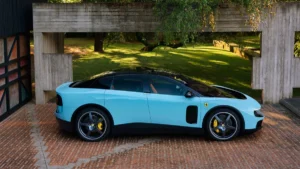
Yet, the industry is currently fracturing into two distinct ideological camps. On one side are heritage brands clinging to evocative, poetic, and historically rich nomenclature—such as Ferrari naming its forthcoming electric vehicle Luce (Italian for "light") or Maserati drawing on the poetry of desert winds like the Ghibli and Mistral. On the other side sits the burgeoning technocratic class of automakers churning out sterile, algorithmic strings of letters and numbers—think of the Honda e:Ny1, the Toyota bZ4X, and Tesla’s infamous S-3-X-Y lineup.
As the automotive landscape rapidly electrifies, the traditional art of naming a car is giving way to a new frontier of corporate risk management, linguistic blunders, and tech-world bravado.
Chronology: The Evolution of Automotive Identities
To understand how we arrived at today’s era of baffling alphanumeric codes and computer-generated syllables, it helps to look back at how car naming has evolved across the decades.
- The Mid-20th Century Golden Era of Americana: During the 1950s and 1960s, European drivers made do with modest, utilitarian monikers like the Austin Cambridge or the MG Midget. Meanwhile, across the Atlantic, American consumers grew up dreaming of rolling horizons fueled by grandiose, aspirational names: the Cadillac Eldorado, the Chevrolet Corvette Stingray, and the Dodge Charger. These were names designed to sell the American dream of infinite highway.
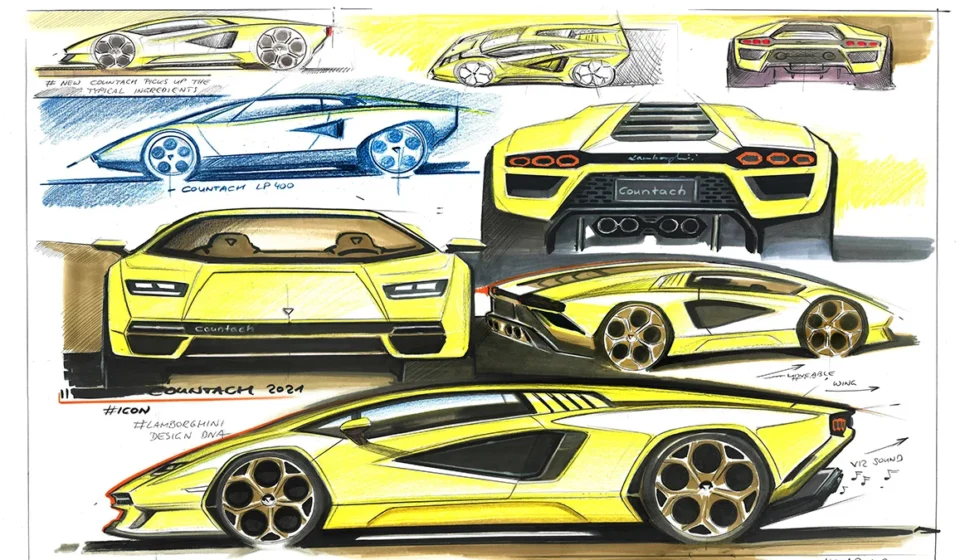
- The Rise of the Exotic and the Idiomatic: Simultaneously, European manufacturers leaned heavily into romance and geography. Maserati introduced the Quattroporte (literally "four-door") in 1963, while Lamborghini birthed an automotive legend in the early 1970s. As designer Marcello Gandini later recounted, the word Countach—born from an exclamation of amazement in a Piedmontese dialect—was slapped onto the prototype simply because the workshop team loved its phonetic punch. Similarly, Lancia’s Stratos and Alfa Romeo’s Disco Volante ("flying saucer") proved that a car could visually embody its name.
- The Corporate Consolidation and Globalization: As car companies scaled to become massive multinational entities selling products globally, the wild west of casual naming came to a halt. Legal departments grew more powerful, and the fear of trademark infringement meant that real words were increasingly locked down by competitors (such as Ford owning the rights to the "Model E").
- The Alphanumeric Pivot: Entering the late 20th and early 21st centuries, luxury marques leaned into structured matrices (BMW 3, 5, and 7 Series; Mercedes-Benz C, E, and S Classes). However, the arrival of the electric vehicle (EV) age triggered a modern free-for-all, prompting automakers to invent pseudo-futuristic tech jargon to signal zero-emissions propulsion.
Supporting Data: Linguistic Minefields and Global Blunders
The challenge of naming a product for a global audience cannot be overstated. When a name crosses international borders, it often steps straight into linguistic minefields. History is littered with brilliant cars handicapped by disastrous translation blunders:
- Mitsubishi Pajero: While marketed successfully as the Shogun in the United Kingdom, Mitsubishi’s rugged off-roader retained its original name, Pajero, globally. Unfortunately, in Spanish-speaking markets, the word translates into vulgar slang.
- Toyota MR2: In French-speaking territories, Toyota quickly realized that pronouncing "MR2" phonetically sounded dangerously close to vulgar French profanity. Consequently, the car was marketed simply as the MR (though, bizarrely, Canada was spared this linguistic sanitization).
- Audi e-tron: Audi faced widespread mockery for pushing ahead with its "e-tron" nomenclature for electric vehicles even in France, where "tron" serves as an informal root associated with excrement.
- Japanese "Lost-in-Translation" Marvels: Japan has historically provided some of the most delightfully eccentric names to ever grace a tailgate, including the Mazda Bongo Friendee, the Daihatsu Naked, the Nissan Cedric, and the wonderfully grandiose Isuzu Mysterious Utility Wizard.
Conversely, modern EV naming conventions have swung toward clinical abstraction. When Jaguar revealed the conceptual precursor to its upcoming electric era—the radical Type 00—it generated global controversy. Its production successor, the Type 01, features a "0" to signify zero tailpipe emissions and a "1" to mark a new corporate dawn. Critics point out that while corporate logic explains the numbers, it strips the soul away from a brand historically famous for names like E-Type, XK120, and F-Type.
Official Responses and Industry Perspectives
Automotive executives and legendary designers have long wrestled with the physics of phonetics and public relations when naming their creations.
When Ferrari Executive Chairman John Elkann revealed that the marque’s first pure-electric vehicle would be called Luce during a high-profile unveiling in San Francisco’s Transamerica Pyramid Sky Lounge, he leaned into heritage and subtle metaphor. Derived from the Italian word for "light," the name intended to evoke "seeing the light" rather than physical weight. Yet, digital reactions instantly exposed the challenges: English speakers frequently defaulted to pronouncing it "Lucy" rather than the correct Italian LU-chay. Despite the pronunciation hurdles, industry insiders largely applauded Ferrari’s bravery in sticking to an evocative, human name rather than falling back on an alphanumeric identifier.
On the other front sits the tech-adjacent disruption playbook, personified by figures like Elon Musk. Tesla’s vehicle lineup—intentionally ordered to spell S-3-X-Y (Model S, Model 3, Model X, Model Y)—demonstrates a disregard for chronological or linguistic convention in favor of internet culture and viral marketing. The aberrant "3" only entered the matrix because Ford steadfastly refused to relinquish the trademark rights to the "Model E." Musk proved that if a grand strategic or meme-worthy plan is in motion, traditional naming conventions are secondary.
Similarly, mass-market manufacturers caught in the EV transition have offered earnest justifications for complex names. Honda defended its bewildering e:Ny1 electric crossover, confirming to frustrated journalists that the alphanumeric tag didn’t actually translate to "anyone" (as optimistic punters had hoped), but was instead a calculated global brand identifier.
Implications: What the Death of the Car Name Means for Culture
The shift away from evocative, poetic car names toward algorithmic codes and clinical tech-speak has broader cultural implications.
For over a century, car names did more than just identify a product; they told a story. They evoked geographical romance (Maserati Ghibli), aspirational luxury (Cadillac Eldorado), or pure kinetic poetry (Lamborghini Countach). These names lived on in popular culture, song lyrics, and childhood daydreams. They anchored the automobile as an emotional object of desire rather than a mere consumer appliance.
As the industry pivots toward software-defined electric vehicles, automakers are increasingly treating cars like smartphones. Just as consumers easily digest iPhone generations, software updates, and processor numbers, manufacturers assume drivers will readily accept vehicles named after Wi-Fi passwords and spreadsheet entries—such as the Toyota bZ4X or the Honda e:Ny1.
Yet, the fierce public backlash that greets every bizarre new corporate designation—from Jaguar’s numeric resets to Audi’s unfortunate linguistic overlaps—proves that consumers still crave personality. People do not dream of queuing up to buy an alphanumeric string; they dream of running away with a Stingray, a Charger, or a Luce. Until tech innovators and traditional automakers alike remember that words matter, the parking lots of tomorrow risk becoming a very boring place indeed.
Related posts: