Safeguarding the Brand: The Modern Imperative of Corporate Reputation Management in a Digital-First Economy

In an era defined by instantaneous digital communication, a company can spend decades meticulously cultivating a pristine public image, delivering exceptional customer experiences, and building robust brand equity, only to see that hard-earned reputation evaporate overnight. Today, brand perception is no longer dictated solely by carefully crafted press releases or traditional advertising campaigns; it is forged, tested, and occasionally shattered in the real-time crucible of social media and online forums.
For modern marketing leaders and corporate executives, understanding and actively steering this narrative is no longer an optional auxiliary function—it is a core business survival strategy.
Main Facts: The High Stakes of Brand Perception in the 2020s
Corporate reputation management has undergone a profound transformation. It is no longer just about crisis PR or damage control after a scandal breaks; it is the proactive practice of monitoring public discourse, resolving operational friction swiftly, and amplifying positive brand moments to shape overarching public perception.
The digital ecosystem has fundamentally altered how crises materialize. According to data from a Q2 Sprout Social Pulse Survey, social media serves as the primary battleground where consumers encounter news of a brand crisis first. Furthermore, public expectations regarding corporate accountability have shifted dramatically: 64% of consumers insist that brands must respond publicly on social media during a crisis, rather than relying on traditional, sterile statements published on corporate websites or distributed via wire services.
The financial stakes are equally staggering. Citing research from the Phillips Group, trust is a critical decision-making factor for 63% of consumers and business stakeholders alike. This aligns with classic economic theory popularized by Harvard Business Review’s seminal work, Reputation and Its Risks, which notes that 70% to 80% of a modern enterprise’s market value stems from "hard-to-assess intangible assets" such as brand equity and goodwill.
When corporate reputation is compromised, the valuation of the entire enterprise takes a hit. Global risk assessments, including Aon’s comprehensive Global Risk Management Survey, now formally rank reputation and brand damage as one of the top ten critical risks facing organizations worldwide.
Chronology: Case Studies in Crisis and Recovery
To comprehend how corporate reputation management operates in practice, industry analysts frequently look to a timeline of real-world trials and strategic responses that define modern brand stewardship.
2018: The KFC #ChickenCrisis
One of the most legendary masterclasses in digital reputation management occurred in 2018, when KFC found itself facing a catastrophic supply chain failure in the United Kingdom that forced the temporary closure of over 750 restaurants. Consumer backlash was swift and severe.
Rather than hiding behind corporate jargon, KFC utilized social listening tools to gauge the rising anger and deployed an immediately self-aware, edgy response. The company rearranged the letters of its iconic logo on an empty chicken bucket to spell out a crude acronym, effectively signaling to the public: "We messed up."
This authentic, humorous, and deeply human apology instantly defused public tension, protected the brand’s long-term reputation, and turned a potential corporate disaster into a viral masterclass. Nearly a decade later, the #ChickenCrisis remains a textbook example of how radical transparency and social agility can salvage brand trust.

2025: The GameStop Merchandise Heist and Reddit Rumors
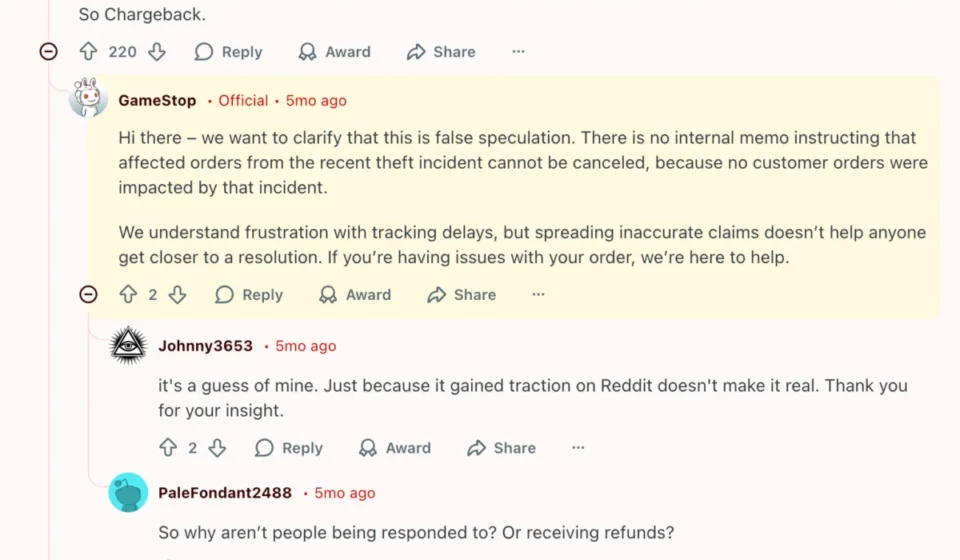
External factors outside a company’s direct control can trigger sudden reputational threats. In 2025, following a brazen $1.4 million merchandise heist involving stolen Nintendo Switch 2 consoles, a user on Reddit claimed that video game retailer GameStop had unjustly charged customers for unreceived pre-orders.
Instead of allowing the rumor to spread unchecked across digital forums, GameStop’s social media team mobilized immediately. Through rapid investigation and proactive engagement on Reddit, the team clarified the facts, assuring the public that no customer orders were financially impacted. This swift intervention stopped a viral misinformation campaign in its tracks, preserving customer trust and averting a broader public relations crisis.
Supporting Data: What the Metrics Reveal
Data-driven insights from industry benchmarks—including the Sprout Social Index and quarterly pulse surveys—reveal three foundational pillars governing modern corporate reputation:
- Audiences Demand Radical Authenticity and Trust:
According to recent data, 93% of consumers believe companies have a moral and operational obligation to address misinformation actively. Furthermore, consumers consistently rank "authenticity" as the single most critical quality they want brands to project online. Trust is no longer won through perfection, but through demonstrable honesty and active listening. - The 24-Hour Expectation Window:
Customer service and reputation management are inextricably linked. Sprout Social data indicates that 70% of consumers expect brands to respond to digital outreach within 24 hours. Brands that fail to meet these baseline response times frequently find customer sentiment turning sharply negative. - The Direct Link to Revenue Growth:
Reputation management directly impacts the bottom line. Academic studies tracking business visibility on platforms like Yelp have demonstrated that simply establishing and actively managing an online presence can yield an average revenue increase of 5% for local storefronts. At an enterprise level, robust brand trust lowers customer acquisition costs and drives higher lifetime value.
Official Responses and Strategic Frameworks
To navigate these treacherous waters, leading organizations have abandoned reactive firefighting in favor of structured, always-on reputation management frameworks. Integrating advanced technologies—such as AI-driven social listening platforms and predictive media monitoring tools like NewsWhip—allows modern marketing teams to operationalize reputation management across four distinct pillars:
1. Daily Monitoring and Predictive Listening
Manual monitoring is no longer sufficient to track the sheer volume of global digital conversations. Enterprises utilize automated listening queries to track sentiment across social media networks, news outlets, and independent forums. Predictive analytics tools can flag when a negative news story is gaining algorithmic momentum, allowing corporate communications teams to choose between issuing a rapid clarification or practicing strategic silence.
2. Authentic, Unified Engagement
When issues arise, responses must be personalized and empathetic. Utilizing centralized communication dashboards—such as Sprout Social’s Smart Inbox and Case Management workflows—ensures that incoming customer queries, complaints, and mentions are automatically categorized, assigned to the appropriate personnel, and tracked against strict response-time SLAs.
3. Comprehensive Crisis Preparedness
A resilient brand is a prepared brand. Organizations must establish formal crisis communication plans that clearly define internal roles, approval hierarchies, and messaging sign-offs long before a scandal hits. Centralizing these workflows through a dedicated social media newsroom model ensures that when a reputation risk materializes, the enterprise speaks with one swift, cohesive voice.
4. Rigorous Sentiment Measurement
To prove the value of reputation management to executive boards, marketing leaders must track concrete Key Performance Indicators (KPIs). Essential metrics include:
- Net Sentiment Score: The ratio of positive to negative mentions across digital channels.
- Share of Voice: How much of the industry conversation your brand controls compared to competitors.
- Average Response Time: The speed at which customer service and social teams address inbound outreach.
- Brand Health Index: Correlating positive social sentiment shifts with downstream increases in lead generation and customer lifetime value.
Implications for the Future of Corporate Governance
The evolution of corporate reputation management signifies a permanent shift in how corporate power is wielded and scrutinized. In a landscape where 46% of corporate reputations experienced a decline between 2019 and 2025 (according to the Axios Harris Poll), complacency is an existential threat.
Ultimately, corporate reputation management is no longer merely a tactical marketing function siloed within a social media department. It is an executive-level discipline that requires cross-departmental collaboration, real-time data intelligence, and an unwavering commitment to authenticity. By treating social media and digital forums not as broadcasting channels, but as listening posts and relationship-building engines, modern enterprises can protect their brand equity, weather inevitable crises, and turn public trust into their most valuable economic asset.
Related posts: