Navigating the 2026 Holiday Shopping Shift: How Economic Pressures and Social Commerce are Redefining Retail

As the retail landscape heads into the peak of the 2026 holiday shopping season, consumer habits are undergoing a profound transformation. Driven by economic anxieties, shifting perceptions of campaign timing, and the enduring dominance of social media as an all-in-one shopping destination, brands face a unique set of challenges and opportunities.
According to data from the Q3 2026 Sprout Social Pulse Survey—which polled over 2,200 consumers across the United States, the United Kingdom, and Australia—social media is no longer merely a top-of-funnel discovery tool. It has matured into a complex, multi-functional ecosystem where consumers search for gifts, execute purchases, and demand instant customer service.

Main Facts: The 2026 Holiday Shopping Landscape
The intersection of macroeconomic headwinds, shifting consumer preferences, and digital evolution has reshaped the parameters of holiday retail success.
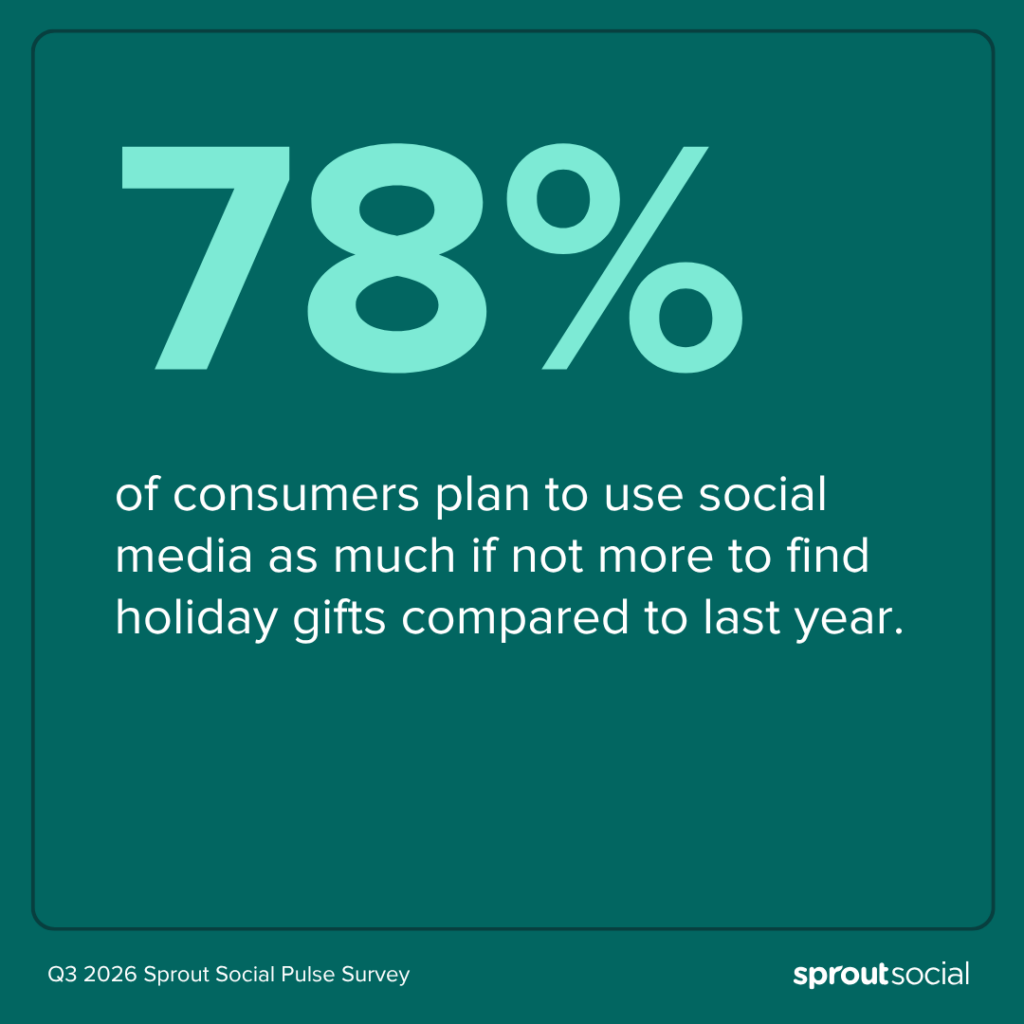
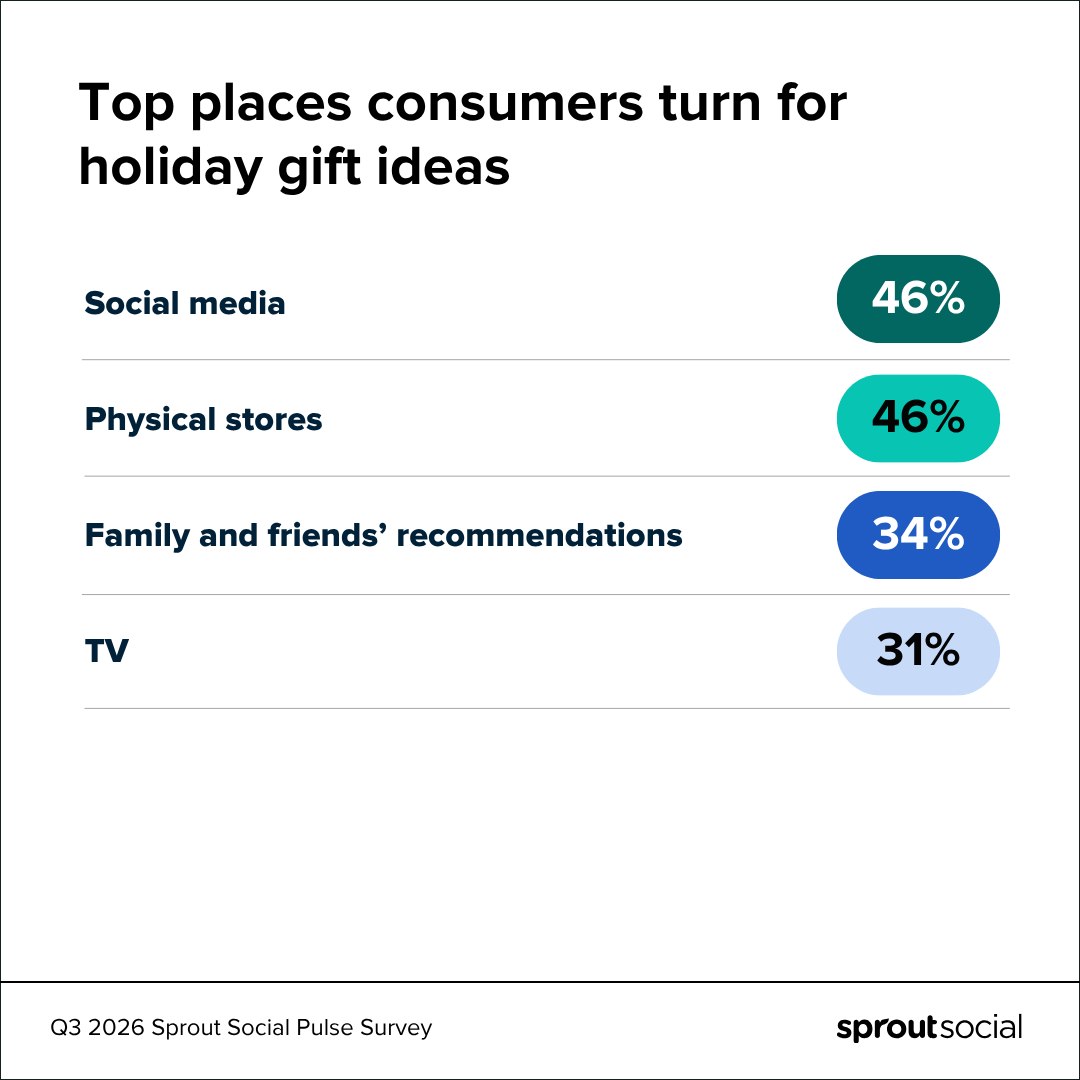
- Social Media Dominance: More than three-quarters (78%) of consumers plan to use social media just as much, if not more, to find holiday gifts compared to previous years. Social media now ties physical retail stores as the primary destination for holiday gift discovery (46%), a metric that jumps to over 50% among Gen Z and Millennials.
- Economic Pressures Drive Early Buying: Driven by lingering inflation and tariff-related price hikes, 56% of consumers plan to reduce their overall holiday spending. Consequently, 36% of shoppers plan to shop earlier than usual to beat potential price increases.
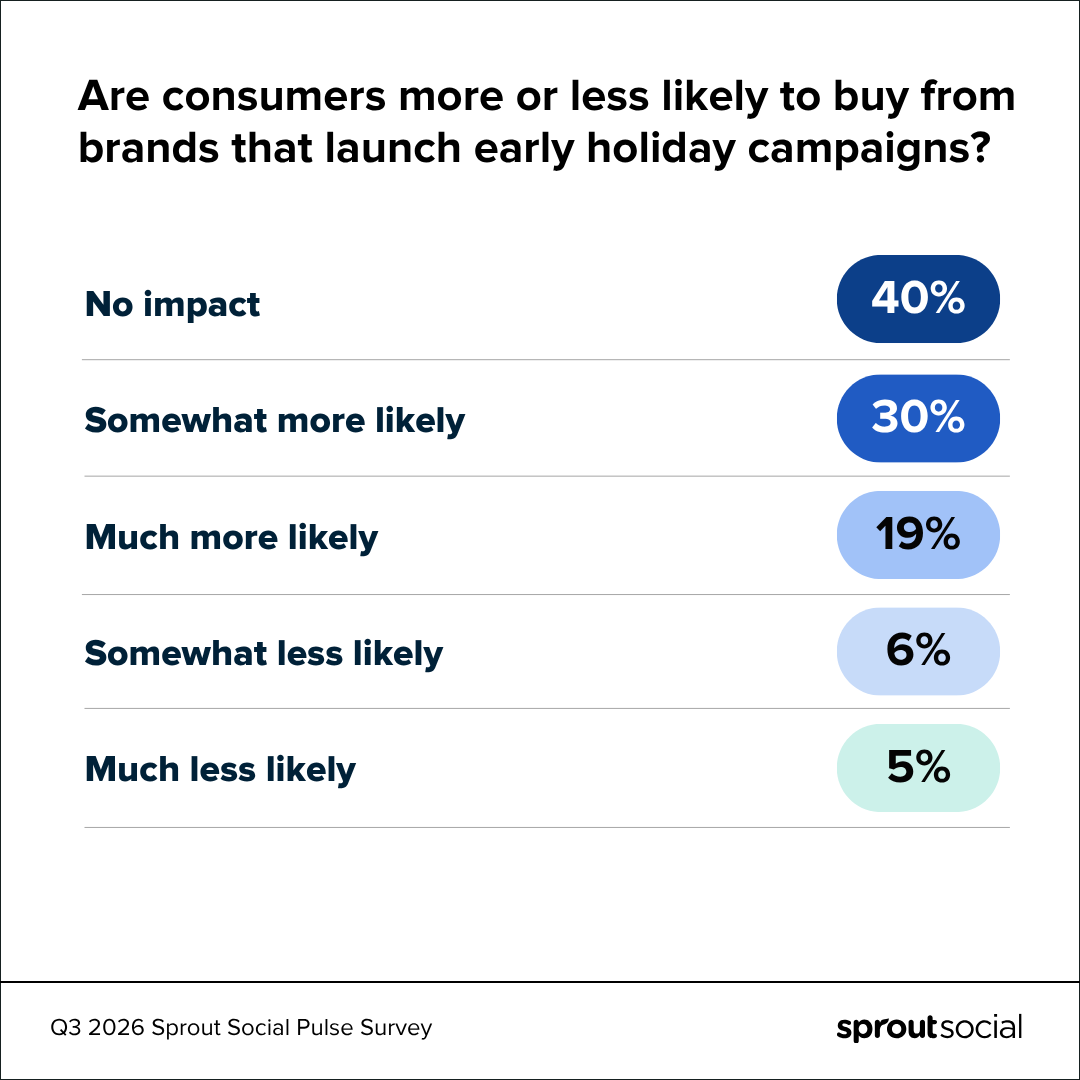
- The Campaign Timing Paradox: While 50% of consumers state they prefer brands to launch holiday campaigns in October—a retreat from the early-summer "creep" seen in recent years—actual buying behavior defies this preference. Nearly 50% of consumers are somewhat or much more likely to buy from brands that advertise as early as August, proving that content and value trump scheduling.
- Surge in Social Customer Care: An overwhelming 86% of users plan to use social platforms as much or more for customer service this holiday season. Speed is paramount, with 70% expecting a response within 24 hours.
Chronology: From Summerween to the Peak Shopping Rush
The timeline of the holiday retail season has historically expanded year over year, but 2026 marks a fascinating psychological tug-of-war between consumer desires and corporate strategies.
Summer to Early August: The Premature Push
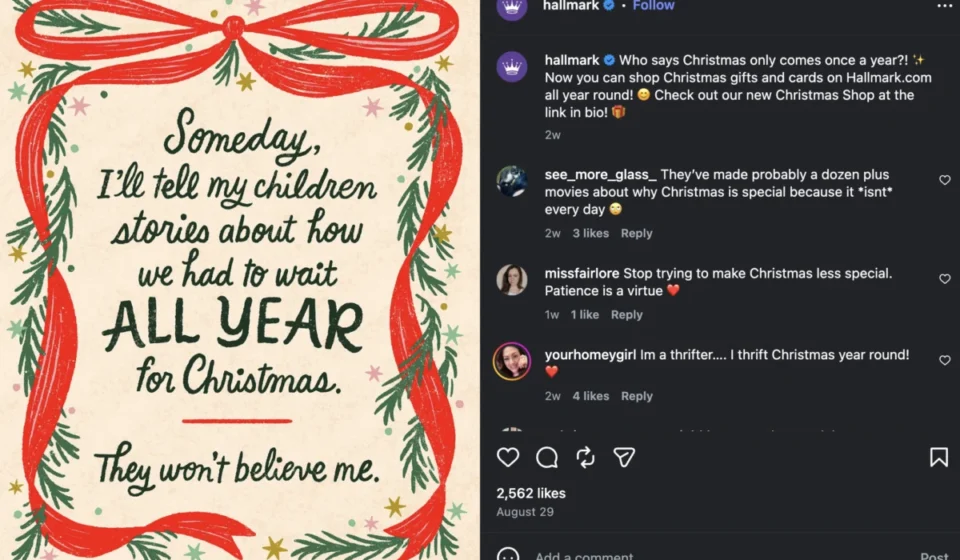
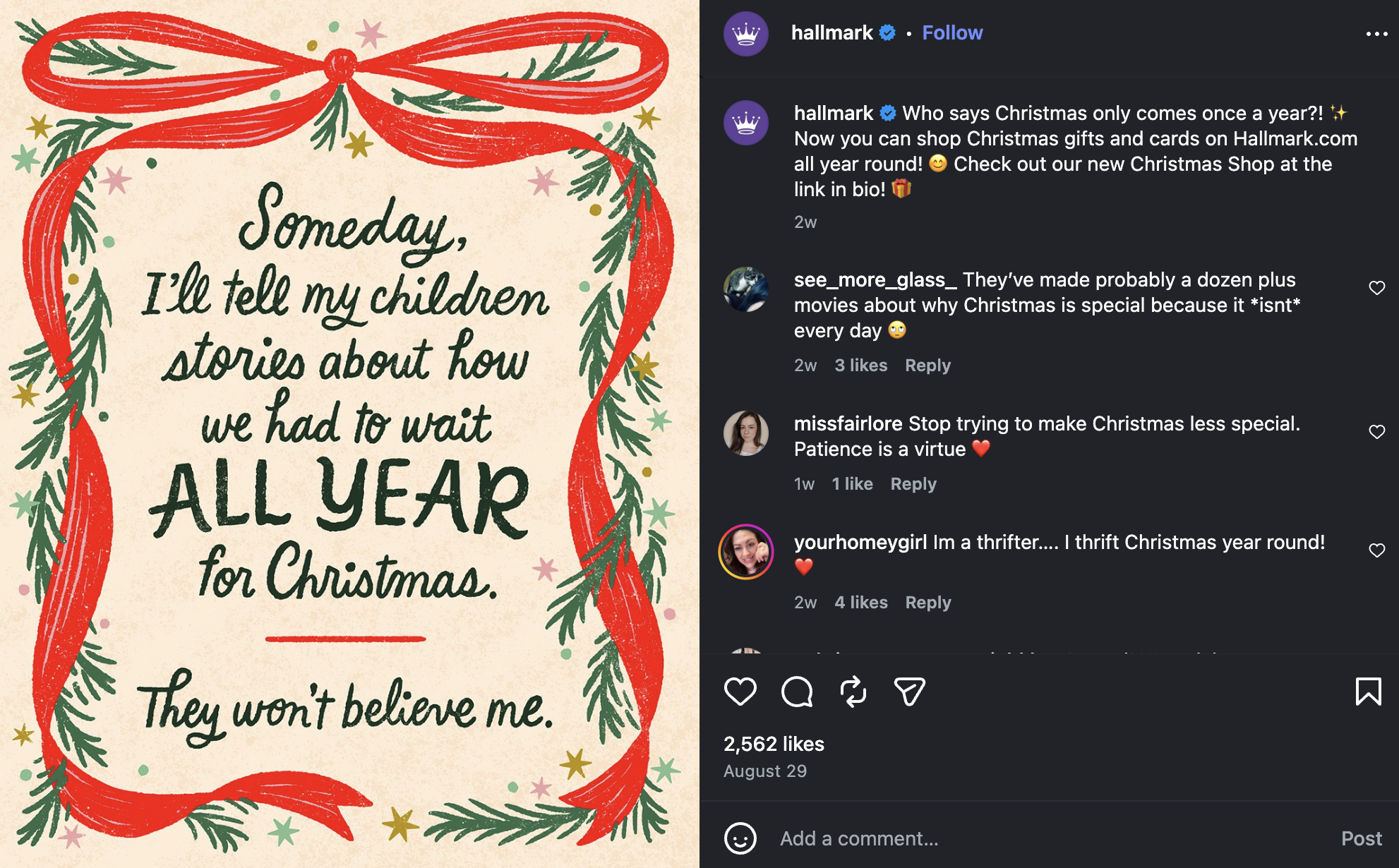
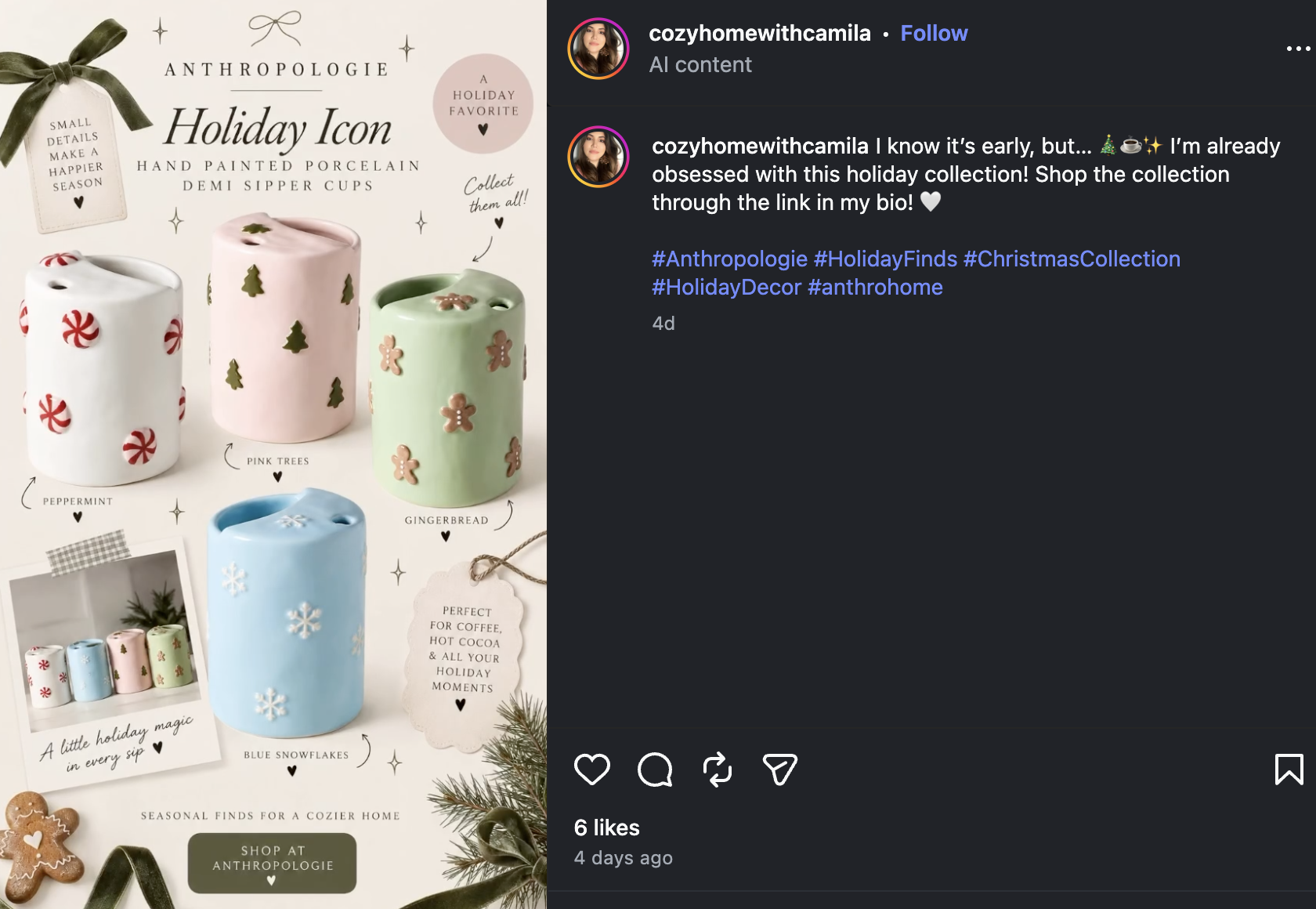
In June 2026, social users leaned into "Summerween" trends, setting an early stage for seasonal merchandising. By August, mainstream brands fully mobilized: Starbucks debuted its iconic pumpkin spice latte, Hallmark launched digital promotions for its online Christmas shop, and apparel brands began seeding holiday home finds.
August 11–18, 2026: Capturing the Data Baseline
Amidst this early-season push, research firm Panoplai conducted the Q3 2026 Pulse Survey on behalf of Sprout Social. The data captured a distinct consumer contradiction: while shoppers expressed fatigue over the early onslaught of holiday marketing, macroeconomic realities—specifically fears surrounding tariffs—forced their hands. Consumers began adjusting their personal budgets and shopping timelines weeks ahead of traditional schedules.
October 2026: The Preferred Starting Line
According to survey respondents, October remains the ideal psychological starting point for official holiday marketing campaigns. Half of all consumers stated they wish brands would wait until October to roll out festive advertisements. However, because early-bird promotions do not deter purchasing decisions, brands that launched in August suffered no penalty, successfully capturing early dollars from budget-conscious shoppers trying to beat anticipated price spikes.
Q4 2026 and Beyond: The Direct-to-Consumer Social Sprint
As the calendar turns toward November and December, the focus shifts entirely to conversion and support. Consumers are increasingly utilizing native in-app checkout features—such as TikTok Shop, Instagram Checkout, and Facebook Shops—to complete transactions without ever leaving their social feeds. Concurrently, customer support teams are bracing for a massive influx of inquiries via direct messages and comment sections.
Supporting Data: What the Numbers Tell Us
Understanding the 2026 consumer requires a deep dive into the quantitative data collected from the Sprout Social survey. The metrics reveal stark contrasts between what consumers say they want and how they actually behave.
Campaign Timing vs. Purchase Intent
- 50% of consumers prefer brands to launch holiday campaigns in October.
- 40% of consumers claim that campaigns starting as early as August have no impact on their buying decisions.
- Nearly 50% of consumers are somewhat or much more likely to purchase from a brand that runs holiday advertisements as early as August.
Economic Impact and Motivating Factors
- 69% of consumers express concern over price increases driven by tariffs.
- 56% plan to cut back on total holiday spending due to broader economic conditions.
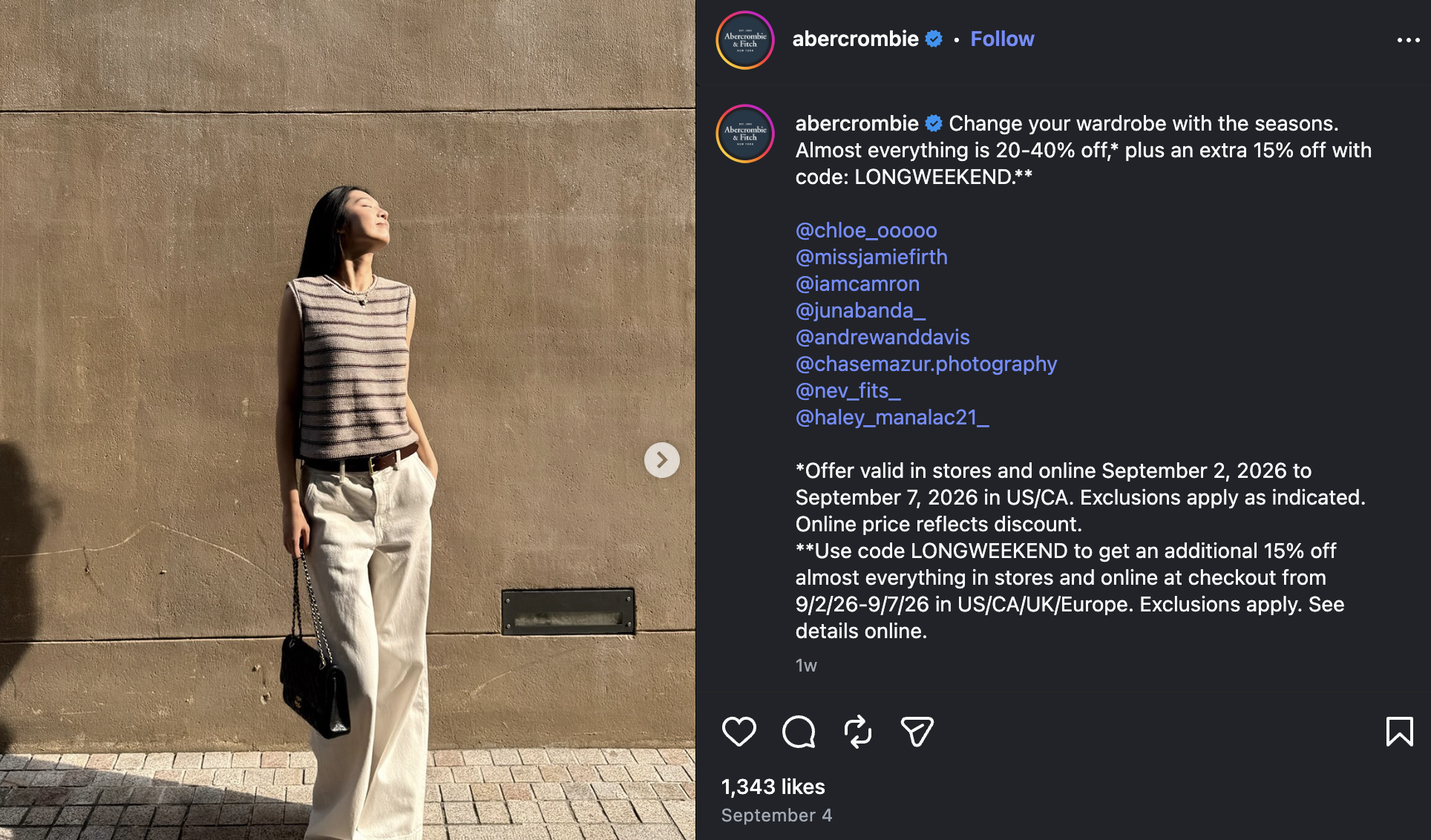
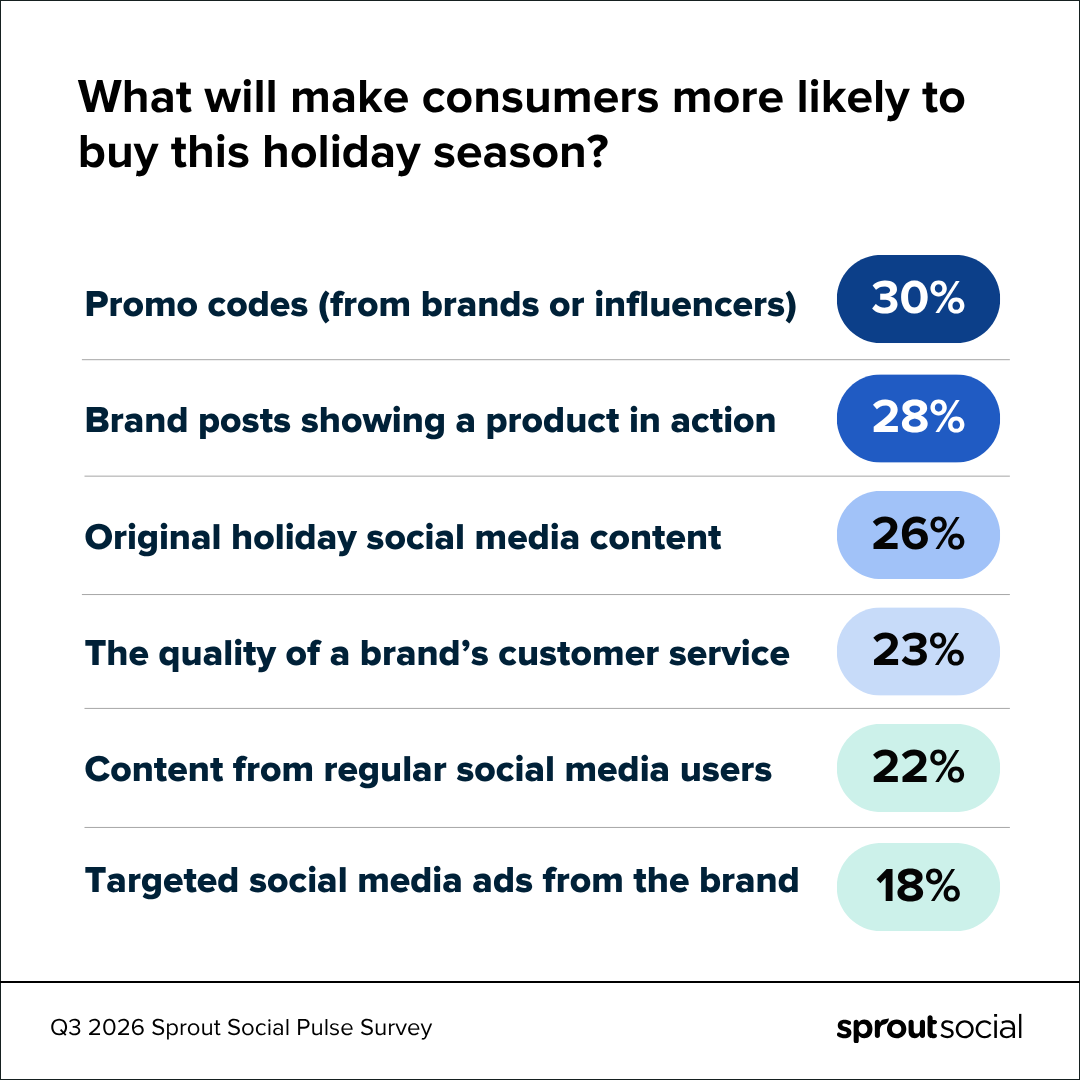
- 30% of shoppers cite promo codes (from brands or influencers) as the single most persuasive tactic to drive a purchase.
- 28% want to see products demonstrated "in action," while 23% demand original, holiday-specific creative content.
Social Search and Customer Service Expectations
- 38% of consumers prefer social search over traditional search engines when looking for experiential ideas, local spots, or things to do.
- 30% use social search for product reviews and recommendations.
- 55% prefer using Direct Messages (DMs) to reach out to brands, while 31% increasingly turn to public comment sections for assistance.
- 70% of consumers expect a brand response on social media within 24 hours. Furthermore, 70% are comfortable with brands utilizing AI to streamline customer service responses (rising to 77% among Gen Z).
Official Responses and Industry Insights
As retailers navigate these evolving trends, industry experts and brand strategists are reassessing how to allocate marketing budgets and resources for the remainder of the year.
Retail analysts note that the traditional boundaries between marketing, e-commerce, and customer service have effectively dissolved on social media. Because social platforms now function as a primary search engine—particularly for Gen Z and Millennials seeking peer-led recommendations—brands can no longer treat social channels as mere broadcasting boards.
Furthermore, customer service leaders are addressing the rise of public inquiries in comment sections. Industry advisories emphasize that when a customer takes a service complaint to a public comment thread rather than a private DM, a brand’s public reputation is immediately on the line. Consequently, organizations are leaning heavily into hybrid models—deploying artificial intelligence behind the scenes to sort message volume and analyze sentiment, while keeping human representatives in the loop to deliver personalized, empathetic resolutions.
Implications for Brands and Retailers
The convergence of economic anxiety, early shopping habits, and social commerce leaves clear operational takeaways for brands aiming to secure a profitable holiday season and a strong start to the new year.
1. Shift Focus from Timing to Content Value
Because early campaign timing does not alienate buyers—and is actively utilized by budget-conscious shoppers looking to spread out expenses—brands should not fear early rollouts. However, timing is secondary to substance. Retailers must focus on value-driven messaging. With 69% of shoppers anxious about tariffs and price hikes, promotional codes, clear pricing transparency, and high-value influencer partnerships are paramount.
2. Optimize for Social Search
With social media tying physical stores for gift discovery, visibility is everything. Brands must audit and optimize their content for social search engine optimization (SSO). This includes using descriptive keywords, geotags, and relevant hashtags so that products surface organically when users type queries directly into platforms like TikTok, Instagram, and Pinterest.
3. Embrace Frictionless Social Commerce
Consumers want convenience, especially when operating on tight holiday schedules. By integrating native checkout capabilities—such as TikTok Shop or Instagram Checkout—brands can eliminate purchase friction, allowing inspired scrollers to transition from discovery to transaction in mere taps.
4. Prepare for the Customer Service Surge
With 86% of users planning to use social media for customer care, response infrastructure must be robust. Brands must combine AI-driven triage tools with human oversight to meet the 24-hour response expectation. Additionally, preemptive measures—such as robust, easily accessible FAQ pages and self-help resources posted directly to social profiles—can alleviate the burden on customer care teams and prevent public complaints from dampening holiday sentiment.
By aligning creative strategies with economic realities and leveraging social media across every stage of the buyer journey, brands can turn a challenging retail environment into a successful conclusion to 2026.
Related posts: