The Half-Million-Dollar Gamble: Inside the Pricing, Polarization, and Performance of Ferrari’s First Electric Vehicle, the Luce

Published October 22, 2026
By Automotive News Desk
Main Facts
The automotive world has long debated the inevitable electrification of Maranello, and the mystery surrounding Ferrari’s maiden voyage into battery-powered vehicles has finally cleared. According to industry reports from Car and Driver, the highly anticipated, intensely debated Ferrari Luce—the brand’s first-ever fully electric vehicle—will carry a base manufacturer’s suggested retail price of $560,800 when it officially touches down on U.S. shores.
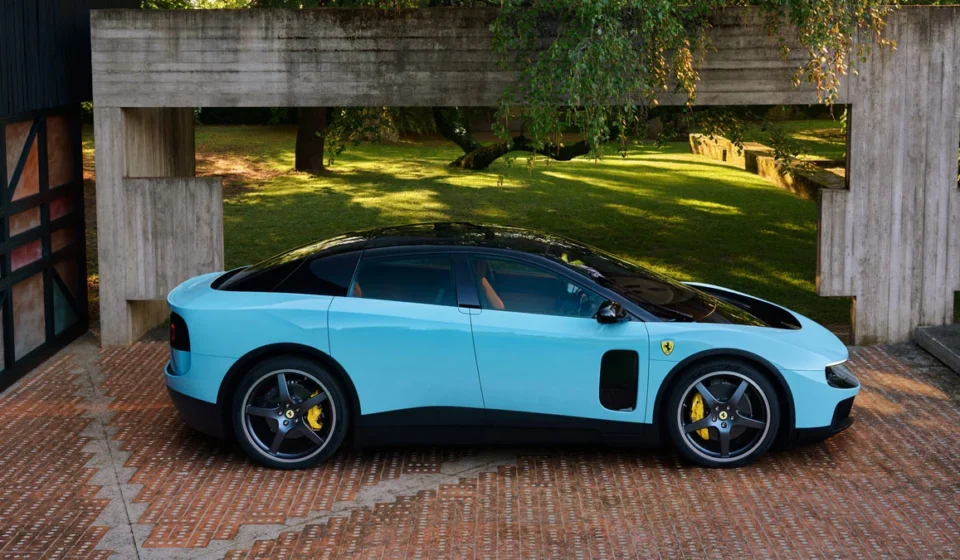
Slated to arrive in North American dealerships during the second quarter of 2027, the Luce represents a radical departure for the legendary Italian marque. Eschewing the roaring V-8 and V-12 powerplants that built the Prancing Horse mythology, this battery-powered four-door features a quad-motor setup pushing an astonishing 1,035 horsepower and 770 lb-ft of torque. It launches from zero to 60 mph in a blistering 2.5 seconds, hurtling onward to a top speed of 192 mph.
Yet, for all its staggering technical metrics, the Luce’s launch has been defined as much by online ridicule and purist backlash as it has by engineering prowess. With a starting price north of half a million dollars, the Luce sits comfortably among the 50 most expensive production vehicles on the planet. Positioned roughly $80,000 below initial market projections—yet nearly $130,000 more expensive than its combustion-powered stablemate, the Purosangue SUV—the Luce is simultaneously a bargain to elite collectors and an exorbitant gamble for a brand venturing into uncharted technological territory.
Chronology: The Road to the Luce
To understand the weight of the $560,800 price tag, one must retrace the turbulent timeline of Ferrari’s transition toward electrification—a journey marked by corporate hesitation, shifting consumer expectations, and internet virality.
The Genesis of Maranello’s EV (2018–2022)
For decades, Ferrari leadership fiercely resisted the push toward battery-electric vehicles (BEVs). Late CEO Sergio Marchionne famously remarked that asking him to build an all-electric Ferrari was an "obscene" concept. However, tightening global emissions regulations, shifting geopolitical landscapes, and the explosive success of competitors in the luxury EV space forced a strategic pivot. By the early 2020s, Maranello’s board greenlit the development of a dedicated electric architecture, promising shareholders that a zero-emission Ferrari would retain the soul, handling dynamics, and emotional resonance expected of the badge.

The Unveiling and the Backlash (2025–Early 2026)
When the covers finally came off the Ferrari Luce, the reaction sent shockwaves through the global automotive community. Not since Tesla CEO Elon Musk shattered the armor glass of the Cybertruck in late 2019 had a vehicle unveiling proven so polarizing. Hardcore traditionalists—purists who view internal combustion as the lifeblood of the brand—expressed profound disappointment.
The backlash, however, extended far beyond the powertrain. Critics took aim at the vehicle’s exterior styling, arguing that its aerodynamic silhouette lacked the aggressive, sensual curves historically associated with Pininfarina-styled masterpieces. The internet quickly latched onto a particularly brutal meme, unfavorably comparing the Luce’s front fascia and greenhouse to the humble, mass-market Nissan Leaf. Because the Nissan EV starts at roughly $30,000, the juxtaposition of a multi-hundred-thousand-dollar Italian hyper-sedan drawing design parallels to an affordable commuter hatchback became prime fodder for automotive forums and social media platforms alike.
Pricing Realities and U.S. Arrival (Late 2026–2027)
Initially, industry analysts and insider leaks suggested the Luce would command a stratospheric starting price of around $640,000. However, the official pricing confirmation from Car and Driver in October 2026 revealed a more restrained—though still eye-watering—$560,800 base MSRP. As pre-orders stabilize and production schedules lock into place, attention has turned to the vehicle’s scheduled North American launch in Q2 2027, followed closely by global rollouts.
Supporting Data and Market Positioning
Placing the Ferrari Luce into the broader context of high-end automotive economics reveals a fascinating paradox. While $560,800 is an astronomical sum for any passenger vehicle, it carves out a very specific, fiercely contested niche within the ultra-luxury segment.
Global Pricing Hierarchy
At its $560,800 base price, the Luce secures the No. 42 spot on the roster of the world’s most expensive production cars. It slots comfortably between the stately Rolls-Royce Phantom and the track-focused McLaren 788HS.
| Vehicle Model | Estimated/Base Starting Price (USD) | Segment / Classification |
|---|---|---|
| McLaren 788HS | ~$550,000 | Track-Focused Supercar |
| Ferrari Luce | $560,800 | All-Electric Luxury Four-Door |
| Rolls-Royce Phantom | ~$570,000 | Ultra-Luxury Sedan |
| Ferrari Purosangue | $438,610 | Performance Luxury SUV |
| Nissan Leaf (for context) | ~$30,000 | Mass-Market Hatchback |
Internal Brand Dynamics
Within Ferrari’s current portfolio, the Luce occupies an intriguing space. Its closest internal sibling is the Purosangue, Ferrari’s first-ever four-door, four-seater vehicle (technically an SUV, though Ferrari prefers to call it a sports car). The Purosangue debuted with a base price of $438,610, meaning the Luce commands a substantial $122,190 premium over its V-12-powered counterpart.

This pricing strategy signals that Ferrari does not view electrification as a discount entry point into the brand. Instead, the complex engineering required to package quad motors, massive battery arrays, and proprietary thermal management systems into a low-slung luxury sedan commands a top-tier luxury tax.
The Secondary Market Anomaly
It is also worth noting the extreme volatility of early-adopter pricing. Earlier in the development cycle, a single charity auction for the very first production example of the Ferrari Luce fetched a staggering $40 million—a testament to the fierce, competitive spirit of ultra-high-net-worth collectors willing to pay any price to own a historic piece of automotive transition. Against that headline-grabbing figure, the $560,800 retail price might almost look approachable to the world’s elite.
Official Responses and Executive Strategy
Ferrari’s executive suite has navigated the rollout of the Luce with a mix of steadfast confidence and calculated diplomacy. Speaking on background and in various press conferences surrounding the vehicle’s development, company leadership has consistently defended the decision to pivot toward electrification without sacrificing performance credentials.
Ferrari executives have emphasized that the Luce was never intended to be a compliance car or a gentle stepping stone. Rather, it is designed to showcase what an electric vehicle can achieve when infused with racing DNA. Engineers at Maranello spent years developing proprietary battery chemistry and energy-recovery systems derived directly from the company’s Formula 1 and World Endurance Championship (WEC) programs.
Addressing the aesthetic controversies, Ferrari’s design teams have maintained that form follows function in the EV era. Aerodynamic efficiency is paramount for maximizing range in a battery-powered vehicle, dictating lines and proportions that break away from decades of mid-engine proportions. Leadership has urged critics to reserve final judgment until experiencing the car in the metal—and, more importantly, from behind the wheel.
Furthermore, Ferrari has assured jittery traditionalists that internal combustion engines will not vanish overnight. The brand’s multi-powertrain strategy ensures that V-8 and V-12 models will continue to run parallel to electric offerings for as long as regulatory frameworks and consumer demand allow, softening the blow for loyalists who view battery power as an existential threat to the Maranello ethos.

Implications for Ferrari and the Ultra-Luxury Segment
The commercial and cultural reception of the Ferrari Luce carries profound implications that extend far beyond the gates of Maranello. As the pinnacle of automotive prestige tests the waters of full electrification, several critical questions emerge regarding the future of the luxury market.
1. Can Heritage Survive the Silent Revolution?
For nearly eight decades, the emotional connection to a Ferrari has been multisensory: the high-pitched shriek of a naturally aspirated V-12, the mechanical thunk of a gated shifter, and the visceral vibration of the chassis. The Luce replaces this orchestra with the eerie, turbine-like whine of four electric motors. The success of the Luce will test whether the Ferrari badge alone—synonymous with status, design heritage, and track dominance—is enough to retain clientele when the traditional acoustic heartbeat is silenced.
2. The Reshaping of Supercar Performance
With 1,035 horsepower and a 2.5-second sprint to 60 mph, the Luce proves that electric powertrains easily outclass traditional internal combustion engines in raw acceleration. However, supercars are defined not just by straight-line speed, but by weight management and driver engagement. At over half a million dollars, buyers will scrutinize how well Ferrari has masked the inevitable heft of a massive battery pack through corners, hairpins, and racetrack sessions. If the Luce handles like a true Prancing Horse, it could permanently alter perceptions of what an EV can do.
3. A Trendsetter for Competitors
Other ultra-luxury and exotic manufacturers—most notably Lamborghini, McLaren, and Aston Martin—are watching the Luce launch with intense scrutiny. While competitors like Lamborghini have previously expressed caution regarding the immediate commercial viability of heavy, expensive super-EVs, a successful commercial run for the Luce at $560,800 could force a rapid acceleration of rival electrification timelines. Conversely, should the Luce suffer from sluggish adoption due to purist pushback or design controversy, competing brands may feel validated in extending the life of hybrid and synthetic-fuel internal combustion engines well into the 2030s.
Final Outlook
As the spring 2027 U.S. launch date draws nearer, the Ferrari Luce stands as a monumental monument to change. It is simultaneously mocked by internet trolls comparing it to hatchbacks and coveted by elite collectors willing to spend small fortunes to secure the dawn of a new era. Whether the Luce is remembered as a catastrophic misstep that diluted the Prancing Horse or as a visionary masterstroke that successfully ushered Maranello into the electric age remains to be seen. What is certain, however, is that the debate over the soul of the supercar will never be the same.
Related posts: