A Love Letter to Advertising: How AdPower’s High-Stakes Campaign is Rewriting Client Acquisition

In a modern marketing landscape defined by programmatic precision, algorithmic targeting, and the cold efficiency of digital data, the art of the "grand gesture" has largely been relegated to history. However, self-service audio and outdoor media platform AdPower has chosen to defy this trend. By launching a nationwide campaign consisting of 100 hyper-personalized "love letters" plastered on billboards, the company is attempting to bridge the gap between human connection and industrial-scale advertising.
The campaign, developed in collaboration with the renowned creative agency Stink Studios, represents a departure from traditional B2B sales tactics. Instead of relying on cold emails or LinkedIn outreach, AdPower has turned the world’s oldest advertising medium—the billboard—into a canvas for courtship, effectively proving that even in the age of AI, a little bit of sincerity goes a long way.
The Core Concept: Humanizing the Cold Call
At its heart, the "Love Letters" campaign is an exercise in creative bravery. AdPower, a platform designed to make outdoor advertising accessible to businesses of all sizes, recognized that catching the attention of potential high-profile partners requires more than just a standard value proposition.
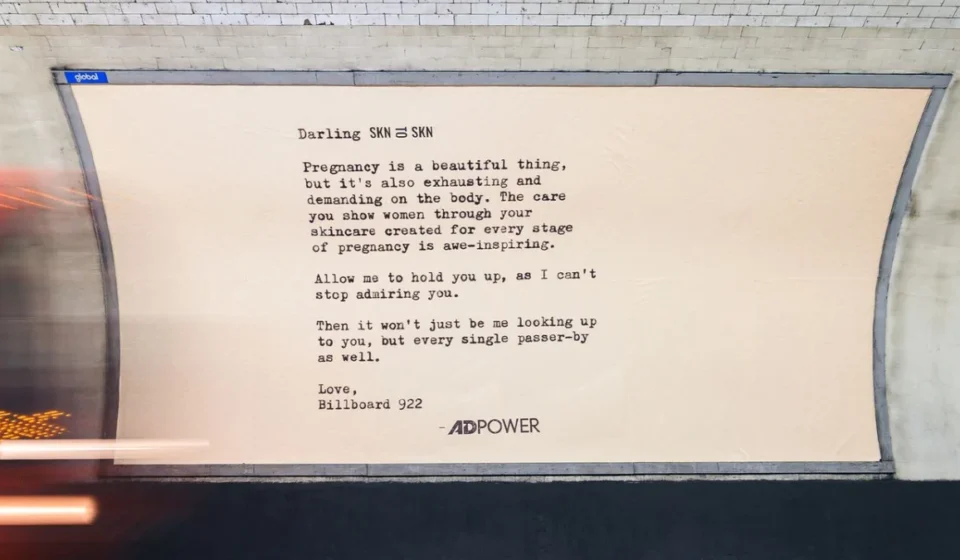
The strategy is deceptively simple: identify 100 potential brand partners, analyze their business models, and create a bespoke billboard message for each one. These messages were then placed in strategic proximity to the targeted companies’ headquarters or flagship retail locations.
The visual identity of the campaign is intentionally "old-school." Each billboard features a clean, typewriter-style font against a minimalist background, evoking the nostalgia of handwritten correspondence. This aesthetic choice serves a dual purpose: it stands out against the chaotic, high-definition digital clutter of modern cityscapes and emphasizes the "handcrafted" nature of the outreach.

A Chronicle of the Campaign’s Rollout
The genesis of the campaign began with a desire to showcase the capabilities of the AdPower platform. Rather than writing a white paper or launching a generic ad campaign, the team at Stink Studios proposed a "proof-of-concept" that utilized the very medium the platform aims to democratize.
Phase 1: Research and Insight
Months prior to the physical installation, the team undertook a deep-dive audit of their "dream list" of partners. This was not a generic outreach; it involved identifying the specific pain points and brand identities of companies ranging from niche Pilates studios to major fashion retailers.
Phase 2: Creative Localization
The copywriting phase was the most intensive. The goal was to find the perfect balance between professional respect and playful, "cheeky" humor. For instance, the footcare specialist brand Margaret Dabbs was targeted with a billboard that read: "I know this is a long shot. I don’t have any feet and that’s what you’re all about. But let me tell you, this relationship has legs." Similarly, the food brand SushiDog received an equally clever nod: "Wrap me in seaweed, and let’s spread the word."
Phase 3: Strategic Placement
The final phase involved the logistical challenge of securing billboard space near the physical offices or retail outlets of these 100 brands. By ensuring the ads were physically inescapable for the decision-makers at these companies, AdPower turned the city itself into their sales funnel.
The Power of Personalization: Supporting Data and Trends
While the "Love Letters" campaign is rooted in creativity, it is supported by a growing body of data regarding the effectiveness of out-of-home (OOH) advertising in the digital age.

According to industry metrics, OOH advertising remains one of the few media formats that cannot be "skipped" or "blocked." In an era where digital ad fatigue is at an all-time high, the return to physical, ambient media is being viewed by many marketers as a strategic pivot.
Furthermore, the "hyper-personalization" trend—traditionally restricted to email marketing—is seeing a renaissance in the physical world. When a brand sees its own name and a custom-tailored message on a 48-sheet billboard in its own neighborhood, the psychological impact is vastly different from a generic digital banner. This campaign functions as an "account-based marketing" (ABM) strategy on a massive, public scale.
Official Perspectives: The Philosophy Behind the Craft
Kat Thomas, the creative director at Stink Studios, has been vocal about the underlying philosophy of this campaign. In a recent interview, she highlighted the intentional symmetry of the project.
"We love the symmetry of one of the oldest media types—billboards—getting a modern revamp with a new platform, and using an old-school typewriter to craft messages to new brands," Thomas stated.
She emphasized that the project was not merely a gimmick, but a demonstration of brand empathy. "With one hundred singular gestures, we’ve drawn on our out-of-home expertise and our history working with brands to understand what makes each business distinctive. We’ve then translated that insight into a personalized experience and a large-scale expression of love and respect for every brand that features in the campaign, built with craft and genuine human effort."

For AdPower, the success of the campaign is measured not just in click-through rates, but in the brand equity gained through the sheer audacity and craft of the approach. It serves as a testament to the idea that a B2B relationship, much like a personal one, is built on the willingness to be vulnerable and the effort to be understood.
Implications for the Future of B2B Advertising
The AdPower campaign serves as a potential blueprint for how B2B companies might approach their marketing efforts in the coming years.
1. The Death of the "Spray and Pray" Method
As automation continues to flood the internet with generic, AI-generated content, the "human touch" becomes a premium asset. Companies that invest in high-quality, personalized outreach—even when it is expensive or logistically complex—will likely see higher engagement rates than those relying on automated mass-email campaigns.
2. The Return to "Physical" Context
The campaign highlights the value of the physical environment in shaping brand perception. By placing ads near corporate headquarters, AdPower is essentially "hacking" the daily commute of the stakeholders they wish to influence. This form of "guerrilla B2B" is likely to become more prevalent as digital channels become increasingly saturated.
3. The Convergence of Tech and Craft
AdPower’s use of modern, self-service technology to facilitate an "old-school" creative concept shows that technology and traditional creative values are not mutually exclusive. The platform provides the infrastructure, but the human insight provides the impact.

Conclusion: A Lesson in Boldness
The "Love Letters" campaign is more than a series of advertisements; it is a cultural commentary on the nature of professional relationships. In a world where we are constantly connected but increasingly detached, AdPower has reminded us that meaningful connection requires effort.
Whether these billboards lead to a direct influx of contracts remains to be seen, but the campaign has already achieved something arguably more important: it has positioned AdPower as a brand that understands the value of storytelling, the importance of context, and the power of a well-placed, sincere message.
As the marketing industry continues to navigate the complexities of AI, automation, and data privacy, the "Love Letters" campaign stands as a refreshing reminder that the most powerful tool in any advertiser’s arsenal remains the human imagination. By treating their potential clients not as data points, but as partners worth wooing, AdPower has set a high bar for creative, intentional, and undeniably bold advertising.