Behind the Swoosh: Unveiling the Anatomy of Innovation at the Museum of Arts and Design

Is there any symbol in the modern lexicon as potent, universal, and instantly recognizable as the Nike swoosh? It is arguably the most successful branding exercise in the history of global commerce—a simple, fluid checkmark that has transcended its origins as a logo to become a cultural signifier for athletic excellence and urban cool. But beyond the marketing brilliance lies a rigorous, obsessive, and often hidden history of industrial design, material science, and engineering.
Now, for the first time, the curtain is being pulled back. Through an unprecedented partnership with the Department of Nike Archives (DNA), the Vitra Design Museum has curated Nike: Form Follows Motion, an exhaustive retrospective that examines how a small, regional running startup transformed into the world’s most dominant athletic powerhouse. Following a successful debut in Germany in 2024, the exhibition has arrived in New York City, taking up residence at the Museum of Arts and Design (MAD) through March 2027.
The Genesis of an Icon: From Trackside to Global Powerhouse
To understand Nike, one must understand the intersection of human movement and industrial design. The story begins in the 1960s with two men: Phil Knight, a runner with a vision, and Bill Bowerman, a track coach with a tinkerer’s mind. Their collaboration was the spark that ignited a revolution in performance footwear.
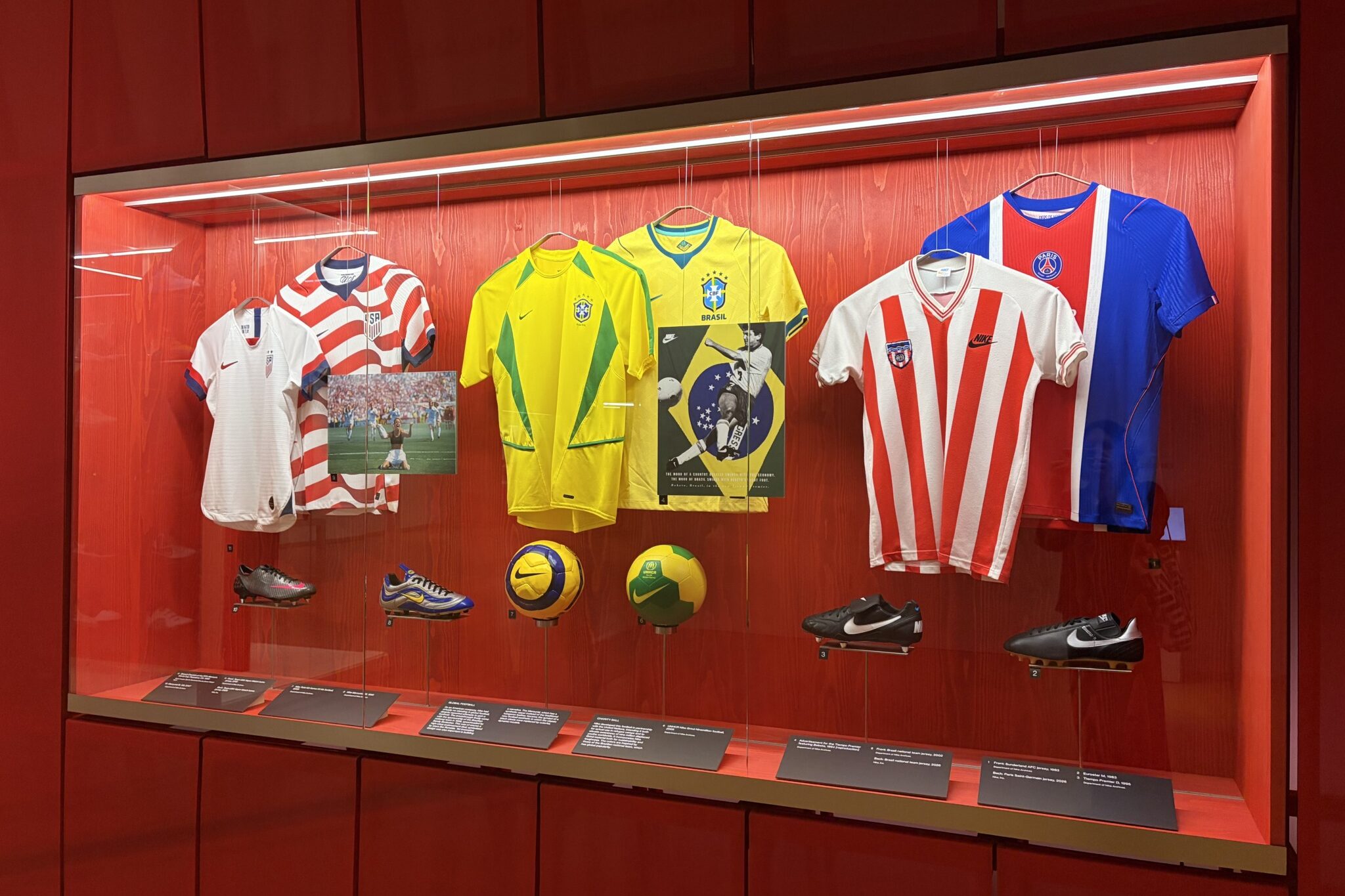
Nike: Form Follows Motion is not merely a display of vintage sneakers; it is a profound look at the "how" behind the "what." The exhibition functions as a time capsule, moving through the evolution of athletic design with the precision of a master athlete. It highlights how the company transitioned from simple rubber-soled shoes to complex, high-tech performance gear, effectively changing the way the world moves.

A Four-Part Journey: Mapping the Evolution of Design
The exhibition is intelligently partitioned across two floors of the Museum of Arts and Design, divided into four distinct thematic pillars that tell the story of Nike’s trajectory.
1. The Track: The Foundation
The first section, titled "Track," grounds the visitor in the company’s humble beginnings. It highlights the early experiments of Bowerman—including the iconic, albeit crude, waffle iron experiments that led to the development of the revolutionary waffle-tread sole. This section underscores the core philosophy that has driven the brand for decades: the belief that design should be subservient to the biomechanical needs of the athlete.

2. The Air: A Revolution in Cushioning
"Air" serves as the mid-career pivot for the brand, focusing on the 1980s, a decade that solidified Nike’s dominance. This section explores the invention of pressurized air cushioning—a concept that seemed radical at the time. Visitors are invited to look at original sketches, early engineering notes, and failed prototypes that eventually led to the 1987 launch of the Air Max. Seeing the evolution of this technology makes it clear that the "visible air" we take for granted today was the result of years of trial, error, and intense material research.
3. Sensation: The Science of Motion
In "Sensation," the focus shifts to the internal labs of the brand. This area examines the work of the Nike Sport Research Lab, where human performance is measured, data-mined, and converted into product features. Beyond performance, this section addresses the brand’s modern push toward circular manufacturing, sustainable material sourcing, and the reduction of waste—a necessary evolution for a company of its scale.

4. Relation: The Cultural Convergence
The grand finale of the exhibition is "Relation." Here, the focus shifts from the internal lab to the external world. Showcasing 50 avant-garde footwear styles, this section highlights the symbiotic relationship between Nike and global culture. By pairing these designs with hip-hop music videos and archival footage, the museum explicitly links the brand’s performance origins to its status as a cornerstone of streetwear and fashion culture.
Unprecedented Access: The Vault of the DNA
The success of Nike: Form Follows Motion rests on the unique access granted to the Vitra Design Museum. The Department of Nike Archives (DNA) is one of the most guarded and comprehensive corporate archives in the world.

"I was able to draw on the extraordinary depth and breadth of DNA’s holdings," says exhibition curator Glenn Adamson. "This included objects, documents, prototypes, study models, and material research, as well as some current designs from the company. We were able to pull from more than 200,000 objects—the majority of which had never been presented to the public as a curated collection."
For design aficionados, the highlight is undoubtedly the raw, unpolished nature of the exhibits. Visitors can view deconstructed shoe patterns, vacuum-forming tools, and mechanical prototypes like the 1981 Shox concept—a shoe that looks more like a piece of industrial machinery than a piece of footwear. These objects offer a rare glimpse into the "design process on the fly," revealing how the most iconic products in history were often the result of messy, iterative, and highly collaborative failures.

The New York Connection: A City of Influence
Bringing this exhibition to New York City in 2026 feels like a homecoming of sorts. The timing is serendipitous: the city recently celebrated the Knicks’ first NBA championship in 53 years, and the atmosphere surrounding the 2026 World Cup final—held just across the river—has kept the city’s pulse synchronized with the spirit of athletic competition.
Adamson notes the deep, historical ties between the brand and the city: "Having the exhibition travel right to the heart of New York couldn’t feel more appropriate. Nike has a very special relationship to New York City, going back at least to the early 1980s. When hip-hop broke, coming out of Queens and Harlem, the community was inherently interested in streetwear, and brands like Nike were at the center of that identity."

To solidify this local connection, the museum commissioned renowned New York graffiti artist Faust to design the cover of the accompanying exhibition book and to apply his signature script to the doors of the MAD Store, effectively blending the polished world of museum curation with the grit and artistry of the streets.
Implications: The Legacy of Innovation
What does Nike: Form Follows Motion imply for the future of industrial design? The exhibition poses a compelling argument: that true innovation is not a sudden flash of genius, but a cumulative process of observation, experimentation, and refinement.

By exposing the "unseen" side of the design process, the exhibition humanizes the brand. It shows that even a multi-billion dollar entity is subject to the same laws of physics and the same frustrations of trial-and-error as any independent studio. The inclusion of early mechanical prototypes alongside finished retail products highlights the bridge between abstract concept and mass-market reality.
Furthermore, the exhibition serves as a commentary on the longevity of "good design." The Waffle Trainer, the Air Force 1, and the Air Jordan are not just shoes; they are design artifacts that have remained relevant for decades. Their inclusion in a museum setting cements their status as cultural icons, moving them from the realm of consumer product into the canon of design history.

Conclusion: A Must-See for the Design-Obsessed
Nike: Form Follows Motion is a rare example of a corporate-sponsored exhibition that avoids the traps of blatant, surface-level marketing. Instead, it offers a sophisticated, academic, and deeply visual exploration of a brand that has fundamentally altered the aesthetics of the 20th and 21st centuries.
Whether you are a sneakerhead, an industrial designer, a fan of hip-hop culture, or simply someone interested in the history of innovation, the exhibition provides a profound look at how form truly does follow motion. With the show remaining on view at the Museum of Arts and Design until March 7, 2027, there is ample opportunity for the public to witness the anatomy of an icon.

The exhibition is a testament to the fact that when curiosity is applied to the mundane—like a running shoe—the result can be nothing short of extraordinary. The "Swoosh" may be the symbol, but the process is the story. And thanks to the curators at Vitra and the team at MAD, that story is finally, and brilliantly, told.