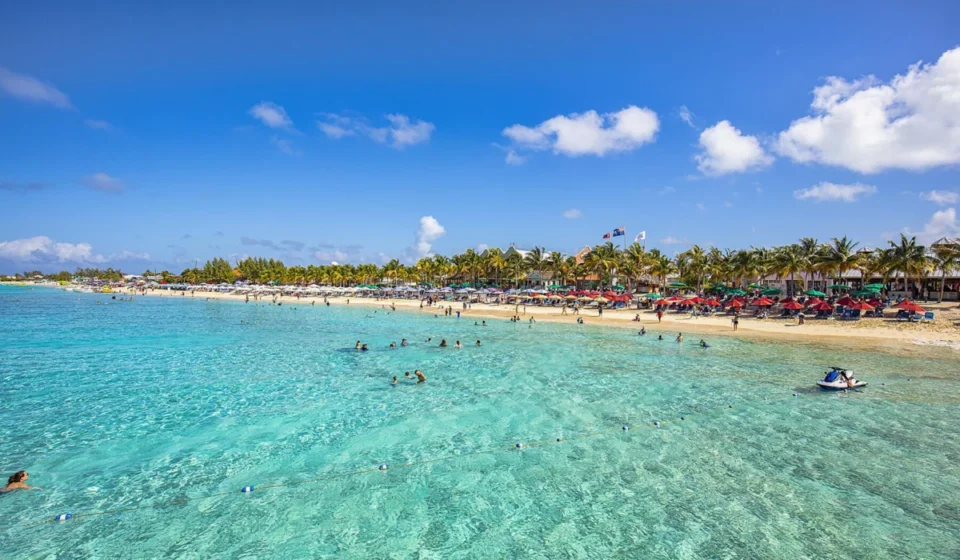

In the realm of international travel, few destinations possess the ability to disarm even the most seasoned critic. Yet, in the Turks and Caicos Islands, the experience is so profound that even the occasional traveler’s grievances—such as sand that is “too soft” or water that is “too clear”—sound less like complaints and more like bewildered compliments. This British Overseas Territory, a chain of 40 low-lying coral islands in the Atlantic Ocean, has quietly cemented its reputation as the gold standard for Caribbean tourism, blending untouched natural majesty with high-end, sustainable hospitality.
The Geography of Perfection: Main Facts
The Turks and Caicos archipelago is defined by its dramatic geological and ecological diversity. While the islands are best known for their miles of pristine, powder-white sand and mesmerizing turquoise waters, the destination offers far more than a typical beach holiday.
Providenciales, colloquially referred to as "Provo," serves as the primary gateway for international travelers. It is here that the intersection of world-class infrastructure and raw, untamed nature is most apparent. The island’s northern coast is home to Grace Bay, consistently ranked among the top-rated beaches in the world. However, the allure of the destination extends well beyond the shoreline. The islands are home to one of the world’s most extensive barrier reef systems, a biological treasure trove that attracts divers, marine biologists, and eco-tourists from across the globe.
The climate remains a perennial draw, with tropical weather tempered by cooling trade winds. For travelers, the main fact remains clear: Turks and Caicos is a rare environment where the reality of the landscape often exceeds the curated imagery found in luxury travel brochures.
A Chronological Evolution of Excellence
To understand the current status of Turks and Caicos, one must look at the strategic evolution of its tourism sector over the last three decades.
- The 1990s: Establishing a Foothold. The archipelago began transitioning from a sleepy, fishing-centric economy to a luxury destination. The development of major resorts on Providenciales signaled a move toward high-net-worth tourism.
- The 2010s: The Shift Toward Sustainability. As the islands gained global popularity, the focus shifted toward preserving the very assets that made them famous. The creation of the Princess Alexandra Nature Reserve and the strengthening of the Turks and Caicos Reef Fund (TCRF) marked a turning point in how the territory manages its natural resources.
- 2020–Present: The Rise of the "Residence-Resort" Model. Following the global pandemic, traveler preferences shifted toward privacy and autonomy. This led to the rise of developments like South Bank, which blends the services of a five-star hotel with the privacy of a residential home. The focus moved from transient hotel stays to experiential, multi-generational living.
Supporting Data: Why the Numbers Favor the Archipelago
The popularity of Turks and Caicos is not merely anecdotal; it is supported by significant industry metrics. According to recent travel industry reports, the islands maintain one of the highest repeat-visitor rates in the Caribbean.
Marine Biodiversity: The islands are home to an estimated 340 miles of barrier reef. Data from the Turks and Caicos Reef Fund indicates that the health of this ecosystem is a primary driver for the territory’s $1.5 billion tourism industry.
Infrastructure Growth: Over the past five years, investment in "residence-resort" concepts—properties that offer villas, boathouses, and private docks—has increased by approximately 22%. This indicates a shift in traveler demographics toward families and long-term stayers who prioritize kitchen access, private outdoor spaces, and integrated community programming.
Accessibility: With direct flight access from major hubs including New York, Miami, Charlotte, and London, the island has minimized the "travel friction" that often plagues remote tropical destinations, making it an ideal candidate for short-term luxury getaways.
Official Perspectives and Stewardship
The government of the Turks and Caicos Islands, in collaboration with private sector partners like Grace Bay Resorts, has adopted a proactive stance on balancing economic growth with environmental conservation.
"Our goal is to ensure that the guest experience remains unparalleled while our natural assets remain protected," says a representative from the local tourism board. "We are seeing a new type of traveler—one who wants to learn about the coral reefs, participate in marine restoration, and support the local ecosystem."
This philosophy is reflected in the programming offered at high-end developments. By integrating educational components—such as visits to the TCRF Visitors Center or workshops on coral tissue loss disease—the tourism sector is effectively transforming the average vacationer into a steward of the environment. Official discourse emphasizes that the preservation of the "impossibly soft sand" is not just a marketing ploy, but a necessity for the island’s long-term economic survival.
The Implications: A New Standard for Family Travel
The shift in tourism models has profound implications for how families experience the Caribbean. The traditional "all-inclusive" resort model is increasingly being challenged by the "residential-resort" model, which offers a more authentic, neighborhood-like experience.
The Rise of the Boathouse Concept
Developments like South Bank in Long Bay are redefining the family vacation. By providing layouts that include multi-story residences, private boat docks, and rooftop decks, the industry is catering to a demographic that values connectivity. The implication here is significant: families no longer have to choose between the safety and amenities of a hotel and the independence of a private villa.
Educational Tourism
The integration of kids’ clubs with scientific programming—such as the TCRF initiatives—suggests a broader trend in luxury travel. Parents are increasingly seeking "purposeful travel," where children are engaged in learning about local ecology rather than being passive participants in resort activities. Whether it is a pizza-making class or a lesson in marine biology, these activities foster a deeper connection to the destination.
The Future of Island-Hopping
The accessibility of uninhabited islands like Little Water Cay, which is part of the Princess Alexandra Nature Reserve, highlights the importance of managed exploration. As the islands continue to grow, the implication for future travelers is that the "wild" beauty of Turks and Caicos will be protected through strict zoning and limited-access excursions, ensuring that the next generation can enjoy the same turquoise waters that define the island today.
Conclusion: The Difficulty of Criticism
Ultimately, the persistent praise for Turks and Caicos is a testament to a destination that has mastered the art of balancing high-end luxury with environmental and community integrity. From the soft, white sands of Grace Bay to the innovative residential designs of Long Bay, the islands offer a rare form of consistency.
When a destination offers a seamless blend of relaxation, adventure, and meaningful engagement with nature, the typical complaints of a weary traveler are silenced. It is not that the islands are perfect in the sense of being flawless, but rather that their imperfections are eclipsed by an overwhelming commitment to excellence. For those seeking a vacation that transcends the ordinary, the Turks and Caicos Islands remain, quite simply, the ultimate benchmark. Whether you are navigating the shallow, protected waters of the nature reserves or watching a sunset from a private rooftop deck, the reality of the experience consistently rises to meet—and often exceed—the highest of expectations.