Beyond Savile Row: The Timeless Legacy and Modern Renaissance of London’s Premier Bespoke Tailors

While American bespoke tailoring is currently experiencing a thrilling golden age, capturing the attention of fashion critics and discerning gentlemen alike, every great innovation requires a foundation. To truly understand the art of the modern tailored suit, one must trace the thread back to its source: the historic workshops of London.
Before experimenting with homegrown domestic talents, a pilgrimage to the British capital remains the ultimate rite of passage for any serious menswear enthusiast. London’s historic streets—most notably Savile Row and its surrounding Mayfair enclaves—house master makers whose centuries-old techniques continue to define global elegance. Below is the definitive guide to the premier tailoring houses in London, ranging from centuries-old heritage institutions to modern architectural visionaries.
Main Facts: The Anatomy of London Bespoke
London’s enduring status as the global capital of bespoke menswear is not merely a matter of marketing; it is a meticulously preserved craft built on the intimate relationship between client, cutter, and tailor. Unlike made-to-measure tailoring, which alters a pre-existing industrial block to fit a customer, true British bespoke begins from scratch. A unique paper pattern is drafted by hand for every single client, accounting for posture, asymmetry, and individual lifestyle.
The city’s tailoring landscape is generally defined by two distinct philosophies: the structured, powerful silhouette traditionally associated with the north side of Savile Row, and the softer, more fluid drape popularized by its neighbors. From royal warrants spanning multiple centuries to contemporary houses outfitting Hollywood’s newest leading men, London tailoring bridges the gap between historical reverence and modern luxury.
Chronology: The Evolution of London’s Master Houses
To walk through London’s tailoring scene is to walk through centuries of British history, style revolutions, and cultural shifts. The timeline of these premier houses tells the story of how menswear evolved from royal military necessity to rock-and-roll rebellion and modern minimalism.
1771: Gieves & Hawkes — A Living Connection to History
- Famous Clientele: Sir Winston Churchill, Ian Fleming, Queen Elizabeth II
- The Specialty: A living connection to British history and military heritage.
Operating out of No. 1 Savile Row, Gieves & Hawkes represents the bedrock of British tailoring history. Formed through the merger of two distinct military tailoring firms, the house has dressed monarchs, military heroes, and cultural icons for over two centuries. Walking into their flagship townhouse is akin to stepping into a museum where every garment carries historical weight. If you require a suit that honors traditional British solemnity, military-grade precision, and aristocratic dignity, Gieves & Hawkes remains unmatched.
1849: Huntsman — The Powerhouse of Tradition
- Famous Clientele: Clark Gable, Gregory Peck, Katharine Hepburn, Gianni Agnelli
- The Specialty: A strong-shouldered, single-button suit from an iconic powerhouse.
Founded in the mid-19th century, Huntsman is instantly recognizable by its distinctive house style: a strong, squared shoulder, a high waist, and a signature single-button fastening. Historically favored by equestrians, royalty, and Hollywood legends who wanted to cut a striking figure, Huntsman projects an aura of uncompromised authority. Wearing a Huntsman suit feels like donning a suit of armor crafted from the finest cloth in the world.
1906: Anderson & Sheppard — Birth of the English Drape
- Famous Clientele: Fred Astaire, Gary Cooper, Charlie Chaplin, Prince Charles
- The Specialty: The original English drape cut, celebrated for soft shoulders and fluid movement.
At the turn of the 20th century, Anderson & Sheppard revolutionized menswear by introducing the "English drape cut." Developed in response to the stiff, uncomfortable military styles of the era, this technique introduced extra fabric across the back, chest, and armscye. The result is a jacket with soft, unpadded shoulders that drapes effortlessly over the body, allowing for fluid movement. It was the preferred choice of dancers like Fred Astaire and actors who valued comfort without sacrificing an ounce of elegance.
1976: Edward Sexton — The ’70s Rock-and-Roll Revolution
- Famous Clientele: The Beatles, Mick Jagger, David Bowie, Andy Warhol
- The Specialty: An unabashedly bold, sexy silhouette featuring roped shoulders, sweeping lapels, and a dramatic long skirt.
In the 1960s and ’70s, Edward Sexton (initially alongside Tommy Nutter at Nutter’s of Savile Row) tore up the rulebook of traditional tailoring. Sexton injected a heavy dose of rock-and-roll swagger into Savile Row, catering to the titans of music and art. Characterized by dramatically roped shoulders, deeply sweeping lapels, pinched waists, and flared trousers, a Sexton suit is designed to command attention. It remains the ultimate choice for those who view tailoring not as a uniform, but as a statement of theatrical luxury.
1986: Ozwald Boateng — Modern Color and Structural Vibrancy
- Famous Clientele: Will Smith, Daniel Day-Lewis, Jamie Foxx, Mick Jagger
- The Specialty: Highly structured suits with a bold, fearless embrace of color and pattern.
Ozwald Boateng permanently altered the visual landscape of Savile Row when he arrived in the late 20th century, bringing a vibrant, multicultural perspective to a historically conservative street. Boateng fuses traditional Savile Row construction techniques with striking, architectural silhouettes and an electric palette of jewel tones, rich purples, and brilliant blues. He transformed bespoke tailoring into a dynamic runway art form while maintaining uncompromising attention to structural detail.

1992: Richard James — The Classic Reimagined
- Famous Clientele: George Clooney, Jacob Elordi, Elton John, David Beckham
- The Specialty: A classically cut British suit delivered within the sophisticated atmosphere of a modern men’s club.
Founded in the early 1990s as part of Savile Row’s "New Wave," Richard James bridged the gap between heritage craftsmanship and contemporary fashion sensibilities. The house strips away the stuffiness often associated with traditional tailoring, offering impeccably cut suits in contemporary proportions and unexpected fabrics. Visiting their townhouse feels less like a formal fitting and more like sinking into the leather armchair of an exclusive London club.
2007: Thom Sweeney — Contemporary Elegance with a Cocktail
- Famous Clientele: Glen Powell, Andrew Garfield, David Duchovny, Eddie Redmayne
- The Specialty: A streamlined, contemporary cut paired with world-class hospitality at their in-house bar, Sol’s.
Founded by bespoke veterans Thom Whiddett and Luke Sweeney, Thom Sweeney represents the modern face of Mayfair tailoring. The house favors a clean, slim, and softly structured silhouette that appeals to contemporary tastemakers and Hollywood actors alike. Beyond the exceptional sartorial execution, Thom Sweeney is renowned for its modern retail environment—complete with an in-house lounge and bar, Sol’s, where clients can sip a bespoke cocktail while reviewing cloth swatches.
2017: Michael Browne — Architectural Perfection
- Famous Clientele: Skepta, Armando Cabral, David Gyasi
- The Specialty: An intensely architectural suit dialed to absolute perfection across up to five rigorous fittings.
The youngest house on this prestigious list, Michael Browne has quickly established himself as a master artisan for the most discerning clients. Having honed his craft at historic institutions, Browne takes a fiercely uncompromising approach to tailoring. Eschewing mass production or rushed timelines, his process can involve up to five meticulous fittings to achieve a garment that is structurally architectural yet weightless to wear. For those seeking the absolute pinnacle of modern bespoke precision, Browne is a revelation.
Supporting Data: The Anatomy of the Investment
Investing in London bespoke is a financial and temporal commitment that separates casual shoppers from true connoisseurs. Understanding the metrics behind the craft illuminates why these houses command global reverence.
- Time Investment: A true bespoke commission requires anywhere from 3 to 6 months from the initial chalk-and-shears consultation to the final delivery. During this period, clients typically undergo 3 to 5 physical fittings to ensure the canvas molds precisely to the body.
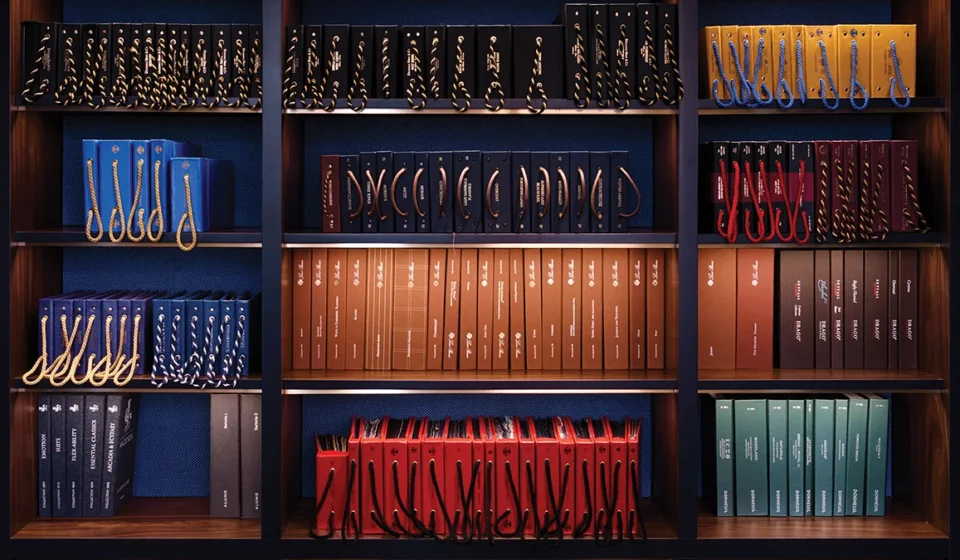
- Cloth Selection: London tailors maintain exclusive access to historic mills across the British Isles, offering upwards of 10,000 fabric options per season—ranging from ultra-fine 16-micron wools and vicuña to rugged Donegal tweeds and vintage cavalry twills.
- Handcraft Hours: A single bespoke jacket represents approximately 50 to 80 hours of meticulous hand-stitching, encompassing everything from pad-stitching the lapels to hand-attaching the sleeves and sewing functional surgeon’s cuffs.
- Longevity: Unlike fused, off-the-rack garments that break down within a few years, a properly cared-for London bespoke suit can easily last 30 to 50 years, frequently becoming an heirloom passed down through generations.
Official Responses and Industry Perspectives
The enduring dominance of London’s tailoring houses is frequently discussed by those at the center of the global menswear ecosystem. Master cutters and industry leaders emphasize that while trends shift toward casualization, the demand for authentic, personalized craftsmanship is growing exponentially among younger generations.
Representatives from historic institutions like Anderson & Sheppard note a distinct influx of international clients—particularly from the United States and Asia—who are traveling to London specifically to escape fast-fashion fatigue. "Clients are no longer satisfied with buying a label; they want a narrative," notes one Savile Row head cutter. "They want to know the sheep the wool came from, the hand that drafted the pattern, and the history embedded in the walls of the fitting room."
Similarly, modern innovators like Ozwald Boateng and Michael Browne have consistently advocated for the evolution of the craft. They argue that tradition and innovation are not mutually exclusive. By pairing centuries-old canvas-building techniques with modern design philosophies, London tailoring continues to dictate how the world’s most stylish men dress for red carpets, boardrooms, and private milestones.
Implications: Why London Bespoke Matters in the Modern Era
In an age dominated by algorithm-driven e-commerce, instant gratification, and disposable fast fashion, the bespoke tailoring houses of London represent a radical act of resistance. They champion the values of patience, sustainability, durability, and human artistry.
For the modern gentleman, commissioning a suit in London is much more than a wardrobe upgrade; it is an immersive cultural experience. It connects the wearer to a lineage of artists, rebels, kings, and icons who understood that clothing is the ultimate non-verbal communicator.
Whether you lean toward the military austerity of Gieves & Hawkes, the theatrical flair of Edward Sexton, the fluid comfort of Anderson & Sheppard, or the razor-sharp architectural precision of Michael Browne, a London bespoke suit remains the gold standard of menswear. As the global conversation around style continues to evolve, these historic London workshops prove that true elegance is never out of fashion—it is simply waiting to be measured.