Beyond the Basic Ticket: Why Educational Institutions Need Specialized Event Registration Software

As the demand for workforce-aligned education, corporate training, and employer partnerships surges across the academic landscape, event planners in universities, school districts, and certification bodies face an unprecedented logistical challenge. According to the UPCEA State of Continuing Education 2025 report, institutions are increasingly prioritizing flexible, career-oriented learning models. However, this growth has unmasked a glaring operational bottleneck: generic event registration software is simply not built to handle the complex ecosystem of academic and professional development events.
From multi-day research conferences featuring simultaneous speaker workflows to continuing education programs requiring meticulous credit tracking, educational events demand a higher level of software sophistication. This comprehensive guide explores the unique hurdles educational organizers face, the essential features to look for in a registration platform, common event workflows, and critical questions to ask vendors before signing a contract.
Main Facts: The Structural Mismatch Between Generic Software and Academic Needs
Educational event management is an intricate web combining audience diversity, credit tracking, and content-heavy programs. While basic event tools excel at selling simple, uniform tickets for standard webinars or corporate mixers, they routinely fail when applied to an academic setting.
The core friction points include:

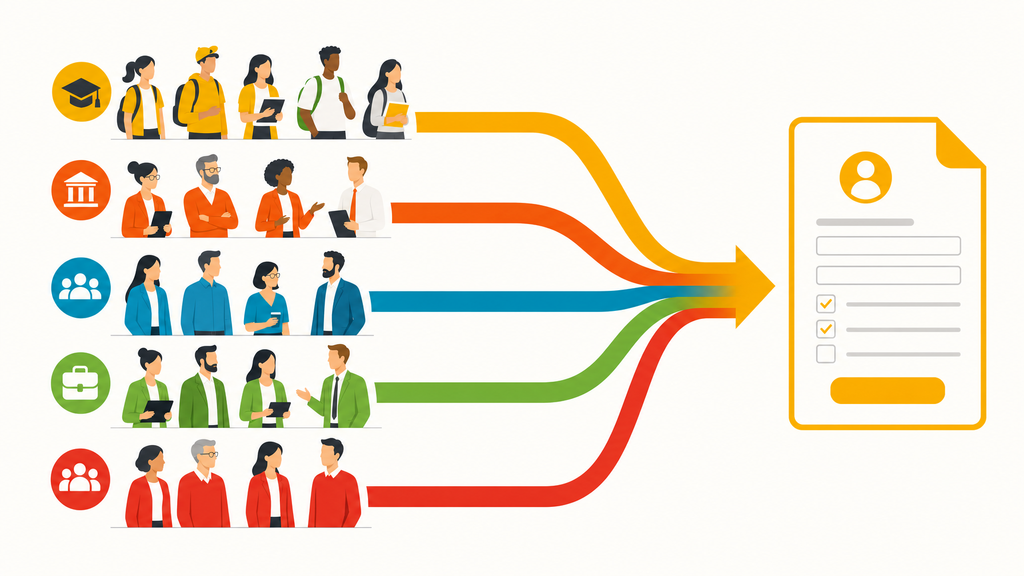
- Audience Fragmentation: Educational events rarely cater to a single demographic. They mix students, faculty, industry professionals, alumni, and international researchers, each requiring different pricing tiers, access rights, and data collection fields.
- Content Density: Unlike a single-track seminar, academic events often feature parallel tracks, breakout sessions, abstract submissions, and multi-day workshops.
- Regulatory and Credential Tracking: Professional development events require precise, session-level data collection to issue Continuing Education Units (CEUs) or Professional Development Units (PDUs).
Generic tools force organizers to stitch together makeshift solutions—such as deploying multiple independent forms, manually auditing spreadsheets, or paying for expensive, disjointed third-party plugins—resulting in administrative gridlock and a fragmented user experience.
Chronology: The Evolution of Educational Event Management
To understand how the industry reached this technological crossroads, it is helpful to look at how educational event planning has evolved over the past two decades:
- The Paper and Spreadsheet Era (Pre-2010s): Universities and academic societies relied heavily on paper forms, mailed checks, and massive, error-prone Excel spreadsheets to track attendees, abstract submissions, and faculty discounts.
- The Rise of Generic SaaS (2010s–2020): As event technology moved to the cloud, organizers adopted off-the-shelf event registration tools designed primarily for corporate webinars, marketing events, and consumer entertainment. While these tools sped up payment processing, they struggled with the nuanced demands of academia, forcing institutions to compromise on workflows.
- The Post-Pandemic Shift and Workforce Alignment (2020–Present): Accelerated by hybrid learning trends and the findings highlighted in reports like the UPCEA State of Continuing Education, institutions expanded their professional development and corporate training portfolios. The complexity of these programs exposed the deep limitations of generic software, sparking a migration toward specialized, highly adaptable event ecosystems capable of handling conditional logic, AI concierges, and deep data integration.
Supporting Data & Key Challenges in Educational Registration
Managing educational events requires confronting specific operational hurdles that generic tools cannot easily absorb.
1. Multiple Attendee Categories and Dynamic Pricing
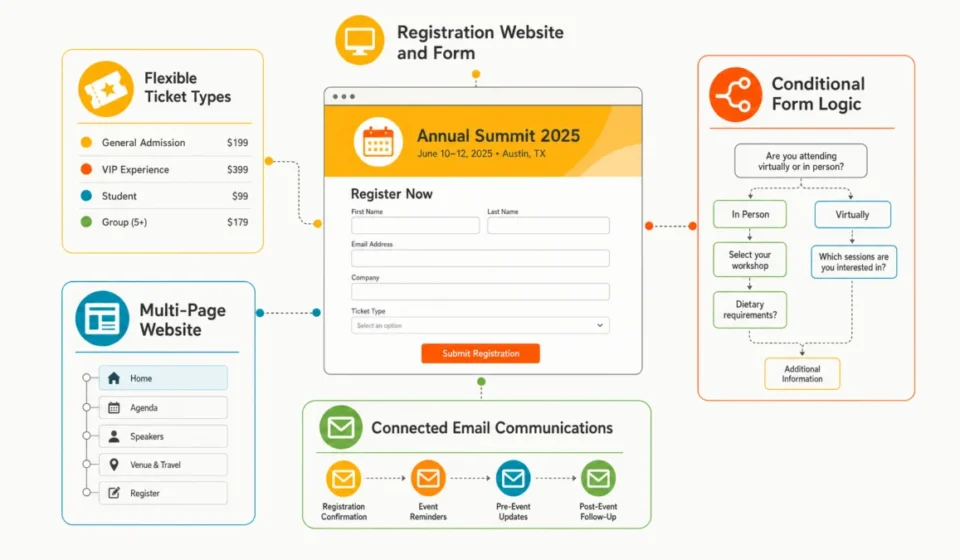
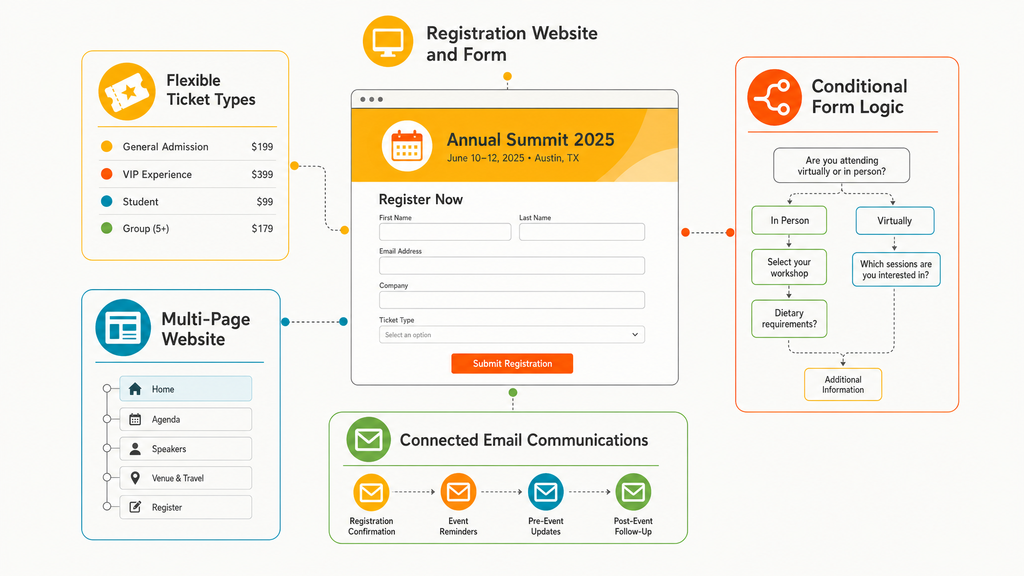
Educational events typically involve several distinct groups—such as undergraduate students, PhD candidates, tenured faculty, industry partners, and community members. Each group demands distinct pricing matrices and compliance data. Without flexible ticket types and conditional form logic, organizers are forced to choose between publishing an unmanageable, bloated form or maintaining separate registration funnels for every audience segment.
2. Session-Level Continuing Education Tracking
When events offer CEUs or PDUs, high-level registration is insufficient. Organizers must capture session-level preferences to ensure attendees can claim their credits accurately. This data must feed seamlessly into post-event reporting and certification generation.
3. Abstract Submissions and Dual-Track Workflows
Academic conferences require parallel registration pathways: one for general attendees and another for presenting authors, panelists, and keynote speakers. These stakeholders operate on entirely different deadlines, pricing structures, and data requirements. Managing both within a unified platform prevents administrative chaos.
4. Gated Institutional Discounts
Offering discounted or complimentary rates to students and faculty is standard practice, but these prices are rarely meant for the public eye. Robust platforms utilize Access Codes to reveal hidden ticket tiers or RSVP-gated flows, keeping public pricing clean while protecting institutional privileges.
Official Responses and Industry Perspectives
Educational technology leaders and association executives emphasize that the shift toward specialized software is no longer a luxury—it is an operational necessity.
"Educational events are fundamentally different from corporate marketing events," notes a leading association technology strategist. "When you are dealing with credentialing bodies, university compliance, abstract reviews, and tiered faculty pricing, an out-of-the-box ticketing widget creates more work than it saves. Organizers need systems designed to adapt to the participant, rather than forcing the participant into a rigid form."
Furthermore, insights from non-profit and education-adjacent management circles underscore that mission-driven organizations thrive on flexibility. Whether dealing with a university continuing education department or an international research society, the ability to automate communication pipelines based on real-time registration data drastically reduces manual overhead.
Implications: What to Look for in Modern Education Event Software
Selecting the right platform requires evaluating how well its features map to the unique demands of academic institutions. Key capabilities include:
- Conditional Form Logic: Forms should dynamically adapt based on user input. For example, a student should never see faculty-specific credential fields, and presenters should automatically be routed to abstract submission prompts.
- Multi-Page Website Builders: Because academic attendees scrutinize multi-track agendas, speaker credentials, and session locations before registering, a drag-and-drop website builder capable of creating comprehensive, multi-page event sites is essential for conversion.
- AI-Powered Multilingual Support: International research conferences benefit immensely from AI registration concierges that can detect a user’s native language and respond intelligently, ensuring global accessibility without the need to fully translate an entire multi-page website.
- Unified Onsite Tools and Event Apps: Data continuity is vital. Registration software should feed directly into mobile event apps, badge-printing stations, and check-in kiosks, eliminating the risk of data loss or synchronization errors during peak arrival times.
Common Education Event Workflows
Educational events generally fall into distinct categories, each requiring tailored software configurations:
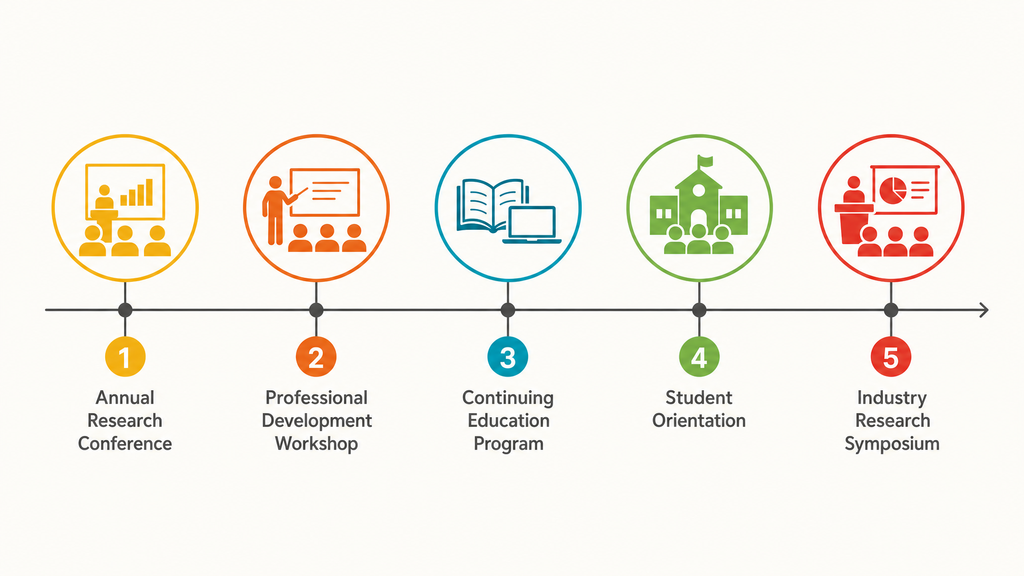
- Annual Academic or Research Conferences: The apex of complexity. They combine multi-audience pricing, abstract management, early-bird deadlines, concurrent session tracks, and international reach.
- Professional Development Workshops & Certificate Programs: Moderate complexity focused heavily on credential tracking, module selection, and structured data exports for post-event certification.
- University Continuing Education Programs: Require strict enrollment caps per module, flexible ticket types, and blended audiences of students, alumni, and working professionals.
- Student-Facing Orientations: Simple, low-cost or free registrations centered around student-only access gating and logistical communications.
- Industry-Facing Research Symposia: Designed to bridge academia and commerce, requiring clear boundaries and separate pricing tracks for university affiliates versus corporate guests.
Critical Questions to Ask Software Vendors
Before committing to an event registration platform, administrators should challenge vendors with real-world scenarios from their institutional calendar:
- How does your platform handle conditional logic when managing five or more distinct attendee types within a single form?
- Can attendees register for specific session tracks, and how is that session-level data exported for continuing education reporting?
- Does your system support hidden ticket tiers activated via secure access codes for faculty and students?
- How do abstract submissions and speaker registration workflows integrate with general attendee registration?
- Is participant data synchronized in real-time with your mobile event app and onsite badge printing tools?
The Bottom Line
Educational event registration is inherently content-rich, audience-diverse, and legally or professionally bound to structured outcomes like continuing education credits. Generic event tools create friction, manual labor, and data silos.
By prioritizing platforms that offer advanced form flexibility, robust session-level tracking, multi-page website builders, and seamless data integration, educational institutions can transform event planning from a stressful administrative grind into a streamlined, professional experience for organizers and attendees alike.