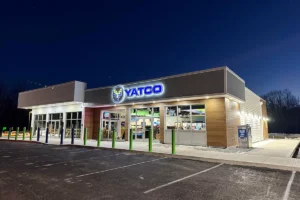

Beyond the Big Box: Why Small-Scale Convenience Retailers Hold the Ultimate Branding Advantage

In the high-stakes world of convenience retail, the industry’s narrative is often dominated by the “giants”—those sprawling, 6,000-square-foot travel centers with high-end food programs and aesthetic polish. These behemoths serve as the industry’s benchmarks, frequently featured in architectural journals and trade case studies. However, for the majority of operators—those managing smaller, legacy footprints or single-store locations—these grand models can feel like an unreachable, if not irrelevant, ideal.
There is a pervasive, damaging assumption in the industry: that a memorable brand is a luxury reserved for those who have already achieved the scale of a corporate powerhouse. John McCauley, a veteran of retail design and partner at Paragon Solutions, argues that this perspective is fundamentally backward. In reality, the small store is precisely where branding matters most, as it is where an operator has the least amount of secondary infrastructure to lean on.
The Myth of the "Traditional Box"
For decades, the convenience industry has operated under a standardized, often uninspired model. Differentiation was rarely about innovation; it was about location and fuel pricing. Historically, operators relied on the reputations of the fuel brands displayed on their canopies to drive traffic. If a motorist saw a familiar logo, they assumed a baseline level of service.
However, as the lines between fuel distributors have blurred and competition has saturated local markets, this reliance on external branding has become a liability. Operators often find themselves sharing a reputation with regional competitors they cannot control. When a customer has a negative experience at a poorly maintained site five miles down the road, the "brand" on the sign suffers—and the local operator pays the price.
"You cannot build a reputation you don’t own, and you certainly cannot defend one," McCauley notes. In an era where the fuel canopy no longer dictates the customer experience, the onus of identity has shifted entirely to the store owner.
The Anatomy of a Transformation: A Chronology of Success
To understand how a small-footprint store can defy the industry’s "generic" trap, one must look at the evolution of Tang Mart in Attalla, Alabama. In 2015, proprietor Jonathan Tang faced a challenge common to thousands of operators: a 1,700-square-foot former Chevron box that lacked a distinct personality.
The transformation began not with a massive capital expenditure on square footage, but with a deep dive into the store’s "why." Tang wanted to honor his heritage without resorting to tired tropes. By leaning into his own story, he developed a brand identity that was inherently personal and impossible for a competitor to replicate.
The Development Timeline:
- Phase 1: Defining the Core (2015): Rather than mimicking national chains, Tang identified his unique narrative. The resulting mascot—a friendly, approachable green character—became the visual anchor of the brand, designed for high-speed visibility.
- Phase 2: Operational Alignment: Before the new branding was applied, the team addressed "disqualifiers." Lighting, restrooms, and basic cleanliness were brought to a modern standard.
- Phase 3: The Ecosystem of Identity: The brand was then extended across the customer journey. Every touchpoint, from the "Black Dragon" coffee to "Dragon Diesel" at the fuel islands, was branded to create a cohesive, proprietary experience.
- Phase 4: Scaling the Standard: As the brand grew to other locations, Tang enforced a strict "standard first" rule. No store received the new signage until the physical infrastructure was brought up to the flagship’s quality, ensuring the brand promise remained intact across the network.
Supporting Data: The ROI of Identity
The impact of this approach on the bottom line is quantifiable. Following the renovation and rebranding of the Attalla location, monthly fuel volume surged from 35,000 gallons to 70,000 gallons. Inside sales experienced a similarly dramatic trajectory, climbing from roughly $40,000 to over $70,000 per month.

These figures illustrate a critical distinction: design and branding are catalysts, not silver bullets. The remodel provided the initial "lift," but the sustained success was a product of operational excellence. The brand gave customers a name to remember—a reason to choose Tang Mart over a nameless, generic competitor—but the operational standards ensured they returned.
Professional Insights: The "Truth-First" Strategy
McCauley emphasizes that the raw materials for a powerful brand are almost always already present in the operator’s life. "The best branding is about something true," he says. "For one operator, that reason is family heritage. For another, it is the specific geography of their highway exit, a local lake, or a signature product they have perfected over thirty years."
The Strategic Checklist for Operators:
- Audit the "Why": Write down why a stranger should choose your store. If the answer is solely "location" or "price," you have not yet found your brand.
- Eliminate Disqualifiers: A brand cannot outrun a bad restroom or poor lighting. Fix the fundamentals before investing in creative design.
- Define the Hierarchy: Determine what elements of your store are non-negotiable. Whether it is your coffee program or your snack selection, choose one category to "own" before rolling out a full brand identity.
- Document and Standardize: Once you have solved the operational and design puzzles in your flagship store, create a manual. This prevents "brand dilution" and ensures consistency as you expand.
Implications for the Future of Convenience Retail
The implications of this shift are profound. As the convenience industry moves toward a future where electric vehicle charging and high-end food service become the new table stakes, the "generic" box is becoming an endangered species.
Small operators are uniquely positioned to compete with national chains because they possess the agility that large, bureaucratic organizations lack. They can pivot, they can inject personality, and they can build genuine, long-term relationships with their communities.
The most successful retailers of the next decade will not necessarily be the ones with the deepest pockets or the largest square footage. They will be the ones who recognize that their brand is a promise. By documenting their standards, staying true to their unique stories, and prioritizing operational integrity, these operators can transform their stores from mere fuel stops into destination hubs.
As McCauley concludes, "Small store. Old building. Modest budget. None of those is the reason an operator blends into the background. The reason is that nobody ever asked what the store was about." The task for the modern operator, then, is simple yet profound: define your identity, build it into every facet of the customer journey, and ensure that the sign on the door represents a standard that is earned, not just displayed.
In a crowded marketplace, the most powerful tool an operator has isn’t a massive marketing budget—it is the authenticity of their own story. By shifting focus from "big box" emulation to "true brand" creation, the small operator can finally move out of the shadow of the giants and into a spotlight of their own making.