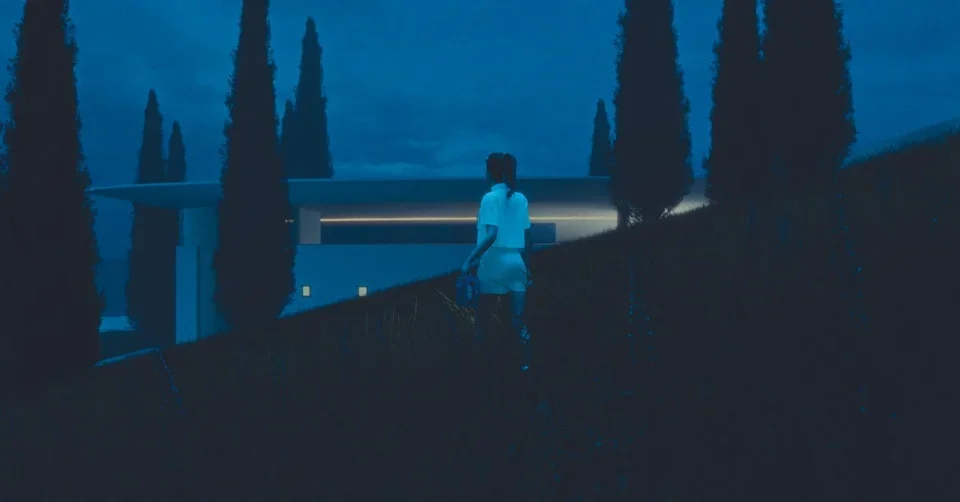

In the competitive and ever-evolving landscape of digital entertainment, few artists manage to carve out a niche that feels both technically precise and deeply personal. Tian Gan, a Senior Concept Artist at Bad Robot Games, stands as a prime example of this duality. With a portfolio that includes significant contributions to titles like 4LOOP, Echoes of Aincrad, and Atmosfar, Gan has transitioned from a childhood dreamer sketching in school notebooks to an award-winning professional recognized by prestigious organizations such as American Illustration and Applied Arts.
Her work is not merely about creating "assets"; it is about the synthesis of narrative and visual language. As the industry continues to push the boundaries of 3D modeling and immersive storytelling, Gan’s approach—which favors fundamental silhouette and form over the allure of early detailing—offers a masterclass for both aspiring and seasoned artists.
The Foundations of a Creative Journey
Every great artist’s journey begins with a catalyst, and for Tian Gan, that spark ignited in the quiet corners of a primary school classroom. Lacking the pocket money to indulge in the burgeoning comic book culture of her youth, Gan turned to her art teacher for a different kind of investment: instruction.
"I asked my art teacher to teach me how to draw comics because I didn’t have the money to buy them," Gan recalls. "They were terrible, of course, but that was probably the first time I felt the desire to create a world for myself."
This early frustration served as the bedrock of her career. The lack of access to external media forced her to become a producer of content rather than a mere consumer. This shift in perspective—from observing to constructing—would eventually define her professional philosophy. Her early amateur sketches were the first attempts at world-building, a pursuit that would later evolve into the complex environmental and creature design seen in her professional work.
Chronology of an Artist: From StarCraft to Bad Robot Games
Gan’s professional trajectory was heavily influenced by the golden age of PC and console gaming. While many artists draw inspiration from traditional fine arts, Gan credits her formative years to the immersive digital landscapes of StarCraft and Final Fantasy VII.
"I have always loved games, so they have probably inspired me the most," she notes. "Those were the first worlds that really opened that door for me. I loved studying how their stories, characters, environments, and cultures were constructed."
This obsession with the "construction" of a game world is what separates a concept artist from a standard illustrator. By analyzing the structural integrity of these early 3D environments, Gan learned to view design as a holistic endeavor. Her career has since seen her move through various studios, eventually landing at Bad Robot Games. Her tenure there has been marked by a commitment to interdisciplinary collaboration, working alongside designers and developers to ensure that the visual language of a game matches its mechanical soul.
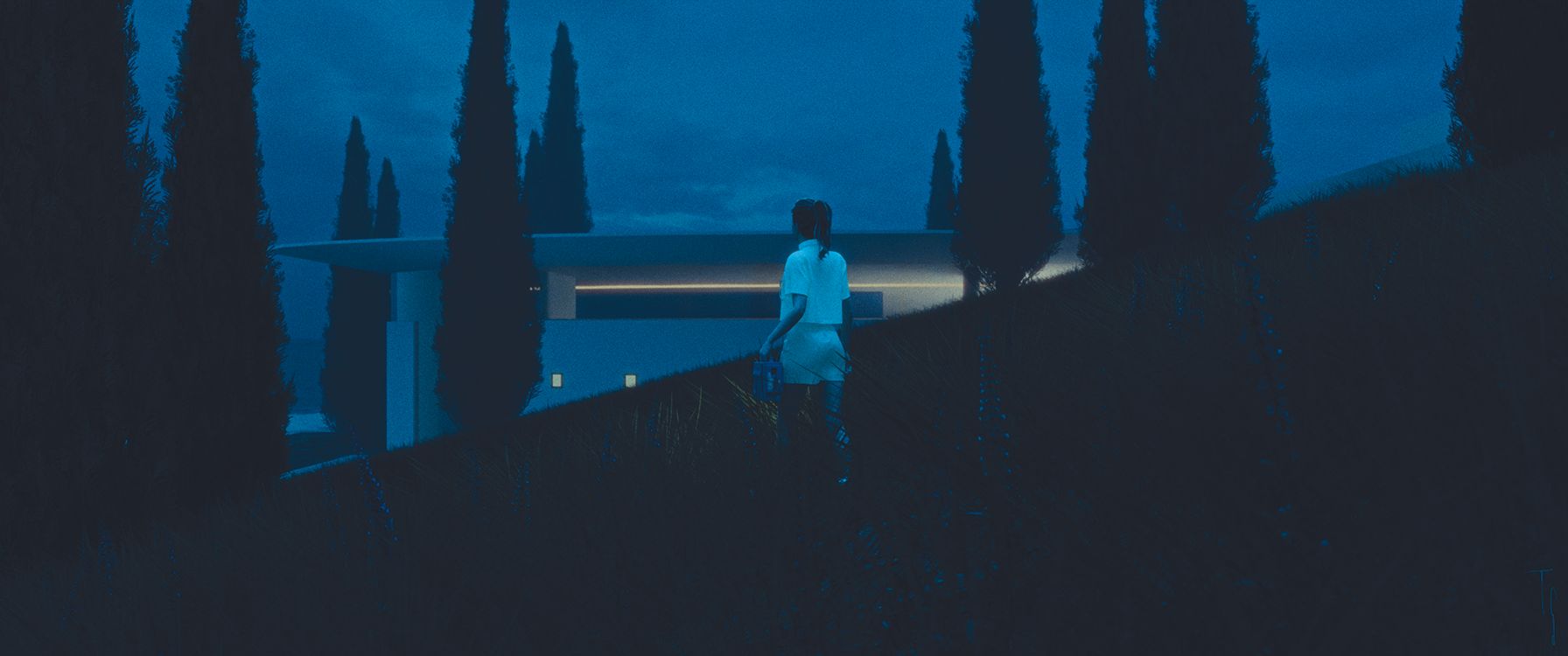
The Technical Dilemma: 2D vs. 3D
In the modern studio, the debate between 2D sketches and 3D modeling is often framed as a conflict of tools. For Gan, however, it is a matter of strategic efficiency. When asked about the challenges of working in 3D, she emphasizes the danger of premature complexity.
"The biggest challenge is not getting lost in details too early," Gan explains. "The overall silhouette can become weak or lose its uniqueness."
To mitigate this, Gan employs a hybrid workflow. She initiates her projects with 2D sketches—the "blueprints" of her vision—before transitioning into 3D software to block out the core forms. By focusing on simple meshes and primary volumes, she ensures that the character or environment retains its visual identity before the heavy lifting of rendering and texturing begins.
This balanced approach allows her to maintain a unique "visual voice" regardless of the medium. For Gan, whether she is using a stylus on a digital tablet or sculpting in a 3D environment, the goal remains the same: "understanding the art direction deeply."
Beyond the Studio: Personal Projects and Cross-Disciplinary Growth
Professional success is often measured by a artist’s ability to adhere to a studio’s vision, but true mastery is found in the pursuit of personal projects. Gan’s work currently extends beyond the high-stakes world of AAA game development into the niche of experimental motion graphics.
Her current passion project is a series of short films inspired by avian anatomy and behavior. By creating 30-to-60-second vignettes, she explores how different visual languages—ranging from gritty realism to abstract science fiction—can interpret the same subject.
"I want to experiment before finding the final visual language," Gan says. This project has already garnered critical acclaim, having been selected as a Chosen Winner in the Motion Graphics category of American Illustration. Such recognition validates her belief that an artist must constantly experiment to prevent their work from stagnating.
Furthermore, Gan is committed to the "ecosystem" of art. She plans to release her self-made assets on platforms like Gumroad, fostering a community of exchange. Her philosophy is collaborative; she recounts an instance where her own concept design inspired a physical sculptor, proving that digital concept art has a tangible impact on the wider artistic world.
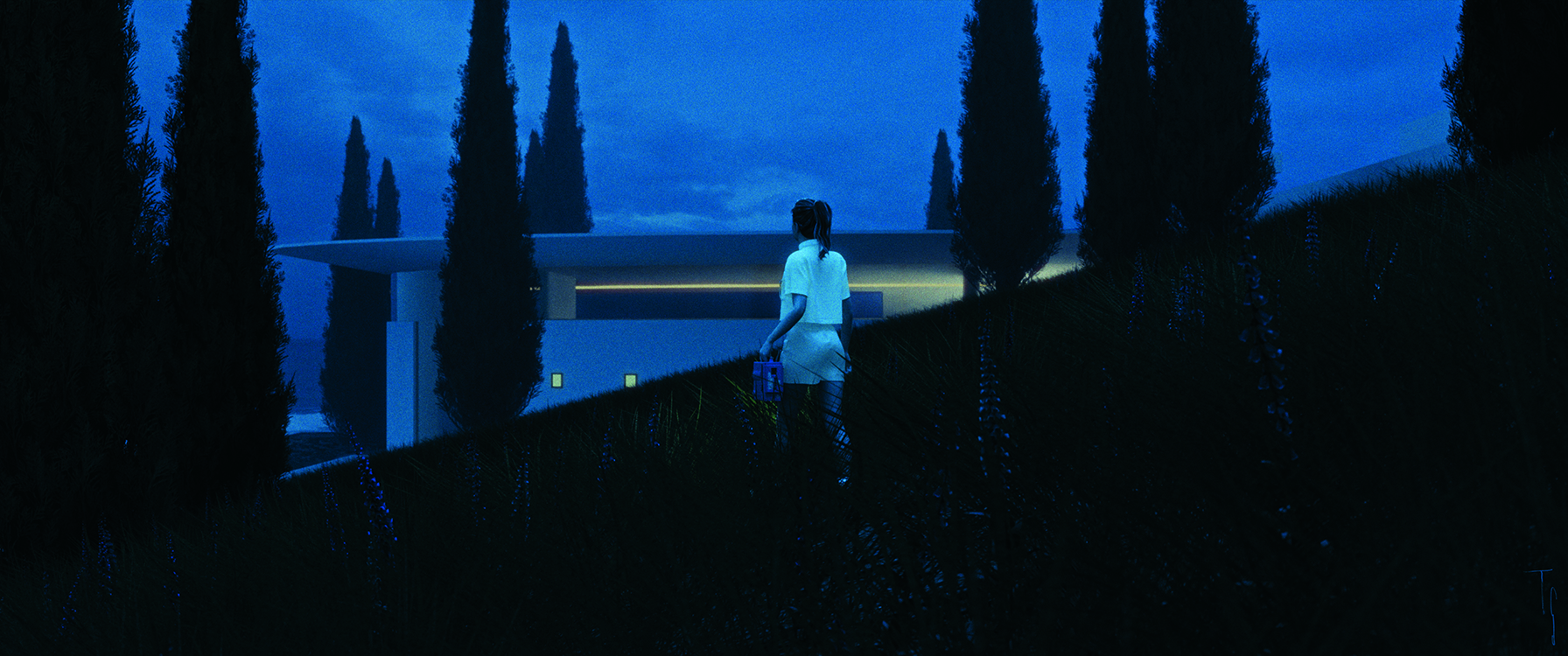
Implications for the Future of Concept Art
As artificial intelligence and automated rendering tools begin to saturate the design market, the role of the concept artist is shifting. Gan’s success highlights a critical trend: the most valuable artists are those who can synthesize disparate influences and apply them to complex narrative problems.
The industry is moving toward a future where "getting the look" is easier, but "creating the meaning" remains a distinctly human pursuit. Gan’s emphasis on understanding cultural construction—the "why" behind a character’s armor or a city’s architecture—is what ensures her work remains relevant.
For those looking to follow in her footsteps, the path is clear:
- Master the Fundamentals: Do not bypass the silhouette in favor of detail.
- Embrace Hybridity: Use both 2D and 3D to serve the project’s specific needs.
- Cultivate a Personal Voice: Engage in side projects that challenge your comfort zone.
Conclusion
Tian Gan’s career is a testament to the power of deliberate, iterative creation. From the humble beginnings of primary school comic strips to the high-fidelity environments of modern gaming, her journey has been defined by a refusal to settle for surface-level aesthetics.
As she looks toward her next steps—expanding into animation and film while continuing to push the boundaries of her own artistic voice—Gan remains a vital voice in the industry. She serves as a reminder that the tools we use are secondary to the intent behind them. In the intersection of technical proficiency and creative curiosity, Tian Gan has found not just a career, but a way to build worlds that resonate far beyond the screen.
Essential Tools for the Modern Artist
For those inspired by Gan’s workflow and looking to build or upgrade their own creative setup, the following resources remain essential for high-end 3D and 2D design:
- 3D Modeling Software: Industry standards such as Blender, Maya, and ZBrush remain the backbone of professional character and environmental design.
- Hardware: A high-performance laptop or workstation capable of handling real-time rendering is non-negotiable. Key specs include high VRAM, dedicated ray-tracing GPUs, and professional-grade color-accurate displays.
- Input Devices: Drawing tablets (such as those from Wacom or Huion) are critical for the 2D sketching phase that underpins professional 3D design.
For more information on the tools and techniques used by industry leaders, keep an eye on our ongoing series of artist spotlights and technical guides.