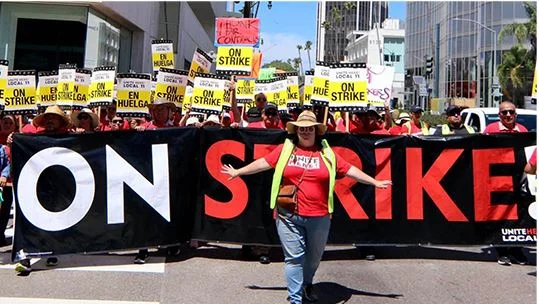

If you are planning to host an event in the "Windy City" in the coming weeks, your logistics may be facing an unexpected and significant hurdle. Chicago’s hospitality sector, a cornerstone of the city’s economic engine, is teetering on the edge of what labor organizers predict could become the largest hotel worker strike in the city’s history.
With over 7,000 employees—ranging from housekeepers and cooks to front desk agents and servers—having voted overwhelmingly to authorize a strike, the tension between major hotel chains and their workforce has reached a critical boiling point. As labor contracts expire and negotiations stall, event planners and business travelers are being forced to prepare for the possibility of picket lines at 46 of the city’s most prominent properties.
The Anatomy of the Impasse: Main Facts
The strike authorization, spearheaded by Unite Here Local 1, was passed by a staggering 85% margin. This level of participation sends a clear message to ownership groups: the workforce is unified and prepared for a prolonged labor dispute. The affected properties include heavy hitters like Hyatt, IHG, Hilton, and Marriott, spanning from luxury high-end establishments like The Ritz-Carlton Chicago to high-volume, select-service locations such as the Home2Suites by Hilton near McCormick Place.
At the core of this movement is the rising cost of living in major metropolitan areas. Despite Chicago’s status as a premier global destination for conventions and tourism, the workers who maintain these standards are struggling to keep pace with inflation. Internal surveys conducted by Unite Here revealed a sobering reality: nearly one-third of these hotel workers report they are unable to consistently pay their rent or mortgage, and nearly 30% struggle to cover basic utility bills.
Beyond the immediate financial strain, workers are citing a degradation of working conditions. The post-pandemic landscape of the hotel industry has been marked by leaner staffing models, leading to increased workloads and physical exhaustion.
Chronology of a Growing Conflict
The current situation did not materialize overnight. It is the culmination of months of tense negotiations that followed the expiration of labor contracts at nearly all of the impacted hotels by the end of August.
- Pre-August 2024: Negotiations between Unite Here Local 1 and hotel management groups began with the goal of securing better wages, healthcare, and safer working conditions.
- Late August 2024: Existing labor contracts at the majority of the 46 affected hotels officially expired, removing the legal barriers to strike action.
- September 2024: The union conducted a strike authorization vote. The 85% “yes” vote provided the union leadership with the mandate needed to call a work stoppage at any time.
- The Future: Should a strike occur, it is expected to unfold in a "rolling" or "wave" fashion. Rather than a total city-wide shutdown at once, the union may target specific properties in sequence to maximize leverage and minimize the ability of management to bring in replacement staff.
This cycle mirrors the 2018 Chicago hotel strike, which saw 26 hotels shuttered or severely limited for four weeks. That historic action successfully secured year-round health insurance for workers, a victory that current organizers are looking to build upon.
Supporting Data: Why Now?
The grievances expressed by Chicago workers are echoed in a national trend of labor unrest across the hospitality industry. Following the 2025 landmark victory in Houston—where workers secured a 25% wage increase—the momentum for organized labor has accelerated.
The testimony of Cassandra Pope, a room attendant at the Palmer House Hilton, encapsulates the human element of these statistics. "They’re putting us on the schedule six consecutive days without even asking us," Pope said. "They demand and demand, always rushing us in the rooms, without acknowledging that we are human beings. I’m coming out of here extremely exhausted. And I have to work because I need money to feed my four children."
For workers like Pope, the issue is not just about a paycheck; it is about the pace of work. The industry-wide push for "lean operations" has effectively doubled the burden on room attendants, who are often expected to clean more rooms in less time, leading to higher rates of repetitive stress injuries and burnout.
Official Responses and Corporate Strategy
In response to the mounting pressure, hotel conglomerates have adopted a unified tone of cautious optimism mixed with firm contingency planning. Hilton, representing the industry’s stance, issued a statement emphasizing that a strike vote is not a guarantee of a strike.
"There is currently no labor disruption at the hotels, and a strike vote does not mean that there will be a strike," the company stated. "We are also focused on providing our guests with our signature hospitality and have contingency plans in place to ensure operations continue to run as smoothly as possible in the case of a work stoppage."
This corporate messaging is designed to reassure convention organizers and individual travelers that service will not be interrupted. However, historically, "contingency plans" often involve the use of management staff to perform housekeeping or food service duties, which rarely matches the quality or speed of the professional workforce, potentially leading to service degradation.
Implications for Event Planners and the City
For the meetings and events industry, the uncertainty is perhaps the most difficult variable to manage. The Chicago Marathon, scheduled for October 11, serves as the most immediate "stress test" for the city’s infrastructure. With 55,000 runners and thousands of international spectators descending on the city, any disruption to hotel services could cause significant reputational damage to the city’s ability to host global events.
Practical Advice for Planners
The union has been proactive in its communication with the events industry. On the Unite Here Local 1 website, planners can find model contract language for "excused non-performance due to labor dispute." This clause is designed to protect planners from penalties if they are forced to cancel or move an event due to a picket line.
Furthermore, the union reports that several organizations have already begun the process of rescheduling or relocating their events to avoid the potential chaos. For those currently contracted with impacted hotels, the following steps are recommended:
- Direct Communication: Reach out to the hotel’s general manager or sales contact to inquire specifically about their contingency plans regarding labor disputes.
- Legal Review: Consult with legal counsel to review existing contracts, specifically looking for force majeure clauses or language related to labor unrest.
- Contingency Scouting: Identify alternative venues or hotels that are not part of the current union negotiations, should the situation deteriorate.
- Monitor Local News: Stay updated via the Unite Here Local 1 website, as the "wave" nature of the potential strike means conditions could change rapidly.
Conclusion: A City at a Crossroads
The potential strike in Chicago represents more than just a local dispute over wages; it is a microcosm of the modern labor movement. As the cost of living continues to rise, the divide between the high profits of luxury hospitality and the wages of the frontline workers who facilitate those profits has become unsustainable for many.
Whether a strike occurs or a eleventh-hour agreement is reached, the message from the 7,000 workers of Local 1 is clear: the status quo is no longer acceptable. For the city of Chicago, the coming weeks will determine whether it can maintain its status as a world-class convention destination while addressing the fundamental needs of the people who make that hospitality possible. For the rest of the country, it serves as a reminder that the hospitality industry is in the midst of a profound transformation, one where the human cost of service is finally being brought to the negotiating table.