
Clash of the Epics: How Elon Musk’s AI-Generated ‘Odyssey’ Contest Sparked a Cultural and Technological Battleground

Introduction and Main Facts
The intersection of classical literature, high-end Hollywood blockbuster filmmaking, and generative artificial intelligence has birthed one of the most eccentric cultural flashpoints of the decade. Despite the monumental, billion-dollar box office success and critical acclaim lavished upon Christopher Nolan’s cinematic adaptation of The Odyssey, the film has drawn the vehement ire of tech billionaire Elon Musk. Musk’s grievances are rooted in ideological objections to Nolan’s casting choices—specifically, the selection of Black actress Lupita Nyong’o as Helen of Troy and transgender actor Elliot Page as a Greek soldier.
Accusing the celebrated auteur of compromising artistic integrity to appease modern inclusivity standards, Musk publicly denounced Nolan’s vision as a "desecration" of Homer. Eager to prove that artificial intelligence could outperform traditional Hollywood executives and directors, the world’s wealthiest individual launched a high-stakes contest backed by xAI. He challenged digital creators to utilize his proprietary AI model, Grok, to produce a "historically accurate" version of the ancient Greek epic.
The grand prize of $100,000 was ultimately awarded to digital artist Nem Perez for his five-minute visual journey through the mythos. While Perez praised Grok’s capabilities for helping him push the boundaries of AI video generation, the resulting short film immediately became a lightning rod for debate. Blighted by the surreal technical anomalies characteristic of generative video—such as characters with feet for hands, fluctuating monster anatomies, and wooden dialogue—the project underscored both the staggering potential and the glaring limitations of AI in narrative filmmaking. As Hollywood continues to grapple with the seismic shifts brought by artificial intelligence, the rivalry between Nolan’s human-crafted masterpiece and Musk’s AI crusade has opened a fascinating window into the future of creative expression.
Chronology of Events
To understand how a centuries-old epic poem became a battleground for AI supremacy and culture-war politics, it is necessary to trace the sequence of events that unfolded throughout mid-2026.
- August 2026: Christopher Nolan’s adaptation of The Odyssey crosses the coveted $1 billion milestone at the global box office, solidifying its place as a historical cinematic triumph, notably recognized as the first film ever entirely shot on IMAX cameras.
- Late July 2026: Elon Musk takes to social media to launch a scathing critique of Nolan’s casting decisions, claiming the director "groveled on his knees" to meet modern award criteria. In the same breath, Musk announces a contest: xAI’s Grok will spearhead a counter-production to deliver a "historically accurate" alternative to Homer’s epic before the end of the year.
- Late August 2026: Digital creator Nem Perez submits his ambitious five-minute short film to the Grok-powered competition, focusing heavily on the Phaeacians and Princess Nausicaa—elements omitted from Nolan’s theatrical cut.
- August 31, 2026: Perez officially releases his AI-generated epic online, proudly proclaiming that he pushed Grok and accompanying imagine tools "to their absolute limits" to present The Odyssey "as Homer intended."
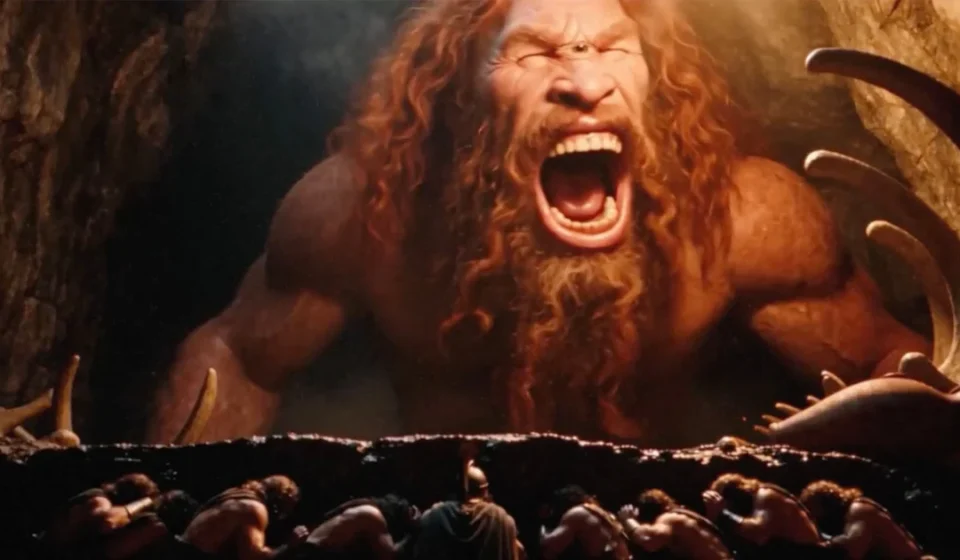
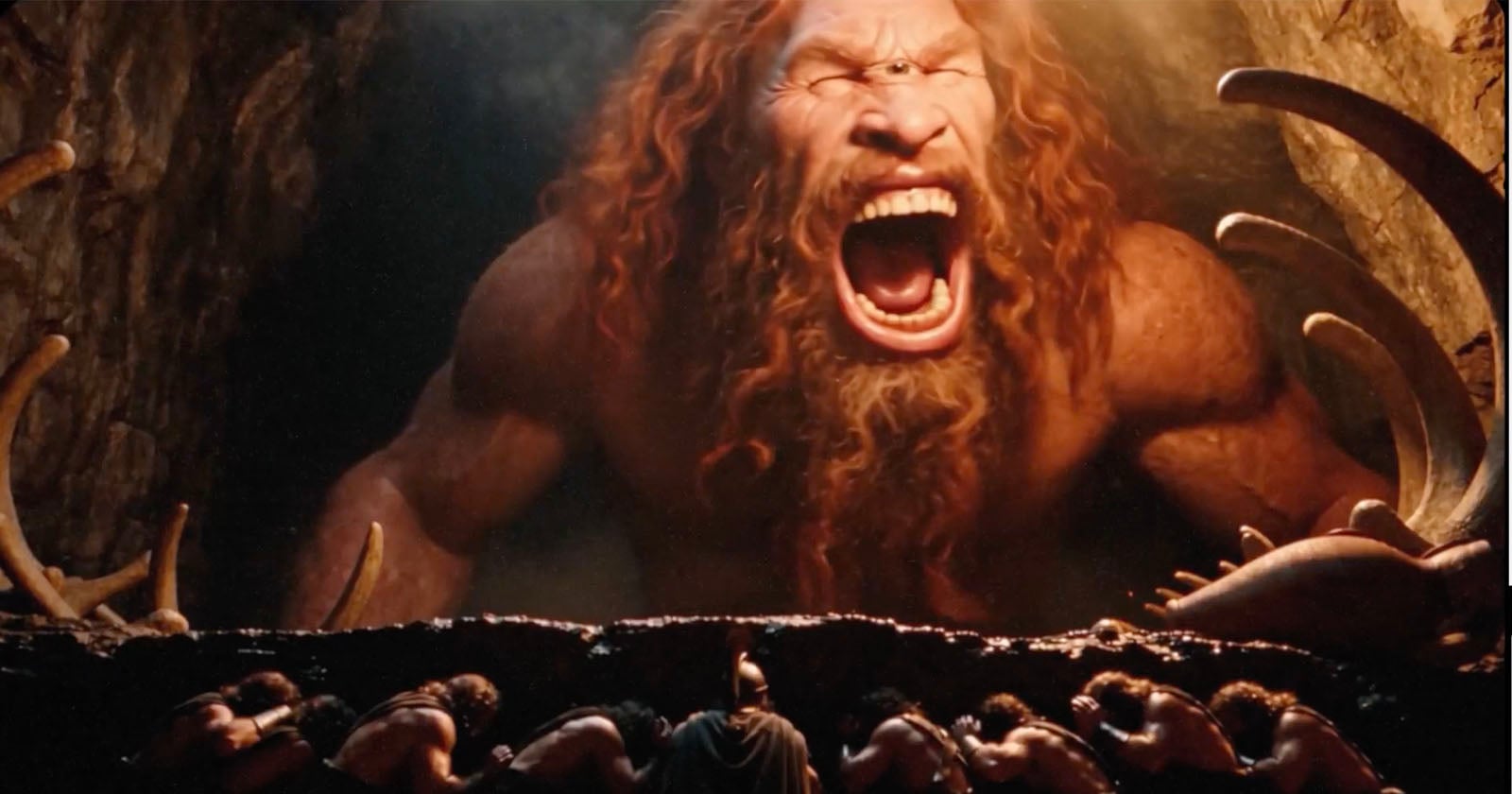
- Early September 2026: Tech and culture publications, including Futurism and PetaPixel, review the winning submission, highlighting the bizarre hallucinations typical of current generative video models—such as the three-eyed Cyclops Polyphemus and anatomical impossibilities among Odysseus’s crew. Concurrently, comedic filmmaker Will Norman enters the fray with a satirical counter-project, shooting his own version of The Odyssey entirely on Apple iMac computers rather than IMAX cameras.
Supporting Data and Technical Breakdown
The technological mechanisms behind the $100,000 contest reveal the current threshold of generative video platforms. While xAI’s Grok and its associated image- and video-generation pipelines have made immense strides in fidelity, texture rendering, and lighting, narrative coherence remains a formidable hurdle.
- The Runtime Constraint: Condensing an epic narrative that spans decades of wandering, divine intervention, and bloody retribution into a five-minute window required severe structural distillation. Perez chose to anchor his narrative around the Phaeacians and Princess Nausicaa, a sequence designed to showcase Odysseus recounting his prior trials.
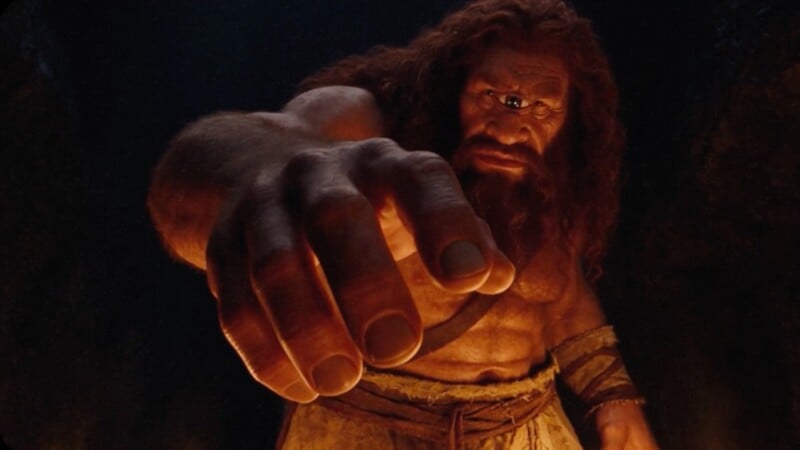
- Generative Anomalies: Despite being hailed as a triumph of prompt engineering, the winning short film exhibits classic artifacts of neural network rendering. Most notable among these is the depiction of the legendary Cyclops Polyphemus, who oscillates wildly in scale between cuts and manifests an anomalous third eye. Furthermore, anatomical glitches—such as background characters appearing with feet substituted for hands—highlight the struggle of AI architectures to maintain consistent spatial and biological logic over extended sequences.
- Dialogue and Delivery: Beyond visual hallucinations, the auditory elements generated through AI pipelines suffered from robotic cadence and unnatural inflection, described by critics as being "more wooden than the boat Odysseus sails on."
- Alternative Production Metrics: Providing a stark contrast to both multi-million dollar Hollywood budgets and massive GPU cluster training runs, independent filmmaker Will Norman demonstrated the democratization of alternative media by filming a competing version of The Odyssey using built-in computer webcams and desktop monitors (iMacs), generating grassroots buzz that rivaled the high-tech AI experiment.
Official Responses and Public Reactions
The collision between Silicon Valley tech ambition and Hollywood prestige elicited a wide spectrum of responses from creators, critics, and the public.
Elon Musk’s pronouncements set a combative tone, framing the initiative as a corrective measure against what he perceives as ideological decay within major motion picture studios. By demanding historical and textual fidelity through algorithmic generation, Musk positioned xAI not merely as a tech developer, but as a direct challenger to traditional creative gatekeeping.
Nem Perez defended his work against inevitable online mockery, emphasizing the intense labor required to coax coherent storytelling out of rapidly evolving AI tools. "I pushed Grok to its absolute limit to create this five-minute epic," Perez noted, expressing pride in restoring narrative elements—like the Phaeacians—that he felt were unjustly cast aside by mainstream adaptations.
Conversely, the broader artistic and journalistic community greeted the $100,000 AI short with a mixture of amusement and reassurance. Outlets like Futurism and PetaPixel pointed out the inherent irony of striving for "historical accuracy" through a medium notoriously prone to generating surreal historical distortions and anatomical errors. Prominent industry analysts suggested that while generative AI functions brilliantly as a rapid prototyping or concept-art tool, it remains miles away from replicating the nuanced emotional resonance, subtext, and directorial vision required to sustain a feature-length narrative.
As one industry observer wryly noted, if Nem Perez’s fever-dream short represents the apex of current AI cinematic capability, Christopher Nolan and human filmmakers at large can rest comfortably for the foreseeable future.
Broader Implications for the Future of Media
The contest commissioned by Elon Musk and won by Nem Perez is much more than a viral internet curiosity; it serves as a micro-cosmic preview of the structural transformations facing the entertainment industry.
1. The Democratization vs. Degradation Debate
Generative AI lowers the financial barrier to entry for epic storytelling. Creators who lack access to studio financing, massive crews, or millions of dollars in visual effects budgets can now conjure sweeping vistas of ancient Greece, mythical monsters, and sweeping oceanic voyages from a desktop computer. However, this democratization comes at the cost of artistic soul. The lack of intentionality, lived human experience, and deep philosophical subtext in AI outputs raises existential questions about what constitutes art. When an algorithm compiles pixels based on statistical probability rather than emotional catharsis, the resulting product risks becoming hollow spectacle.
2. Culture Wars and Algorithmic Curation
Musk’s motivation to fund a rival Odyssey highlights a growing trend of ideological polarization spilling over into software development and media consumption. The desire for "historically accurate" art often masks subjective interpretations of history and mythology. By weaponizing AI models to bypass traditional studio oversight, tech leaders are signaling an intent to curate alternative media ecosystems tailored to specific ideological parameters. This could lead to a fragmented media landscape where audiences consume algorithmically validated versions of history and myth that confirm their pre-existing worldviews.
3. The Future of Hollywood Labor
As tools like Grok, OpenAI’s Sora, and other generative video engines evolve, the pressure on Hollywood’s traditional workforce—from concept artists and storyboarders to visual effects houses and background actors—will intensify. While current AI outputs are easily lampooned for extra fingers, shifting cyclops eyes, and wooden dialogue, the exponential curve of technological improvement suggests that these rough edges will smooth out over time.
Ultimately, the battle over The Odyssey proves that while artificial intelligence can successfully mimic the surface aesthetics of classical mythology, the grueling, messy, and deeply human endeavor of true storytelling cannot be so easily synthesized. Whether Hollywood adapts by embracing these tools as collaborative assistants or fortifies its position by doubling down on uniquely human authorship, the ancient tales of gods, monsters, and heroes will continue to reflect our deepest technological and cultural anxieties.
Related posts: