Cracker Barrel Exits Fast-Casual Sector: The Strategic Wind-Down of Maple Street Biscuit Company

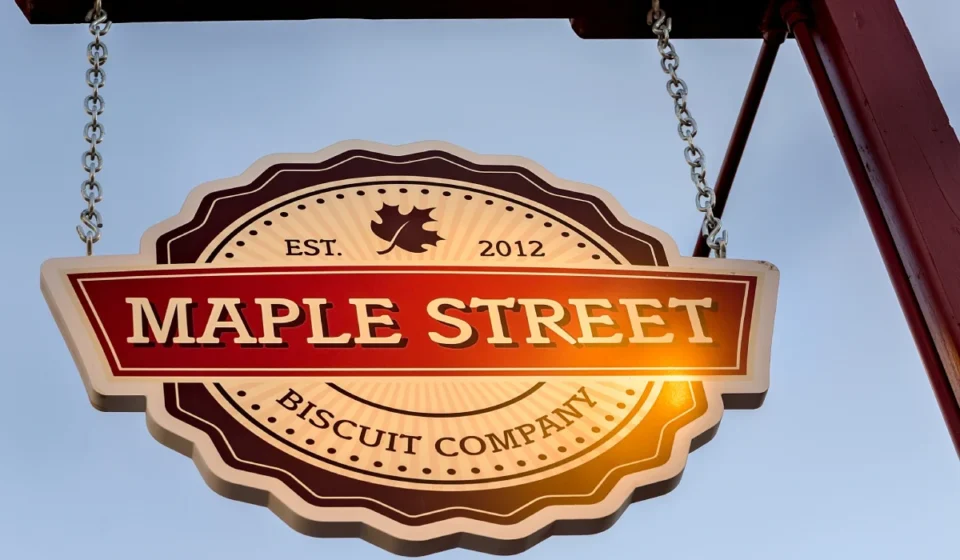
In a definitive move to streamline its operations and sharpen its focus on its namesake brand, Cracker Barrel Old Country Store, Inc. announced on Monday that it has officially exited the fast-casual breakfast segment. The decision marks the end of a five-year experiment for the Tennessee-based hospitality giant, which acquired the Jacksonville, Florida-born Maple Street Biscuit Company in 2019.
The exit involves a two-pronged strategy: the sale of the Maple Street trademark, intellectual property, and 35 operating units to the emerging fast-casual chain Biscuit Belly, and the immediate closure of the remaining 16 Maple Street locations. This strategic pivot is expected to cost the company up to $47 million in combined charges and exit expenses, a price tag management views as a necessary investment to clear the path for the long-term revitalization of the core Cracker Barrel business.
The Financial Implications: Costs and Efficiencies
The departure from the fast-casual market is not without immediate financial pain. Cracker Barrel anticipates recording non-cash charges of approximately $37 million to $39 million in the fourth quarter of the current fiscal year, primarily tied to the asset impairment and sale of the brand. Beyond these non-cash hits, the company expects to incur between $6 million and $8 million in cash-based expenses, including severance packages for affected employees, lease termination fees, and various logistical exit costs.
Management has noted that while some of these exit expenses will be absorbed in the short term, others will stretch into fiscal 2027. Despite the immediate bottom-line impact, the company is optimistic about the long-term benefits. Maple Street contributed less than 2 percent of Cracker Barrel’s total annual revenue; by pruning this non-core asset, the company expects to see a measurable improvement in its adjusted EBITDA starting in fiscal 2027.
A Chronology of the Maple Street Acquisition and Expansion
The story of Maple Street Biscuit Company began in 2012, founded by Gus Evans and Scott Moore as a boutique, community-focused breakfast concept. By 2019, the brand had caught the eye of Cracker Barrel, which acquired the then-33-unit chain for $36 million. At the time, the acquisition was viewed as a diversification play, allowing Cracker Barrel to tap into the high-growth fast-casual breakfast segment.
Following the acquisition, Cracker Barrel aggressively scaled the footprint. The brand’s unit count grew steadily:
- Fiscal 2020: 35 restaurants
- Fiscal 2021: 37 restaurants
- Fiscal 2022: 51 restaurants
- Fiscal 2023: 59 restaurants
- Fiscal 2024: 66 restaurants
- Fiscal 2025: 68 restaurants
However, the rapid scaling eventually hit a ceiling. By May 2024, the company signaled a shift in strategy, announcing that it would slow the pace of development and attempt to refine the Maple Street business model. That September, the company took a more aggressive step, announcing the closure of 14 underperforming units—a move that reduced the chain’s footprint by roughly 20 percent. The recent sale to Biscuit Belly represents the final surrender of that expansion effort.
CEO Julie Masino’s Turnaround Mandate
The exit from Maple Street is largely credited to the leadership of CEO Julie Masino, who has been vocal about the necessity of returning Cracker Barrel to its roots. Since taking the helm, Masino has emphasized that the "strategic transformation" of the core Cracker Barrel brand is the company’s singular priority.
During a February 2024 earnings call, Masino addressed the status of the secondary brand with a tone of cautious detachment. "We are working very, very hard on the strategic transformation and getting this business back to growth," she stated. "Maple Street, we’re not talking about that today, but we’ll share more in the future. There’s a lot to love about Maple Street. It’s great food, it’s got a nice weekend business. But right now we are really focused on growing Cracker Barrel and returning it to strength."
Masino’s focus is on operational discipline, menu simplification, and modernizing the guest experience at the company’s flagship locations. By shedding the administrative and operational burden of managing a distinct fast-casual brand, leadership aims to redirect executive bandwidth and capital back into the core restaurant and retail experience that built the company’s reputation.
Complementary Moves: Strengthening the Balance Sheet
The Maple Street divestiture is part of a broader financial housekeeping effort. Concurrently, Cracker Barrel announced that it has completed a sale-leaseback transaction involving 26 of its company-owned Cracker Barrel restaurants. This transaction generated approximately $77 million in net proceeds, which the company intends to use to pay down debt and bolster its balance sheet.
These maneuvers come at a challenging time for the industry. In the first 11 weeks of the fourth quarter of 2026, Cracker Barrel reported a 2.5 percent decline in same-store sales, while retail comps saw a modest increase of 0.5 percent compared to the previous year.
Despite these headwinds, the company remains confident in its overall trajectory. Cracker Barrel has indicated that it expects to reach or even exceed the high end of its fiscal 2026 revenue outlook—projected between $3.27 billion and $3.30 billion—and is on track to surpass its adjusted EBITDA guidance of $120 million to $125 million.
The Buyer: Biscuit Belly’s Growth Strategy
For the buyer, Biscuit Belly, the acquisition of the Maple Street assets provides a significant shortcut to scale. Founded in 2019 by Chad and Lauren Coulter, Biscuit Belly has established itself as a rising star in the "chef-driven" breakfast space.
Prior to this acquisition, the Louisville-based chain operated approximately 15 locations across nine states, with several more in the pipeline. The acquisition of the Maple Street intellectual property and 35 existing restaurant sites effectively triples the company’s footprint. This consolidation allows Biscuit Belly to absorb proven, high-traffic locations, significantly accelerating its expansion without the time-intensive process of new site selection and greenfield development.
Strategic Implications for the Casual Dining Industry
The exit of Cracker Barrel from the fast-casual space serves as a case study for the risks of corporate brand diversification. For years, major casual dining players sought to hedge against shifting consumer preferences by "buying into" the fast-casual segment, believing that the operational agility of smaller brands would naturally complement the steady, high-volume performance of full-service chains.
However, the reality of managing two distinct business models—one centered on the "sit-down, stay-a-while" experience and the other on speed and convenience—proved to be a distraction. As costs of labor and commodities have risen, the pressure on restaurant companies to focus on core competencies has intensified.
For investors, the move is being viewed as a positive signal that Cracker Barrel is no longer willing to tolerate "distraction assets." By cutting its losses and offloading the operational complexities of Maple Street, the company is signaling to the market that its internal focus is now fully aligned with its primary brand.
Conclusion: A Focused Future
As Cracker Barrel closes the book on its fast-casual experiment, the company enters a new phase of its turnaround strategy. With a leaner portfolio, a bolstered cash position from the sale-leaseback, and a management team hyper-focused on the flagship restaurant experience, the company is positioning itself to weather current economic headwinds.
The closure of 16 locations and the sale of 35 others is not just a divestiture; it is a declaration of intent. For the shareholders and employees of Cracker Barrel, the message is clear: the company is returning to what it knows best. While the $47 million exit cost is substantial, the long-term objective—a return to robust growth and operational excellence at the core—appears to be the guiding star for the company’s fiscal 2027 and beyond.