
Delivering Convenience: How Weigel’s Transformed Its Delivery Strategy to Triple Revenue

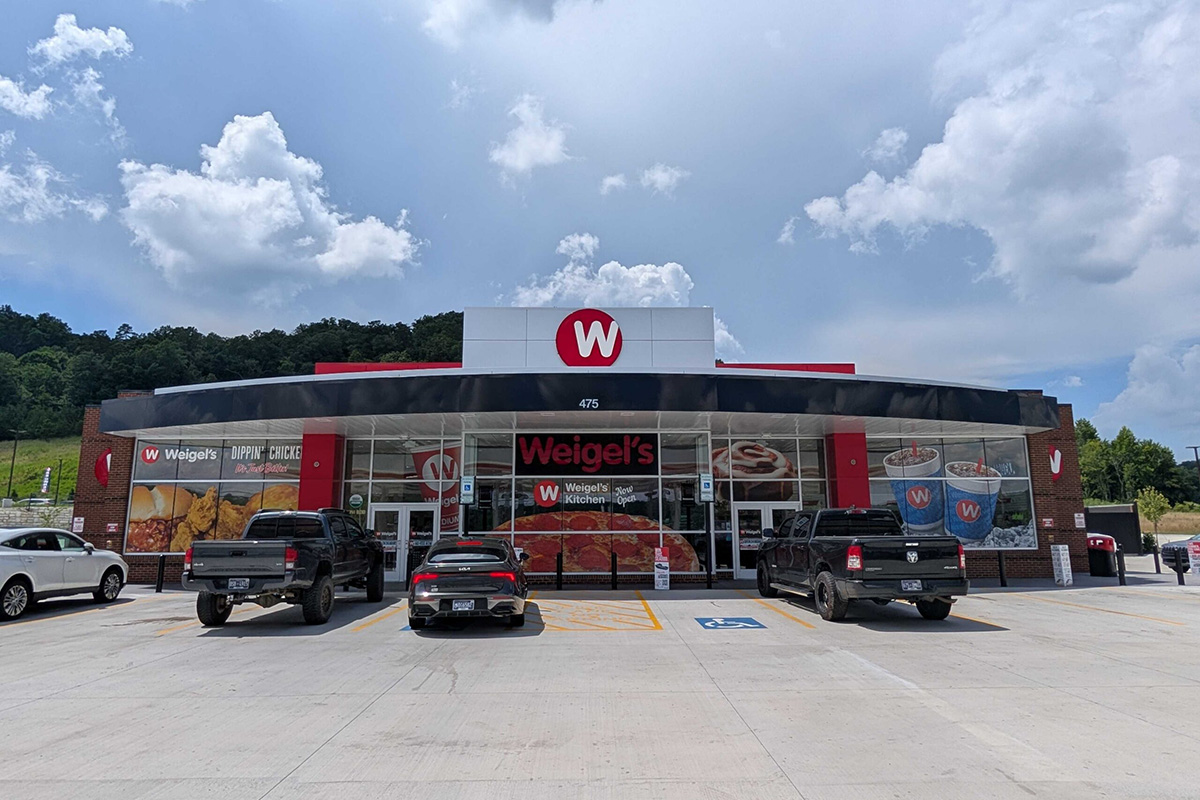
In the fast-evolving landscape of the convenience store industry, the ability to pivot from a brick-and-mortar legacy to a digital-first service provider is no longer just an advantage—it is a survival mandate. Weigel’s, the Knoxville, Tennessee-based chain with 90 locations across the eastern part of the state, has recently emerged as a masterclass in this transformation. By treating delivery not as an auxiliary afterthought, but as a primary storefront, the company has successfully tripled its annualized delivery revenue in a span of just seven months.
This surge in growth, documented between December 2025 and July 2026, highlights a fundamental shift in how consumers interact with convenience retailers. By leveraging sophisticated technology partnerships and a "full-store" philosophy, Weigel’s is successfully capturing a unique market segment that bridges the gap between restaurant meal delivery and traditional grocery replenishment.
The Strategy: Treating Delivery as a Virtual Storefront
The core of Weigel’s success lies in a paradigm shift in executive philosophy. Nick Triantafellou, Director of Marketing at Weigel’s, notes that the company’s explosive growth was not the result of a single, isolated promotion. Instead, it was the culmination of a concerted effort to meet the customer exactly where they wanted to be met.
"We stopped treating delivery like a small add-on channel and began merchandising and marketing it as another Weigel’s storefront," Triantafellou explained. This approach allowed the company to move away from limited, menu-only delivery options and toward a model that offers customers the ability to order essentially the entire inventory of a store directly from their smartphones.
Chronology of Expansion: A Roadmap to Growth
The trajectory of Weigel’s delivery program has been characterized by strategic, incremental scaling. The timeline of their recent success serves as a blueprint for other regional retailers looking to compete with national chains and third-party delivery giants.
The Foundation (Early 2025)
Weigel’s launched its initial delivery efforts on Uber Eats in early 2025. This move was intended to test the waters of the "on-demand" economy, ensuring that the brand remained relevant to a digital-native customer base.
The Accelerator (December 2025)
The most significant inflection point occurred in December 2025, when the company added DoorDash to its portfolio of partners. This provided an immediate, massive increase in visibility. By appearing on the platforms that consumers were already using, Weigel’s minimized the friction associated with acquiring new digital customers.
Optimization and Segmentation (2026)
Following the expansion of their platform reach, the company refined its digital architecture. A major step in this phase was the decision to split their digital presence into two distinct storefronts: "Weigel’s" for general convenience and household items, and "Weigel’s Kitchen" for prepared meals. This segmentation allows the brand to capture two specific consumer missions: the person looking for an immediate meal and the shopper performing a "top-up" trip for household essentials.
Supporting Data: Understanding the Customer Mission
Data from the first half of 2026 confirms that Weigel’s strategy is resonating with consumer habits. The convenience store industry occupies a "Goldilocks" zone—it is faster than a full-service grocery store and more comprehensive than a typical quick-service restaurant.
The Evening Surge
The data reveals that the most critical window for Weigel’s is the evening. According to the company, more than 51.7% of all delivery sales occur within the eight-hour window between 4:00 p.m. and midnight. Specifically, 42% of sales are concentrated in the six-hour block between 4:00 p.m. and 10:00 p.m. This confirms that customers are using the service not just for snacks, but for dinner, evening beverages, and the household items necessary to finish their day.
Reach and Coverage
Currently, 86 of the chain’s 90 stores offer delivery. The four stores currently excluded from the program are located in dense urban or suburban areas where coverage is already redundant due to the proximity of other Weigel’s locations. This demonstrates a high level of operational efficiency, ensuring that the company’s reach is broad without cannibalizing its own resources.
The Technological Backbone: Partnering with Vroom
The complexity of managing multiple platforms (DoorDash, Uber Eats, Postmates, and eventually Grubhub) is a significant hurdle for any retail chain. Weigel’s has navigated this through a partnership with Vroom, a technology platform that serves as a bridge between the physical store and the digital marketplace.
Vroom allows Weigel’s to manage pricing, inventory, and order fulfillment through a single, centralized system. Without this, the administrative burden of managing disparate storefronts would likely have stifled the chain’s growth. Furthermore, this integration ensures that customers who are members of the MyWeigel’s Rewards program do not lose out on benefits when ordering through third-party apps. By allowing customers to link their accounts and earn points on deliveries, the company is actively strengthening its long-term brand loyalty.
Implications for the Convenience Industry
The success of Weigel’s carries significant implications for the broader retail sector. It suggests that the future of the convenience store is not just "within the four walls" of a physical location, but in the digital extension of that space.
The "Full-Store" Advantage
The most profound takeaway is the effectiveness of the "entire store" delivery model. By allowing customers to build a basket that includes fresh food, snacks, ice, beverages, and household staples in a single transaction, Weigel’s is providing a utility that is distinct from restaurant delivery (which focuses on meals) and grocery delivery (which focuses on bulk replenishment).
"A restaurant can deliver dinner, while a grocery store can provide a large household order," Triantafellou noted. "But a convenience store can quickly fulfill the collection of needs that often occur together."
Rural vs. Suburban Success
Perhaps the most surprising finding in the company’s research is that delivery performance is not strictly tethered to population density. Weigel’s has seen its top-performing delivery store in a rural market, where the delivery service provides an essential bridge to goods that might otherwise require a long drive to a major grocery retailer. Simultaneously, a suburban store located near a 24-hour factory is also a top performer, proving that the service is effective regardless of the specific trade area, provided the execution remains consistent.
Looking Ahead: The Future of the "Weigel’s Heart"
As Weigel’s continues to integrate new partners like Grubhub, the challenge will be maintaining the human touch in a digital experience. Triantafellou emphasizes that the goal is to deliver the same "warm Weigel’s heart" that customers expect when they walk into a physical store. This means consistent, high-quality fulfillment, accurate inventory management, and a seamless interface.
The company’s ability to use its vertically integrated commissary—notably their fresh, late-night doughnut delivery—highlights the power of combining traditional, high-quality manufacturing with modern, digital convenience.
In conclusion, Weigel’s has demonstrated that the secret to delivery success is not found in a secret sauce or a viral promotion. It is found in the willingness to acknowledge that the convenience store is, at its heart, a solution to the immediate, varied needs of the modern consumer. By expanding their digital presence, broadening their assortment, and integrating their loyalty programs, Weigel’s has successfully transitioned from a local fixture to a digital powerhouse, setting a new standard for what convenience means in the 21st century. As other regional chains look to scale their operations, the Weigel’s model provides a clear, proven, and highly effective roadmap for the future.