Elevating Convenience: Insights on Foodservice Excellence and Retail Media at the 2026 NACS Show

The 2026 NACS Show reached a fever pitch on its third day, as industry titans and emerging leaders converged to dissect the most pressing challenges facing the modern convenience store landscape. With the retail environment shifting rapidly toward experiential commerce, two themes dominated the conversation: the evolution of high-quality, scalable foodservice and the democratization of retail media networks.
As c-stores transition from mere pit stops to culinary destinations, the strategies shared by industry veterans provide a roadmap for operators of all sizes. Simultaneously, the demystification of retail media networks suggests that the power of data-driven advertising is no longer the exclusive domain of national chains.
The Foodservice Imperative: A Blueprint for Success
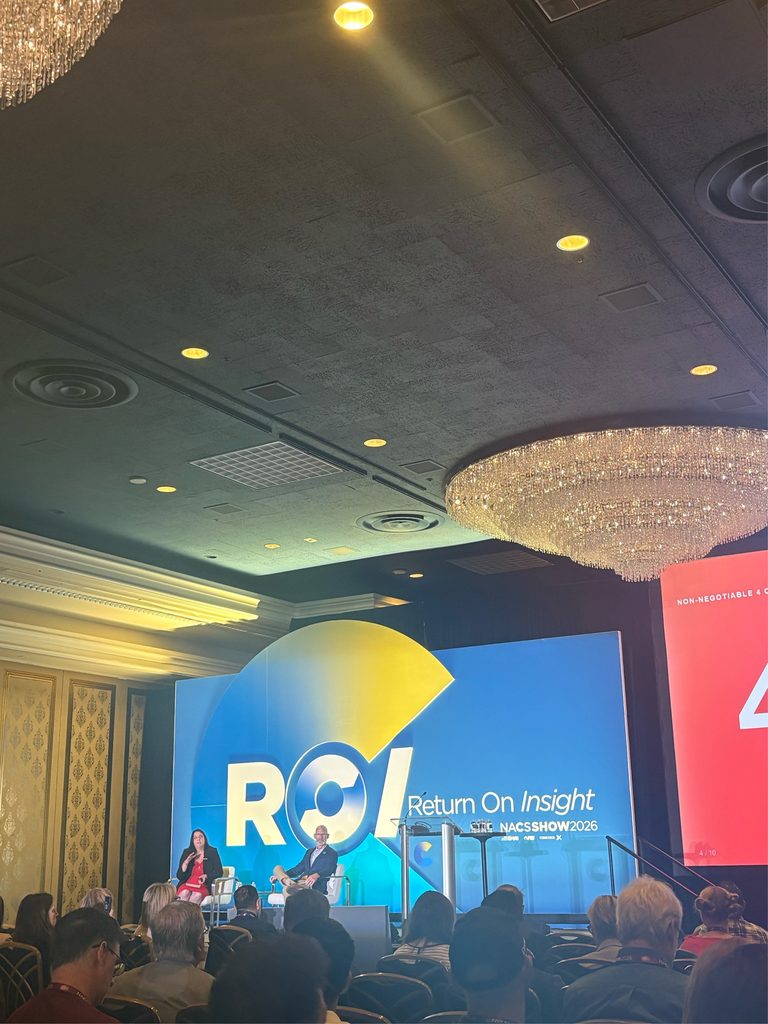
For many convenience retailers, the path to a robust foodservice program is fraught with operational hurdles. During the session "Fundamentals That Make or Break a Foodservice Program," Beth Hoffer, Vice President at Weigel’s, and Ryan Krebs, Senior Director of Food Service at Sprint Mart, provided an unfiltered look at what it takes to succeed in a competitive culinary market.
The 10 "Non-Negotiables"
Hoffer and Krebs identified ten pillars—the "non-negotiables"—that serve as the foundation for any sustainable foodservice initiative. These principles prioritize operational discipline over flashy, unsustainable trends.
- Data-Driven Development: Testing must be anchored in hard data. If a product cannot be executed consistently across shifts, it is a liability, not an asset.
- Operational Simplicity: An overcrowded menu is a recipe for disaster. Complexity creates confusion for staff and complicates inventory management.
- Scalability: A program must be designed to be rolled out across the entire fleet, not just as a one-off feature in a flagship store.
- Waste Management: Acceptance of initial waste is part of the learning curve. Leaders should not fear waste during the R&D phase; they should analyze it to refine supply chains.
- Staff Training: The most advanced kitchen technology is useless without a team that understands the brand’s quality standards.
- Consistency in Execution: Whether a customer visits at 6:00 AM or 11:00 PM, the quality of the product must remain identical.
- Supply Chain Reliability: Partnering with vendors who understand the unique speed-to-market demands of the c-store industry.
- Menu Agility: The ability to pivot based on regional preferences while maintaining core brand integrity.
- Technological Integration: Utilizing POS and inventory systems that track foodservice performance in real-time.
- Customer Feedback Loops: Implementing mechanisms to capture and act upon consumer sentiment immediately.
The Philosophy of "Keep It Simple"
The dialogue between Hoffer and Krebs centered on the danger of over-ambition. Hoffer noted, "Everything that’s new has a problem. You really have to take your time, figure it out, and not get too caught up about the waste."
This philosophy suggests that the most successful programs start small—often with items that require minimal footprint—before scaling. By focusing on products that can be replicated in every store, retailers avoid the "boutique trap," where foodservice excellence is confined to only a handful of locations.
The Retail Media Revolution: Democratizing Data
While foodservice addresses the in-store experience, the session "A Tale of Multiple Media Networks" tackled the digital future of convenience retail. The panel, moderated by Matt Riezman of NexChapter, featured insights from Circle K’s Joell Robinson, Love’s Media Group’s Tommy Greenberg, and 4Court Media’s Dan Seymour.
Busting the Size Myth
A primary objective of the session was to dispel the persistent myth that retail media networks (RMNs) are only for massive, multi-national chains.
"One of the biggest misconceptions in our industry is that you have to be a certain size to participate in a retail media network, and that’s just not true," Dan Seymour stated. According to the panelists, retailers have three primary entry points:
- Building: Creating a proprietary network from the ground up (best for large chains).
- Partnering: Collaborating with existing networks to aggregate scale.
- Joining: Plugging into established third-party platforms to monetize customer touchpoints.
Organizational Alignment: The First Step
Joell Robinson emphasized that before a retailer considers the technology behind an RMN, they must achieve internal harmony. "Step one before you even get to inventory is making sure you have organizational alignment around your retail media network," she explained.
This means that marketing, operations, and IT departments must move in lockstep. Without standard operating procedures (SOPs) and total employee buy-in, the digital advertising layer can feel like a burden rather than a revenue generator.
Non-Disruptive Integration
A critical takeaway for operators looking to enter the media space is the importance of the customer experience. Tommy Greenberg of Love’s stressed that retail media must be "additive and in a place that isn’t disruptive." The goal is to provide value—such as relevant coupons or localized promotions—rather than cluttering the customer’s path to purchase with irrelevant digital noise.
Chronology of Industry Shifts
The 2026 NACS Show has highlighted a clear trajectory for the industry:
- 2023–2024 (The Foundation): The industry focused on basic foodservice expansion and the early adoption of loyalty programs.
- 2025 (The Refinement): Retailers began optimizing supply chains and testing small-footprint, high-margin food concepts.
- 2026 (The Integration): The current era, where foodservice and retail media are no longer "side projects" but are central to the core value proposition. Operators are now focusing on scaling these programs through data-driven precision and cross-departmental alignment.
Supporting Data and Strategic Implications
The implications for the convenience sector are profound. By shifting from a "gas-first" model to a "food-and-media" model, retailers are fundamentally changing their profit margins.
The Economic Impact of Foodservice
Retailers who successfully integrate high-quality foodservice see a significant uptick in customer frequency. The data shared at NACS suggests that when a store becomes a reliable meal solution, the "basket size" increases by an average of 15–20% per visit.
The Strategic Value of Media
Retail media is projected to be one of the highest-growth revenue streams for c-stores over the next five years. By leveraging the data they already possess—who is buying what, and when—retailers can offer CPG partners high-value advertising space that is significantly more effective than traditional digital ad buys.
Official Perspectives and Looking Ahead
The tone of this year’s NACS Show is one of cautious optimism tempered by operational rigor. The consensus among the experts is clear: the future of the convenience industry is not in massive, sweeping changes, but in the disciplined execution of scalable, data-backed initiatives.
As the show continues through Friday, October 9, the focus is expected to shift toward the integration of AI-driven supply chain tools and the sustainability of packaging—the next frontier in the foodservice evolution.
For the small-to-mid-sized operator, the message is empowering: you do not need thousands of locations to be a player in the new retail economy. You need a clear strategy, an alignment of your internal teams, and the willingness to test, fail, learn, and iterate. The industry is moving forward, and those who prioritize consistency and digital integration are poised to define the next generation of convenience.