From Music Video Rebellion to Luxury Empire: Jay-Z’s Armand de Brignac Marks 20 Years of Redefining Champagne

By Global Business and Lifestyle Correspondent
Published: October 2026
Main Facts
Two decades after a cinematic rebellion in a high-octane music video, Sean "Jay-Z" Carter’s venture into the upper echelons of viticulture has officially cemented Armand de Brignac—affectionately and globally known as "Ace of Spades"—as a titan of the luxury beverage sector. What began in 2006 as a striking visual and cultural statement has evolved into a powerhouse luxury Champagne house, characterized by meticulous craftsmanship, rare multi-vintage releases, and a half-billion-dollar valuation backed by a landmark partnership with luxury conglomerate LVMH (Moët Hennessy Louis Vuitton).
To commemorate its monumental 20th anniversary, the brand has just released its most exclusive expression to date: Assemblage No. 5, a 100 percent Pinot Noir Blanc de Noirs. Produced in a strictly limited run of just 8,165 individually numbered bottles, the new release retails for $1,200, or $2,500 for a special collector’s twin pack paired with Assemblage No. 4.
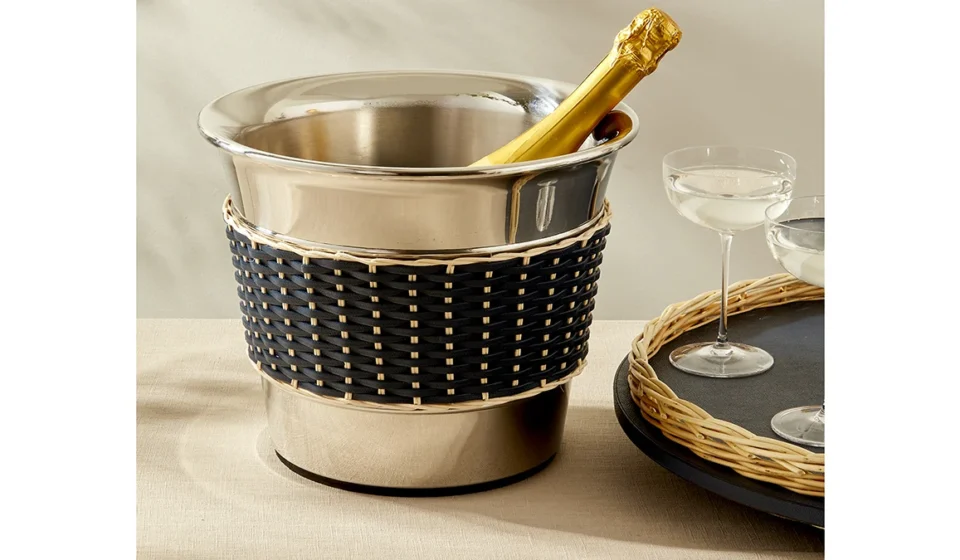
This milestone reflects not only the resilience of a celebrity-backed brand but also its permanent migration from pop-culture novelty to serious, critically acclaimed winemaking. Alongside the bottle launch, the luxury market has embraced complementary high-end accessories tailored for connoisseurs, such as the new handwoven rattan-and-leather Pigment France champagne bucket, priced at $1,325. Together, these offerings underscore a broader trend: the enduring appetite for ultra-exclusive, tactile luxury experiences among global high-net-worth consumers.
Chronology: The Evolution of Ace of Spades
The trajectory of Armand de Brignac reads like a masterclass in modern branding, cultural disruption, and long-term strategic execution.
2006: The Monaco Manifesto and the Birth of a Brand
In the spring of 2006, Jay-Z released the music video for his hit single "Show Me What You Got." Directed with cinematic flair, the video stars NASCAR icon Dale Earnhardt Jr. chauffeuring Carter at breakneck speeds through the glamorous, winding streets of Monaco. The narrative navigates a yacht, an exclusive nightclub, and ultimately culminates in a high-stakes casino scene.

It is here that the pivotal cultural moment occurs: Carter is offered a bottle of Louis Roederer’s Cristal. With a dismissive wave of his hand, he rejects the established status symbol, accepting instead a gleaming, opaque metallic bottle adorned with a pewter Ace of Spades emblem.
This gesture was far more than artistic license. Earlier that year, the managing director of Louis Roederer made comments in an interview with The Economist that were widely interpreted as dismissive and racist regarding the brand’s popularity within the hip-hop community. Jay-Z’s public rebuff triggered an immediate, high-profile consumer boycott of Cristal and introduced the world to Armand de Brignac. Initially serving as an investor and prominent cultural promoter, Carter aligned his immense influence with a Champagne house that was eager to challenge centuries-old European traditions.
2014: Outright Acquisition
Having spent nearly a decade building cachet, prestige, and market demand through sheer cultural gravity, Jay-Z took full control of the brand in 2014, buying out his previous partners to take sole ownership of Armand de Brignac. This move signaled a transition from promoter to true proprietor, giving him absolute creative and strategic control over the estate’s direction.
2021: The LVMH Mega-Partnership
By 2021, Armand de Brignac had scaled to a level that demanded global distribution networks and institutional infrastructure. LVMH’s Moët Hennessy division acquired a 50 percent stake in the brand in a blockbuster deal that stunned the wine world. The partnership validated the Champagne house not merely as a pop-culture artifact, but as a premier luxury asset capable of standing shoulder-to-shoulder with century-old legacy houses like Dom Pérignon, Krug, and Ruinart.
2026: Celebrating Two Decades of Excellence
Marking its 20th anniversary, the house has released Assemblage No. 5. Built upon the backbone of the exceptional 2016 Pinot Noir harvest—supplemented by reserve wines from the remarkable 2015 and 2014 seasons—the release bridges the gap between historical pop-culture disruption and contemporary oenological mastery.
Supporting Data & Winemaking Craftsmanship
While the striking metallic bottles and celebrity endorsement initially drew global attention, the enduring success of Armand de Brignac rests entirely inside the glass. The house operates out of Chigny-les-Roses in France, adhering to strict traditional methods while leveraging unique viticultural strategies.

The Anatomy of Assemblage No. 5
- Composition: 100% Pinot Noir (Blanc de Noirs).
- Bottle Count: Exactly 8,165 numbered bottles worldwide.
- Pricing: $1,200 per individual bottle; $2,500 for the 20th-anniversary twin pack (including Assemblage No. 4).
- Aging Potential: Ready for immediate consumption or cellaring for up to two decades.
The Terroir and the "Secret Weapon"
The grapes for Assemblage No. 5 are sourced from the house’s private vineyards alongside a curated network of small family farmers situated in premier Premier and Grand Cru villages across the Montagne de Reims.
- Verzenay: Comprises roughly 45 percent of the cuvée, lending structural integrity and power.
- Verzy, Ludes, and Mailly: Add further complexity and refined minerality.
- The Southern Secret (Ville-sur-Arce): According to Monika Kaufman, President of North America for Armand de Brignac, the true secret weapon of this blend lies far to the south. Sourcing 10 percent of the fruit from Ville-sur-Arce—a region geographically and climatically close to Burgundy—introduces extraordinary acidity.
"The reason that our winemaker used quite a bit [from Ville-sur-Arce]… is because of the darker fruit, the gaminess of Pinot Noir, and an almost ironlike characteristic that adds depth to Pinot," Kaufman explained in an interview with Robb Report.
Tasting Notes
Visually pale yellow with a persistent, delicate stream of effervescence, Assemblage No. 5 delivers aromas of yellow plum, ripe summer cherry, dried apricot, and rising brioche. On the palate, it strikes with an initial bracing freshness before unfolding into layers of mango, Granny Smith apple, candied orange zest, and rich espresso bean, culminating in a long, refreshing saline splash.
Official Responses and Industry Perspectives
The journey of Armand de Brignac has consistently challenged the conservative, often insular norms of the French wine establishment. Traditional Champagne houses historically relied on quiet elegance, aristocratic heritage, and understated marketing. Jay-Z and his executive team flipped this paradigm by wedding high-energy modern culture with uncompromising agricultural rigor.
Industry analysts note that the LVMH acquisition in 2021 was a watershed moment for the category. It proved that traditional European luxury conglomerates recognized a shift in consumer demographics: the modern luxury buyer is increasingly diverse, culturally connected, and drawn to brands that embody modern entrepreneurship rather than antiquated exclusivity.
Monika Kaufman emphasizes that despite the pop-culture origins, the day-to-day operations at the winery remain intensely focused on traditional craftsmanship, sustainability, and agricultural precision. The collaboration between local French growers—many of whom have worked their plots for generations—and a modern global icon has created a unique hybrid model in the luxury beverage market.

Implications for the Luxury Market
The 20-year milestone of Armand de Brignac carries profound implications for the future of luxury goods, celebrity entrepreneurship, and the wine industry at large.
1. The Blueprint for Celebrity Brand Equity
For decades, celebrity involvement in consumer goods was limited to superficial endorsement deals or short-term licensing agreements. Jay-Z’s handling of Armand de Brignac—evolving from equity investor to sole owner, and finally to a joint-venture partner with the world’s leading luxury group—has established the gold standard for entrepreneurial longevity. It demonstrates that cultural capital, when paired with operational execution and patience, can build enduring, institutional brand value.
2. Diversification of the Champagne Demographics
Historically, prestige Champagne marketing targeted an older, traditional demographic. By introducing a bold, unapologetic visual identity coupled with world-class juice, Armand de Brignac expanded the market upward and outward, capturing a younger, wealthier, and more diverse cohort of collectors, athletes, and entrepreneurs who view luxury through a contemporary lens.
3. The Resilience of Ultra-High-End Collectibles
The simultaneous release of high-end accessories, such as the Pigment France three-bottle rattan-and-leather champagne bucket ($1,325), highlights a broader lifestyle integration within the ultra-luxury tier. Consumers are no longer just buying a consumable product; they are investing in an entire ecosystem of curation, storage, and presentation. As demonstrated by the rapid uptake of limited runs like Assemblage No. 5, the appetite for scarcity and tactile craftsmanship remains remarkably resilient against broader economic fluctuations.
As Armand de Brignac enters its third decade, it stands as a monument to cultural foresight. What began as a defiant gesture on a winding Monaco racetrack has matured into a cornerstone of global luxury, forever altering how the world perceives, values, and enjoys Champagne.