
As the global travel landscape evolves, stakeholders from aviation regulators to tourism boards are navigating a complex web of logistical, security, and environmental challenges. This week’s dispatch covers critical developments that are reshaping how we move, where we go, and how we manage the impact of record-breaking human mobility.
From the sabotage of critical rail networks in the Netherlands to the ambitious sustainability mandates emerging in Spain, the travel industry remains in a state of high-stakes transformation.
1. The Dutch Rail Crisis: Infrastructure Sabotage
The efficiency of the European rail network was thrown into disarray this past Tuesday as thousands of passengers across the Netherlands faced widespread cancellations and delays.
The Incident and Operational Impact
ProRail, the Dutch railway infrastructure operator, confirmed that foreign objects were deliberately placed on tracks at 30 separate locations. The incident was not a random act of vandalism but a coordinated disruption that paralyzed the central and eastern corridors, specifically impacting the critical hubs of Zwolle, Deventer, and Amersfoort.
The timing of this event was particularly disruptive, coinciding with Prinsjesdag—the annual Dutch budget day—which brings thousands of visitors to The Hague for royal ceremonies and government proceedings. The national rail operator, NS, worked throughout the day to clear the tracks, though the logistical shockwave persisted through the evening commute.
Investigations and Security Implications
Police have launched an extensive investigation into the motive behind the sabotage. Notably, ProRail staff were instructed to handle all debris with forensic care, utilizing gloves to preserve potential DNA evidence or fingerprints. Despite the scale of the disruption, no individual or group has claimed responsibility. The deliberate nature of the act has raised questions about the vulnerability of European rail infrastructure, prompting discussions regarding enhanced security monitoring for critical transit nodes.
2. Geopolitical Volatility: U.S. Travel Advisory for Saudi Arabia
The U.S. State Department has issued a cautionary update regarding travel to Saudi Arabia, reflecting the volatile security environment in the Middle East.
The Security Landscape
While the official designation for Saudi Arabia remains at "Level 3: Reconsider Travel," the September 15 update underscores a deepening concern regarding regional drone and missile threats. The warning follows a recent incident in which a Houthi-launched drone attempted to penetrate the airspace surrounding Mecca.
Although Houthi officials have denied targeting the holy city, the Saudi-led military coalition has declared the region a "red line," signaling an uncompromising stance on regional security. The State Department has explicitly warned travelers that the debris from intercepted aerial threats poses a genuine danger to civilians, particularly those located in proximity to energy infrastructure and military bases.
Internal Restrictions and Legal Risks
The updated guidance does more than track military risk; it imposes stricter internal travel protocols for U.S. government employees. Furthermore, the State Department reiterates the importance of local compliance, warning travelers that Saudi laws governing social media activity and digital expression are strictly enforced. Travelers are cautioned against venturing within 20 miles of the Yemeni border, which remains under a "Level 4: Do Not Travel" warning.
3. The FAA Funding Gap: Modernizing America’s Skies
The U.S. Federal Aviation Administration (FAA) is facing a significant financial reckoning as it attempts to overhaul the nation’s aging air traffic control (ATC) infrastructure.
The Financial Disconnect
In testimony before a House subcommittee, FAA Administrator Bryan Bedford highlighted a widening chasm between the scope of the agency’s modernization efforts and its current funding levels. Phase 1 of the modernization project is now projected to cost $16 billion—a significant increase over the $12.5 billion Congress has currently appropriated.

The agency is being forced to pull funds from its facilities and equipment budget to bridge this gap, yet Administrator Bedford warned that Phase 2 will require at least an additional $10 billion to remain on track.
GAO Findings and Project Oversight
A scathing report from the Government Accountability Office (GAO) has intensified pressure on the FAA. The audit found that the agency lacks a cohesive "lifecycle cost estimate" and has failed to produce an integrated master schedule for the more than 11,000 individual projects encompassed by Phase 1.
Costs for critical components, such as the replacement of antiquated copper telecommunications wiring, have ballooned from $4.75 billion to $5.91 billion. With contractor Peraton now managing the $1.5 billion modernization contract, the agency is under immense pressure to prove that it can manage the project’s scale without further budgetary drift.
4. Wildlife Encounters: Colorado’s Bear Season Intensifies
Nature is encroaching upon human spaces in Colorado at an alarming rate, with wildlife officials issuing urgent warnings following a surge in bear-human encounters.
The Current Crisis
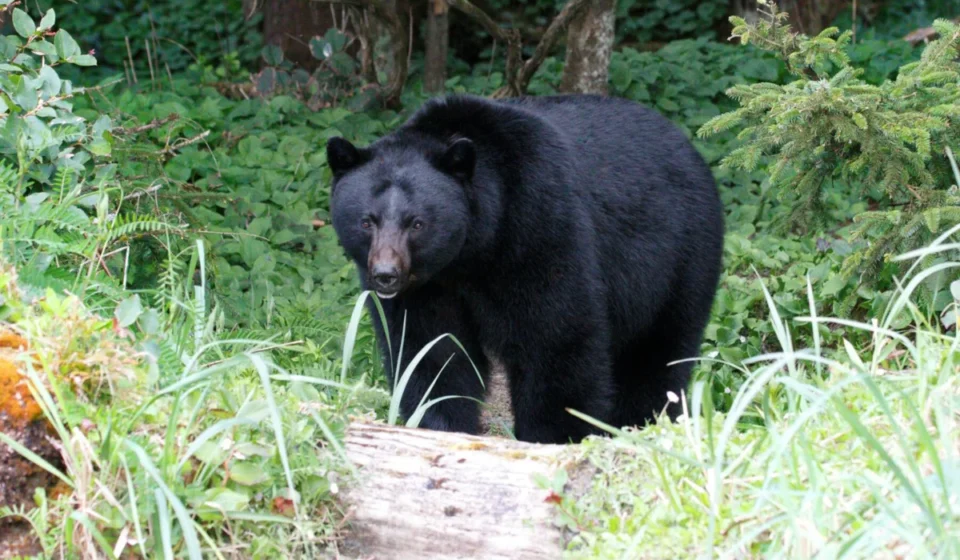
Two separate attacks over the weekend have brought the total number of confirmed bear incidents this season to 10. The spike is attributed to "hyperphagia," a biological phase where bears consume massive amounts of calories to prepare for winter hibernation. Combined with a localized scarcity of natural forage, bears are increasingly entering residential and recreational areas in search of food.
- The Campground Incident: At the Park Creek Campground in Rio Grande National Forest, a bear attacked a woman through the fabric of her tent. She sustained a puncture wound, and the campground was forced to close early for the season.
- The Residential Break-in: In Durango, a black bear breached a home by tearing through a window screen and entering a bedroom. A 17-year-old resident survived by hiding under blankets; the bear swiped at her, but the layers of fabric acted as a vital buffer against more severe injury.
Official Response and Mitigation
Colorado Parks and Wildlife (CPW) is actively hunting the bear involved in the Durango incident, which has been linked to a string of home intrusions. Residents are being urged to adopt rigorous "bear-smart" behaviors: locking garages, securing trash, and removing bird feeders. The agency emphasizes that these are not mere suggestions but essential safety protocols to prevent habituation, which often leads to the euthanasia of the animal.
5. The Future of Tourism: Spain’s 2030 Sustainability Strategy
As international travel demand skyrockets, Spain is pivoting toward a "quality over quantity" model, aiming to decentralize its tourism industry by 2030.
The Shift in Strategy
With 2025 seeing a record-shattering 96.8 million international arrivals and 2026 trending toward the 100-million mark, the strain on popular coastal hubs and major cities has reached a breaking point. Under the "Spain Tourism 2030" strategy, the government is prioritizing the well-being of local residents alongside the visitor experience.
Promoting Inland and Rural Tourism
Carlos Ruiz González of the Spanish Tourist Office recently highlighted that the goal is not to stop tourism, but to redistribute it. By incentivizing travelers to visit the Pyrenees, the Picos de Europa, and the historic towns of the Castilla region, Spain hopes to alleviate the "overtourism" pressures felt in Barcelona and Madrid.
The strategy relies heavily on Spain’s world-class high-speed rail network, which makes reaching the rural interior easier than ever. By encouraging "slow travel"—where visitors stay longer in one region rather than hopping between overcrowded hotspots—Spain aims to foster an economic model that is environmentally sustainable and socially equitable for its citizens.
Summary Table: Key Developments
| Sector | Primary Issue | Status/Action |
|---|---|---|
| Rail | Sabotage in the Netherlands | Investigation ongoing; services restored. |
| Aviation | FAA Funding Shortfall | $10B+ gap identified; GAO demands better planning. |
| Security | Saudi Arabia Travel Risk | Advisory maintained; border zones restricted. |
| Wildlife | Colorado Bear Attacks | 10 incidents; public advised to secure homes. |
| Tourism | Overtourism in Spain | 2030 strategy focuses on rural, sustainable travel. |
Disclaimer: This report was compiled with the assistance of AI tools. All information has been reviewed and vetted by editorial staff to ensure accuracy and journalistic integrity.