Mastering the Architecture of Action: How "Environmental Design" Transforms Productivity and Behavior Change

NEW YORK — In an era dominated by discussions of raw willpower, ruthless self-discipline, and exhaustive morning routines, behavioral scientists and productivity experts are converging on a radically different premise: human beings rarely rise to the level of their goals; instead, they fall to the level of their environments.
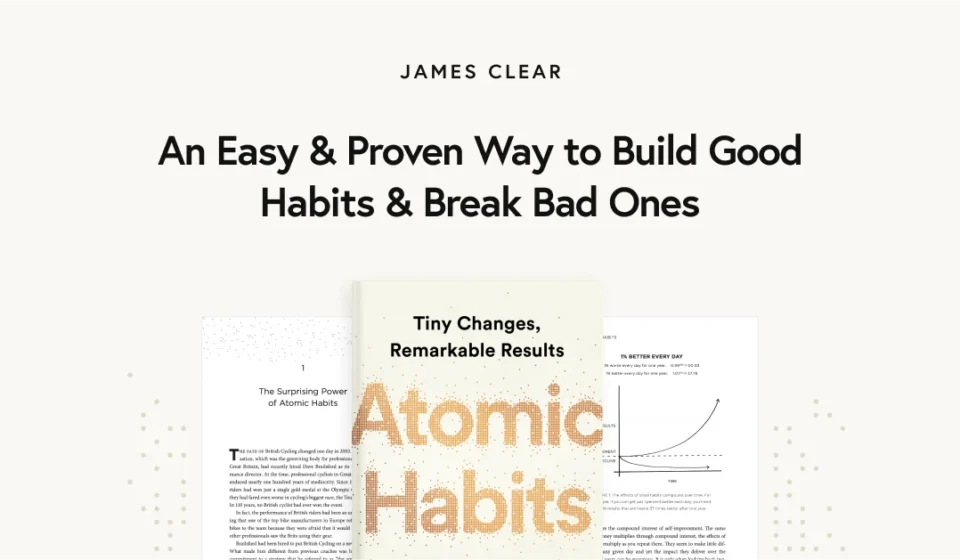
This core philosophy, popularized by author James Clear in his New York Times bestselling book Atomic Habits, challenges the conventional wisdom surrounding personal transformation. Rather than relying on sporadic bursts of motivation to drive behavior, researchers suggest that the most successful individuals act as architects of their physical and digital surroundings, systematically designing spaces that make desired habits frictionless and undesired behaviors agonizingly difficult.
At the heart of this movement is a deceptively simple strategy known as "resetting the room"—a practice that transforms passive tidying into an active catalyst for future productivity.
Main Facts: The Anatomy of Environmental Design
The foundational concept of environmental design rests on the idea that our immediate surroundings act as silent cues, constantly prompting certain actions while discouraging others.
When applied correctly, environmental design operates on two distinct levers:
- Reducing Friction for Good Habits: Priming a space so that the path of least resistance naturally leads to positive behaviors.
- Increasing Friction for Bad Habits: Introducing intentional barriers, delays, or physical obstacles that make mindless, counterproductive routines structurally difficult to execute.
According to behavioral insights popularized in Atomic Habits, the human brain is inherently wired to conserve energy. It gravitates toward options that require the least cognitive and physical effort. By manipulating this biological predisposition through spatial arrangement, individuals can achieve sustainable behavioral changes without draining their psychological reserves.
Chronology: From Accidental Insight to Behavioral Science
The realization that physical environments dictate behavior has evolved significantly over the past century, moving from industrial psychology to mainstream self-optimization.
- Early 20th Century (Industrial Engineering): Pioneers of scientific management, such as Frederick Winslow Taylor, began studying workplace layouts to minimize unnecessary physical movements for factory workers, establishing early links between spatial design and efficiency.
- Late 20th Century (Environmental Psychology): Urban planners and environmental psychologists formalize theories on how architecture and interior spaces influence human moods, social interactions, and decision-making processes.
- The Case of Oswald Nuckols (The Modern Inspiration): While researching behavioral triggers for Atomic Habits, author James Clear encountered Oswald Nuckols, an IT developer from Natchez, Mississippi. Nuckols conceptualized the "resetting the room" methodology, demonstrating how daily micro-habits of preparation dramatically alter subsequent execution.
- Present Day (Mainstream Adoption): Millions of individuals, corporate leaders, and educators utilize environmental priming techniques to manage digital distractions, improve workplace productivity, and maintain health routines.
Supporting Data and Case Studies: The Power of "Proactive Laziness"
The effectiveness of environmental priming is best illustrated through everyday applications that bypass the need for conscious grit.
The IT Developer Who Mastered "Proactive Laziness"
Oswald Nuckols operationalized environmental design through a rigorous routine of resetting his physical spaces immediately after completing a task. When finished watching television, he returns the remote to its stand, straightens couch pillows, and folds the blanket. Before stepping into the shower—while the water is warming up—he wipes down the toilet, capitalizing on a moment of natural downtime.
"When I walk into a room, everything is in its right place," Nuckols noted. "Because I do this every day in every room, stuff always stays in good shape… People think I work hard, but I’m actually really lazy. I’m just proactively lazy. It gives you so much time back."
Nuckols’ approach highlights a vital distinction: the objective of tidying up is not merely aesthetic cleanliness; it is preparatory execution. By putting an environment in order upon completion of a task, an individual removes the barrier to entry for the next cycle of work.
Card-Sorting and Culinary Cues
Consider the behavioral divergence between individuals who successfully maintain relational habits—such as sending greeting cards—and those who do not.
In many households, success is driven by simple infrastructure. By keeping a box of greeting cards presorted by occasion (birthdays, weddings, sympathy, graduations) alongside stamps and pens, an individual lowers the friction of the task to near zero. Conversely, individuals who rely on memory must first recognize the need, travel to a store, select a card, purchase postage, and find a pen—a multi-step friction point that frequently results in procrastination and missed opportunities.
In the kitchen, the same principle applies. Preparing a healthy breakfast can be engineered the night before simply by placing the skillet on the stove, positioning the cooking spray on the counter, and setting out plates and utensils. Upon waking, the brain encounters a pre-configured environment that virtually commands action.
Engineering Friction Against Bad Habits
Conversely, the inversion of this principle proves equally potent when applied to compulsive or counterproductive behaviors.
For chronic television viewers, behavioral designers recommend unplugging the television after each use or removing the batteries from the remote control. For those struggling with smartphone addiction, placing the device in a separate room during deep-work blocks eliminates the micro-distractions of habitual screen-checking.
As James Clear notes regarding his own routines:
"When my phone is right next to me, I’ll check it all morning for no reason at all. But when it is in another room, I rarely think about it. And the friction is high enough that I won’t go get it without a reason. As a result, I get three to four hours each morning when I can work without interruption."
Further data from everyday self-regulation reveals that minor obstacles—such as hiding alcoholic beverages in the back of the refrigerator or deleting social media applications from a phone—frequently delay or entirely prevent impulsive consumption loops.
Official Responses and Expert Perspectives
Behavioral psychologists, organizational consultants, and public health experts increasingly endorse environmental redesign over moralistic appeals to self-control.
Dr. Wendy Wood, Provost Professor of Psychology and Business at the University of Southern California and author of Good Habits, Bad Habits, has extensively researched the limitations of sheer willpower. According to Wood’s findings, individuals who appear to have extraordinary self-discipline are rarely fighting constant internal battles against temptation. Instead, they have successfully constructed lives that minimize exposure to tempting situations altogether.
"Willpower is a finite resource that depletes under stress, fatigue, and cognitive overload," notes a leading behavioral health advisory group in a recent workplace wellness brief. "Relying on discipline alone is a flawed strategy. True institutional and personal resilience is built by designing systems that automate compliance with good choices."
Corporate leadership consultants have similarly begun advising Fortune 500 executives to apply environmental design to digital workspaces. By reorganizing computer desktop folders, setting up automated communication blocks, and establishing physical "clean desk" policies at the close of every business day, companies report measurable increases in employee focus and reductions in burnout.
Implications: Reshaping Homes, Workplaces, and Leadership
The widespread adoption of environmental design carries profound implications across multiple domains of modern life—from individual wellness to organizational leadership and public policy.
1. The Shift from Motivation to Architecture
For individuals, recognizing that behavior is a byproduct of architecture removes the guilt traditionally associated with failed habit formation. When a diet fails, an exercise routine collapses, or a study goal is abandoned, the root cause is rarely a personal moral failing. More often, it is a poorly designed ecosystem. By reframing personal development as an exercise in spatial and digital design, individuals can systematically audit their surroundings to ask a single guiding question: "How can I design a world where it is easy to do what is right?"
2. Organizational and Corporate Culture
In the workplace, leaders who understand environmental priming move away from demanding higher output through motivational speeches. Instead, they focus on workflow optimization. By removing bureaucratic friction, streamlining digital tools, and ensuring that collaborative spaces are physically primed for brainstorming and execution, forward-thinking organizations foster environments where high performance is the default state.
3. Public Health and Parenting
Parents and public health advocates can utilize these insights to address systemic challenges such as sedentary lifestyles, nutritional health, and screen addiction among children. Rather than constantly policing behavior, redesigning the home environment—such as keeping healthy snacks visible and accessible while storing processed foods out of sight, or establishing tech-free zones in bedrooms—creates structural guardrails that protect long-term well-being.
Conclusion
As modern society continues to grapple with rising levels of distraction, digital saturation, and burnout, the lessons drawn from foundational behavioral frameworks like Atomic Habits offer a refreshing clarity.
The ultimate secret to productivity is not working harder; it is preparing smarter. By mastering the art of resetting our physical and digital rooms, we stop fighting against our own psychological tendencies and begin working in harmony with them. When preparation becomes a habit, execution ceases to be a struggle, proving that the most powerful transformations begin not with a change in mindset, but with a change in space.