Navigating the Backbar: How C-Stores are Adapting to a Shifting Tobacco and Nicotine Landscape

The convenience store (c-store) industry is currently navigating one of the most complex regulatory and operational environments in its history. As the "backbar"—the retail space dedicated to tobacco and nicotine products—evolves, retailers are finding that success no longer comes from simply stocking shelves. Instead, it requires a sophisticated blend of legislative vigilance, agile merchandising, and deep investment in employee education.
While the traditional cigarette category continues its slow, steady decline, the backbar is being revitalized by a tale of two segments: a heavily regulated, volatile vape category and a surging, high-growth modern oral nicotine market. For c-store operators, the ability to balance these competing pressures while maintaining 100% compliance is now the primary differentiator between market leaders and those falling behind.
Main Facts: The State of the Backbar
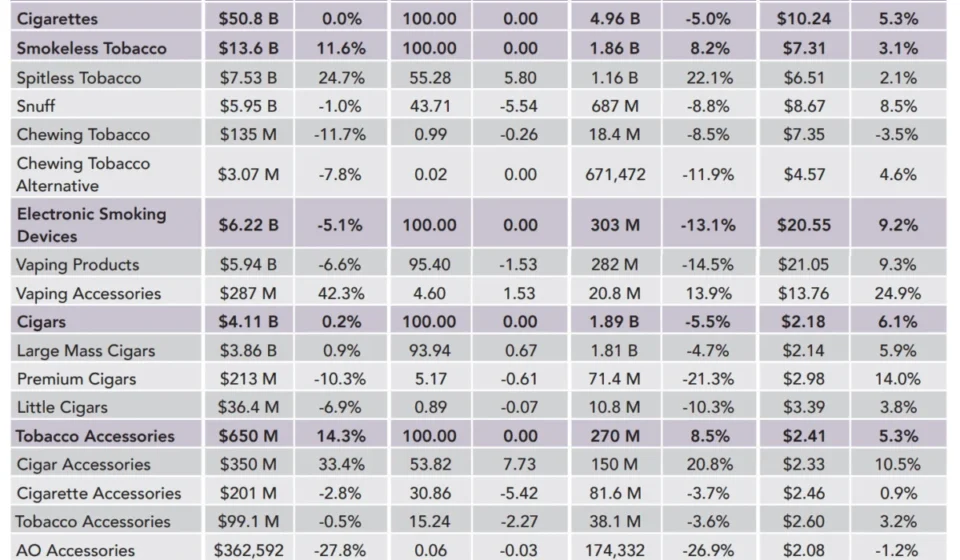
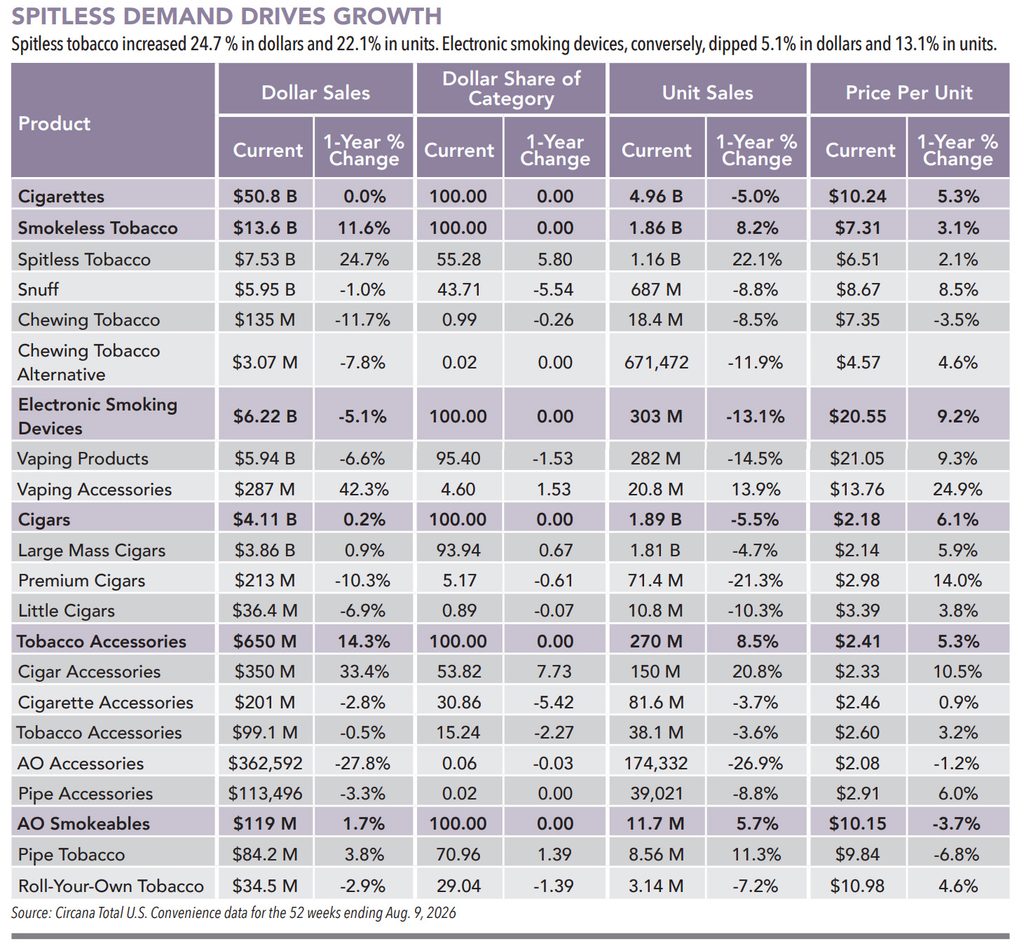
The current retail landscape is defined by a significant divergence between vape and smokeless products. According to data from the market research firm Circana, the vape category remains a substantial revenue generator, pulling in $6.22 billion in c-store sales annually. However, volume is under pressure. Dollar sales for electronic smoking devices dipped 5.1% over the 52 weeks ending August 9, with unit sales dropping 13.1%. While price-per-unit increases have helped buffer the financial blow, the underlying data points to a cooling market driven largely by legislative headwinds.
Conversely, the smokeless segment—specifically modern oral nicotine pouches—is experiencing a renaissance. The category grew 11.6% in dollar sales and 8.2% in units over the same period. This growth is being fueled by a shift in consumer preference, particularly among younger demographics who are moving away from traditional tobacco products in favor of convenient, spitless nicotine delivery systems.
Chronology of Regulatory Compression
To understand the current state of the backbar, one must look at the timeline of intensifying oversight. The regulatory climate has shifted from federal guidance to a localized, piecemeal patchwork of bans and mandates.
- 2022 (The California Catalyst): The state of California implemented a sweeping ban on the retail sale of most flavored tobacco products, including e-cigarettes. This set a precedent that many other jurisdictions would soon follow.
- 2025 (The Emergence of Registries): California further tightened its grip by establishing an "Unflavored Tobacco List." Retailers were effectively barred from selling any product not explicitly appearing on the state-approved directory, forcing a massive, rapid reorganization of store planograms.
- Ongoing (The FDA Crackdown): At the federal level, the Food and Drug Administration (FDA) has continued to utilize premarket tobacco product applications (PMTAs) to determine which products can legally enter the U.S. market. The resulting gap between authorized products and those in demand by consumers has created a "grey market" dilemma for retailers.
- 2027–2028 (Future Prohibitions): The legislative pressure continues to mount. Recent legislation in California aims to prohibit the importing or manufacturing of disposable vapor products starting in 2027, with a total ban on the sale and distribution of such products by 2028.
- 2027 (Taxation Expansion): Iowa is set to implement new excise taxes on vapor products (five cents per milliliter) and nicotine pouches (five cents per can), signaling a trend of states looking to capitalize on the growth of the modern oral category to bolster tax revenue.
Supporting Data: The Impact on Retail Operations
The operational reality for c-store chains is a constant state of flux. For 40-store chain Robinson Oil Corp (dba Rotten Robbie), operating in the hyper-regulated environment of California has meant a total redesign of their tobacco strategy. Despite the intense restrictions, the chain has actually seen a rise in vape sales, largely because they have pivoted their inventory strategy to accommodate consumer shifts toward multi-pack (six-pack) purchases.
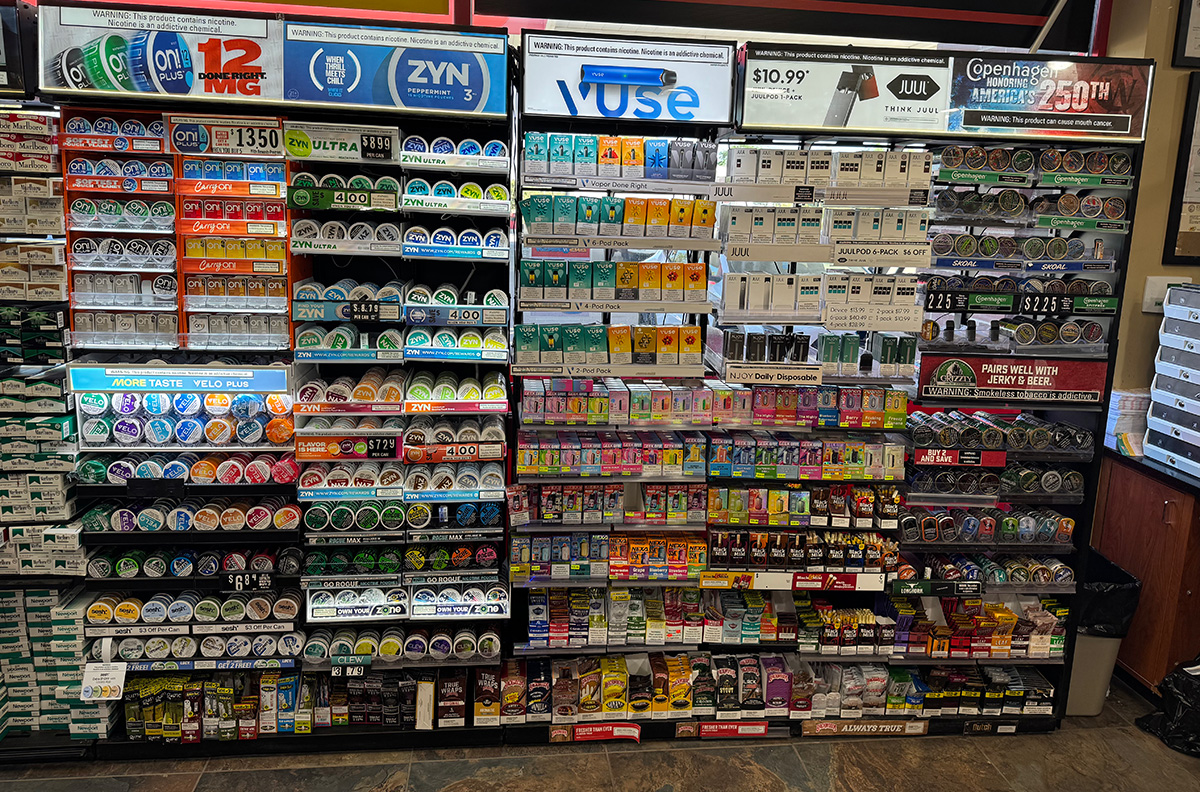
"That way we could take advantage of as many contractual dollars as we could," said Reilly Musser, VP of marketing and merchandising for Rotten Robbie. "We also have tried to replicate the same backbar set across the chain as much as we could. It’s helped a lot; the re-merch process is more efficient when we add new products or we re-merchandise for contracts."
Meanwhile, in Illinois, Gas N Wash faces different challenges. With 38 locations, the chain is finding that the "defining issue" is the massive discrepancy between FDA-authorized products and the products that consumers are actually seeking. Aman Sahi, director of retail strategies, warns that retailers must look past the surface-level dollar sales. "Watch units, not just dollars," Sahi advised. "Price increases and manufacturer funding can carry a category’s sales line for a while and mask real volume erosion underneath."
Official Responses and Strategic Pivots
Retailers across the country are responding to these challenges with tactical adjustments to their merchandising and product mix.
The Shift to Modern Oral Nicotine
As cigarette sales wane, chains like InConvenience Inc.—which operates 29 stores across Iowa, Missouri, Arkansas, and Texas—are actively reallocating shelf space to modern oral products like ZYN, Velo, and On!.
"Allocating space to high-growth categories is essential," says Stephanie Hutton, category manager at InConvenience Inc. The chain’s strategy is highly analytical: they evaluate product selection based on a four-pillar approach: profitability, regulatory safety, customer demand, and brand reliability. This data-driven approach led them to introduce higher-milligram nicotine pouches, which resulted in a 1% sales increase within just one month of implementation.
The "Compliance-First" Operational Routine
Compliance is no longer a back-office task; it is a front-line necessity. Operators are increasingly building compliance into their daily store routines. This involves:
- Centralized Pricebooks: Maintaining a master, real-time database of local, county, and state regulations to ensure no banned products reach the shelf.
- Continuous Training: Human resources teams are creating specialized educational materials to ensure store employees understand the complexities of the nicotine products they sell. As Cailyn Hanson, HR and payroll administrator for InConvenience Inc., notes, "We need to provide ongoing coaching and training so they can have a better understanding of how tobacco trends are evolving."
- Collaborative Merchandising: Working closely with tobacco representatives to reset backbars quickly. When local ordinances restrict high-margin flavored vapes, retailers are pivoting to authorized, nationally recognized brands like Vuse and NJOY to ensure consistency and legal safety.
Implications for the Future of C-Store Retail
The long-term implication of these trends is a consolidation of the market. Smaller independent retailers may struggle to keep up with the administrative burden of tracking state-by-state product registries and ever-changing tax laws. Large chains, however, are finding that the "nimble" approach—being able to identify an emerging brand, verify its compliance, and integrate it into the planogram faster than the competition—is the new key to profitability.
The "grey market" remains a significant threat to established retailers. When independent smoke shops sell products that c-store chains must avoid due to strict regulatory compliance, it creates an uneven playing field. However, major chains are betting that consumer trust in brand-name, compliant products will ultimately outweigh the allure of unregulated, potentially unsafe alternatives.
As we look toward 2027 and beyond, the c-store tobacco category will likely become less about "selling everything" and more about "curating the best of the compliant." The chains that survive this era will be those that view their backbar not just as a source of revenue, but as a dynamic, legally sensitive asset that requires constant monitoring, expert management, and a commitment to employee literacy.
In the words of Aman Sahi, "The biggest opportunity isn’t a single segment; rather, it’s how quickly you can identify an emerging brand, get it in the door and give it the right SKUs and space before competitors do." In an industry defined by legislative uncertainty, the winners will be those who master the art of the pivot.