Navigating the New Normal: Analyzing the 2026 Processing State of the Industry Report

The food and beverage landscape has entered a period of measured, sustainable growth, shedding the volatile highs of the pandemic-era surge for a more predictable, structural evolution. According to the newly released 2026 Processing State of the Industry Report, a landmark collaboration between the Food Production Solutions Association (FPSA) and PMMI, the Association for Packaging and Processing Technologies, the U.S. food equipment market is maturing into a phase defined by efficiency, automation, and rigorous safety standards.
This joint venture marks a significant milestone in industry intelligence, merging the distinct research capabilities of two leading organizations to provide a unified roadmap for food manufacturers and original equipment manufacturers (OEMs). As the industry pivots from rapid crisis-response to long-term strategic planning, this report serves as the essential baseline for capital investment and operational design.
The Genesis of a Strategic Collaboration
For years, the FPSA and PMMI operated on parallel tracks, each producing industry analyses that informed their respective memberships. However, the realization that these memberships share identical pain points—price volatility, growth identification, and risk management—led to the strategic decision to join forces.
Chris Lyons, President and CEO of the FPSA, noted that the initiative began when PMMI CEO Jim Pittas proposed a collaborative framework. "There is a good deal of overlap in our memberships," Lyons explains. "They both want the same thing: headlights into how prices are moving, where to find growth opportunities, and what the big risks are that they have to factor into planning."
The resulting 2026 report is the product of extensive surveying and interviewing of members across both associations. By synthesizing these perspectives, the organizations have created a comprehensive tool designed to benchmark capital plans against the reality of market size and growth trajectories.
Market Chronology: From Pandemic Surge to Steady Expansion
The trajectory of the food processing equipment market over the last five years reads like a narrative of adaptation. Following the immediate, chaotic demand surge of the COVID-19 pandemic—driven by supply chain disruptions and a sudden shift in consumer consumption patterns—the industry experienced a "correction" phase.
Today, that volatility has given way to a steady, albeit modest, upward trend. In 2025, U.S. food and beverage processing machinery shipments were valued at $6.2 billion. While this represents a modest growth rate of approximately 3.2% over 2024, the outlook remains bullish, with projections suggesting the market will reach $6.7 billion by 2027.
"We’re past the surge, but the baseline remains strong and continues to grow," says Lyons. "The U.S. continues to be the biggest market for food equipment, and we are seeing a consistent trend of international firms without a U.S. footprint actively investing to establish one, driven by the sheer scale of the domestic growth opportunity."
Supporting Data: Where the Capital Flows
The 2026 Processing State of the Industry Report provides a granular look at where investment dollars are concentrating. By analyzing the current market share of 2025, the report highlights the dominance of three core sectors:
- Meat and Poultry: 29.2% market share
- Prepared Foods: 14% market share
- Dairy: 12.4% market share
The growth in the prepared foods and dairy sectors is particularly noteworthy, as it represents significant percentage gains atop an already substantial market base. This growth is not merely incidental; it is being driven by structural, long-term shifts in consumer behavior, such as a move toward simplified, "clean label" ingredients and a rising demand for high-protein, nutritionally dense products.
Equipment Category Trends
On the machinery side, the report identifies specific categories poised for accelerated adoption through 2030. These include:
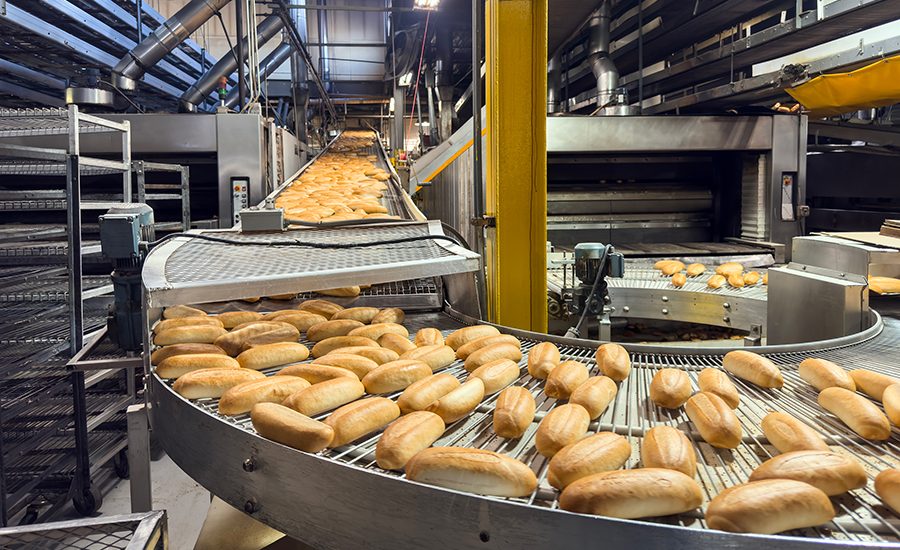
- Automation and Robotics: Essential for addressing ongoing labor shortages.
- Advanced Inspection and Vision Systems: Critical for quality assurance and brand protection.
- Sanitary Processing Equipment: Driven by the industry’s heightened sensitivity to recall risks.
Implications: The Structural Drivers of Modern Processing
The report posits that current capital investment is being dictated by "structural realities" rather than cyclical whims. These drivers are fundamentally reshaping how food plants are designed and how equipment is purchased.
The Labor Constraint
Workforce challenges remain the primary bottleneck in food processing. Manufacturers are no longer just looking for machines that perform a task; they are looking for machines that reduce the need for specialized human intervention.
"Buyers increasingly prioritize automation and equipment that reduces manual intervention," Lyons explains. "Plants can’t assume they’ll have abundant skilled labor to run, maintain, or re-configure lines. They are looking to OEMs to provide intuitive controls, less reliance on specialized internal engineering, and smoother system integration."
The Shadow of Recall Risk
With high-profile recalls dominating headlines in recent years, such as the 2024 industry challenges, food safety has migrated from a "compliance requirement" to a central pillar of competitive advantage. Sanitation is now being "built-in" to equipment design rather than being treated as an operational add-on. This shift is fueling demand for hygienic, easy-to-clean equipment that allows for repeatable, validated sanitation workflows.
The Construction Lag
A fascinating tension exists between equipment demand and physical facility construction. Currently, equipment demand is outpacing new "greenfield" construction. This indicates that while manufacturers are eager to upgrade, they are approaching new site development with caution. Factors such as inflationary pressure, high interest rates, and the rapid pace of technological change are causing many firms to focus on "brownfield" upgrades—modernizing existing lines rather than building from scratch.
"It’s hard to plan a greenfield project that might limit the adoption of the next new thing," says Lyons, noting that he expects construction to recover gradually as lead times and project pipelines normalize.
Future Outlook: A Unified Path Forward
Looking ahead, the FPSA and PMMI are not stopping at a static report. They have already launched an interactive, filterable dashboard that allows users to drill down into the data by machine subcategory and industry segment. Furthermore, the collaboration may soon expand into professional development.
"I am interested in seeing if there are synergies between the training PMMI offers and our Food Industry Technician (FIT) training program," says Lyons. "There may be a path for continuing education of our FIT grads by partnering with PMMI on some of their training."
For the industry at large, the takeaway is clear: the future of food processing is not about chasing short-term trends, but about building resilience. By leveraging the data-backed insights of the 2026 Processing State of the Industry Report, manufacturers and OEMs alike can align their product roadmaps and capital strategies with the structural realities of a post-pandemic world.
As the industry continues to professionalize and modernize, this collaboration between the FPSA and PMMI stands as a testament to the power of shared intelligence. In an era of uncertainty, a common, fact-based baseline is perhaps the most valuable tool a business leader can possess. Through the marriage of technological innovation and rigorous market data, the sector is well-positioned to meet the evolving demands of global food production.