
Navigating the Skies: Why These 8 Global Airports Are Becoming a Traveler’s Nightmare

Air travel has undeniably bridged the gap between continents, turning once-distant lands into accessible destinations. Yet, for the modern globetrotter, the journey is often fraught with a specific kind of anxiety: the dreaded layover. While the flight itself is a controlled environment, the time spent on the ground between connections introduces a chaotic variable that can derail even the most carefully planned itinerary. Between baggage restrictions, fluctuating ancillary fees, stringent security protocols, and the perennial exhaustion of transit, a poorly timed connection can transform a dream vacation into a logistical ordeal.
As passenger volumes return to record-breaking levels, airport infrastructure is being pushed to its absolute limits. Some of the world’s most significant transit hubs have earned a reputation for being particularly challenging, characterized by complex layouts, frequent delays, and systemic bottlenecks. For those planning their next international journey, understanding the risks associated with these specific hubs is essential for mitigating travel-related stress.
1. Hartsfield–Jackson Atlanta International Airport (ATL), USA
The High-Volume Hurdle
As the world’s busiest airport, Hartsfield–Jackson serves over 100 million passengers annually. While this sheer volume is a testament to its efficiency as a major American hub, it is also its primary weakness. The complexity of managing such an immense flow of traffic means that when a singular disruption occurs—a mechanical issue, a staffing shortfall, or a computer glitch—the ripple effects are felt across the entire network.
The Weather Factor: Atlanta’s geographic location makes it susceptible to volatile weather patterns. Summer convection storms and winter ice events frequently paralyze operations. Because the airport is a critical hub, even a brief ground stop in Georgia can result in a cascade of cancellations throughout the United States. Travelers are advised to prioritize non-stop flights when navigating through the Southeast during peak storm seasons.
2. Chicago O’Hare International Airport (ORD), USA
The Complexity of the Windy City
Chicago O’Hare is a titan of aviation, featuring an expansive layout of four terminals and over 200 gates. However, its size is often cited as its greatest impediment to smooth transfers.
Logistical Barriers: The separation of Terminal 5 from the main complex is a frequent source of frustration. Unlike airports with seamless, airside transit loops, O’Hare requires passengers to navigate landside transit—often involving shuttle buses or the Airport Transit System (ATS)—to bridge the gap between terminals. For international travelers arriving at Terminal 5 and connecting to a domestic flight, this necessitates a complete re-entry through security, a process that can easily exceed 60 to 90 minutes during peak hours.
3. Dallas Fort Worth International Airport (DFW), USA
The Challenge of Unsequenced Terminals
Serving as the primary hub for American Airlines, DFW is a mandatory stop for millions. Despite the brilliance of the "Skylink" train—which allows passengers to move between terminals airside—the airport remains a point of contention for many travelers.
Strategic Navigation: The airport is frequently criticized for its non-sequential terminal numbering and sprawling layout, which can lead to significant transit times. The key to surviving a layover at DFW is preparation. Travelers should download the airport’s dedicated mobile application to track gate changes in real-time, as the distance between gate A and gate E is substantial. Given the high rate of delays reported at this hub, a "tight" connection of under 90 minutes is widely considered a gamble.
4. John F. Kennedy International Airport (JFK), USA
A Legacy Hub in Transition
New York’s JFK is a study in aging infrastructure. While the Port Authority of New York and New Jersey has embarked on multi-billion dollar renovations to modernize the airport, the current reality remains challenging.
The Infrastructure Gap: The primary complaint from frequent flyers is the lack of interconnected airside terminals. Similar to O’Hare, connecting passengers often find themselves forced to exit security, board the AirTrain, and navigate a second, often grueling, security checkpoint. Combined with severe air traffic controller shortages in the New York airspace, delays at JFK are common. For international arrivals, experts recommend a minimum of three hours to ensure baggage re-check and security clearance are completed without the risk of missing a connection.

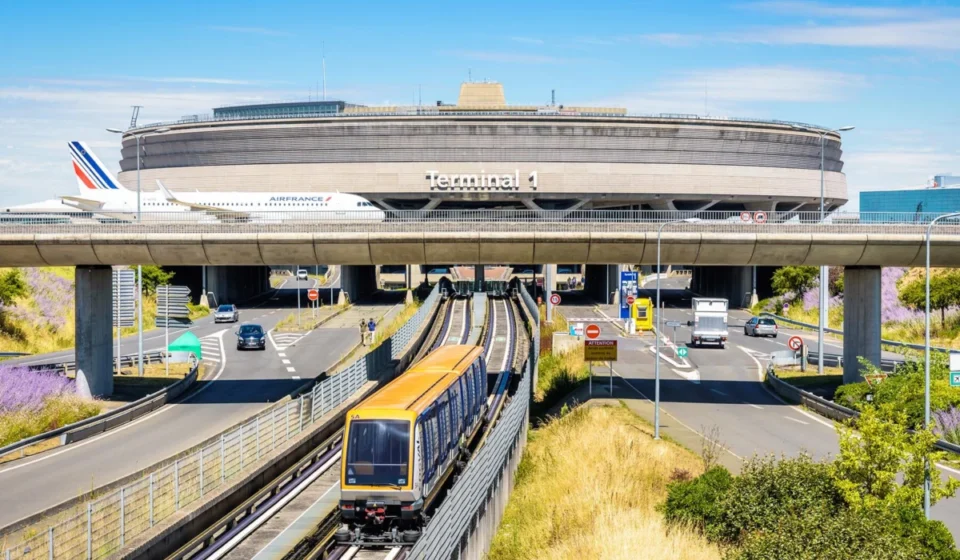
5. Paris-Charles De Gaulle (CDG), France
The Labyrinth of Europe
Paris-Charles De Gaulle is frequently cited by international travelers as one of the most confusing airports to navigate globally. Its sprawling, multi-terminal design often feels counter-intuitive to the user experience.
Operational Realities: Reports from passengers on platforms like Reddit consistently highlight "missed connection" horror stories, even for those with two-hour layovers. The issue is two-fold: the vast distance between terminals and the frequency of lengthy taxi times on the runway. If your arrival is delayed by even twenty minutes, the logistics of clearing French immigration and navigating the terminal shuttle system can become insurmountable. Travelers are encouraged to treat CDG as a "destination" rather than a "transfer" airport whenever possible.
6. London Heathrow (LHR), United Kingdom
The Crowds and the Queue
As the primary gateway to the United Kingdom, Heathrow manages an annual volume of 80 million passengers. The scale of the operation is immense, but the procedural requirements for transfers are equally taxing.
Security Bottlenecks: Unlike many global hubs where airside transfers are streamlined, Heathrow often requires passengers to undergo a full security screening upon arrival, regardless of their origin. With transit times between terminals—such as the journey between Terminal 4 and Terminal 5—taking upwards of 30 minutes, the margin for error is razor-thin. During peak holiday seasons, the queues for these transfer security points can extend significantly, making "tight" connections a risky proposition.
7. Milan Bergamo Airport (BGY), Italy
The New Frontier of Transit Issues
Milan Bergamo has recently come under fire as a cautionary tale for the impact of new international travel regulations. As a primary base for low-cost carriers like Ryanair, the airport has seen its infrastructure strained by shifting immigration protocols.
The Entry/Exit System (EES) Impact: The European Union’s implementation of new biometric entry/exit systems has caused significant bottlenecks at passport control. In recent months, passengers have reported being left behind by departing flights because they were trapped in hours-long queues at immigration. This serves as a critical warning: in the era of digital border control, the time required to cross borders has increased, and airports like Bergamo are currently struggling to adapt their processing speeds to these new requirements.
8. Frankfurt Airport (FRA), Germany
The Sprawl of the Financial Hub
Frankfurt is one of Europe’s most important financial and aviation centers, yet it is also a source of significant traveler dissatisfaction. The airport is massive, and its layout is notoriously difficult for the uninitiated.
Systemic Inefficiencies: Travelers frequently cite a lack of human assistance and slow, labor-intensive security processes. Because the airport is spread across a vast area, the physical walking distances between gates can be exhausting. When combined with the requirement for security and passport control for non-Schengen connections, a "normal" layover time often proves insufficient. The prevailing advice from seasoned travelers is to avoid any connection at FRA that is shorter than two hours.
Implications and Recommendations
The recurring theme among these eight airports is not necessarily a lack of ambition, but rather a clash between 20th-century design and 21st-century passenger demands. As security requirements tighten and travel volumes grow, the "transit" experience has become a specialized skill set.
How to Mitigate the Risk
- The "Two-Hour Rule": For domestic connections, aim for a minimum of 90 minutes. For international-to-domestic transfers, do not book anything less than three hours.
- Download the App: Every major airport now has a mobile app that provides real-time gate information and terminal maps.
- Understand Your Terminal: Research whether your connection requires a change in terminals and whether that transit is airside (secure) or landside (requiring re-security).
- Monitor Weather: Use flight tracking services to monitor storms at your transit hub 48 hours before departure. If a storm is forecasted, contact your airline early to discuss re-routing options.
While the convenience of a hub-and-spoke model is undeniable, the traveler is ultimately responsible for their own itinerary. By acknowledging the limitations of these major hubs, passengers can transform a potentially disastrous connection into a manageable part of their global journey. As the aviation industry continues to evolve, the most important tool in your suitcase remains a well-informed strategy.