Refuel Secures $260.9 Million Capital Injection Through Strategic Getty Realty Partnership

In a major financial maneuver aimed at fortifying its balance sheet and optimizing its capital structure, Refuel—a rapidly expanding convenience retail powerhouse—has officially finalized a comprehensive $260.9 million sale-leaseback transaction with Getty Realty Corp. Concurrently, the company has successfully closed a new senior secured credit facility, marking a pivotal moment in its ongoing efforts to refine its debt profile and accelerate its long-term growth trajectory across the southeastern United States.
The transactions, which involve 41 key properties within Refuel’s vast network, underscore a broader trend in the retail industry: the strategic divestment of real estate assets to unlock trapped liquidity while maintaining full operational control.
Main Facts: The Transaction Breakdown
The core of this financial restructuring rests on two distinct pillars: the sale-leaseback agreement and the debt refinancing.
Under the terms of the agreement, Getty Realty Corp. has acquired the underlying real estate of 41 Refuel-branded convenience retail locations. For Refuel, this move generates a significant influx of cash while ensuring continuity for its customers and employees. Crucially, the deal includes long-term lease agreements that allow Refuel to continue operating these sites without any disruption to daily management, branding, or staffing.
Simultaneously, the company finalized a new senior secured credit facility. This refinancing effort is designed to replace existing, more costly debt with more favorable terms, specifically aimed at reducing annual interest expenses. The credit facility is led by Citizens Bank, acting as the administrative agent, with a robust syndicate of financial institutions including the Bank of Montreal, Fifth Third Bank, Pinnacle Bank, and Wells Fargo.
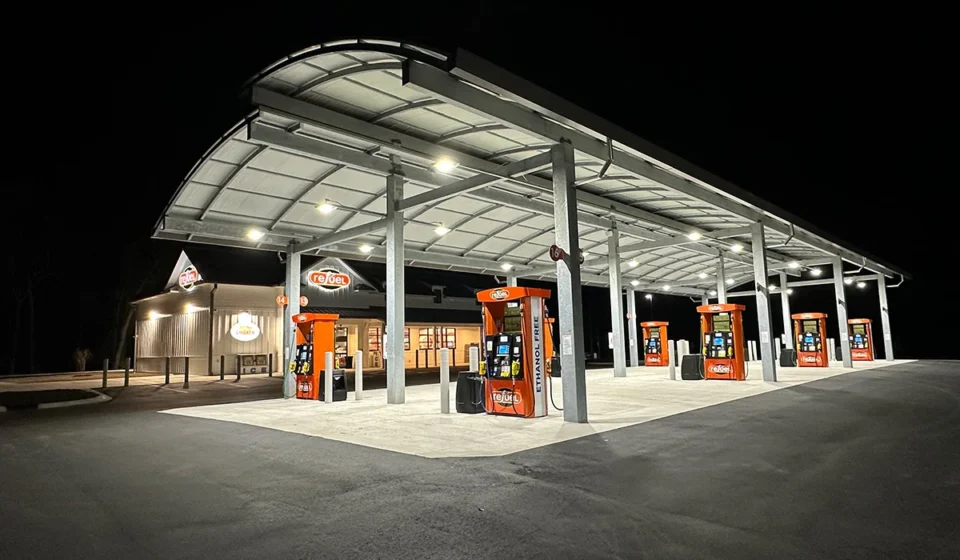
Refuel, which currently boasts a footprint of approximately 250 locations, emphasized that while it is monetizing a portion of its real estate portfolio, it remains committed to a hybrid ownership model. The company retains a substantial portion of its real estate holdings, ensuring that the firm remains asset-rich while benefiting from the increased flexibility provided by the new capital.
Chronology: Building Toward the Deal
The path to this multi-million dollar transaction was not an overnight development but the result of a deliberate, multi-year strategy.
Phase 1: Strategic Aggregation
Since its inception, Refuel has focused on an aggressive growth-by-acquisition model. By targeting high-quality stores in attractive markets throughout the Southeast, the company built a portfolio characterized by significant real estate ownership. This "buy-and-build" phase established the asset base that allowed the company to reach the scale necessary to attract institutional partners like Getty Realty.
Phase 2: Market Evaluation
In the months leading up to the announcement, Refuel’s leadership team, led by co-CEOs Travis Smith and Jon Rier, began evaluating the company’s capital structure. As interest rates shifted and the retail landscape became increasingly competitive, the executive team determined that the company’s balance sheet was too heavily skewed toward owned real estate, leaving potential capital underutilized.
Phase 3: Negotiation and Syndication
The negotiation phase involved complex coordination between Getty Realty’s real estate investment experts and the bank syndicate led by Citizens. The process required not only a valuation of the 41 properties but also a meticulous audit of Refuel’s debt obligations to ensure the new credit facility provided the most advantageous reduction in interest payments.
Phase 4: Finalization
The transaction reached its conclusion in the current quarter, with all legal, financial, and regulatory benchmarks met. The closing of these deals signals a transition for Refuel from a phase of intense asset acquisition to a phase of balance sheet optimization and operational refinement.
Supporting Data: The Financial Landscape
To understand the magnitude of this move, one must look at the data surrounding the retail convenience sector. Convenience retail is a capital-intensive business, requiring consistent investment in fuel infrastructure, store aesthetics, and digital transformation.
- Portfolio Impact: By leasing back 41 locations, Refuel has successfully transitioned those assets from "fixed capital" to "liquid capital." This allows the company to reinvest the $260.9 million into its remaining 200+ stores, technological upgrades, or potential future acquisitions.
- Interest Expense Reduction: The new credit facility serves a dual purpose: lowering the cost of capital and extending maturity dates. By reducing annual interest expenses, Refuel improves its EBITDA margins, providing a stronger "bottom line" that makes the company more attractive to future investors and provides a buffer against economic volatility.
- Market Reach: With 250 locations spread across the Southeast, Refuel operates in one of the fastest-growing regions in the U.S. demographic-wise. This geographic concentration provides a stable base of operations that supported the valuation of the 41 properties sold to Getty.
Official Responses: The Leadership Perspective
The sentiment from Refuel’s executive leadership is one of calculated optimism. Travis Smith and Jon Rier, co-CEOs of Refuel, released a joint statement highlighting the strategic intent behind the deal.
"Since inception, Refuel has been focused on assembling a portfolio of high-quality stores in attractive markets with significant real estate ownership," the co-CEOs stated. "This transaction exemplifies the benefits of that strategy, allowing us to unlock significant value while maintaining a highly attractive network of stores and a strong balance sheet."
The leadership team was also quick to reassure stakeholders—both internal and external—that the company’s mission remains unchanged. "We are pleased to partner with Getty and our longtime bank group led by Citizens. Our focus remains what it has always been: investing in our people, our stores, and the long-term growth of Refuel in service of our customers."
For Getty Realty, the deal represents a stable, long-term yield-generating opportunity. By partnering with an established operator like Refuel, Getty secures long-term rental income from a network of locations that have already been vetted for their market strength and profitability.
Implications: What This Means for the Future
The implications of this transaction extend far beyond the immediate cash injection.
1. Operational Stability
By explicitly stating that day-to-day operations will remain unchanged, Refuel is signaling to its workforce and its customer base that the "front of house" experience is not affected by "back of house" financial maneuvers. For the employees at the 41 affected sites, the transition to a lease-back model will be seamless, as the store remains under the Refuel brand and management structure.
2. The "Asset-Light" Shift
This deal is a clear indicator of Refuel’s shift toward a more modern, asset-light retail strategy. While owning real estate provides security, it also ties up capital that could be used for rapid expansion or digital innovation. By balancing owned and leased assets, Refuel is better positioned to pivot quickly if the retail market changes or if new growth opportunities arise in untapped territories.
3. Strengthening the "Bank Group" Relationship
The inclusion of major players like Wells Fargo and the Bank of Montreal alongside Citizens indicates that Refuel has attained a level of institutional maturity that grants them access to top-tier capital markets. This relationship will be vital should the company decide to pursue further large-scale acquisitions in the future.
4. A Template for Success
Industry analysts are already looking at the Refuel-Getty deal as a textbook example of how retail chains can extract value from their physical footprint. As the convenience store sector continues to consolidate, other regional players are likely to monitor Refuel’s performance to see if this model provides a sustainable competitive advantage in a high-interest-rate environment.
Conclusion
Refuel’s recent financial restructuring is a testament to the company’s ability to leverage its assets to fuel its long-term vision. By successfully balancing the divestment of real estate with a proactive debt refinancing strategy, the company has cleared the path for a new era of growth.
The $260.9 million infusion, combined with reduced interest burdens, provides the fiscal agility necessary to navigate the complexities of the modern retail landscape. As Refuel continues to serve its 250 locations across the southeastern U.S., the company’s leadership remains focused on the core tenets that brought them to this position: operational excellence, strategic market selection, and a commitment to investing in the future of their people and their stores. With these financial foundations now solidified, Refuel is well-positioned to maintain its status as a significant player in the convenience retail industry.